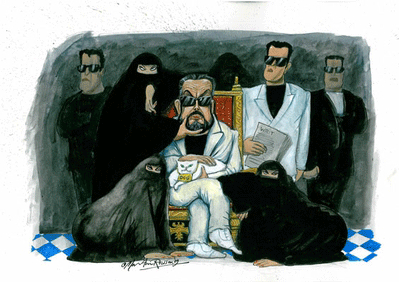
Sex, flies and videotape: the secret lives of Harun Yahya

by Halil Arda, The New Humanist, Volume 124, Issue 5, September/October 2009

Inspired by the high profile of its Christian American counterpart, Muslim creationism is becoming increasingly visible and confident. On scores of websites and in dozens of books with titles like The Evolution Deceit and The Dark Face of Darwinism, a new and well-funded version of evolution-denialism, carefully calibrated to exploit the current fashion for religiously inspired attacks on scientific orthodoxy and “militant” atheism, seems to have found its voice. In a recent interview with The Times Richard Dawkins himself recognises the impact of this new phenomenon: “There has been a sharp upturn in hostility to teaching evolution in the classroom and it’s mostly coming from Islamic students.”

The patron saint of this new movement, the ubiquitous “expert” cited and referenced by those eager to demonstrate the superiority of “Koranic science” over “the evolution lie”, is the larger-than-life figure of Harun Yahya. Continue reading Sex, flies and videotape: the secret lives of Harun Yahya
The Land and the Book #5: Dead Sea Reflections


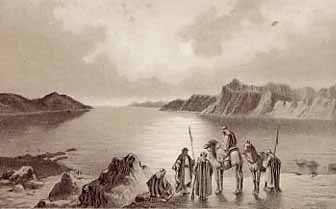
The Dead Sea from Thomson’s “The Land and the Book”, opp. p. 614

Almost 150 years ago one of the most popular travel accounts of the Holy Land was penned by an American missionary named William M. Thomson. Born in Ohio, my own home state, the 28-year old Thomson and his young bride arrived in Lebanon in 1834 as Protestant missionaries. This was a mere 15 or so years after the first American missionaries had made the Holy Land a mission field. At once an entertaining travel account and Sunday School commentary on the places and people of the Bible, this may have been one the most widely read books ever written by a Protestant missionary.


Reading Thomson is like reading one of the early English novels. The language is less familiar, although still thoroughly Yankee and the devotional tone has long since disappeared for a readership buying out The Da Vinci Code as soon as it hit the bookstores. The biblical exegesis, literalist yet frankly pragmatic at times, is intertwined with astute and at times humorous accounts of the people Thomson met along the way. But the style is not at all dry or discouragingly didactic. From the start Thomson engages in a dialogue with the reader, making the text (which stretches over 700 pages in the 1901 version) a rhetorical trip in itself.

Among the wonders described by Thomson is the Dead Sea, which as a devout literalist he interpreted through the biblical tale of the brimstone destruction of Sodom and Gomorrah. Yet, he is quite interested in the geologic and chemical character, as he notes: Continue reading The Land and the Book #5: Dead Sea Reflections

The Land and the Book #4: Bringing in the Sheaves


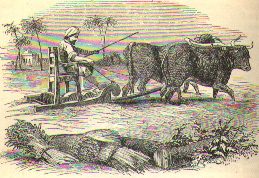
Threshing Sledge or Mowrej from Thomson’s “The Land and the Book”, p. 540

Almost 150 years ago one of the most popular travel accounts of the Holy Land was penned by an American missionary named William M. Thomson. Born in Ohio, my own home state, the 28-year old Thomson and his young bride arrived in Lebanon in 1834 as Protestant missionaries. This was a mere 15 or so years after the first American missionaries had made the Holy Land a mission field. At once an entertaining travel account and Sunday School commentary on the places and people of the Bible, this may have been one the most widely read books ever written by a Protestant missionary.


Reading Thomson is like reading one of the early English novels. The language is less familiar, although still thoroughly Yankee and the devotional tone has long since disappeared for a readership buying out The Da Vinci Code as soon as it hit the bookstores. The biblical exegesis, literalist yet frankly pragmatic at times, is intertwined with astute and at times humorous accounts of the people Thomson met along the way. But the style is not at all dry or discouragingly didactic. From the start Thomson engages in a dialogue with the reader, making the text (which stretches over 700 pages in the 1901 version) a rhetorical trip in itself.

While hardly free from Yankee hubris and missionary zeal, Thomson’s observations are often useful as well as colorful, especially when accompanied by illustrations. Consider, for example, this description of threshing on a visit to Yebna, about three and a half hours from Haifa through Wadi Hanayn in Palestine: Continue reading The Land and the Book #4: Bringing in the Sheaves

Picturing the Quran


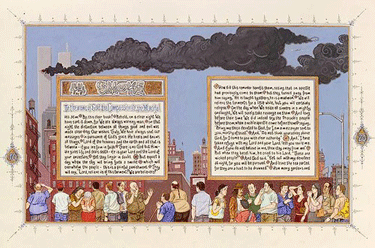
TERROR: “Sura 44 (A–B)” shows the towers of the World Trade Center on Sept. 11. (Sandow Birk / Catharine Clark Gallery / March 26)

Long Beach artist’s illustrations of a new take on Koran

Sandow Birk’s ‘American Qur’an,’ heading to San Francisco and Culver City galleries, breaks away from Islamic tradition to examine the faith through contemporary images.

By Sharon Mizota, The Los Angeles Times, August 23, 2009

There’s a long tradition of illustrating scenes from the Bible — even a version of Genesis by alternative comics master R. Crumb. But the Koran, which Muslims consider to be the holy word of God, has never incorporated images of people or animals, according to Linda Komaroff, curator of Islamic art at the Los Angeles County Museum of Art.

“It simply wasn’t the kind of thing that would come up,” she said, “In Islam, like Judaism, there’s one invisible god that’s everywhere, that can’t be seen and can’t even be comprehended.” As a result, there was no need to develop figurative imagery for religious purposes. The Koran, said Komaroff, is regularly decorated with geometric or vegetal patterns, but she has seen only one example that contains more representational imagery. It depicts the facade of a mosque.

Now, Long Beach artist Sandow Birk has challenged that centuries-old tradition. His series of works on paper, “American Qur’an,” is an English-language version of the central text of Islam, illustrated with scenes from contemporary American life. Selections from the project, which is ongoing and will eventually include over 300 pages, will be on view at Catharine Clark Gallery in San Francisco starting Sept. 5 and at Koplin Del Rio gallery in Culver City as of Sept. 8. Continue reading Picturing the Quran

Bury on Yemen

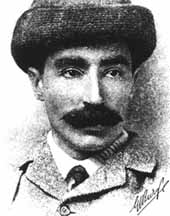
[Note: One of the early 19th century travelers to Yemen was the British birder G. Wyman Bury. His Arabia Infelix, or The Turks in Yamen (London: MacMillan, 1915) is a personal and informative account of his visit to the southern part of Yemen, especially Aden and its hinterlands. Near the end of his book, he discusses the political climate of his day, when Britain was firmly in control of Aden as part of its Indian Empire. Clearly biased in favor of his own British order, there is nevertheless a note of irony for a country which until this day has yet to attain stability.]

The Yameni is not fanatical. He has his own religious views, but realizes, from the sects into which his own people are divided, that there are at least two sides to every religious question.

He is a patriot ; and who, indeed, could help loving a country like the highlands of Yamen, in spite of past and present woes ? His patriotism, however, does not blind him to the fact that his local rulers have done and can do little for the welfare of his country. He would gladly throw off his present yoke for any change of government that promised more stability. Continue reading Bury on Yemen

Acid Pain


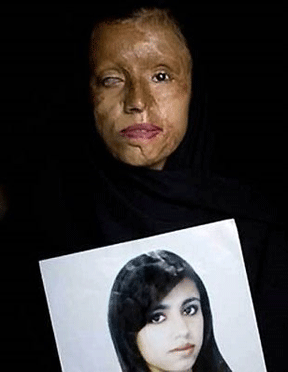
Twenty six year old Saira Liaqat poses for the camera, while holding a picture of her former self before her betrothed doused her face with acid.


Scarred by acid in Bangladesh

By Nicolas Haque in Dhaka, Bangladesh, Al-Jazeera, July 11, 2009

Rahima Begum, a young woman in the village of Kaligonj in the northwest of Bangladesh, turned down the romantic advances of a neighbour and paid dearly for it.

In the dead of night, while she was asleep, her neighbour poured acid over her face, leaving her disfigured for life.

“I may be still alive but he took my life away, I have become the shame of my family and of my village. I have no where to go,” she says.

According to official figures, there are only around 200 acid-related crimes reported every year in Bangladesh. Continue reading Acid Pain

Lisân al-‘Arab Online

The digital world is an extraordinary boon to those of us who depend on a variety of Arabic resources. One of my mainstays is the multi-volume Lisân al-‘Arab of the great lexicologist Ibn Manzur (died 1311 CE). I picked up my copy in 1979 in Dâr al-Muthana in Baghdad. Now I discover that this major classical lexicon, along with al-Fayrûzabâdî’s Qâmi¨s al-muhît and two other dictionaries are online at http://baheth.info. One can type in the Arabic word desired and all references to that in the extensive commentary will be highlighted. All the prompts are in Arabic, although I note that the one Google Ad prompt across the top in English advertised “Arabic Girls.” Poor Ibn Manzûr would no doubt roll over in his qabr, were he around to click his way today. On the right hand side notable quotes are posted. On one recent day I found one by Lenin. Ah, the power of words…

A Poet’s Recipe


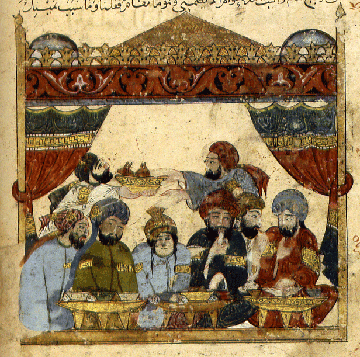
A host tending to the needs of his guests, Maqâmât al-Harîrî, 1236 CE

As richly illustrated in Geert Jan van Gelder’s delightul God’s Banquet: Food in Classical Arabic Literature (New York: Columbia University Press, 2000), Arab poets loved food and wrote extensively on the adab of cuisine. There are poems devoted to specific foods, but even a few recipes for the cook with a wit as well as a greasy thumb. Here is van Gelder’s translation of a recipe poem by the Baghdadi poet Kushajim (died 961 CE):

You have asked me about the best of dishes:
You’ve asked today someone who is not ignorant!
Now take, my friend, some ribs of meat,
And after that some meat of leg, and fat,
And chop some fat and succulent meat
And rinse it with sweet and clear water. Continue reading A Poet’s Recipe