Reduced to a four-letter word


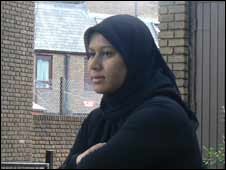
Tamanna Rahman: Even at home in Manchester, Tamanna is now wary of attacks

Tamanna Rahman spent two months living on a Bristol housing estate for the BBC’s Panorama programme Undercover: Hate on the Doorstep.

Here she explains her reasons for agreeing to take part in the programme and describes how it felt to be a daily target of racist abuse, both physical and verbal. Her report contains details of racial abuse.

by Tamanna Rahman, BBC Panorama, October 19, 2009

In 2000, as a 16-year-old at my culturally and racially diverse Manchester secondary school, I was asked by a local television news team examining the hopes and aspirations of the first class of the new millennium if I felt that racism in Britain was a thing of the past.

Fresh-faced, naïve and optimistic, I answered yes; racism is dead.

Fast-forward to the summer of 2009 and my answer is very different.

What changed? As part of a Panorama programme, I spent two months working undercover on a Bristol housing estate.

Over the course of our investigation I would have glass, a can, a bottle and stones thrown at me. Continue reading Reduced to a four-letter word
Mapping the Global Muslim Population


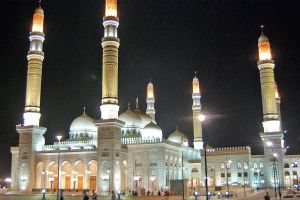
The “President’s Mosque” in Sanaa, Yemen

Mapping the Global Muslim Population
A Report on the Size and Distribution of the World’s Muslim Population

The Pew Forum on Religion and Public Life, October 2009

Executive Summary

A comprehensive demographic study of more than 200 countries finds that there are 1.57 billion Muslims of all ages living in the world today, representing 23% of an estimated 2009 world population of 6.8 billion.

While Muslims are found on all five inhabited continents, more than 60% of the global Muslim population is in Asia and about 20% is in the Middle East and North Africa. However, the Middle East-North Africa region has the highest percentage of Muslim-majority countries. Indeed, more than half of the 20 countries and territories1 in that region have populations that are approximately 95% Muslim or greater.

More than 300 million Muslims, or one-fifth of the world’s Muslim population, live in countries where Islam is not the majority religion. These minority Muslim populations are often quite large. India, for example, has the third-largest population of Muslims worldwide. China has more Muslims than Syria, while Russia is home to more Muslims than Jordan and Libya combined. Continue reading Mapping the Global Muslim Population

With Van-Lennep in Bible Lands: 1

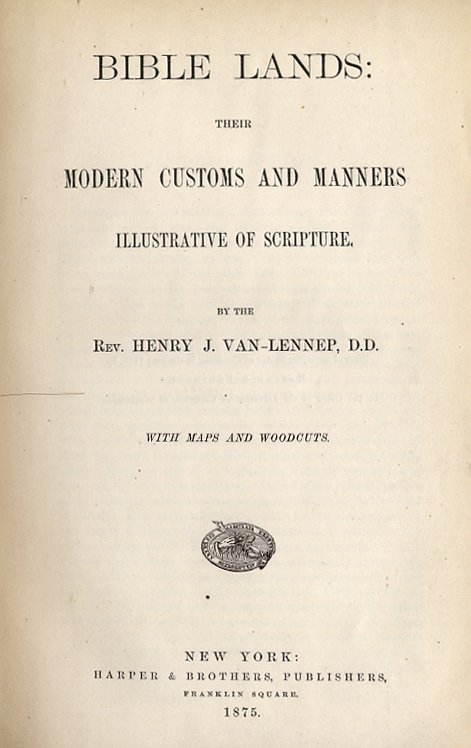
The nineteenth century Rev. Henry J. Van-Lennep provided one of the most exhaustive (832 pages) compilations of contemporary customs of “Holy Land” peoples said to be “illustrative of scripture.” In a sense the popularity of the “Bible customs” genre, which included many of the travel accounts of ministers, missionaries and lay Christians, served as an antidote to the Higher and Lower Criticism of the Bible. To the extent the Bible was treated as a literary text, the divine luster wore thin for conservative Christians. By the mid-nineteenth century archaeological discoveries in the Holy Land seemed to vindicate aspects of recorded biblical history. Van-Lennep, however, was less concerned about the spoils beneath the soil than the customs of contemporary Arabs and other indigenous people in what he thought of as Bible lands. Continue reading With Van-Lennep in Bible Lands: 1

Cartoonist in Yemen

“Return to Aden:” Rediscovering Yemen, the land of a thousand tales

By Dr. T.I.Farag, The Ambassadors Online Magazine, January, 2001

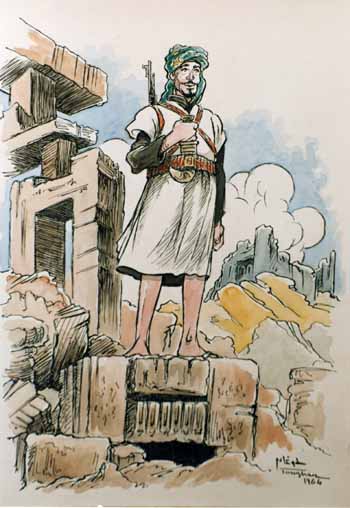
This issue’s megastar and renowned political cartoonist, Ahmed Toughan, is preparing a gallery illustrating his journeys in Yemen, through his artistic drawings. During his ten visits to the country over a period of 40 years, Toughan has compiled a library of works about Yemen and developed a strong bond with the tribes, the communities, the buildings, the environment, and all that he came in contact with. Since that time, Toughan has produced galleries of water paintings, sketches and cartoons about Yemen that have been published in seven books and presented in several international exhibitions. In true and genuinely-arousing colors and strokes, Toughan’s pieces presented here capture a Yemen that transcends time and space, whose ambiance is penetrative and transporting. His art exudes a mystique that penetrates materiality while embodying all that moves his aesthetic essence. We hope that these images will move you the same way they moved me. Continue reading Cartoonist in Yemen

Ardi, We hardly knew yah

Making sense of Al Jazeera’s strange coverage of “Ardi”

by Salman Hameed, Irtiqa, A Science & Religion Blog, October 13, 2009

About two weeks ago, Science included a series of papers about our 4.4 million year old ancestor Ardipithicus or “Ardi”. It is a fascinating find that has justifiably garnered attention worldwide. You can read the details in Science (there is also a nice short video there) and an excellent description on The Loom.

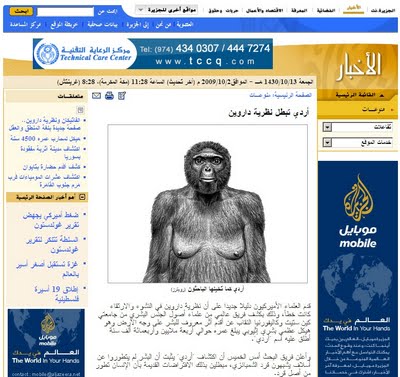
However, Al Jazeera gave an interesting spin to the same story. Lina Malkawi translates the story on her blog and points out the bizarre coverage by the Arabic version of Al Jazeera, where the headline reads: Ardi refutes Darwin’s theory (the screen shots on the right are from Lina’s blog). And one goes, huh?! Did Al Jazeera any thing about Ardi? Hey – if not the original Science article, at least read the summary of the findings (they could have at least watched the short video that explains the findings). Continue reading Ardi, We hardly knew yah

For the Love of Bread

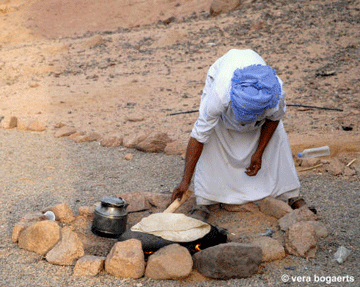
Arab poets extolled just about everything under the soon and in the moonlight. Even a loaf of bread could inspire passion. The following is a poem by Abu al-Mukhaffaf, an early 9th century Baghdadi poet. Here is the introduction (nasîb) in his ode:

Please, no abodes abandoned in the wastelands!
Spare me your lines about expensive wines;
No virgin girls with narrow waists and waistbands.
Describe a noble loaf: a sun that shines,
Or like the moon when it is full and round;
For only them my poetry is sound.

I’ve given up all contacts with attractive girls.
I’ve sobered up: no more consorting with all those
Who please the eye until you die from love. Continue reading For the Love of Bread

The End of Middle East History

by Richard Bulliet, Agence Global, September 28, 2009

Iran’s Arab adventure had ostensibly grown from three separate roots, Islamic revolution, Shi‘ite solidarity, and sympathy for the Palestinians. But underlying each of these was a dream dating back to the overthrow of Prime Minister Mossadegh in 1953 — the dream of confronting and confounding American imperial arrogance. Now each of the three roots withered, and confrontation with the Great Satan faded from significance along with them.

The idea of an Islamic revolution leading to an Islamic republic that would reinvigorate the faith and reveal the viciousness of Western stereotypes of Islam had lost steam before the IRI was a decade old. Internal progress had been stifled by eight years of war with Iraq and by factional infighting that sapped governmental innovation and efficiency. Though public discourse of unprecedented vitality flourished after the revolution, other intellectual and philosophical trends superseded the concept of Islamic revolution per se. However, the death knell of constructive Islamic revolution was rung on September 11, 2001 when the terrorist attacks on the World Trade Center and the Pentagon elevated nihilistic violence in the name of (Sunni) Islam above the dream of creating a model religious state in (Shi‘ite) Iran. Instead of an Islamic republic, the ideologues of the new terrorism called for an autocratic Islamic emirate or an atavistic return to a universal caliphate that had not wielded significant political power for over a thousand years. In response, Islamic political parties everywhere put behind them the idea of an Islamic republic, and with it the Iranian model, and called instead for pluralistic electoral systems in which Islamist parties would be free to run for office, but not free to disempower rival non-religious parties. Continue reading The End of Middle East History