Saliba on Islamic Science and the Renaissance

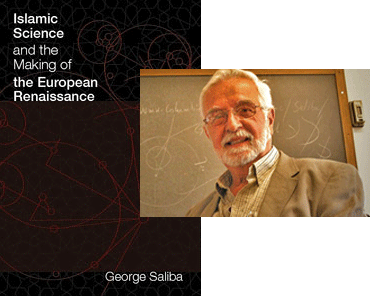
[Note: The cover interview of Rorotoko has an essay by historian of Islamic science George Saliba on his fascinating study entitlted Islamic Science and the Making of the European Renaissance. Here is the start of the essay, the whole of which can be read at Rorotoko.]

This book started almost ten years ago. Initially, I wanted to know what were the conditions under which a civilization could produce science afresh.

I was trained in ancient Semitics, and mathematics, but I was always interested in these rumors that the general reader knows about, that the great invention of science was a really Greek project. And that everything else is either a shadow or a continuation of the classic antiquity.

Growing up, you assimilate these paradigms. You begin to think that these are the normal things. But then, trained in mathematics, and beginning to read a little bit of what was produced in the Islamic civilization, in science, I grew curious. I grew curious because I began to note that some of the science produced was not a shadow of the Greek project. It was more re-focusing of light, a new way of looking at things, which the Greeks did not know. Continue reading Saliba on Islamic Science and the Renaissance
Islam, Sufism and the Heart of Compassion


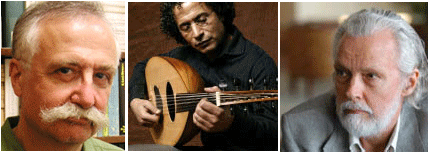
left to right: Michael Sells, John Henry Barrows Professor of Islamic History and Literature in the Divinity School at the University of Chicago; Taoufiq Ben Amor,a Tunisian vocalist, percussionist, oud player and Professor of Arabic at Columbia University; William C. Chittick, Professor of Religious Studies in the Asian and Asian American Studies Dept. at Stony Brook


Islam, Sufism and the Heart of Compassion: Living the Teachings of Muhyiddin Ibn ‘Arabi

The New York Open Center and the Muhyiddin Ibn ‘Arabi Society will co-present a conference titled “Islam, Sufism and the Heart of Compassion: Living the Teachings of Muhyiddin Ibn ‘Arabi” on November 6,7, 2009

This conference will examine the heart of Ibn ‘Arabi’s teachings and in the process seek to deepen understanding of Islam here in the West in the light of one of its most profound, original and universally relevant thinkers.The conference will open with a series of talks on Friday evening and Saturday morning and will be followed by afternoon workshops, ending with a concluding presentation including a music ensemble. The presentations will cover such themes as: Ibn ’Arabi and the Quest for Human Perfection; Suffering and Spiritual Growth in Ibn ‘Arabi’s Futuhat; The Wisdom of the Heart; Ibn ‘Arabi in Dialogue with the Confucian Tradition; and more. The presenters include some of the leading Ibn ‘Arabi scholars in the world from the U.S., Europe and the Middle East. Confirmed speakers include:

• Salman Bashier
• William Chittick
• Sashiko Murata
• Mohamed Haj Yousef
• Stephen Hirtenstein

You can download the symposium brochure here. (This is an Acrobat pdf file, 3.5mb.) Continue reading Islam, Sufism and the Heart of Compassion

Ignorance is no Excuse


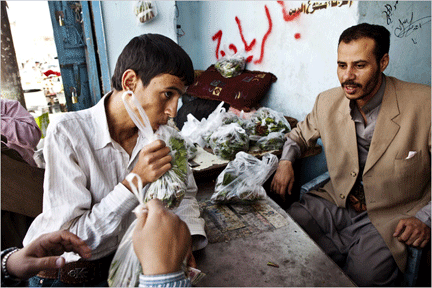
Selling qât in Sanaa, Yemen’s capital. Photo: Bryan Denton

These days if you run across an article on Yemen, it will no doubt feature a scenario of gun-toting tribesmen swearing allegiance to Al-Qaeda, the latest German tourist hijackings or feigned shock at the terrible, terrible addictive drug called qât. At least this was the case in Sunday’s New York Times in another piece of mixed journalistic pablum by roving reporter Robert Worth. Entitling the article “Thirsty Plant Dries Out Yemen,”, the author seems unaware that the site of his posting (Jahiliya) is in fact the Arabic term for the time of “Ignorance” before the rise of Islam. I doubt this reporter stepped out of a Queen-of-Sheba-era time machine and interviewed Abraha about his recent defeat at the “Battle of the Elephant” before Mecca. So where exactly is the fabled posting site of Jahiliya? Ironically, it is part of a World Bank irrigation project. I will leave the irony about IMF money being poured into Jahiliya in the strict sense to the imagination of the reader. And I strongly suspect the posting was made from a fancy hotel in the capital Sanaa and not from a rural internet cafe, while sipping qishr. But for a front page article on a major newspaper, ignorance is no excuse. Continue reading Ignorance is no Excuse

With Van-Lennep in Bible Lands: 3


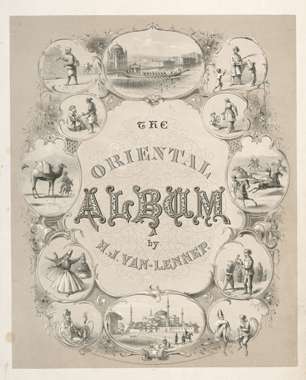
Van-Lennep’s album cover

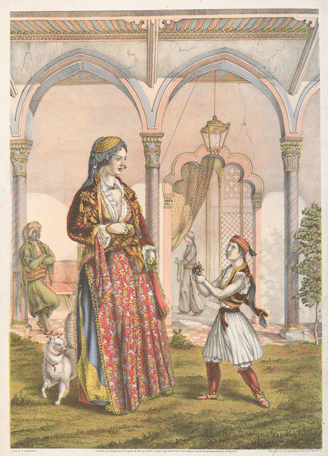
In 1862 Henry J. Van-Lennep published twenty original chromolithographs of life in Ottoman Turkey. These include two scenes of Jewish life in the Ottoman Empire, “A Turkish Effendi,” “Armenian Lady (at home),” “Turkish and Armenian Ladies (abroad),” “Turkish Scribe,” “Turkish Lady of Rank (at home),” “Turkish Cavass (police officer),” “Turkish Lady (unveiled),” “Armenian Piper,” “Armenian Ladies (at home),” “Armenian Marriage Procession,” “Armenian Bride,” “Albanian Guard,” “Armenian Peasant Woman,” “Bagdad Merchant (travelling),” “Jewish Marriage,” “Jewish Merchant,” “Gypsy Fortune Telling,” “Bandit Chief,” “Circassian Warrior,” and “Druse Girl.” The lithographer for Van-Lennep’s paintings was Charles R. Parsons (1821-1910).


Van-Lennep’s illustration of a Turkish Lady of Rank (At Home)

Continue reading With Van-Lennep in Bible Lands: 3

Beeman on Iran in Obama Era

AWAC Presents: Dr. William Beeman

Posted in AWAC Presents

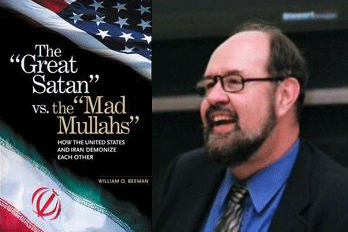
Listen to Dr. William Beeman on U.S. – Iranian Relations During the Obama Era this week on KSKA’s Addressing Alaskans, Thursday (Oct 29) at 2:00 pm, repeating Wednesday (Nov 4) at 9:00 pm on FM 91.1. Recorded at the Alaska World Affairs Council luncheon on Friday October, 23 Dr. William Beeman is the President of the Middle East Section of the American Anthropological Association and Professor & Chair of the Department of Anthropology, University of Minnesota.

Audio will be available under Addressing Alaskans following the radio broadcast Thursday at 2:00 pm.

The Merchant Houses of Mocha

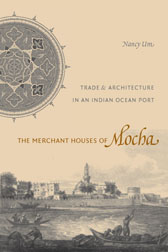
The most important historical port on Yemen’s Red Sea coast is no doubt the old port of Mocha, which gained fame in the West for its association with the Yemen coffee trade. In a new book, The Merchant Houses of Mocha: Trade and Architecture in an Indian Ocean Port, Nancy Um provides a fascinating social history of the trade through this seaport during the Ottoman period. Here is how the book is described on the publisher’s website.

Gaining prominence as a seaport under the Ottomans in the mid-1500s, the city of Mocha on the Red Sea coast of Yemen pulsed with maritime commerce. Its very name became synonymous with Yemen’s most important revenue-producing crop – coffee. After the imams of the Qasimi dynasty ousted the Ottomans in 1635, Mocha’s trade turned eastward toward the Indian Ocean and coastal India. Merchants and shipowners from Asian, African, and European shores flocked to the city to trade in Arabian coffee and aromatics, Indian textiles, Asian spices, and silver from the New World. Continue reading The Merchant Houses of Mocha

With Van-Lennep in Bible Lands: 2


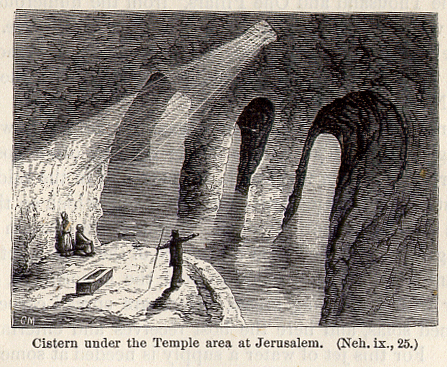
Van-Lennep’s illustration of a Easterner with outstretched arm in awe at the scenes under the Temple mount at Jerusalem

Heny J. Van-Lennep, missionary, author and artist of the Holy land, has no doubt that the “remarkable reproduction of Biblical life in the East of our day is an unanswerable argument for the authenticity of the sacred writings.” While the bias of this Christian writer is clear, it would appear to flow more from a sense of sectarian and cultural superiority rather than an innate desire to denigrate the people being studied. Because writers like Van-Lennep believed that current customs of the Arabs, in particular, had been preserved by God as a testimony to the truth of scripture, these customs were held in high regard. While I hesitate to label the efforts of these texts as “ethnography” in the contemporary sense, Van-Lennep (1875:6) is proud of the fact that he “enjoyed unrivaled opportunities of intercourse with all classes of people.”

Rather than using his text to criticize the “Orientals,” Van-Lennep (1875:7) is at pains to counter existing stereotypes of his day. Thus, he used “Mohammed” rather than “Mahomet”, “Bedawy” rather than “Bedouin.” Consider the rationale for recognizing how Muslims saw themselves: “On the other hand, we have not called the religion of Mohammed Mohammedanism, but Islam, its universal name in the East (not Islamism, nor the religion of Islam); and his followers not Mohammedans, but, as they call themselves, Muslims (not Mussulmans); Muslimin is the plural of Muslim.” To the extent that Van-Lennep believed that God had preserved these customs as a testimony, it was important to describe them as accurately as he could. Continue reading With Van-Lennep in Bible Lands: 2

Picturing the Displaced in Yemen


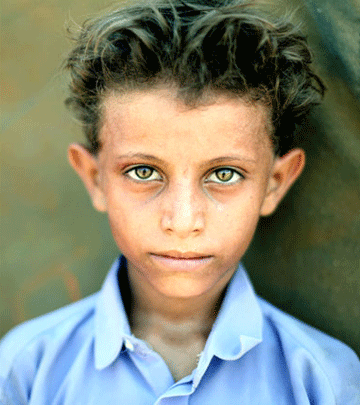
A boy who fled fighting between militants and government forces in a refugee camp near the town of Hadja, north west Yemen. Photo by David Bebber, The Times

Photographer David Bebber has produced a superb slide show in The Times on Yemenis, especially children, displaced by recent fighting in the north of Yemen between government forces and the al-Huthi rebels. To see a slide show of the 19 images, click here.


Photo by David Bebber, The Times