Part 2 of a three-part trilogy by George N. El-Hage


For part 1, click here.
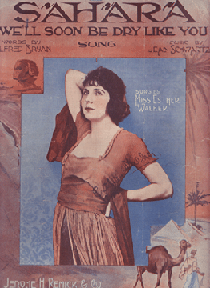
Vaudeville loved Orientalism. By the time Valentino played The Sheik, images of Middle Eastern scenes were well represented on stage and in music. Some of the lyrics from this time period are very clever. My personal favorite is a prohibition song from 1920 called “Sahara, We’ll Soon Be Dry Like You,” sung by the great comic singer Billy Murray. To hear this original 1920 recording in a digital format, click here.
Here are the words. Why not click above and sing along…
Sahara (We’ll Soon Be Dry Like You)
Words by Alfred Bryan, Music by Jean SchwartzVerse 1: King Rameses went to pieces seven thousand years ago,
And pass’d a law that Egypt must go dry.
He took the liquors from the “shickers” all the way to Jericho,
But kept his little toddy on the sly.
The desert of Sahara flow’d with honey so they say,
Till prohibition came along and dried it up one day. Continue reading Tabsir Redux: Sahara, My, My, but its Dry
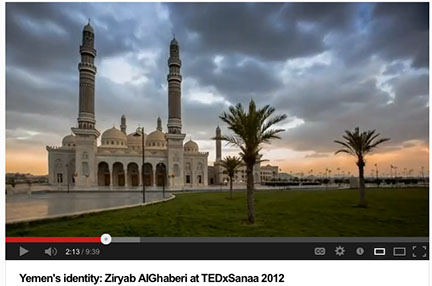
For a beautifully filmed whirlwind tour of Yemen, see the Youtube video posted by Ziyab al-Ghaberi. This includes scenes inside and outside the 60 million dollar Sanaa mega-mosque built by former President Salih. The film itself is about three minutes in length, but the Youtube video includes discussion with the audience.
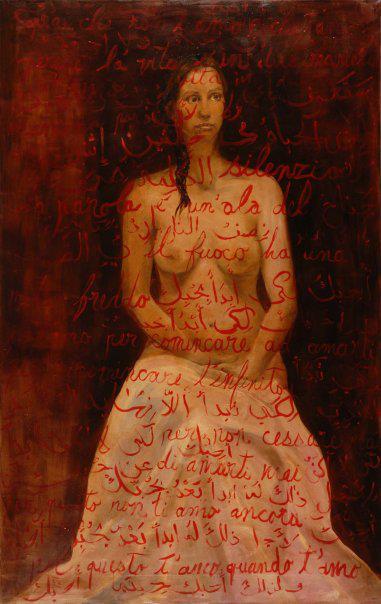
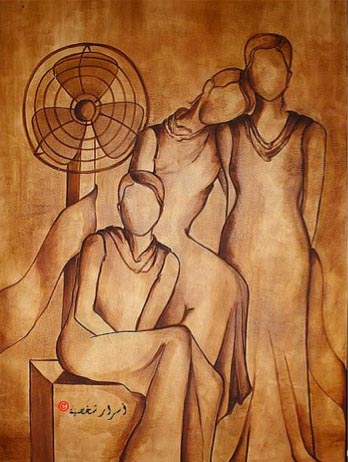
A painting by Iraqi artist Hadeel Azeez on Arab Women Artists.
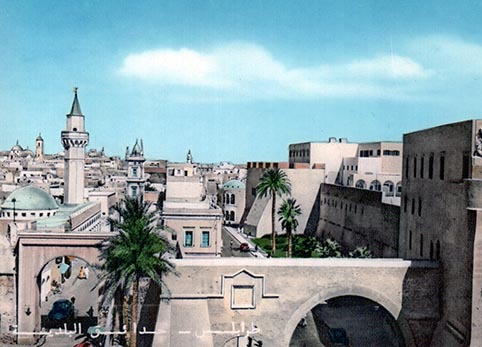 Panorama of Tripoli
Above and below are postcards of scenes in Tripoli, Libya from the 1950s, when it was still a kingdom. All of these were distributed by Ediz. Ris. Foto AULA in Tripoli – Rop. vietata.
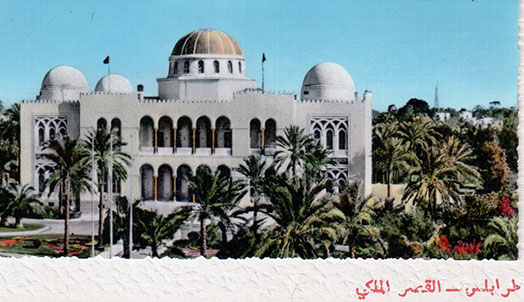 The King’s Palace
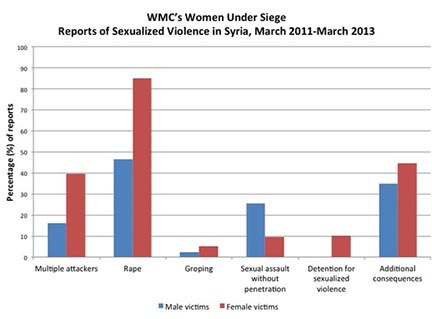
by Lauren Wolfe, The Atlantic, April 3
One day in the fall of 2012, Syrian government troops brought a young Free Syrian Army soldier’s fiancée, sisters, mother, and female neighbors to the Syrian prison in which he was being held. One by one, he said, they were raped in front of him.
The 18-year-old had been an FSA soldier for less than a month when he was picked up. Crying uncontrollably as he recounted his torture while in detention to a psychiatrist named Yassar Kanawati, he said he suffers from a spinal injury inflicted by his captors. The other men detained with him were all raped, he told the doctor. When Kanawati asked if he, too, was raped, he went silent.
Although most coverage of the Syrian civil war tends to focus on the fighting between the two sides, this war, like most, has a more insidious dimension: rape has been reportedly used widely as a tool of control, intimidation, and humiliation throughout the conflict. And its effects, while not always fatal, are creating a nation of traumatized survivors — everyone from the direct victims of the attacks to their children, who may have witnessed or been otherwise affected by what has been perpetrated on their relatives.
In September 2012, I was at the United Nations when Norwegian Foreign Minister Espen Barth Eide shook up a fluorescent-lit room of bored-looking bureaucrats by saying that what happened during the Bosnian war is “repeating itself right now in Syria.” He was referring to the rape of tens of thousands of women in that country in the 1990s.
“With every war and major conflict, as an international community we say ‘never again’ to mass rape,” said Nobel Laureate Jody Williams, who is co-chair of the International Campaign to Stop Rape & Gender Violence in Conflict. [Full disclosure: I’m on the advisory committee of the campaign.] “Yet, in Syria, as countless women are again finding the war waged on their bodies–we are again standing by and wringing our hands.”
We said after the Holocaust we’d never forget; we said it after Darfur. We probably said it after the mass rapes of Bosnia and Rwanda, but maybe that was more of a “we shouldn’t forget,” since there was so much global guilt that we just sort of sat back and let similar tragedies occur since and only came to the realization later — we forgot.
Could we have forgotten that the unfolding human catastrophe in Syria exists before it’s even over? Continue reading Syria Has a Massive Rape Crisis
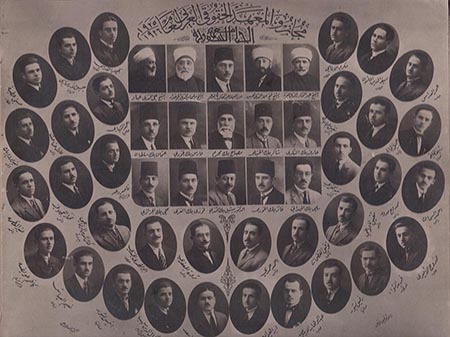
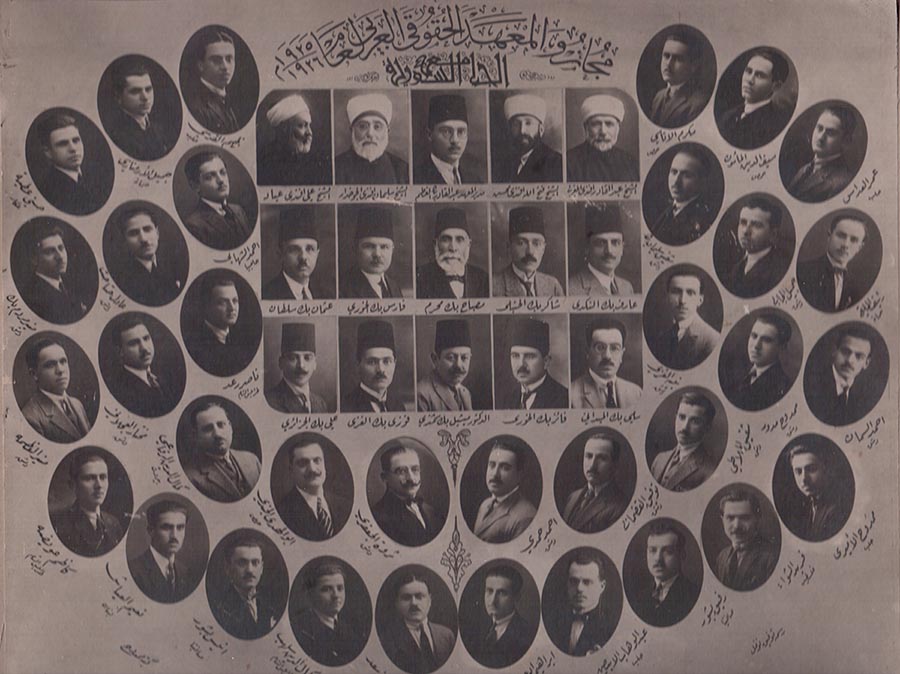
The graduating class surrounding their professors for the University of Syria’s Institute for Arabic Law in 1925-26; for a larger image, click here
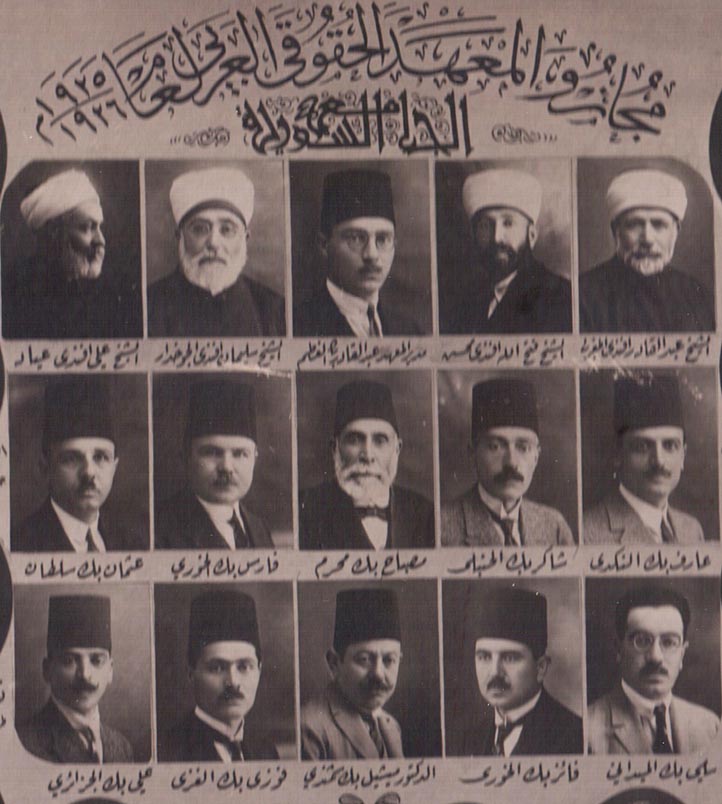
The image above shows the graduating class from the University of Syria’s Institute for Arabic Law in 1925-26. Among the professors is Fath Allah ‘Ali Adibe (top row, second from right), a graduate of al-Azhar and the grandfather of Dr. Najwa Adra. He is in the minority of professors sporting beards, although the moustache was clearly a necessity and only one of the scholars has a bare head and he is one of the few with spectacles. What is fascinating is the representation of the students, who are dressed entirely in Western suit and tie. About half have their moustache intact, with one showing a handlebar worthy of a Viennese gentleman. School graduation pictures like these are priceless. Would it not be a worthy project for someone or some school to archive these for the Middle East? Any takers out there?
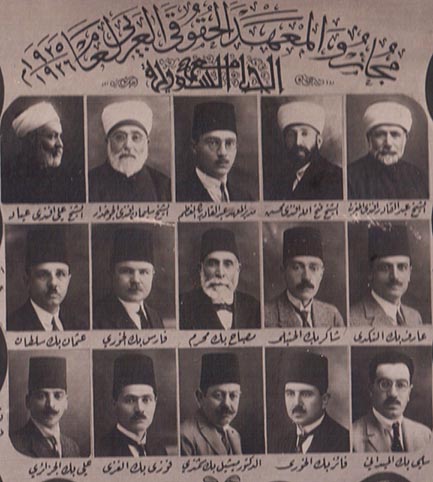
The professors for the University of Syria’s Institute for Arabic Law in 1925-26; for a larger image, click here