Lecture in New England


On Monday, October 24, 2011, I will be delivering a lecture entitled “What’s Happening in Yemen?” at the Portland campus of the University of New England in WCHP Lecture Hall at 6 pm. For more details click here.

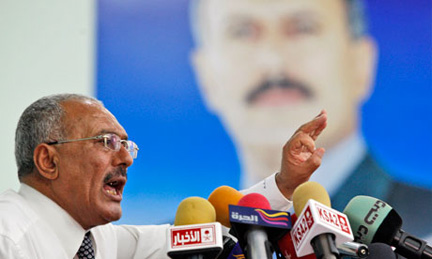
This talk will focus on the impact of the “Arab Spring” political protests that started in Yemen, located at the southwestern corner of the Arabian Peninsula, in February. These led to unrest that brought the country to the brink of civil war and economic collapse. Yemen has been ruled by a military leader, Ali Abdullah Salih, who came to power in 1978. In 1990, North and South Yemen were united, followed by a brief civil war in 1993. Before the recent protests there was a secessionist movement in Yemen’s south and an open tribal rebellion near the border with Saudi Arabia. In the past decade the United States has given millions of dollars in aid to President Salih to theoretically combat al-Qaida in Yemen. Questions addressed include the influence of conservative Saudi-backed salafism, the nature of Yemeni tribalism, the role of youth and students in protesting for their own future in a democratic Yemen, and the exaggerated fears about Yemen as a terrorist haven. President Salih once remarked that ruling Yemen was like dancing on the heads of snakes. Now that the snakes have bitten, what is next?

Sic gloria mundi transit


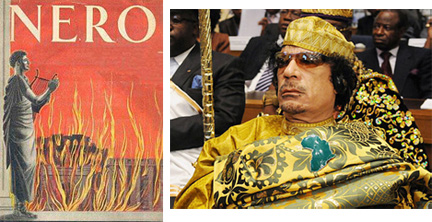
There is a phrase in Latin that seems to have been invented for the free fall of dictators in this year’s Arab Spring. Italian Prime Minister Berlusconi mentioned it when commenting on the death of Libya’s Qaddafi. Sic gloria mundi transit: the glory or fame in this world is fleeting. The man once styled the king of African kings is dead; long live an alternative to the agony and bloodshed that military coups and foreign meddling create. The killing of Qaddafi is a celebration for those who were brutalized during his regime of more than four decades and understandably so. But vengeance and reprisals need to be transit, in the Latin sense, as well. The focus of positive hate must be to change the system of corruption that allows any single person to have such absolute power. Countries do not need dictatorial “fathers” and citizens are not children to be ordered about or slaves to be disposed of at the whim of a self-styled master.

There is a deeper lesson in the Latin phrase, a poignant reminder that Rome had its Nero and Caligula. Every age and every place has its would-be masters, who have a tendency it seems to become delusional when there are no checks on their ability to control wealth and weaponry. The Abbasid caliph Mansur, for example, attempted to exterminate his main opposition of Shi’a who questioned the legitimacy of his caliphate. The story is told that after his death, his annointed heir and son al-Mahdi found a locked room in which there were carefully placed the mummified bodies of all the prominent Shi’a men that his father had killed, each with a name plate attached; all of this monstrous monument enmeshed in a trove of gems, precious jewelry and dinars. The gloria of the Roman Empire and of the Abbasid Empire (and the list goes on and on and will never end) is fleeting in hindsight, but not, of course, to those who fell victim to the brutalities or lived to mourn the atrocities.

All eyes are on Libya now to see what will come out of the ashes of a madman’s playground. Hail to the Libyan people but hell to the would-be caesars…

The Peace Push and Shove

As readers of Tabsir can easily see, I am no friend of dictators or military rulers masquerading as democratic demagogues. The fall of Ben Ali, Mubarak and Qaddafi is a welcome sign, even though it is not clear that the people will be able to achieve the kind of government most want. In Yemen the handwriting and a smatter of twittering is on the wall for Ali Abdullah Salih. He has held on to power far too long, allowing for an ugly power grab that could have been avoided if he had done the noble thing and stepped aside earlier, when given ample chance. But Salih is not Asad and Yemen is not Syria. The swell of the Arab Spring has somehow thrown all the dictators into one soup, one overly ladled with self-righteous indignation. Hatred for the man at the top is clouding the pragmatic need for effective political reform.

Yesterday the recent Nobel Peace Prize recipient, Tawakkul Karman, came to New York and demonstrated outside the U.N. It should be noted that her efforts in Yemen, as one among many individuals organizing the widespread protests, have not yet resulted in the exit of Salih or the emergence of a new viable government. Since she is now center stage as a symbol of peaceful protest, it is strange that she would leave Yemen and vow to stay in New York until Salih’s assets are frozen and he is put on trial in The Hague. Does she really think that this is a bargaining point? Receiving a peace prize is indeed a great honor, but it hardly makes someone into an effective powerbroker. The last thing Yemen needs at this time is for the United Nations or the United States to meddle into the political mess by dictating rather than working with the various Yemeni parties in negotiation. Karman is opposed to the GCC transition proposal because it grants immunity to Salih, but is it really so important to seek revenge on the man at the top when the entire governmental system has been corrupt and military men like Ali Muhsin have as much blood on their hands as the president? Continue reading The Peace Push and Shove

The fast and furious plot to occupy Iran


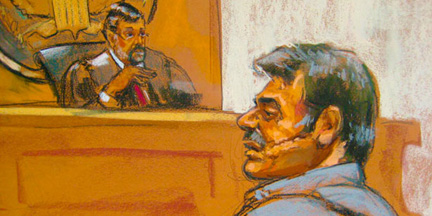
Manssor Arbabsiar is shown in this courtroom sketch during an appearance in a Manhattan courtroom in New York on October 11, 2011

by Pepe Escobar, Al Jazeera, October 12, 2011

No one ever lost money betting on the dull predictability of the US government. Just as Occupy Wall Street is firing imaginations all across the spectrum – piercing the noxious revolving door between government and casino capitalism – Washington brought us all down to earth, sensationally advertising an Iranian cum Mexican cartel terror plot straight out of The Fast and the Furious movie franchise. The potential victim: Adel al-Jubeir, the ambassador in the US of that lovely counter-revolutionary Mecca, Saudi Arabia.

FBI Director Robert Mueller insisted the Iran-masterminded terror plot “reads like the pages of a Hollywood script”. It does. And quite a sloppy script at that. Fast and Furious duo Paul Walker/Vin Diesel wouldn’t be caught dead near it.

The good guys in this Washington production are the FBI and the Drug Enforcement Agency (DEA). In the words of Attorney General Eric Holder, they uncovered “a deadly plot directed by factions of the Iranian government to assassinate a foreign Ambassador on US soil with explosives.”

Holder added that the bombing of the Saudi embassy in Washington was also part of the plan. Subsequent spinning amplified that to planned bombings of the Israeli embassy in Washington, as well as the Saudi and Israeli embassies in Buenos Aires. Continue reading The fast and furious plot to occupy Iran

Tabsir Redux: Earth-shaking cleavage

Violence, scandal and sex: the media feed us a daily diet and we lap it up like faithful mutts willing to chase any sensationalized bone thrown our way. So when an Iranian cleric says something ludicrous to our sectarian ears, it is all the more newsworthy because it is so entertaining. But after the recent loss of life in Haiti, Chile and China, is it really a laughing matter when a far-off cleric blames natural disasters on God’s wrath over human behavior? Consider an AP story which broke on April 19 and was submitted, ironically, by a reporter with the first name of Scheherezade (her namesake could spin a tale almost to death). Here is the bait:

Iranian cleric: Promiscuous women cause quakes

By SCHEHEREZADE FARAMARZI (AP) – Apr 19, 2010

BEIRUT — A senior Iranian cleric says women who wear revealing clothing and behave promiscuously are to blame for earthquakes.

Iran is one of the world’s most earthquake-prone countries, and the cleric’s unusual explanation for why the earth shakes follows a prediction by President Mahmoud Ahmadinejad that a quake is certain to hit Tehran and that many of its 12 million inhabitants should relocate.

“Many women who do not dress modestly … lead young men astray, corrupt their chastity and spread adultery in society, which (consequently) increases earthquakes,” Hojatoleslam Kazem Sedighi was quoted as saying by Iranian media. Continue reading Tabsir Redux: Earth-shaking cleavage

Which man will you buy a “Used” plot from?


The “very scary” Iranian Terror plot
by Glenn Greenwald, Salon.com, October 12, 2011

The most difficult challenge in writing about the Iranian Terror Plot unveiled yesterday is to take it seriously enough to analyze it. Iranian Muslims in the Quds Force sending marauding bands of Mexican drug cartel assassins onto sacred American soil to commit Terrorism — against Saudi Arabia and possibly Israel — is what Bill Kristol and John Bolton would feverishly dream up while dropping acid and madly cackling at the possibility that they could get someone to believe it. But since the U.S. Government rolled out its Most Serious Officials with Very Serious Faces to make these accusations, many people (therefore) do believe it; after all, U.S. government accusations = Truth. All Serious people know that. And in the ensuing reaction one finds virtually every dynamic typically shaping discussions of Terrorism and U.S. foreign policy.

To begin with, this episode continues the FBI’s record-setting undefeated streak of heroically saving us from the plots they enable. From all appearances, this is, at best, yet another spectacular “plot” hatched by some hapless loser with delusions of grandeur but without any means to put it into action except with the able assistance of the FBI, which yet again provided it through its own (paid, criminal) sources posing as Terrorist enablers. The Terrorist Mastermind at the center of the plot is a failed used car salesman in Texas with a history of pedestrian money problems. Dive under your bed. “For the entire operation, the government’s confidential sources were monitored and guided by federal law enforcement agents,” explained U.S. Attorney Preet Bharara, and “no explosives were actually ever placed anywhere and no one was actually ever in any danger.’”
Continue reading Which man will you buy a “Used” plot from?