خارطة طريق لحل مشكلة المياه والقات في اليمن


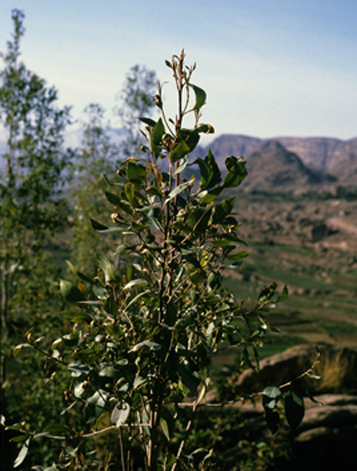
Qat tree in the highland valley of al-Ahjur; photograph by Daniel Martin Varisco

محمد فارع محمد الدبعي
بروفيسور الموارد المائية – جامعة صنعاء
الأحد, 25 نوفمبر, 2012

التفكير جدياً في استيراد القات من دول الجوار على مراحل حفاظاً على الإنسان في اليمن.

لماذا كل شيء يمكن استيراده في بلادنا (كل شيء) ما عدا القات؟؟

منع استخدام المبيدات في زراعة القات لما تشكله من أضرار على صحة المواطنين

توطين تكنولوجيا تحلية المياه في المناطق الساحلية باعتبارها الحل الذي لا بديل عنه لمجابهة الحاجة المتزايدة لهذا المورد على الدوام.

العمل على أن تكون عبوة قنينة الماء المعبأة نصف لتر فقط، حفاظاً على كثير من الماء المهدور.

استيراد القات الخالي من المبيدات أصبح ضرورة للحد من الاستنزاف الحاد للمياه الجوفية والعبث بالمواطن اليمني صحياً ومادياً

المشكلة في غاية الأهمية والخطورة بالنسبة لنا ولأجيالنا القادمة وعلى الجهات المسئولة إيجاد الحلول والمعالجات بدلاً من عقد المؤتمرات والندوات وورش العمل المغلقة التي تستهلك معونات وهبات المنظمات الدولية ويستفيد منها منظموها فقط وبدون مردود على الصعيد الوطني. إن ما يتم القيام به لحل مشكلة المياه والحد من التوسع في زراعة القات لا يلامس حل المشكلة ولا يعطي الاطمئنان لتنمية مستدامة تبشر بمستقبل واعد.

لليمن تاريخ طويل في إدارة الموارد المائية والحفاظ عليها. وما بناء سد مأرب التاريخي قبل ثلاثة ألف سنة، وصهاريج عدن التاريخية، وكذلك بناء السدود الصغيرة في المنحدرات الجبلية، إلا شاهداً على ذلك، لقد اختفى الكثير من هذه السدود الصغيرة وأصبحت في ذمة التاريخ، وما تبقى منها لا يعمل، لقد عملت هذه السدود على حفظ الماء من أجل الري الزراعي والشرب والاستخدامات المنزلية المختلفة، وساعدت في تغذية الخزان الجوفي.
Continue reading خارطة طريق لحل مشكلة المياه والقات في اليمن

Notes from Algeria and Turkey


Notes from Algeria and Turkey — Charting the Modern Face of Islamic Civilization and Democracy in a Global World

by Bruce Lawrence, Transcultural Islam Research Network, November 30, 2012

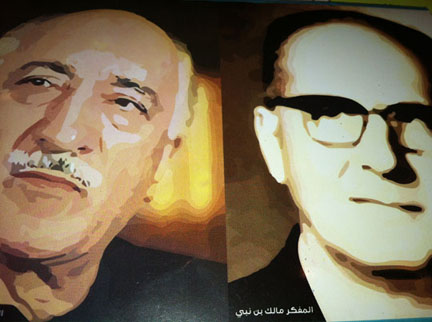
What can we learn from an aging Turkish Imam with a pan-Turkish cultural movement to his name and a deceased Algerian philosopher — both of whom command attention as devout Muslims and men of science — about civilizational rebuilding in the modern era?

Scholars gathered in Algiers from Nov 21-22 at the College of Islamic Sciences at the University of Algiers to find out.

“The Philosophy of Civilizational Rebuilding, according to Malek Bennabi and Fetullah Gülen: Guidelines for Creative Thinking & Effective Action” was the theme for the conference, and I was invited to give a paper on this weighty subject.

I had been teaching in Istanbul during Fall 2012. My assignment there had been to train graduate students, both Turkish and non-Turkish, in theories and methods that apply to civilizational studies.

I had also been traveling and giving lectures elsewhere in Turkey, including a memorable lecture to 400 students at Mustafa Kemal University in Antakya — where the topic was Islam and Global Civilization and included a survey of constitutionalism, citizenship and cosmopolitanism, along with numerous approaches to Islamic civilization in the crowded marquee of world civilizations that claim to be both global and universal.

Just who were Fethullah Gülen and Malek Bennabi? Why was their thinking paired to address the topic of civilizational rebuilding, and how would their views advance an initiative that spanned centuries and engaged some of the best minds, from Ibn Khaldun in late 14th century North Africa to Arnold Toynbee in mid-20th century Britain? Continue reading Notes from Algeria and Turkey

The Soccer Stadium that was


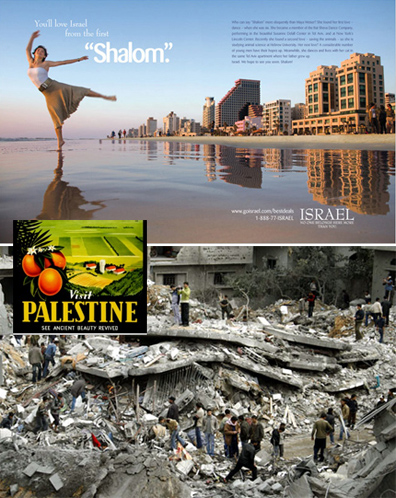
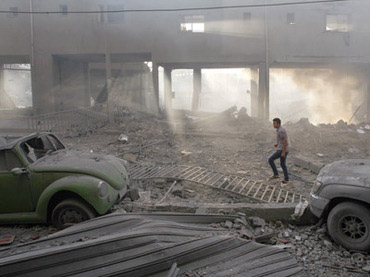
Gaza’s war-damaged Palestine Stadium

Israeli measures fuel international anti-Israeli soccer protests

By James M. Dorsey

A series of Israeli measures against Palestinian soccer culminating in an attack on a stadium in Gaza during last month’s confrontation with Hamas, the Islamist Palestinian group that controls the heavily populated strip along the Mediterranean, has fueled growing international soccer opposition to the Jewish state’s policies.

In the latest expression of discomfort, 62 professional players have called for depriving Israel of the right to host European soccer body UEFA’s 2013 Under-21 championship. Israel has already employed the championship to counter the image of being an area dominated by war and conflict that was reinforced by last month’s hostilities with Hamas that killed more than 150 Palestinians and five Israelis.

“In June we have the Under-21 here in Israel. I hope that everything will be quiet until then and we can show the different sides of Israel,” said Maccabi Tel Aviv defender Omer Vered in a BBC interview.

The statement by the players follows protests earlier this year by world soccer body FIFA, UEFA and players’ group FIFPro against Israel’s handling of a hunger strike of an imprisoned Palestinian player, Mahmoud Sarsak, accused of being a member of militant group Islamic Jihad, and the arrest of two other players suspected in involvement in violent anti-Israeli actions. Continue reading The Soccer Stadium that was

No Olive Branch in Gaza


by Daniel Martin Varisco
[Originally posted on Anthropology News.]

Civil unrest continues to grip the Middle East. Adding to the battle to remove Syria’s Russian-backed Assad and the political infighting following the ousting of dictators in Tunisia, Libya, Egypt and Yemen is a recent flare up in Gaza, leaving more than 160 Palestinians dead before a fragile ceasefire took hold just before Thanksgiving Day.

Politics can often mirror geography, especially in a land considered holy by three major religions. The lowest geographical point on earth is the Dead Sea, a critical juncture point of Israel, the Palestinian Authority and Jordan. But not far away sandwiched between Israel and Egypt is the narrow strip of Gaza, which is perhaps the lowest moral point in the current political strategy of the Israeli government and its vaunted IDF.

To say that the Gaza Strip is over populated and under resourced is an understatement. An estimated 1.7 million Palestinians live in a beleaguered area of 141 square miles, isolated and walled off like a Bantustan oasis. Before the 1948 creation of the state of Israel, this was a sparsely populated area with few resources to attract settlement, but some 200,000 Palestinians fled here at the time. Formal occupation of Israel, following the 1967 6-day war, officially ended in the mid-90s with the Oslo Accords. But there has been no peace in Gaza, whether under the control of the PLO or Hamas.

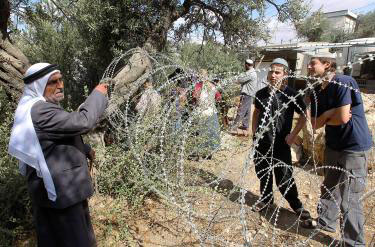
Pundits flood the airwaves with condemnation of Hamas, as though calling it a terrorist organization means open season on any Palestinian living in Gaza. So why does Hamas not sue for peace, given the obvious fact that a slew of puny missiles lobbed at Israel only brings more retaliation? A potent symbol of peace in the “Holy Land” is the olive branch. Students still read about this peace symbol in Virgil’s first century BCE Aeneid, so the need for such a symbol has certainly been around along the shores of the Mediterranean for a long time. Defenders of Israel’s continuing bombing strikes and assassinations in Gaza argue that Israel has a right to defend itself because Hamas is out to somehow destroy Israel. Hence Israel’s expensive prophylactic “Iron Dome” symbolically trumps an olive branch on the cable news. But it is hard to expect Palestinians to wave olive branches when there are so few olive trees left standing in Gaza. The recent “Pillar of Cloud” military campaign that rained down on Gaza occurred during the height of the olive harvest and processing season.

For the rest of this post, click here.

That settles it


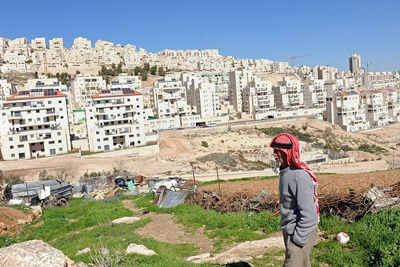
A Palestinian man walks on his property overlooking the Israeli settlement Har Homa in the Israeli-occupied West Bank; photograph from the Christian Science Monitor

Lob missiles in the direction of Tel Aviv, drop a bomb on a Hamas official, strap on a vest and blow up an Israeli bus, tear down Palestinian houses and build a wall, teach your children to hate the oppressor and get a symbolic upgrade in the UN: how can this seemingly intractable dilemma of “World of Warcraft: Land of Abraham” Israel vs. Palestine scenario ever get settled. One unilateral way is to settle it with yet more settlements. As The New York Times notes in today’s edition, the current Israeli government has their own kind of settlement in mind:

A day after the United Nations General Assembly voted overwhelmingly to upgrade the status of the Palestinians, a senior Israeli official said the government would pursue “preliminary zoning and planning preparations” for a development that would separate the West Bank cities of Ramallah and Bethlehem from Jerusalem. If such a project were to go beyond blueprints, it could prevent the creation of a viable, contiguous Palestinian state.

The development, in an open, mostly empty area known as E1, would connect the large settlement town of Maale Adumim to Jerusalem. Israeli officials also authorized construction of 3,000 housing units in parts of East Jerusalem and the West Bank.

The Obama administration, which backs virtually everything Israel does, is barking about how this is unhelpful, stopping short of the political bite that could be called condemnation. But some American diplomats see the danger in this mood: “This is not just another few houses in Jerusalem or another hilltop in the West Bank,” said Daniel C. Kurtzer, a former American ambassador to Israel and Egypt. “This is one of the most sensitive areas of territory, and I would hope the United States will lay down the law.”


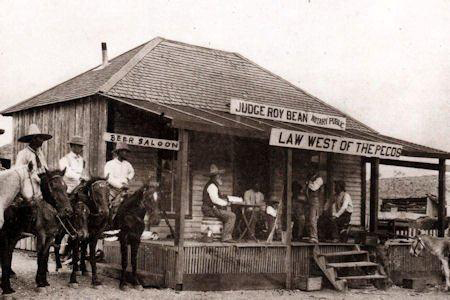
That law has about as much chance of being laid down in the current political climate as the law west of Pecos in America’s own landgrab days. Continue reading That settles it

Being Normal and being Car Bombed


Poster in Tripoli, Lebanon; photography by Estella Carpi

Unearthing a misconceived “normalization” of violence in Beirut. The October car bomb in relation to generalized insecurity.

The 19th October 2012 car bomb in Beirut’s Ashrafiyye, within the Eastern district of the Lebanese capital, shed light on the re-articulation of the relations between the State, allegedly “inexistent” in the Lebanese context, and its society that lives in the constant effort to subjectively reformulate their citizenship, in the lack of a commonly shared nationhood.

New outbursts of violence seem to give a reason to the state to promote its technology of control, as Michel Foucault would put it. This complex re-articulation of relations has come to the fore with the October 26 White March from Martyrs Square (Beirut Downtown) to Sassine Square (Ashrafiyye, where the explosion was one week before). The “White March”, in which no political flag but the national Lebanese was waved, wanted to be considered as an act of social refusal of further violence and national solidarity, in addition to their political contestation of both the 14 and 8 March coalitions, which have politically and socially polarized the country into two sections after Hariri’s murder in February 2005. The White March mainly had the implicit aim of contesting the taken for granted watershed between what is “normal” and what is not in Lebanese parameters.

Social fear, as well as the perception of risk in Beirut, has specific historical explanations. Lebanese society seems to be doomed to live in a not-war-not-peace state, as Jeffrey Sluka used to define Northern Ireland during the clashes between Protestants and Catholics. Such an unstable state has engendered a social attitude towards violence that has been named by political scientists and journalists as “normalization”, which, in light of the Lebanese reaction to the last explosion, begs for a re-conceptualization. Continue reading Being Normal and being Car Bombed