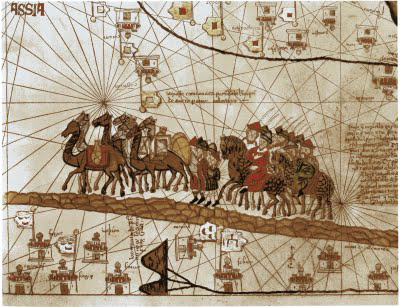
Travels of Sir John Mandaville, 2


Silk Road

[One of the most widely read Holy Land travel narratives of the 14th century was attributed to a certain Sir John Mandaville. Some scholars believed it was compiled from writings of It appears to have been compiled from the writings of William of Boldensele, Oderic of Pordenone, and Vincent de Beauvais. Whoever the author, it is a fascinating read for the positive depiction of Islam. But part of the praise is to heap shame on the Christians for not keeping faith as well as these Saracens. Martin Luther used the same tactic, even accusing the Catholic Church of being worse in keeping faith than the Turks of his day. The entire book is online, but here is the part comparing Muslim and Christian devotion. For part one, click here.]

And, therefore, I shall tell you what the soldan told me upon a day in his chamber. He let void out of his chamber all manner of men, lords and others, for he would speak with me in counsel. And there he asked me how the Christian men governed them in our country. And I said him, “Right well, thanked be God!”

And he said me, “Truly nay! For ye Christian men reck right nought, how untruly to serve God! Ye should give ensample to the lewd people for to do well, and ye give them ensample to do evil. For the commons, upon festival days, when they should go to church to serve God, then go they to taverns, and be there in gluttony all the day and all night, and eat and drink as beasts that have no reason, and wit not when they have enough. And also the Christian men enforce themselves in all manners that they may, for to fight and for to deceive that one that other. And therewithal they be so proud, that they know not how to be clothed; now long, now short, now strait, now large, now sworded, now daggered, and in all manner guises. They should be simple, meek and true, and full of alms-deeds, as Jesu was, in whom they trow; but they be all the contrary, and ever inclined to the evil, and to do evil. And they be so covetous, that, for a little silver, they sell their daughters, their sisters and their own wives to put them to lechery. And one withdraweth the wife of another, and none of them holdeth faith to another; but they defoul their law that Jesu Christ betook them to keep for their salvation. And thus, for their sins, have they lost all this land that we hold. For, for their sins, their God hath taken them into our hands, not only by strength of ourself, but for their sins. For we know well, in very sooth, that when ye serve God, God will help you; and when he is with you, no man may be against you. And that know we well by our prophecies, that Christian men shall win again this land out of our hands, when they serve God more devoutly; but as long as they be of foul and of unclean living (as they be now) we have no dread of them in no kind, for their God will not help them in no wise.” Continue reading Travels of Sir John Mandaville, 2 →
Travels of Sir John Mandaville, 1


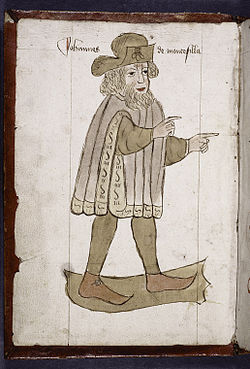
portrait of Sir John Mandeville, from 1459


[One of the most widely read Holy Land travel narratives of the 14th century was attributed to a certain Sir John Mandeville. Some scholars believed it was compiled from writings of It appears to have been compiled from the writings of William of Boldensele, Oderic of Pordenone, and Vincent de Beauvais. Whoever the author, it is a fascinating read for the positive depiction of Islam. The entire book is online, but here is the part on Islam.]

NOW, because that I have spoken of Saracens and of their country — now, if ye will know a part of their law and of their belief, I shall tell you after that their book that is clept ALKARON telleth. And some men clepe that book MESHAF. And some men clepe it HARME, after the diverse languages of the country. The which book Mohammet took them. In the which book, among other things, is written, as I have often-time seen and read, that the good shall go to paradise, and the evil to hell; and that believe all Saracens. And if a man ask them what paradise they mean, they say, to paradise that is a place of delights where men shall find all manner of fruits in all seasons, and rivers running of milk and honey, and of wine and of sweet water; and that they shall have fair houses and noble, every man after his desert, made of precious stones and of gold and of silver; and that every man shall have four score wives all maidens, and he shall have ado every day with them, and yet he shall find them always maidens. Continue reading Travels of Sir John Mandaville, 1 →

7000 Manuscripts in Zabid


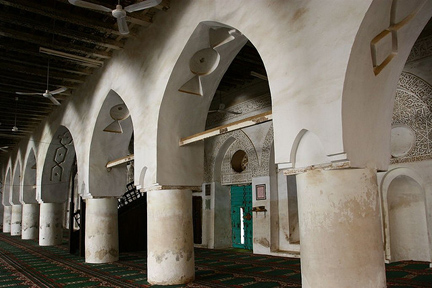
Zabid mosque interior; Photograph by Eric Lafforgue

مدير مرگز المخطوطات في زبيلـ

هناك سبعة آلاف مخطوطة في زبيد!

الجمعة 25 يناير-كانون الثاني 2013 الساعة 01 صباحاً / الجمهورية نت – توفيق حسن أغا

لم يتبق لمدينة زبيد التاريخية إلا أربعة أشهر من المهلة التي منحت لها من قبل لجنة التراث العالمي التابعة لمنظمة الثقافة والعلوم (اليونسكو) إما أن تطمس أو تكون في قائمة التراث العالمي؛ ومنذ عام 2007 وزبيد بين مد وجزر وكلما تنفست الصعداء وجدت أحدا ينغصها ويباعدها عن بلوغ بوابة التراث العالمي، كلما اقتربت من البقاء في هذه القائمة التي كتبت فيها زبيد عبارة دون بقاء منذ عام 1993م ، ومن هذا التنفس وجدت هذه المدينة عام 2007 من مبنى دار الضيافة رفاً وجدته حينها هو المكان المناسب لحفظ ما تمتلكه من مخطوطات، ولكن عندما وجدت ضالتها في هذا المكان وجدت من يطمع بأخذ هذه الدار من يدها ليهدم ما بنته “ زبيد” في ساعة زمن

الجمهورية كانت في اليومين الماضيين في أروقة دار الضيافة سابقا ومركز المخطوطات حالياً، وبعد أن رأت العجب العجاب حول ما يدور حول هذا المبنى والذي إذا قدر الله وتحول إلى مكتب أوسكن أو لمصلحة أخرى عما هو عليه كمركز مخطوطات ستكون واقعة أخرى لن تتحملها مدينة زبيد التاريخية، ولمزيد من التفاصيل التقت (الجمهورية) الأستاذ عرفات الحضرمي ـ مدير مركز المخطوطات في مديرية زبيد وأجرت مع الحوار التالي..
من يكسب..؟!

بداية كيف تحدثنا عن هذه الخلفية التي تم فيها التزامن في اختيار دار الضيافة وتحويله كمركز للمخطوطات؟
Continue reading 7000 Manuscripts in Zabid →

The high social price of humanitarian dissimulation


By Estella Carpi

A few months ago, while conducting my PhD fieldwork in North Lebanon, I shared my ideas on the current humanitarian assistance to Syrian refugees with a journalist working in Lebanon. I reported that I was told by some Lebanese from Halba that their neighbors threw stones at humanitarian workers during the food kits’ distribution for Syrian refugees in a little town in ‘Akkar (North Lebanon). Apparently it was just an outburst of tension because of the sudden massive presence of humanitarian organizations in loco. In the past they have always neglected this area in Lebanon due to lack of political interests, since the Israeli occupation and the consequent local impoverishment were primarily vexing the south of the country (1978-2000).

The humanitarian agency that the journalist was working for at that time first decided to omit such information before publishing the article. After that, in order not to be accused of censorship, with a cringe-worthy diplomatic move, they published it by elegantly modifying the content of the stones episode, and contending that local people in North Lebanon would definitely warm up if aid were provided to them too. This is a human dynamic that, unfortunately, I had never got the insight of in the field. The humanitarian agency at issue declared that this “information amendment” was carried out in a bid not to generate further frictions between the Lebanese and the Syrian communities. My “Wikileaks philosophy” pushes me instead to broach out the subject overtly and try to analyze it. Continue reading The high social price of humanitarian dissimulation →

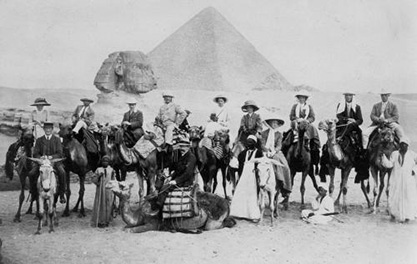
A Viennese Tour to Egypt in 1912


While in Vienna last week for a conference, I was able to visit the Museum für Völkerkunde and see several of the current exhibits there. One of these is entitled “Urania reist nach Ägypten:
Wiener Volksbildung und der Orient um 1900”
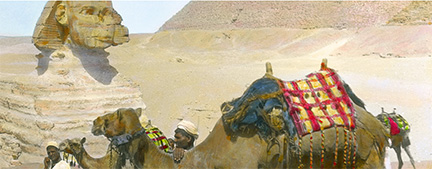
and presents an Austrian field trip to the Pyramids and Egypt in April, 1912. This was led by the President of the Urania institute, opened by the emperor Franz Joseph I in 1910. About 70 individuals went on the trip. some from the Hapsburg family. The exhibition includes a number of vintage photographs and touristic items like postcards and souvenirs, as well as the type of clothing the Viennese would have worn while touring Egypt.


1912 tour to Giza organized by Thomas Cook

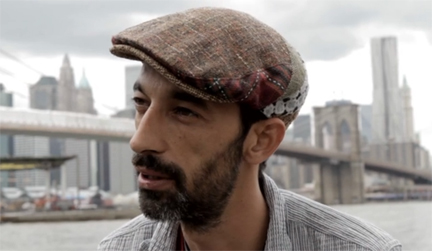
Karim Ben Khelifa: “The World is Changing, Change With It”


Karim Ben Khelifa

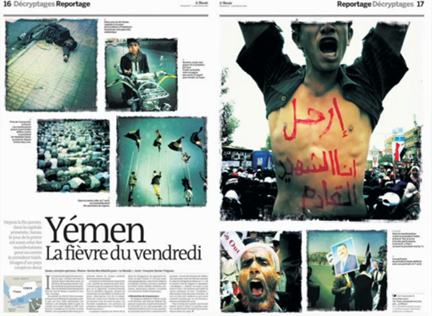
Photojournalist Karim Ben Khelifa is interviewed about his work in war zones with a collage of his photographs on Vimeo. This is a short video; check it out for an excellent insight into the art of photojournalism in the Arab Spring and other conflict contexts. For his website of older galleries, click here. For his Twitter account, click here. Karim has also found a new online photojournalism site called Emphasis.is.


Karim’s work in Le Monde

Continue reading Karim Ben Khelifa: “The World is Changing, Change With It” →

Letters to My Son, #3


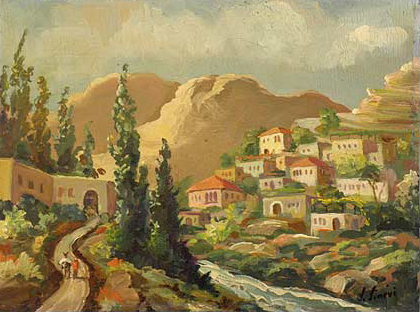
Lebanese village by Saadi Sinevi

by George Nicolas El-Hage, Ph.D.This is part three of a series from my book: The Return of the Hero and the Resurrection of the City, originally written in Arabic and translated by George N. El-Hage and edited by MaryAnn Del Vecchio, Ph.D. For part one, click here. For part two click here.September 1988Monterey, CAThird LetterI plant you in my eyes, a song of virgin longing, and I draw your smile over my sails bound towards the future.I am longing for return, and you are my hope and the eternal truth.Your two hands, my little one, are the cradle of love, and I am but a Sufi drowning in the deluge of meditation.I wear the gown of pain, and my feet are rooted in the glowing clay of creativity.May peace be upon you the day you were born and the day you embraced me and I felt that I held a bouquet of innocence and embraced a flaming sword.Glory be to your miraculous childhood.You are the lamb of peace, the joy of life, the tear of yearning and the hope of resurrection.My letters to you are but the embers of my burning thoughts, for you are the flame of prophecy and the wings of inspiration.You carry me to the world of the unknown and plant me in the fields of lilies and poems.You throw me on the sidewalks of the past and desert me on the shores of faraway islands.There, I metamorphose and transform into tropical plants, exploding with pleasure and burdened with forbidden fruits.I take off the tied gown of civilization and become naught but the flame of truth.I become one with the elements and melt like dew in the eyes of bereaving mothers. Continue reading Letters to My Son, #3 →