Corruption Charges Hit Indonesia’s Biggest Islamic Party

by Kevin W. Fogg

Late last month, the head of Indonesia’s most prominent Islamic political party, the Prosperous Justice Party or PKS (Partai Keadilan Sejahtera), was arrested in connection to a corruption scandal over importation licenses. His arrest made it the first time that the chairperson of any party has been arrested for corruption, even though the chairmen of some secular parties have also been getting some heat. The arrest of Luthfi Hasan Ishaaq elicited shock from across the Indonesian political spectrum, and even accusations by PKS members of a vast Zionist conspiracy to bring down the Islamic party, among other allegations of selective investigation of corruption.

Why is the arrest of Luthfi of the PKS more than your average corruption scandal? Well, it has plenty of juicy elements, like how Luthfi’s aide was arrested completely unclothed while in the company of a 19-year-old young college woman, who is not one of his alleged five wives but was also completely unclothed.

More seriously, though, the case is important is it gives the Corruption Eradication Commission a reason to investigate PKS more broadly, which could turn up more corruption. Many people are speculating that the PKS-aligned Minister of Agriculture (whose ministry oversees the import licenses) could go down over this scandal – the second time a minister would fall because of corruption in the last few months. Continue reading Corruption Charges Hit Indonesia’s Biggest Islamic Party

Islam: The Chinese Connection


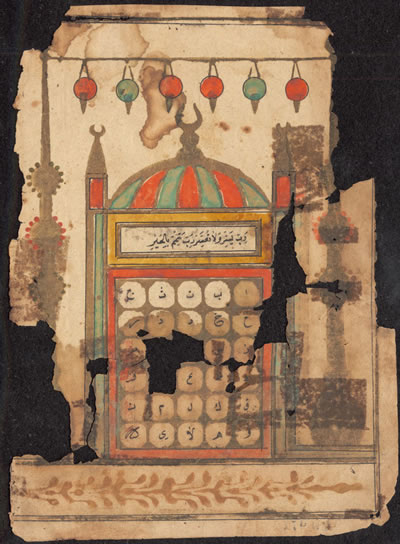
Arabic Paper #0972, University of Utah- J. Willard Marriott Library

by Anouar Majid, Tingis Redux, January 31st, 2013

After reading Jonathan Bloom’s splendid book Paper Before Print: The History and Impact of Paper in the Islamic World, published more than decade ago, I now think that there is a close relationship between Islam as we know it and the discovery of paper by Arabs in the 8th century. I also understand why natives of Tangier in Morocco call paper “kaghit.” Since it was the Chinese who invented paper some 2000 years ago, the Muslims who conquered Central Asia in the 8th century used that term, which was borrowed from the Persian kaghaz, itself originating from the Chinese guzhi.

The Muslims adopted paper with gusto and the technology of papermaking soon spread in Iraq, Syria, Egypt, North Africa and Spain. Europeans learned papermaking from the Moors who established the first paper mills in Spain. Paper eventually facilitated the printing process that was started by Johann Gutenberg in 15th-century Germany.

According to Muslim sources, the first Muslim paper mill was established in 8th century Baghdad either by the Abbasid caliph al-Mansur or by Harun al-Rashid. Regardless of who claims the honor, the use of paper soon led to the establishment of a Stationers’ Market (Souk al-Warraqeen). By the 12th century, according to one account, the Moroccan city of Fez had some 472 paper mills. No wonder papermaking has been associated with Arabs and Arabic. When one talks about “reams” of paper, one is using an Arabic term—rizma, which means bundle—via the Spanish resma and Old French rayme.

The discovery of paper by Arabs led to a major revolution in human civilization. Until then, most documents outside Asia were written on parchments (dried animal skins) or papyrus rolls—both laborious and expensive processes. Paper was easier to use. The Abbasids lost no time in making use of it to enhance their standing among world civilizations. They established a House of Wisdom (bayt al-hikma), commissioned the translations of foreign works in Greek, Hindu and Persian, wrote down the Hadith and codified Islamic law from what had been a mostly oral tradition. Libraries grew and played a major role in the dissemination of knowledge. The Shiite dynasty of the Fatimids in Egypt had an annual budget for library collections and activities. Continue reading Islam: The Chinese Connection

USAID in Yemen


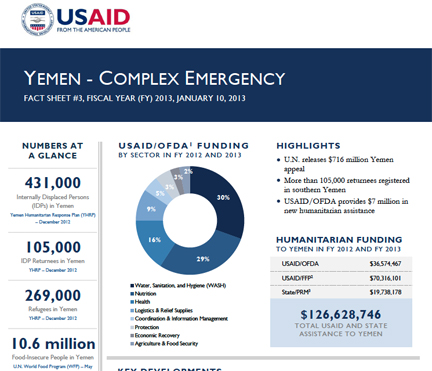
The drones capture the headlines when Yemen makes the news. The development arm of the U.S. State Department, USAID, also works in Yemen, although its activities have been greatly curtailed since the old days when I worked as a consultant on a number of USAID projects, starting in 1982 on the Agricultural Sector Assessment of Yemen of that year. For information on USAID’s current programs in Yemen, check out the relevant website. USAID provides a recent (January) fact sheet on the development situation in Yemen.


Rebellion in the Ottoman Empire


Last year I had the privilege of serving on the Albert Hourani Book Award Committee for the Middle East Studies Association. There were a number of excellent books submitted, but in the final analysis it was unanimous for a remarkable historical study by Sam White entitled The Climate of Rebellion in the Early Modern Ottoman Empire (Cambridge: Cambridge University Press, 2011), parts of which are available on Google Books. For an interview about the book, click here.

Below is the statement released by the committee:

Our committee reviewed over eighty books for this year’s Albert Hourani Book Award. Manycommittee members commented on the large number of high quality works from the incredibly rich and diverse body of nominations. Finally settling, unanimously, on a single work of superior scholarship could not have been achieved without the conscientious, diligent and professional attention my four fellow committee members gave to their colossal task: Michael Bishku of Augusta State University, Terri DeYoung of the University of Washington, Devin DeWeese of Indiana University, and Daniel Martin Varisco of Hofstra University.
The committee has chosen Sam White’s masterful work, The Climate of Rebellion in the Early Modern Ottoman Empire, published in 2011 by Cambridge University Press as the 2012 recipient of the Albert Hourani Book Award. Sam White is an assistant professor of history at Oberlin College. Continue reading Rebellion in the Ottoman Empire

Amat Al Alim Alsoswa on the Yemeni National Dialogue


ROUNDTABLE DISCUSSION;
YEMENI COMPREHENSIVE NATIONAL DIALOGUE: CHALLENGES AND PROSPECTS

The International Peace Institute (IPI) is pleased to host a roundtable discussion on the Yemeni Dialogue with Ms. Amat Al Alim Alsoswa, former Assistant Secretary-General, Assistant Administrator and Director of the Regional Bureau for Arab States, United Nations Development Program on Wednesday, February 13, 2013, from 1:00pm–2:45pm at IPI’s Trygve Lie Center for Peace, Security & Development on the 12th floor, located at 777 United Nations Plaza.

Yemen’s transition began on November 23, 2011, when an agreement was brokered by the Gulf Cooperation Council (GCC) creating a two-year transitional government led by President (and former Vice-President) Abdu Rabu Mansour Hadi. The agreement mandates holding a National Dialogue to decide the formation of the new movement and address other pressing national issues. According to the GCC agreement, the National Dialogue conference must include “all forces and political actors, including youth, the Southern Movement, the Houthis, other political parties, civil society representatives and women.” Continue reading Amat Al Alim Alsoswa on the Yemeni National Dialogue

Those Priceless Sumerians


One of my favorite books of all time is Samuel Noah Kramer’s History Begins at Sumer. In my youth I was fascinated with the Sumerians. I have a paperback copy of C. Leonard Wooley’s The Sumerians, published by Norton in 1965 and also his Excavations at Ur, an Apollo Edition also from 1965. The first Woolley book set me back $1.75 back then and the second was a whopping $1.95. All three cost me less than a five-dollar bill. A few days ago I received an email from Routledge announcing a new book called The Sumerian World spread out in some 688 pages. Pagewise this is about the same as all three of the books mentioned above. It looks like a fine book and I only wish I was a millionaire so I could afford it. The price for this new tome is $220 for the hardback (the e-book is not yet announced).

I do understand the nature of inflation, but going from $5 to $220 in a little less than five decades strikes me as over the top for printed books. If I asked my librarian to order this book, I suspect the laughter would continue for at least several minutes. I am not sure how many millionaires out there have a profound interest in the Sumerians, but surely the price is no object for any of them. But somewhere there may be a 14-year old kid, like me in 1965, with a developing interest in the Sumerians or some other ancient people. I suspect he or she will have to stick with Kramer and Woolley and that is a shame. Brilliant and useful as those books are, we do know more about the Sumerians now than when these books were written (which was before 1965 in fact). But here is some good news: Wooley’s original 1929 Ur of the Chaldees is available free online at archive.org, as is a copy online of Kramer’s book.

But let’s allow Sir Woolley the last word, indeed the last words of his The Sumerians:

The military conquests of the Sumerians, the art and crafts which they raised to so high a level, their social organization, and their conceptions of morality, even of religion, are not an isolated phenomenon, an archaeological curiosity; it is as part of our own substance that they claim our study, and in so far as they win our admiration we praise our spiritual forebears.