An American Tabari, #2

In a previous post I introduced the universal history of John Clark Ridpath. In a section on the origins of Islam Ridpath includes several illustrations. The Orientalist trope of depicting the Prophet Muhammad, as seen in the image above, is interesting because it is a very Ottoman style of dress. The style looks like an Italian version of the Ottoman Sultan Mehmed the conqueror. Just as devout Protestant missionaries and preachers saw the Bedouin of 19th century Palestine as the exact image of the patriarchs, so it was no stretch of the Orientalist imagination (although it was indeed quite a stretch) to present Muhammad in Ottoman style.


http://en.wikipedia.org/wiki/File:Gentile_Bellini_003.jpg

For those curious about the illustration in the earlier post, this is said to be a scene of the tombs in Cairo.

to be continued

Free Reads from U. California Press


Brinkley Messick’s 1992 book on Yemeni legal reasoning, one of the many books available to read online at the U. of California Press website

The University of California Press is offering online viewers the opportunity to read online 770 of the books it published between 1982 and 2004.

Some 36 selections on the Middle East published between 1982-2004 are available to read online by clicking here.

On Dar al-Kutub in Cairo

A review of the manuscript collections viewable at the Bab al-Khalq branch of Dar al-Kutub wa-al-Wathaʾiq al-Qawmiyya (Egyptian National Library and Archives), Cairo, Egypt.

by Noah Gardner, Dissertation Reviews, January 6, 2014

Bab al-Khalq Square, Cairo, Egypt
Tel: +20 2393-8656; 2391-7843; 2391-7825
Fax: +20 2393-8759
www.darelkotob.gov.eg (functions sporadically)

Bab al-Khalq Reading Room hours:
Sunday – Thursday, 9 am to 4:45 pm
Closed Fridays, Saturdays, and national holidays.

The Egyptian National Library and Archives in Cairo makes available extensive holdings of printed books, serials, coins, papyri, documents, and other collections of interest to researchers; however, in this review I solely address working with its large and important collection of Islamicate manuscripts, much of which is accessible in microform at the library’s Bab al-Khalq branch. After giving a brief history of the library and its manuscript holdings, I discuss preparing to visit the library, reaching it once in Cairo, working with the printed catalogs and on-site electronic catalog, and viewing and obtaining copies of microfilms. As an appendix I include a list of the numerous printed catalogs dedicated to the collection, along with some tips for working with them. While some of my observations regarding the library’s systems are critical, I hope it will be understood that they come from the perspective of an avid user and admirer of the library, and are in no way intended to detract from the efforts of the highly dedicated staff, or to discourage would-be researchers.

History of the library and an overview of its manuscript holdings

The library was founded in 1870, during the reign of the Khedive Ismaʿil Pasha. It originally was located in Darb al-Gamamiz, at which time it was called al-Kutubkhana al-Khidiwiyya (the Khedival Library). In 1904 it was moved to the purpose-built, monumental Neo-Mamluk-style building at Bab al-Khalq Square—on Port Said Street at the intersection of Ahmed Maher and Muhammad Ali Streets—which it shares with the Museum of Islamic Art. In the 1970s much of the library was relocated to a new building on the Nile Corniche. While the majority of the actual manuscripts are still stored at the Corniche Branch, the Bab al-Khalq building has been renovated in recent years, and now houses greatly improved conservation and storage facilities, a microfilm reading room, and a state-of-the-art exhibition area for select manuscripts. The library currently holds approximately 57,000 codices; the vast majority of these are in Arabic, though roughly 1,000 are in Persian and over 2,100 are in Ottoman Turkish. Since its founding the library has absorbed a number of smaller Cairene libraries and important private collections of manuscripts, such as those of Ahmed Pasha Taymur, Halim Pasha, Khalil Agha, and others, and the names of many of these collectors still serve as shelfmark headings. It is one of the largest and most important collections of Islamicate manuscripts in the world, and includes numerous manuscripts from the first four centuries anno hegirae, including what are claimed to be some of the earliest surviving Qurʾan manuscripts, as well as many thousands of later medieval and early modern codices on the full range of subjects common to premodern Islamicate learning and culture. Much, though not all, of the collection has been filmed and is available in microform. Those seeking a more complete history of the library and the manuscript holdings should consult Dr. Ayman Fuʿad Sayyid’s excellent Dar al-Kutub al-Miṣriyya : Tārīkhuhā wa-taṭawwuruhā (Cairo: Maktabat al-Dār al-ʻArabiyya li-al-Kitāb, 1996). Continue reading On Dar al-Kutub in Cairo

An American Tabari, #1

There was a time when it was possible to write universal histories. In geological time scale the writing of history is a mere second in the millions of years life has been evolving on this planet. In the ancient Near East empires were being formed as fodder for later historians. The classical age saw an expansion of Greeks and Romans far afield from Europe. Muslim historians chronicled life from Adam to the caliphs who patronized their work. Medieval European histories had no space for the Americas, which would not be discovered until the end of the 15th century. By the end of the 19th century there were still valiant attempts to condense world history into a series of tomes. One of the last multi-volumed histories of the world was by an American, John Clark Ridpath, whose universal history stretched to 16 volumes and whose biographical dictionary reached 25. Ridpath seems an unlikely candidate for such a task. He was born in 1840 in rural Indiana and educated in “frontier” schools not long after Abe Lincoln’s experience in the same pedagogical setting. His career trajectory led to college, teaching and eventually an administrator at the beginning of De Pauw University. He was a prolific writer, digesting history and literature for the public and his books sold well.


John Clark Ridpath

Continue reading An American Tabari, #1

The Canonization of Islamic Law

Ahmed El Shamsy, The Canonization of Islamic Law: A Social and Intellectual History
Cambridge University Press, 2013

by SherAli Tareen, New Books in Islamic Studies, January 10, 2014

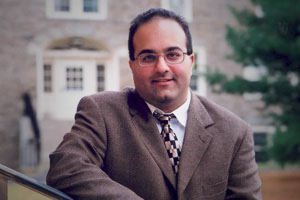
In his brilliant new book, The Canonization of Islamic Law: A Social and Intellectual History (Cambridge UP, 2013), Ahmed El Shamsy, Assistant Professor of Islamic Studies at the University of Chicago, explores the question of how the discursive tradition of Islamic law was canonized during the eighth and ninth centuries CE. While focusing on the religious thought of the towering Muslim jurist Muhammad b. Idris al-Shafi‘i (d. 820) and the intellectual and social milieu in which he wrote, El Shamsy presents a fascinating narrative of the transformation of the Muslim legal tradition in early Islam. He convincingly argues that through al-Shafi‘i’s intervention, a previously mimetic model of Islamic law inseparable from communal practice made way for a more systematic hermeneutical enterprise enshrined in a clearly defined scriptural canon. Through a rich and multilayered analysis, El Shamsy shiningly demonstrates how and why this process of canonization came about. Written in a remarkably lucid fashion, this groundbreaking study will delight and benefit specialists and non-specialists alike. In our conversation, we talked about the shift from oral to written culture in early Islam, the contrast between the normative projects of Malik and al-Shafi‘i, al-Shafi‘i’s theory of language, the social and political reasons for the success of his legal theory, and the transmission of al-Shafi‘i’s thought by his students.

For an interview with the author, click here and scroll down.