Remembering 1920 in Iraq


An Iraqi looks at a statue during his visit to the Najaf Heritage and 1920 Revolution Museum in the Khan al-Shilan building on February 27, 2014 in the holy city of Najaf, central Iraq © Haidar Hamdani – AFP

Iraq commemorates 1920 revolt against Britain in new museum

Your Middle East, February 27, 2014

Iraq opened a museum in the Shiite pilgrimage city of Najaf on Thursday commemorating a 1920 uprising against British occupation in a building that once housed captured soldiers.

Iraq opened a museum in the Shiite pilgrimage city of Najaf on Thursday commemorating a 1920 uprising against British occupation in a building that once housed captured soldiers.

The opening of the Najaf Heritage and 1920 Revolution Museum in the Khan al-Shilan building was attended by Tourism and Antiquities Minister Liwaa Smaisim, as well as tribal leaders and politicians.

“This is the first museum dedicated to the heritage and history of Najaf, and represents a symbol of the rejection of slavery and foreign occupation,” Smaisim told AFP. Continue reading Remembering 1920 in Iraq

#WithSyria and Banksy: Saving Syria through Orientalism


Banksy’s two girls: #WithSyria campaign (L) and “There is always hope” (R)

by Hisham Ashkar, on/off..but mostly off, March 7, 2014

Ahead of the third anniversary of the Syrian uprising, a coalition of international organizations was formed, #WithSyria, urging people around the world to hold vigils on 15 March, with the aim to “show our leaders that we will not give up on the people of Syria, that they must act to bring an end to the bloodshed and to get aid to all those who need it.”

Among the organizations, we can find Amnesty International, Save the Children, Reporters Sans Frontières and the Church of England.

In their mobilization effort, they recruited Banksy, and indeed the famous anonymous British graffiti artist didn’t fail to impress us once again. He produced an original Banksy for the campaign, that Amnesty proudly twitted it.

This new Banksy reminds us of an old Banksy: A young girl losing a heart-shaped balloon to the wind. Behind her on the staircase is written “There is always hope.” The graffiti was made in 2007.

For #WithSyria campaign, the little girl was given a veil. Well yes, it’s very logical! Syria is a Muslim country. Muslim women are dotted with veils. So to be politically correct , and to take in consideration and not to offend the feeling of Muslims, the little girl wears a veil.

Maybe Banksy didn’t thought much of that while drawing his work. But this reveals an unbearable amount of ignorance, stereotyping and orientalism, not only from Banksy, but also from the organizations in #WithSyria camapign. Continue reading #WithSyria and Banksy: Saving Syria through Orientalism

Muslim Men: Please Shut Up About Women!

By Amanullah De Sondy, Sacred Matters

A recent Pew Research Center study indicated how “people” in various Muslim countries “prefer” Muslim women to dress. The results are varied from fully veiled dress to no veil at all. There seems to be no turning away from public interest in Muslim women and the flurry of commentaries from public intellectuals has begun. Beyond the polemics of discussions on Muslim women, I’m interested to interrogate the notion of “preference” in this matter and ask, “Who are these ‘people’?”

Issues of women and veiling may seem simple at face value but in fact, they are complex and require interrogating a variety of themes and concerns in Islamic cultures and societies.

The way in which anyone covers his or her body is bound to considerations of gender, culture and politics. Continue reading Muslim Men: Please Shut Up About Women!

Saladin Days in Oslo


Anouar Majid, far right; Olivier Roy to the left

by Anouar Majid, Tingitana, March 6, 2014

Olivier Roy gave a spirited and light-hearted lecture at Oslo’s Litteraturhuset on secularism Islam and the West, followed by comments from a Norwegian expert on terrorism and myself. As happens to me nowadays, I chose not to comment on, or highlight, the finer points of his critical analysis of the terms “secular” and “religious,” but to express my barely disguised exasperation with the tropes that have blocked the Muslims’ mind for more than two centuries. The question, in the end, is not whether religion is misread, or whether it is good or not, but whether we are condemned to define ourselves in terms penned down for us by scribes from antiquity and the early medieval period. I don’t care much about secularism, but I do lament the waste of our mental faculties and our entrapment in mythologies that are totally dissociated from our current experiences. The prophets of Scripture spoke the languages of their people; who will speak for us today? –

Playing with Fire in Egypt


Egypt’s President Mohamed Morsi (C) pose for photos between Defence Minister Abdel Fattah al-Sisi (centre L) and General Sedky Sobhi (centre, R), chief of staff to Egypt’s Supreme Council of the Armed Forces (SCAF), and other military generals and members of SCAF (Photo: Reuters)

Playing With Fire: The Showdown in Egypt between the General and the Islamist President

by Ann M. Lesch, Foreign Policy Research Institute, March 2014

General Abdel Fattah El-Sisi, May 2013: “No one should think that the solution is with the army…. This army is a fire. Do not play against it and do not play with it.”[1]

El-Sisi: “The Army’s decision to intervene [on July 3] was dictated by national interest, national security necessities, and fears of a civil war breaking out… if the situation continued… We believed that if we reached civil war, then the army would not be able to stop it.”[2]

Last July 9, I commented in an FPRI E-Note on the vast public protests that had just swept Egypt, which culminated in General Abdel Fattah el-Sisi’s arrest of President Mohamed Morsi on July 3.[3] A wide range of Egyptians demonstrated to restore the country to the path of political and socio-economic democratization longed for in January 2011 but delayed by seventeen months of military rule and then side-tracked by a year of the elected president’s increasingly divisive and authoritarian behavior. Even as the minister of defense seized power in July, he claimed he was acting at the request of the public and was following the road-map proposed by Tamarod (rebel!), the informal group of protest organizers who wanted the head of the Supreme Constitutional Court to be the (symbolic) interim president with a technocratic cabinet, pending elections for a new president.

In this essay, I focus on the indications before July 3 that El-Sisi was increasingly angry at Morsi’s policies. His perspective shifted from trying to manage a difficult situation, to threatening a putsch, to encouraging a popular uprising. It is possible to partly reconstruct those shifts because of the interviews and statements that El Sisi[4] and senior security officers made before and after July.

It is clear that the police never reconciled to serving under a president whose base of power lay in the Muslim Brotherhood.[5] Police never differentiated between the Brotherhood, which eschewed violence, and the jihadist groups operating in Sinai. Having been humiliated (from their perspective) during the January Revolution – and especially on January 28, when they lost control over the street, the police stations, and the prisons – they (inaccurately) blamed the revolution on the Brotherhood and vowed revenge. Indeed, a senior officer stated that lower and mid-rank officers agreed to perform routine duties only when senior officers assured them that they would find the right moment to depose the president. They refused to guard the offices of the Brotherhood’s political party or, notably, the Presidential Palace, when it was surrounded on December 5 by protesters against Morsi’s November 22 Constitutional Decree…

for the rest of this article, click here.

CUNY talk on Islam in Digital Humanities


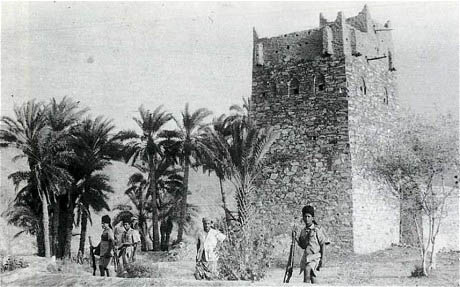
Traditional Plow Agriculture in highland Yemen, for which there are many proverbs

When “Being There” is Here: An Anthropologist at Large in Digital Humanities

On Wednesday, March 5, I will be giving a talk at the CUNY Graduate Center for the Program on Religion, directed by Prof. Bryan Turner. Lunch will be served, and coffee too, of course. The talk will be in room 5307 of the Graduate Center at 34th St. and 5th Avenue, 12.30-2 (lunch served from 12.15), to discuss a topic pertinent to many disciplines.

Abstract:

The aim of this talk is to explore the role of traditional field-based ethnography in the rapidly evolving world of digital humanities. I look back on my original ethnographic fieldwork in Yemen in 1978-79, before there was an Internet or laptop computer. While technology has long been an important resource for anthropologists, the digital world allows for instantaneous contact in a way never available before. There is now a role for e-ethnography, analysis of representation and communication in cyberspace in which the field literally comes to the computer of the researcher. The talk will explore the implications of recent advances in the digital humanities on the nature and future of anthropological research.

Daniel Martin Varisco is President of the American Institute for Yemeni Studies. He is the founding editor of CyberOrient, an online journal co-sponsored by the American Anthropological Association and Charles University in Prague. His last book was Reading Orientalism: Said and the Unsaid (2007) and he is currently finishing a book titled Culture Still Matters: Notes from the Field.

Islamophobia in the Russian Federation


The domes of a Russian Orthodox church (right) share the skyline of Kazan, Tatarstan’s capital, with the minarets of a Muslim mosque, a reminder of the city’s history of peaceful coexistence between Christians and Muslims. Corey Flintoff/NPR

The current conflict over Russian involvement in the Ukraine overshadows the extent of Islamophobia in Russia. For a recent article (“Cycles of Violence: Dangers of Islamophobia in the Russian Federation”) on this in the Georgetown Journal of International Affairs, click here. The article is by Marjorie Mandelstam Balzer, a Research Professor in the Center for Eurasian, Russian, and Eastern European Studies (CERES) and the Department of Anthropology at Georgetown University.