The Reach of War


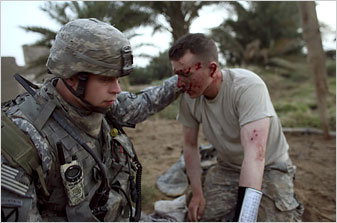
[Photograph by Michael Kamber for the New York Times.]

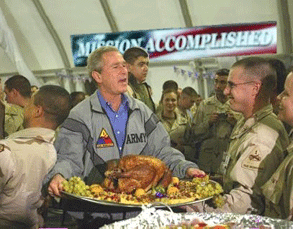
While the news media feed on the battle between congressional democrats and the Bush administration over the war budget, the war continues day by day with no congressionally prodded end in sight. The war in Iraq also dominates the field of political play for the next presidential election, with Bill Richardson declaring his candidancy yesterday and in no uncertain terms blasting the current war policy. But in all of this the war does not really reach us. Yet it is possible to reach out and feel some of the pain of the war. In today’s online New York Times, Michael Kamber, a photographer, provides a slide show of an attack on an army unit in which an American soldier was killed. I suggest you ignore the talking heads of politicians today and see for yourself the agony of loss on a battlefield with no visible enemy. Don’t wait to see the name in the paper; absorb the context that took a life needlessly to satiate the ideological appetite of the current lame duck (pun intended) administration.

Daniel Martin Varisco
Bury Me Not on the Lonesome Yemeni Plain

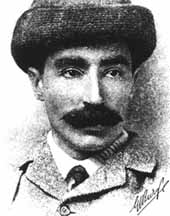
There are not as many travel accounts by Western authors visiting the Middle East as sand particles in the great Arabian desert, but the number is considerable just the same. One of the younger visitors, arriving in the British held port of Aden in 1896, at the age of 22 was G. Wyman Bury, whose intrigues and failed attempt to navigate the so-called “Empty Quarter” left him a broken man and brought him to an early death at age 46. It did not start out that way. Spending a year in Morocco, the young English lad described himself there as a “callous youth just out of his teens dropping in haphazard on a real tribe accompanied by a mission-taught Moor and a large liver-coloured pointer who had more sense than his master.” Continue reading Bury Me Not on the Lonesome Yemeni Plain

A Voice in the Wilderness that is Gaza


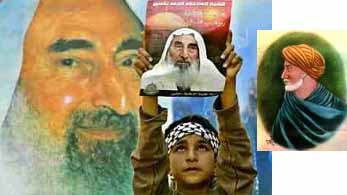
[Illustration: Khalil Yaziji found two bodies outside his shop, al-Jazeera.]

So what is today’s top story of violence in the Middle East? Take your pick: the Lebanese army vs. Fatah al-Islam in the camps of Tripoli, a Taliban-ignited bomb exploding in a market and killing civilians in Afghanistan, an assassination attempt on the mayor of Mogadishu, six U.S. soldiers and an interpretor killed in Diwaniya in southern Iraq, more deaths in Gaza. Reading the news (I almost made the anachronistic slip of “picking up” a newspaper) today is a time warp back to the revelationary isle John of Patmos and his prophetic vials of plagues. I am not referring to an incendiary end of the world scenario spun by the late Jerry Falwell (may he rest in Baptist solitude), but the continuing hell on earth. If you think this is about religion (or democracy), think again. Remove the politics (and American involvement or influence) from each of the stories above and the religion is reduced to a drizzle.

So here is my pick of the day, one from the little guy. Al-Jazeera, which has the resources and access that Western journalists can only dream about, published a piece by reporter Laila Haddad, who interviewed a variety of ordinary Palestinians living through the nightmare of Gaza these days. It is worthwhile looking at the violence from the ground-up, a welcome break from the bird’s-dropping view usually spun in the media. Here is what Khalil Yaziji, 26 years old, a shopkeeper and banker thinks of his present and future: Continue reading A Voice in the Wilderness that is Gaza

What Went Wrong: A Top-Ten Review

What went wrong in Iraq? It seems as though it might make more sense to ask why didn’t anything go right. When Operation Iraqi Freedom began, the good news was that a brutal tyrant named Saddam Hussein had been ousted from power. For the billions of dollars thrown at modern Mesopotamia, the result is now in painful hindsight a bloody (and I do not simply mean the British expletive) mess with no good in realistic sight. The litany of bad news has morphed into a politically untenable tsunami, destroying all good intentions in its wake. One of the top stories in today’s news is the alarming rate of deaths among contractors working alongside the American military in Iraq. In the first three months of 2007 almost 150 were killed, often because they tend to be “soft targets,” but increasingly because U.S. troops are stretched thin outside the surge-happy capital. Even Chatham House, hardly a left-leaning lean-to in British politics, has neon-lighted the handwriting on the Babylonian wall with a recent report by Gareth Stansfield, who argues in a paper released Thursday that “Iraq is on the verge of being a failed state which faces the distinct possibility of collapse and fragmentation.” You know things are really bad when the U.S. military creates its own shared channel on You-Tube.

The reasons are so obvious four years after the patriotic fever orchestrated by the Bush-Cheney-Rumsfeld-Wolfowitz gang of neocons that it almost seems trivial to keep repeating them, so perhaps the best thing is a Letterman-like line-up of the top ten real stupid mistakes made so far (it ain’t over until the fatuous voter sings) by recent U.S. foreign policy in Iraq: Continue reading What Went Wrong: A Top-Ten Review

Tableaux Manners Egyptian Style

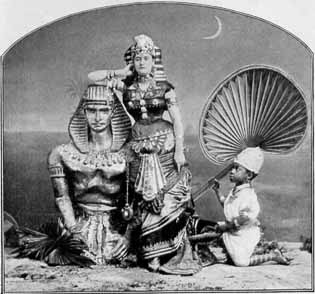
The year was 1875. As reported in The Cosmopolitan (for January, 1898), the governor of New York proposed a fund raiser for the expected visitors in the upcoming American centennial celebrations. New York City’s high society was mobilized under the direction of Mrs. Elizabeth Hamilton Cullen, granddauther of Alexander Hamilton and wife of General G. W. Cullen. Mrs. John Jacob Astor and Mrs. Belmont assisted in gathering 230 elite ladies and gentlemen to pose in various tableaux from “The Puritan Family at Prayer” to “Miss Egypt” shown here. Here is a nostalgic tidbit of vintage American Orientalism when the digs in Egypt were still very fresh. But for a nation that had only abolished slavery slightly over a decade before, it is clear that the race to end racism had only just begun. Continue reading Tableaux Manners Egyptian Style

Islam by the Numbers

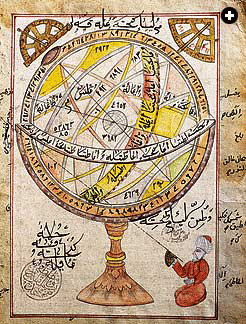
[Illustration: An astronomer calculates the position of a star with an armillary sphere and a quadrant in this illustration from a 16th-century Ottoman manuscript, ART ARCHIVE /UNIVERSITY LIBRARY ISTANBUL /DAGLI ORTI]

[Note: The current issue of “ARAMCO World” has a long and well illustrated article on the history of the sciences in the islamic World. This is written by Richard Covington, an author based in Paris.]

Like astronomy, which evolved from the practical necessities of finding the directions and hours for prayers, Islamic mathematics was very much a hands-on affair at the beginning, a product of the marketplace and of the need for pragmatic legal precedents. Both algebra and the use of zero had the same end in mind—streamlining computations for business deals. Al-Khwarizmi had a hand in the development of both.

In his Kitab al-jabr (Book of Algebra)— the word comes from the Arabic word jabara, “to restore”—the Baghdad mathematician spells out his no-nonsense intent: “It’s a summary encompassing the finest and most noble operations for calculations which men may require for inheritances and donations, for shares and judgments, for commerce and all sorts of transactions that they have among them such as surveying tracts of land, digging canals and other aspects and techniques.” Continue reading Islam by the Numbers

Hamas and Ibn Khaldun: Going for the Cycle?

I am not an expert on the Palestine issue, nor am I trained to think in the apocalyptic terms sometimes engaged by pundits who forget that political science is more often an art or even impure fiction than a replicable analytical technique. But the ongoing in-fighting between Hamas (the neo-bad guys) and Fatah (the paleo-bad guys) is too intriguing to pass up. Today’s BBC News has a comparison of the two parties, following the resignation of the interior minister. Much of the speculation in the media is about tactics: Will Hamas ever give up support of violent acts against Israelis? Will Israel stubbornly refuse to negotiate with a group it would rather see fade into oblivion? Will the United States promote this democratic experiment as a bridge or a barrier on the so-called road map to peace? In all this I cannot help but think about what the famous 14th century North African savant Ibn Khaldun would have said if he could be interviewed from the grave for the New Tunis Times. It might go something like this… Continue reading Hamas and Ibn Khaldun: Going for the Cycle?

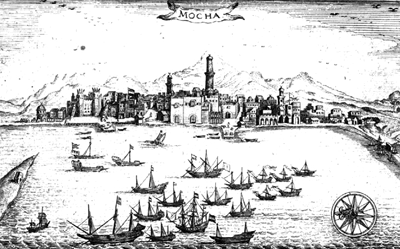
Mocha, Port of Coffee

[Joseph Osgood was a Black American sailor who visited the Yemeni port of Aden about a dozen years before the start of the American Civil War. He offers a rich, descriptive account, including information on the coffee cargo that may have brought his ship to this Red Sea port in the first place. The following is his rendition of a popular origin tale for the popular brew.]

Any communicative Arab will tell the following story about the early history of Mocha, with more or less modification.

A little over two centuries ago, there dwelt near the beach, enclosed by two sandspits forming the harbor, a worthy fisherman, whose learning, wisdom, and pious observance of all the tenets of the Moslem faith, had collected around his humble hut the dwellings of a band of devoted pupils to be instructed in the religion of their great Arabian legislator and prophet. One day a ship from India, and bound to Jiddah, was driven by adverse winds into the cove, and, while there detained, the crew visited the settlement near the beach, and were entertained by the holy Sheik, who regaled them with coffee, a beverage till then unknown to his guests. The Sheik, learning that the captain was ill on board his vessel, extolled the sanative virtues of coffee, and sent some as a present to the captain, by the returning crew. The prescribed medicine was taken, the captain recovered his health, visited the shore, made confidence with the people, bartered his cargo for coffee and sailed for home, where the worth of the rare and newly discovered product was quickly acknowledged, and successive voyages soon established a lucrative commerce, and thus founded and gave a world wide repute to the city of Mocha and many of the neighboring inland towns. Continue reading Mocha, Port of Coffee