Exposing Extremism—No Matter Where It Is Found

By Bruce B. Lawrence

Robert Benchley, the American humorist, once quipped that “there are two categories of people in the world, those who constantly divide the people of the world into two classes, and those who do not.” Less funny, but persistent is the reflex to divide all approaches to Islam into two categories. The first are those who seek the truth in Islam. They ask: What are the various forms of Islam? How can we determine which is the true form of Islamic belief, and how do we know what are authentic norms for Islamic conduct? In opposition, there are those who have already decided there is no truth in Islam. Instead, they regard Islam itself as the true enemy—the enemy of global peace, the enemy of civil society and, above all, the enemy of Western civilization. Continue reading Exposing Extremism—No Matter Where It Is Found →

Mahdi as Hell: Look out Darwin

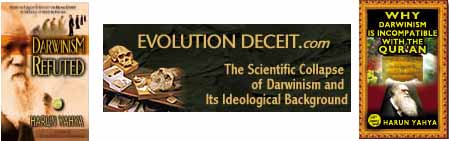
Has your atlas arrived yet? The New York Times reported yesterday that prominent American scientists and politicians are receiving what purports to be an “Atlas of Creation” from a Turkish media guru self-named Harun Yahya. No, it is not revenge for the “War on Terror.” Nor is a glossy book of patent nonsense, no matter how intelligently designed and styled as “probably the largest and most beautiful creationist challenge yet to Darwin’s theory” much of a challenge. Scientists will recognize it for a “load of crap,” as Kevin Padian, an evolutionary biologist at the University of California, Berkeley, impolitely phrased it.

The “War on Terror” has manufactured a whole host of new enemies. But what a strange bedfellow is Charles Darwin, who liberated science from the dogmatic demands of religious apologists like Mahdi Yahya a century and a half ago. Darwin’s approach now summarizes all of modern science, a steady advance in knowledge because no specific idea is ever held sacred. This does not mean that scientists must abandon religion and faith, but it does offer a view of the world in which human reason is not abandoned under the cloak and rhetorical dagger of a supposedly spiritual quest for moral behavior. Continue reading Mahdi as Hell: Look out Darwin →

Eden is Lost

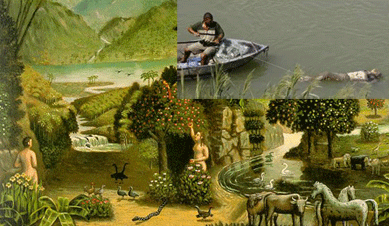
Today’s BBC has a report about the daily toll of mutilated bodies dumped into the Tigris River in Iraq and found in nets down river. Once a symbol of a river of paradise, the Tigris might as well be fed these days by a burning lake of fire. There are times when perhaps the best way to respond is in poetry.

A river rises in Eden to water the garden; beyond there it divides and becomes four branches. The name of the first is the Pishon; it is the one that winds through the whole land of Havilah, where there is gold. The gold of that land is excellent; bdellium and lapis lazuli are also there. The name of the second river is the Gihon; it is the one that winds all through the land of Cush. The name of the third river is the Tigris; it is the one that flows east of Asshur. The fourth river is the Euphrates. The LORD God then took the man and settled him in the garden of Eden, to cultivate and care for it. (Genesis 2:10-15)

Eden is lost
yet again.
The weeds of war have choked the marshes
where the water god once spoke of life.
Nothing rises in Eden today
but the dust of a hate I can not measure.
God’s good well is dry
and the fields lie parched,
savaged by unwanted salt and more lies. Continue reading Eden is Lost →

Water rather than Whining


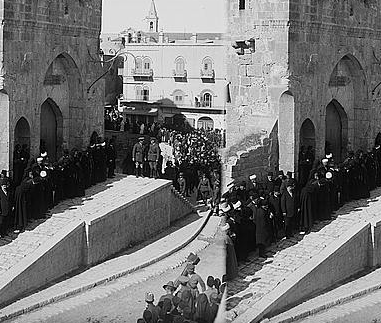
[“…I entered the city officially at noon, “December 11th”, with a few of my staff, the commanders of the French and Italian detachments, the heads of the political missions, and the Military Attaches of France, Italy, and America. The procession was all afoot, and at Jaffa gate I was received by the guards representing England, Scotland, Ireland, Wales, Australia, New Zealand, India, France, and Italy. The population received me well…” (General Allenby in Source Records of the Great War, Vol. V, ed. Charles F. Horne, National Alumni 1923)]

[Note: Almost 90 years ago, on December 9, 1917, General Allenby marched into Jerusalem to accept the surrender of the city by Ottoman Turkish officials. But unlike the current debacle in Iraq, where liberation has not been followed up by tangible development, it was the ability of British engineers to provide clean drinking water that helped smooth the transition from Ottoman rule to a mandate, ultimately as unclean and messy as it would become. It is worth reading the following excerpt by W. T. Massey, not only for strategic advice on how to win over a conquered populace, but also for a prime example of the journalistic ethnocentrism in which the West provides a “civilising hand” to the poor Oriental.]

THE TOUCH OF THE CIVILISING HAND
by W. T. Massey (1919)

It is doubtful whether the population of any city within the zones of
war profited so much at the hands of the conqueror as Jerusalem. In
a little more than half a year a wondrous change was effected in the
condition of the people, and if it had been possible to search the
Oriental mind and to get a free and frank expression of opinion,
one would probably have found a universal thankfulness for General
Allenby’s deliverance of the Holy City from the hands of the Turks.
And with good reason. The scourge of war so far as the British Army
was concerned left Jerusalem the Golden untouched. For the 50,000
people in the City the skilfully applied military pressure which
put an end to Turkish misgovernment was the beginning of an era
of happiness and contentment of which they had hitherto had no
conception. Justice was administered in accordance with British
ideals, every man enjoyed the profits of his industry, traders no
longer ran the gauntlet of extortionate officials, the old time corruption was a thing of the past, public health was organised as far as it could be on Western lines, and though in matters of sanitation and personal cleanliness the inhabitants still had much to learn, the appearance of the Holy City and its population vastly improved under
the touch of a civilising hand. Sights that offended more than one of
the senses on the day when General Allenby made his official entry had
disappeared, and peace and order reigned where previously had been but misery, poverty, disease, and squalor. Continue reading Water rather than Whining →
What If?

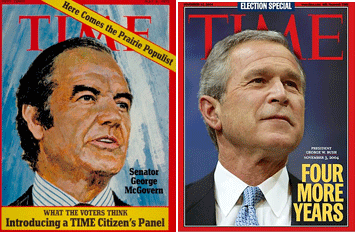
Pundits thrive on “what if” scenarios. “What if” George W. Bush had not charged with General Custer bluster into Saddam’s Iraq over four years ago? “What if” we just up and pulled out right now? The other day, trying to balance my checkbook, I wondered “what if” my grandfather had bought shares in a tin-Lizzied start-up company called Ford Motor Company? I also remember my first election in 1972 when I enthusiastically voted for George McGovern for President. “What if” George McGovern had not been slimed and dimed by the new and yet to be watergate-downed Nixon and his Kissenger messenger? I mention McGovern, one of those rare Presidential candidates who has never had a taint of corruption, because last October he published a piece on the Iraq War in Harper’s Magazine. Had his advice been followed, we would be out of Iraq right now. So it seems relevant to ask “what if” we return and read his comments again.

The Way Out of War:
A blueprint for leaving Iraq now

by George S. McGovern
Harper’s Magazine, October, 2006

Staying in Iraq is not an option. Continue reading What If? →

Traveling Light in Arabia

[Note: the following list of items for light camping in Arabia is provided by G. Wyman Bury for the early part of the 20th century.]

CAMP EQUIPMENT
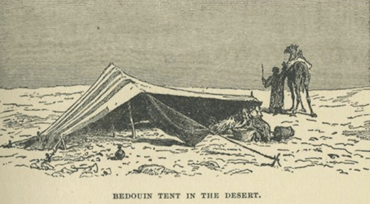
Try to do without a tent. Arabs hate pitching tents after a long day’s march, and seldom pitch them well. They draw fire and afford no protection, while preventing your own observation; they also betray the site of your camp to bad characters and casual callers on the look out for supper.

BEDDING
Avoid Wolseley valises or anything with pleats and folds, which become the permanent abiding places of parasitic insects.
‘Blankets.’ One each for the men. A few extra for convalescents or invalided men. Two for yourself.
‘Pillows.’ Carry your spare clothes in a green canvas sack. Continue reading Traveling Light in Arabia →

For Lust of Reading

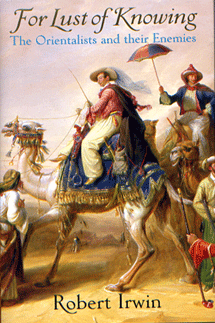
The publisher, author and Arabist historian Robert Irwin recently published a readable and passionate defense of academic Orientalism, a once-respected field that has seemingly been in post-colonial freefall (perhaps more accurately a free-for-all) since Edward Said wrote his seminal polemic Orientalism in 1978. Lust of Knowing (or Dangerous Knowledge: Orientalism and Its Discontents in the American edition), Irwin’s take on the motivation of most past Orientalist scholars, is subtitled “The Orientalists and their Enemies,” a list which extends far beyond Edward Said. “I have done my best to make this book interesting,” (p. 2) begins Irwin and all but the most head-in-the-sand devotees of Said’s thesis would have to agree he is successful in this. Like most readers of Said’s text, which is nearing the three decade mark, Irwin does not set out to defend the bias and prejudice hurled in an Oriental direction from generations of European authors, nor does he disparage Said because he was Palestinian or a staunch defender of Arab causes. Continue reading For Lust of Reading →

Ibn al-Farid’s “Khamriyya” – or “Ode on Wine”


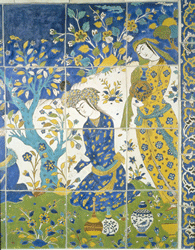
[Illustration: Tile panel with picnic scene (detail), Iran (Safavid), Isfahan, 17th century, fritware with colored glazes, Victoria and Albert Museum, London]

Ibn al-Farid’s “Khamriyya” – or “Ode on Wine”
A critical introduction, translation and analysis.

by George Nicolas El-Hage, P.h.D. Columbia University

Sufism has been defined as both “the apprehension of divine realities and as a universal message of love, brotherhood, and unity of man.” (1) Although R.A. Nicholson writes that Sufism is at once “the religious philosophy and the popular religion of Islam” (2), nevertheless it must not be understood that Sufism is a type of organized or conventional religion. It is not a religion, nor does it claim to create another sect, but it attempts to eliminate hatred and conflicts and to gather people in brotherhood. In his book, Sufism: Message of Brotherhood, Harmony, and Hope, Nasrolla S. Fatemi says that the elements common to Judaism, Buddhism, Christianity, and Islam can best be appreciated in Sufism. To the Sufi, only the moment of ecstasy can cleanse the soul of all its earthly concerns and elevate it to a joyful reunion with its creator. The soul, anxious to partake in divine love, will become ready to behold the truth and embrace the light and the beauty. Continue reading Ibn al-Farid’s “Khamriyya” – or “Ode on Wine” →