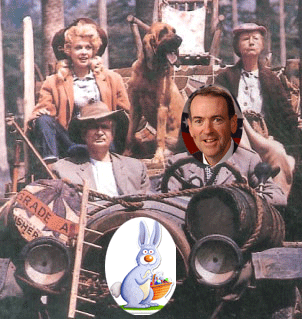
Huckabilly Lays an Egg, Flunks Geography

In last night’s GOP presidential debate, hosted by MSNBC, the Huckabilly former governor of Arkansas laid an egg and he can hardly blame Chuck Norris in absentia for such a wisecrack. Asked if the war in Iraq has been worth all the blood shed, Huckabilly defended Bush’s rationale by comparing the lack of evidence in the massive search for Iraqi WMDs to an Easter Egg hunt. A colorful comment for the Late Show, but one that ultimately leaves egg on his face. Asked later about his all-encompassing religious conservatism, the Huckabilly said he even respects Americans who do not have faith (as long as they vote for him, perhaps), although he conveniently avoided looking for Mormon support. It appears that part of his weight loss may have been in his cranium. Continue reading Huckabilly Lays an Egg, Flunks Geography →

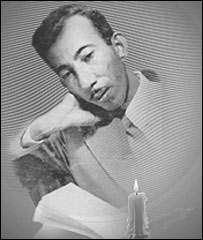
The Letters of Badr Shakir al-Sayyab:#11


The Iraqi Poet Badr Shakir al-Sayyab

[Note: This is the eleventh in a series of translations of selected letters of the noted Iraqi poet Badr Shakir al-Sayyab. For more information on the poet, click here.]

Letter #11

My Dear Adunis, (1)

First of all, I hope you will forgive me for writing to you on this kind of paper. It is all I have in the house right now since I have just returned from night school. Perhaps you will now understand the reason why I have been tardy in responding to your letter. Working day and night does not give me any time to write.

I received the final version of your poem. I notice that you have paid attention to what I wanted to alert you to concerning the earlier version of the poem: namely, the excess use of rhymed paragraphs among those that are written in prose. Your poem that was published in the latest issue of “Shi’r” was more successful in this regard. Haven’t you seen how the versifiers have exploited free verse? Continue reading The Letters of Badr Shakir al-Sayyab:#11 →

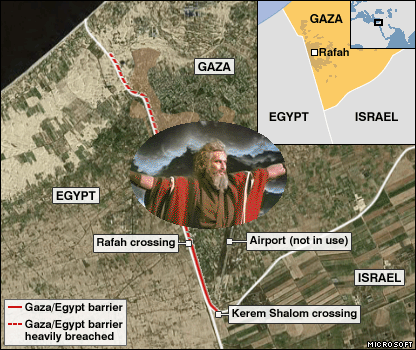
Exodus Redux

Remember the Exodus? Even if you never saw Charlton Heston part the waters Hollywood style, the story of the mistreatment of the descendants of the patriarch Jacob of Israel and their harrowing escape from the clutches of a hard-hearted Pharaoh has been retold millions of times over the past two millennia or more. In that story the more that Moses and brother Aaron demand “Let my people go,” the more the burden on the people, including the last straw, literally the last straw, in a work force up against a mud brick wall. Things got so bad that even the supervisors tried to reason with Pharaoh, but to no avail. So Moses in frustration turned to his Lord and complained in plain King James English:

And Moses returned unto the LORD, and said, Lord, wherefore hast thou so evil entreated this people? why is it that thou hast sent me? For since I came to Pharaoh to speak in thy name, he hath done evil to this people; neither hast thou delivered thy people at all. (Exodus 5:22-23)

Then came the plagues worthy of a passionate Mel Gibson remake: Nile water turned into blood, frogs everywhere, pesky gnats and flies (hardly anything new, I should suspect), the heavy vegan-friendly killing off of horses, donkeys, camels and flocks, then festering boils, heaven-sent hail and fire (an interesting notion for resolving global warming), lots and lots of locusts (some of which may have been kosher), total darkness and then the ultimate weapon of killing every non-Israelite firstborn. One would think this would be enough for several movies, but the journey has not even begun. That exodus, hardly a march of triumph, would condemn the brickmakers of Egypt to forty years wandering in the desert. Where is Mel Brooks when you need him?

Yesterday the irony of contemporary politics put the exodus in reverse. Continue reading Exodus Redux →
Poems from Guantánamo: The Detainees Speak

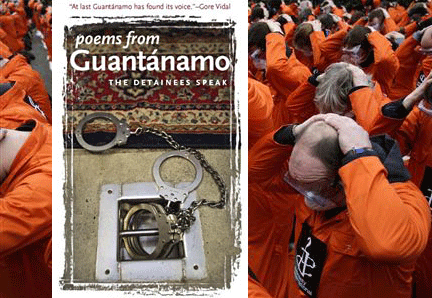
Since 2002, at least 775 men have been held in the U.S. detention center at Guantánamo Bay, Cuba. According to Department of Defense data, fewer than half of them are accused of committing any hostile act against the United States or its allies. In hundreds of cases, even the circumstances of their initial detainment are questionable. Poems from Guantánamo: The Detainees Speak (The University of Iowa Press, 2007) conveys the voices of men held at Guantánamo. Available only because of the tireless efforts of pro bono attorneys who submitted each line to Pentagon scrutiny, Poems from Guantánamo brings together twenty-two poems by seventeen detainees, most still at Guantánamo, in legal limbo. The collection is edited by Marc Falkoff, who has worked on behalf of many detainees from Yemen, and contains a preface by Flagg Miller, an anthropologist and professor of religious studies at the University of California, Davis. Miller’s essay combines an overview of Muslim prison poetry throughout history to an analysis of the poems in the collection, and is entitled “Forms of Suffering in Muslim Prison Poetry.” An afterward is written by Ariel Dorfman, a Chilean American poet, novelist, and human rights activist who teaches at Duke University. Continue reading Poems from Guantánamo: The Detainees Speak →

A 16th Century Caravan

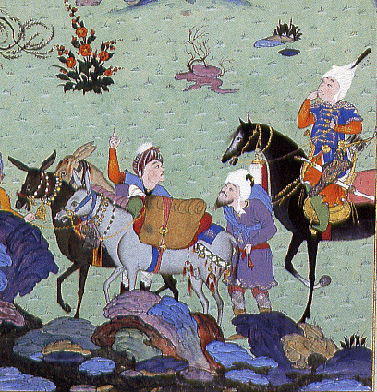
The title of this watercolor painting by ‘Abdol-‘Aziz is “Zal is sighted by a Caravan” and is part of a scene from the Shahname in which the hero Rostam’s father, known as Zal, was born an albino and exiled by his superstitous father to the top of a mountain, where he was rescued by the legendary bird known as a simurgh. The caravan, shown here, saw Zal and reported this to his royal father, who was glad his son was alive and would be the ehir to the throne. The painting was done in Tabriz around 1525 CE.

Illustration from Abdolala Soudavar, Art of the Persian Courts (New York: Rizzoli, 1992), p.370.

Veiled Voices


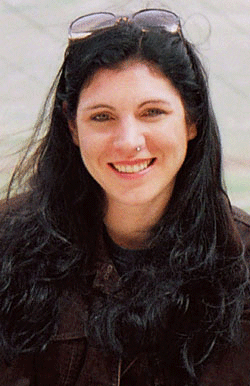
Brigid Maher, Director of “Veiled Voices”

Veiled Voices is a one-hour documentary that investigates the grassroots movement of Muslim women in the Middle East who act as religious leaders. It introduces the viewer to a world rarely seen by outsiders: the world of devout Arab Muslim women leading other women in prayers and lessons. Veiled Voices concentrates primarily on Ghina Hammoud, a divorced mother separated from her children, who has a television program and a charitable foundation in Lebanon, and Huda al-Habash, who has a loving and supportive husband and children, and runs lessons and programs in a mosque in Syria. Veiled Voices also travels to Egypt, where women struggle for public recognition in roles of authority over men; this is contrasted with Syria, where some male religious authorities, such as the Grand Mufti, are encouraging of women in leadership roles. The film shows women empowered, while exploring the struggles they face on both a personal and a public level. Continue reading Veiled Voices →

Hillbilly Heaven and Muslim Paradise

There is an old Tex Ritter song where he imagines going to heaven and hearing the roll call of future Country Western singers. It goes like this:

I met all the stars in hillbilly heaven
Oh what a star-studded night

Then I asked him who else do you expect in the next, uh, say a hundred years? He handed me a large book covered with star dust. Will called it the Big Tally Book. In it were many names and each name was branded in pure gold. I began to read some of them as I turned the pages: Red Foley, Ernest Tubb, Gene Autry, Roy Acuff, Eddy Arnold, Tennessee Ernie, Jimmy Dean, Andy Griffith, Roy Rogers, Kareem Salama
Whaaaatttt???
Kareem Salama? Oh, well, that’s when I woke up, and I’m sorry I did, because
I dreamed I was there in hillbilly heaven
Oh what a beautiful sight…

OK, so the original lyrics did not include Kareem Salama, but if Dolly Parton can rearrange the song, why can’t I? So who is Kareem Salama, you ask? Continue reading Hillbilly Heaven and Muslim Paradise →

Islam and Jesus

An Opportunity to Discuss Our Knowledge of Mohammed and Jesus
by Dr. Zein Al Abdeen Al Rekabi, Asharq Alawsat, Tuesday 08 January 2008

The Archbishop of Canterbury, Dr. Rowan Williams, has urged Muslims to learn about Christian culture. This appeal, diplomatic as it is, is based on the assumption that Muslims are “ignorant” of Christianity, or at least know very little about it.

To begin with, we should welcome, and even accept any invitation to further our knowledge because, for the respectable and wise, it is a perpetual pursuit. Moreover, God has urged Muslims to know other peoples and nations and interact with them. This is explicit in the following verse: “Oh mankind! We created you male and female and divided you into tribes and nations, so that you may come to know each other,” (Surat al Hujurat 49:13). In this global human acquaintance and interaction endorsed by the Quran, learning of other nations’ cultures is a primary asset among others.

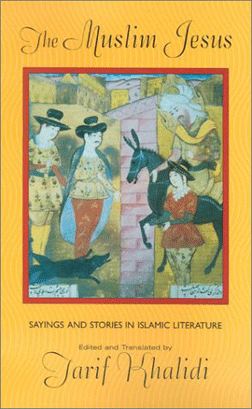
At the beginning of this commentary or discussion we present to the Archbishop a supreme truth: knowledge of Jesus son of Mary, and belief in him are integral to the Islamic faith, since they are pillars of the faith, and a Muslim’s faith is considered incomplete without it. What follows is verification from the Quran and Sunnah: Continue reading Islam and Jesus →