Issues in the Islamic Calendar


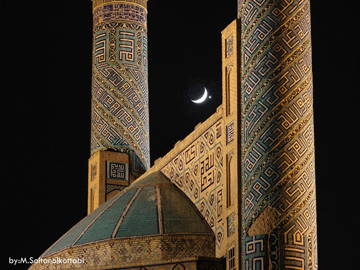
Full Moon on lunar eclipse and Venus, dated June 18, 2008 – Photo by Mohamad Soltanolkotabi

by Khalid Chraibi

“The sun and the moon follow courses (exactly) computed;”

(Koran, Ar-Rahman, 55 : 5)

“It is He Who made the sun to be a shining glory and the moon to be a light (of beauty), and measured out stages for it; that ye might know the number of years and the count (of time).”
(Koran, Yunus, 10:5)

“The ulamas do not have the monopoly of interpretation of the shariah. Of course, their advice must be sought in the first place on shariah matters. (But) they do no make religious law, in the same way that it is not the law professors who make the law, but parliaments.” (Ahmed Khamlichi, Point de vue n° 4)

Issue # 1: Why do Muslims observe the new moon to determine the beginning of months?

When the Messenger was asked by his Companions for a method to determine the beginning of the month of fasting, he told them to begin fasting with the observation of the new moon (on the evening of the 29th day of sha’aban) and to end fasting with the new moon (of the month of shawal). “If the crescent is not visible (because of the clouds), count to 30 days”. (1)

At that time, the Bedouins didn’t know how to write or how to count. They knew nothing about astronomy. But, they were used to observe the stars, at night, in order to find their way in the desert, and to observe the birth of the new moon to determine the beginning of months. The Messenger’s recommendation fitted perfectly with the specifics of their situation.

Issue # 2: Why is the new moon visible, at its birth, in some regions of the world only? Continue reading Issues in the Islamic Calendar
Yemen sleepwalks into water nightmare

By Alistair Lyon, Special Correspondent, Environmental News Network, March 1, 2008

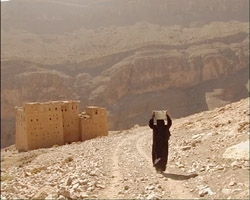
BEIT HUJAIRA, Yemen (Reuters) – Black-clad women trudge across a stony plateau in the Yemeni highlands to haul water in yellow plastic cans from wells that will soon dry up.

“We come here three or four times a day,” says Adiba Sena, as another woman draws water six metres (20 feet) to the surface and pours it into jerry cans lashed to her grey donkey. “We use it to clean, cook, wash — we have no pipes that reach us.”

These women are at the sharp end of what Yemen’s water and environment minister describes as a collapse of national water resources so severe it cannot be reversed, only delayed at best. Continue reading Yemen sleepwalks into water nightmare

Chickens Come Home to Roost in Georgia

William O. Beeman, New America Media, Aug 12, 2008

Editor’s Note: The Bush Administration’s push for access to oil from the Caspian Sea and it’s desire to isolate Iran precipitated the Russian invasion of Georgia. William O. Beeman is professor and chair of the department of anthropology at the University of Minnesota. He has lived and worked in the Middle East region for more than 30 years.

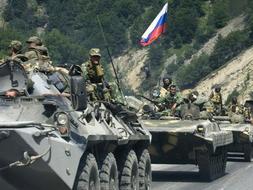
No one should be surprised that U.S. interference in the Caucasus has led to the Russian invasion of South Ossetia. By mixing into the volatile politics of the Caucasus, and trying to recruit the governments there to become American “plumbers” for a variety of purposes, the United States has only drawn Russian fire.

The Caucasus was one of the last territories added to the Russian Empire in the 19th century. It was captured from the Qajar Empire of Iran. The Caucasians never were fully incorporated into Greater Russia, and maintained a fierce cultural separatism. Georgia in particular was proudly nationalistic, with a distinctive language, cuisine, literary tradition and writing system. Continue reading Chickens Come Home to Roost in Georgia

Mahmoud Darwish Dies

Al-Jazeera, August 9, 2008
Mahmoud Darwish, the renowned Palestinian poet, has died after open heart surgery at the Memorial Hermann medical centre in Texas.

Ann Brimberry, Memorial Hermann’s spokeswoman, confirmed to Al Jazeera that Darwish died at 1.35pm (1835GMT).

Siham Daoud, a fellow poet and friend of Darwish, 67, had asked not to be resuscitated if the surgery did not succeed.

She said Darwish departed for the US ten days ago for the surgery, and he had undergone two operations for heart problems before Saturday’s surgery.

Best known for his work describing the Palestinian struggle for independence, the experience of exile and factional infighting, Darwish was a vocal critic of Israeli policy and the occupation of Palestinian lands. Continue reading Mahmoud Darwish Dies

Al-Qaeda’s war in Yemen

By: Aqeel Al-Halali, The Yemen Times, August 7, 2008

SANA’A, Aug. 6 – A leading Al-Qaeda figure in Yemen has threatened to execute armed attacks “at larger scales” if the Yemeni government doesn’t release his detained colleagues from prison.

This comes a day after a government announcement that it is interrogating suspects in the July 25th suicide bombing that targeted a camp in Hadramout governorate’s Sayoun city, 794 kilometers east of Sana’a.

In a taped recording, Yemeni Al-Qaeda leader Hamza Al-Quaity stated, “Your worries are our worries, your sorrows are ours and your grief is our grief. We’ll never forget you, Allah willing. As for you, oh [Ariel] Sharon of Yemen, [Political Security director] Ghalib Ba Gumesh, you’ll see how our colleagues will be freed from your prisons, Allah willing.” Continue reading Al-Qaeda’s war in Yemen