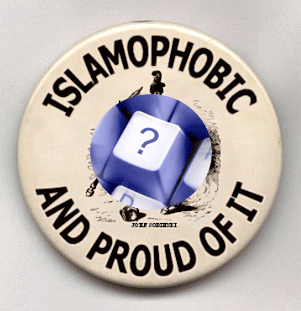
Islamophobia 101, A call to analyse

[Webshaykh’s Note: This is the start of a new blog thread dedicated to energizing scholarly and pedagogical attempts to combat, or at least mitigate, the ongoing volume of Islamophobia in the media, especially on the Internet. The question is simple: what can be done to respond to Islamophobia in the media by our efforts in the blogosphere, formal media outlets, classroom, community and scholarly forums? I invite fellow scholars, professors and teachers and anyone concerned with this issue to contribute to the discussion here at Tabsir.]

People of any particular religious faith are understandably offended when someone or something they hold to be sacred is dragged through the media-made mud of ridicule. There is no way to completely stop desecration, even when hate crime laws are in place. As long as there are synagogues with walls and anti-Semites with paint, swatstikas will be painted. As long as there are artists who stretch their creative energies to the limit of tolerance, animal dung will adorn the body of the Madonna. And as long as so many individuals in Western societies fear Islam through the veil of their own ignorance and historically constructed disdain, the Prophet Muhammad will be pictured as a profligate. The Danish cartoon controversy was only the tip of the iceberg, one that created a titanic rift in the Muslim community worldwide. The irony is that portraying Muhammad in any form is considered wrong in Islam, so that placing a stud missile in the turban of a caricatured Mahound (to drop a literary motif of the same controversial dimension) glosses over the level of misunderstanding motivating those who made and appreciated the cartoon images.

So what is the proper response to the volume of prophet bashing out there, not only in the case of Islam. Here are a few suggestions to jumpstart the process of analysis so that we as scholars can mitigate the paralysis created by an Islamophobia that is only a mouse click away.

• Identify resources (books, relevant articles, websites, speakers) which provide a scholarly and objective-as-possible perspective on Islamophobia
• Discuss the merits of whether or not to provide examples of Islamophobic writing, art and videos that are admittedly offensive to many Muslims
• Provide lesson and project ideas to encourage students to critically assess the Islamophobia in specific examples they are likely to find in the media and on the Internet
• Engage with fellow scholars and concerned Muslims about the most effective and least offensive ways to combat and mitigate Islamophobic writing and art
• Link examples of Islamophobia to other forms of verbal and artistic ridicule of sacred materials.
• Expose Islamophobic rhetoric by politicians, celebrities and other people in the news.

Having set out the goals, I invite colleagues contribute comments, commentaries and examples for and against Islamophobia for this series, please email the webshakh at daniel.m.varisco@hofstra.edu. I will post the first commentary tomorrow.

Daniel Martin Varisco
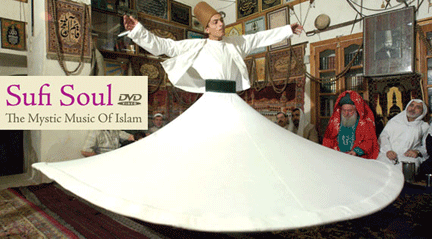
Sufi Soul

Cyberspace is increasingly crowded with videos, the virtual youtubization of the internet. This is especially the case for documentaries. Youtube has a wide range of videos on Islam, from professional films to homemade khutbas and television reruns. The diversity of Muslim practice is available, as is the worse Islamophobia, with just a click of the mouse and a wifi point. This ease of access is also convenient for professors, who can often find relevant video excerpts to power point into their lectures. Of the numerous videos out there, here is one well worth watching: Sufi Soul – The Mystic Music of Islam, a 50-minute film directed by Simon Broughton for Channel 4 in the U.K. To watch it, click here.

Here is a brief description of the film: Continue reading Sufi Soul

Jihad for Jesus

Forget “Jews for Jesus.” Bill Maher missed the t-shirt gospel in his Religulous. If the War on Terror is the message; a t-shirt may be the best medium. Just check out the one-size-does-not-fit-all humor at smarttorso.com.

The site even comes with a disclaimer:

This site is not suggesting that the Global War on Terror is a front for spreading western Christianity to Afghanistan, Iraq, and the rest of the middle east.

That sure would be sweet, though.

(Reminder to our heroes overseas: any SmartTorso order shipping to an APO or FPO address will automatically recieve $5 off. Thanks for your service. Just don’t wear this shirt in formation, unless you have enormous balls and can get away with it.)

New Age Islam in the Digital Age

A LONG STRUGGLE AHEAD: Sultan Shahin set up a website that has taken on the religious right head-on.

Praveen Swami, The Hindu, March 24, 2009

Back in the summer of 1999, Sultan Shahin found himself being hectored by an earnest young man outside London’s Finsbury Park mosque.

“You Indian Muslims are cowards,” Shahin was told “but soon you will have just two choices: either to become a true Muslim like us, or to perish.”

For Shahin, the experience was transformative. “It became clear to me that the Islam that I believe in was under serious threat,” he says, “and that I would have to do something if the religion I loved was not to be demeaned by the evil that was being spoken in its name.”

Last year, Shahin set up a website that has taken on the religious right head-on. Though run on a shoestring budget and without the help of full-time staff, New Age Islam (http://www.newageislam.com/) is visited by hundreds of readers every day. Its electronic newsletter has over 29,000 subscribers.

New Age Islam provides its audience to a wide range of original theological and political writing that does not figure in the mainstream media. In recent weeks, New Age Islam has seen debates on Niyaz Fatehpuri, a twentieth-century literary figure with unconventional ideas on the concept of divine revelation, as well as the neo-conservative televangelist Zakir Naik. Continue reading New Age Islam in the Digital Age

Daydreams and Arabian Nights


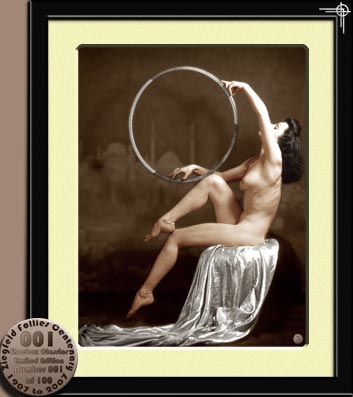
Ziegfeld Follies Girl representing Scheherazade from The Arabian Nights

On a personal note, today is my birthday. It is hard to be serious on such a foreboding occasion, especially when the magic number now exceeds the number of varieties of Heinz pickles. Besides (myself), the sun is shining and it is spring and silliness is in the air. [Isn’t it silly that we drop the ‘y’ to make silliness gramatically correct?] Since I have been preparing a powerpoint for a class on the history of ways in which the human body has been depicted, especially in the art of Adam and Eve in Eden, I have come across a number of Google-ill-begotten images, some of which are hilarious, some risque and some poignant. Take, for example, the picture above, which is not off a current porn site but actually a Ziegfield Follies Centennial print, indeed the first in the series.

So what do you see here? Continue reading Daydreams and Arabian Nights

‘Hello America, I’m a British Muslim’

‘Hello America, I’m a British Muslim’

by Imran Ahmed, BBC News, March 25, 2009

When British businessman Imran Ahmed was made redundant in January, instead of hitting the Job Centre he decided to arrange a one-man speaking tour of the United States to spread his message of peace and Muslim moderateness.

“Do you think the American drone raids in Afghanistan, in which women and children are killed, are actually obstructing the movement for an Islamic reformation?”

“What can be done about the alienation of young Muslim men in the UK?”

“Did you learn English in England?”

I’ve had an interesting range of questions at my speaking events in the US, but thankfully there have been some laughs with the audience too.

But first things first: what am I doing with a rented hybrid car on a 12,000-mile, 40-city speaking tour of America? Continue reading ‘Hello America, I’m a British Muslim’

Musawah Framework for Action

The following information is taken from a relatively new Muslim organization dedicated to equality and justice in the Muslim family. The name of the group is Musawa.

Musawah was initiated in March 2007 by Sisters in Islam, a Malaysian non-governmental organisation that is committed to promoting the rights of women within the framework of Islam, and a 12-member international planning committee of activists and scholars from 11 countries. The committee came together to consolidate information, experiences, and ideas that have been used by NGOs and activists in countries around the world to advance equality in the family. Women’s groups have been conducting these advocacy efforts for decades (see the background papers for more information). Continue reading Musawah Framework for Action

Heritage in a Global Era

Heritage in a Global Era: The Integration of Modernity and Tradition in the UAE

by el-Sayed el-Aswad, United Arab Emirates University

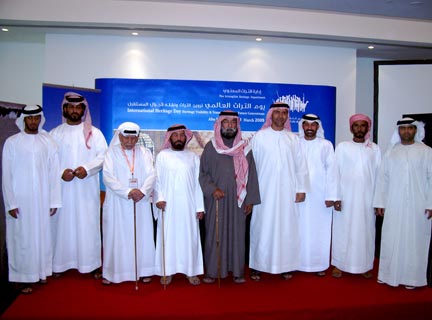
As part of the United Arab Emirate’s celebration of International Heritage Day, the Abu Dhabi Authority for Culture and Heritage (ADACH) organized a conference held on March 18-19, 2009, entitled “Heritage: From Preservation and Documentation to Promotion and Transmission to Future Generations.” The conference provided a fresh perspective by rethinking the oppositions of modernity/tradition and globalism/localism. A number of leading figures in the field of anthropology, folklore and comparative studies participated in the workshop by presenting papers and engaging in discussions and debates concerning various topics including folk tales, child folklore, falconry, symbolism, worldviews, the preservation of oral literature, and heritage promotion. Intangible heritage, more specifically oral literature, is an important component in understanding not only cultural specificities of societies but also enhancing intercultural relations. The following are some basic questions addressed in the workshop: Does the global culture depict the future as relying primarily on economic, technological, and multi-corporate forces that demand systemization, integration and uniformity? Does the traditional culture conceive the future as contingent essentially on the continuation of heritage, value-systems, religion, rituals, and social-kinship relationships? Continue reading Heritage in a Global Era