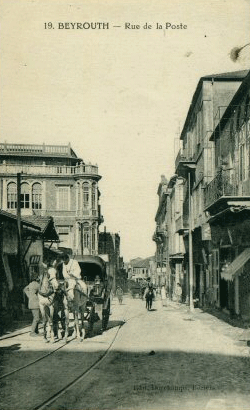
Since I am currently in Beirut and I am not sure what my internet access will be on a regular basis, here are some old postcard views of Beirut, starting with the image above of the Beirut Post Office from about a century ago.
Since I am currently in Beirut and I am not sure what my internet access will be on a regular basis, here are some old postcard views of Beirut, starting with the image above of the Beirut Post Office from about a century ago.
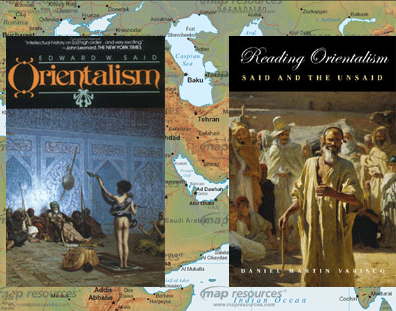
Today I am at the American University of Beirut for a one-day conference looking back on the impact of Edward Said’s seminal and polemical Orientalism, first published in 1978. The conference, “Orientalism and its Critics,” is sponsored by The Center for Arab and Middle Eastern Studies and the Department of Philosophy. Here is the line-up, for those who want to pseudo-twitter the event.
9:30 Basim Musallam (Cambridge University)
A First Reading of Orientalism
10:30 Daniel Varisco (Hofstra university)
Orientalism’s Wake: The Ongoing Politics of a Polemic
12:00 Ahmad Dallal (Georgetown University)
Cultural History and the Persistence of Orientalism: The Case of the 18th Century
1:00 Robert Irwin (University of London)
Pulp Orientalism
4:00 Robert Spencer (University of Manchester)
The War on Terror and the Backlash against Orientalism
5:00 Sadiq Jalal al-Azm (University of Damascus)
Political Said
My talk will be published this fall in a special issue of Viewpoints, an online forum of the Middle East Institute. It is a follow-up to my 2007 book, Reading Orientalism: Said and the Unsaid, published by the University of Washington Press.
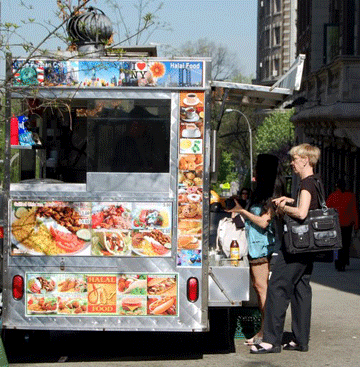
Little Persian Cafe, on the corner of Broadway and W116th Street
by Dagmar Riedel
Street vendors in midtown Manhattan, between 5th and 6th Avenue, often play Arab music and wear vaguely Muslim head dresses. Some time ago, their advertisements began focusing on all-beef hot dogs and burgers. But now they are advertising their food as halal. The photos of the halal carts were taken between the end of March 2009 and the beginning of May 2009. It seems that both Arab-Americans and Iranian-Americans are jumping on the bandwagon, though dress and cart names may also be the result of marketing strategies. Continue reading Streetwise Halal
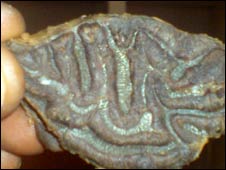
Sacred meat with name of Allah from Nigerian restaurant
Gullibility may be the most common human trait. The West has its UFOs and citings of Elvis, following medieval Christian crusades to find the true cross and holy grail. Indeed, even the prepuce of the Messiah (venerated in the church on January 1) shares space in almost two dozen cathedrals. It is reported (the kind that Fox News might report) that on Christmas day in 800 AD the about-to-be-crowned Charlemagne gave a part of the foreskin of Christ to Pope Leo III. Charlemagne said he received it from an angel, but others say it was a wedding gift from the Byzantine Empress Irene. One wonders who spirited the bit of divine flesh out of the stable in Bethlehem and saved it for a future queen.
All three monotheisms posit signs from Yahweh, the Triune God or Allah. The Virgin Mary or even the head of Jesus may appear on a piece of toast, as though God blesses the bread we eat only if it can take the heat. Islam, unfortunately, is not immune from calligraphic appearances in the most mundane places. Less than a year ago, the Arabic name Allah, appeared on several pieces of meat in a Nigerian restaurant. Alhamdillah, it was beef. But as a sign of hard times, it was not a prime rib or filet mignon (which would have been far too much Western cuisine, I think), but gristle. “When the writings were discovered there were some Islamic scholars who come and eat here and they all commented that it was a sign to show that Islam is the only true religion for mankind,” claimed the restaurant owner. The more appropriate response might be: fat chance. Continue reading At least it wasn’t pork
By Asghar Ali Engineer, April, 2009
A few days ago I was invited to speak in a Prophet Day’s function. There were other speakers as well. As usual the speakers before me indulged in rhetoric ‘Islam is the solution’ and also said the world economy has failed and slowed down as it is based on gambling and interest. Another person said Islam declared human rights 14 hundred years ago whereas UNO declared it only sixty years ago. Yet another speaker said Islam has given equal rights to women and made it obligatory for them to seek education. Also it was emphasized that Islam is religion of peace.
All this provoked me to say all this is true and I can add much more to it but have we ever seriously reflected why Islamic world is in such turmoil today. Why Muslims have totally failed to adopt these teachings in practice. I said if one caste a critical glance at Islamic world today one finds exactly opposite of what Qur’an teaches. If Qur’an lays great emphasis on knowledge, Islamic world from Indonesia to Algeria has more illiterates than any other community. Continue reading Islam and Contemporary Issues
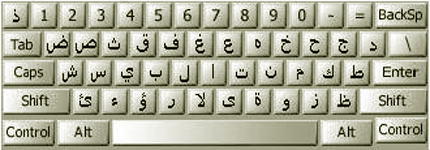
Historicizing Arab blogs: Reflections on the transmission of ideas and information in Middle Eastern history
by Brian Ulrich, Arab Media & Society, Spring 2009.
[This is an excerpt; to read the whole article, click here.]
Arab blogs have caught the attention of Middle East watchers. Much of the attention dedicated to them, however, has dealt with their political importance, whether as a mobilizing tool for activists or as an alternative source of news reporting. Blogging is also interesting, however, as a new and perhaps significant departure in the history of media in the Middle East. By this I do not mean “media†in the common late 20th century usage in which it applies primarily to those who work within unidirectional mass media, but rather as a medium of communication. In particular, I am interested in the way media enables and structures relationships between and among senders and receivers of ideas and information, as well as in the mechanisms of reception of messages and the perceptions of media forms and transmitters which circumscribe their authority. Continue reading Historicizing Arab blogs
Muslims for Progressive Values cordially invites you to participate in our Third Annual National Conference, to be held from June 19 – 21, 2009 at Sarah Lawrence College in Bronxville, New York.
Join us for a spiritually uplifting and engaging weekend as we explore this year’s theme, “Building the Progressive Muslim Community.” The retreat will include a variety of skills-building workshops including media engagement, political advocacy, and discussions on spirituality as well as social activities. To learn more or register to attend the conference, please click here.
The 3rd annual Muslim for Progressive Values retreat “Building a Porgressive Muslim Community” is June 19-21 at Sarah Lawrence College, NY and the deadline for registration is May 31, 2009. Continue reading Muslims for Progressive Values Conference
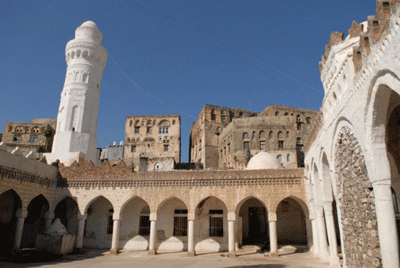
Mosque in Jiblah, Yemen
There was a time when books were hard to come by. Either they cost too much or were inaccessible in a private or exclusive university library. Whatever else the world wide web has done (and that is a mouthful), it now functions as an archive. More and more, the rare and out-of-print books I used to be forced to read in a library reading room are becoming available online. Mr. Gutenberg might roll over in his Grab at the very thought of a pdf file, but print has taken a new and universal turn. I especially enjoy the “flipbook”, which simulates turning the pages of images of the original. For an enjoyable read on the early history of Yemen, there is the flipbook version of Henry Cassels Kay’s translation called YAMAN, ITS EARLY MEDIAEVAL HISTORY, published in London in 1892. This has excerpts (not always trustworthy in their translation) from Umarah ibn Ali al-Hakami (1120/21-1174), Ibn Khaldun (1332-1406); Muhammad ibn Yaqub al-Janadi (d. 1332?).
The sad thing is that well over a century ago, Kay lamented that there was virtually nothing available on the history of Yemen, which had become of strategic interest to the British empire. Continue reading Flipping through Yemen a Millennium Ago