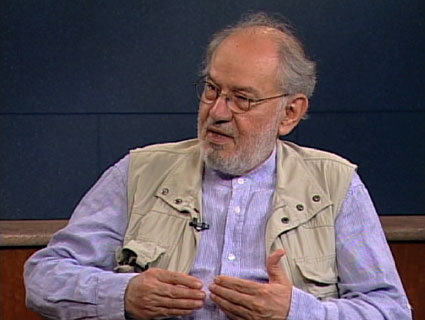
[Note: In preparing for my role to respond to presentations on the work of Talal Asad and the Anthropology of Islam at AAR recently, I reread portions of the edited volume Powers of the Secular Modern (edited by David Scott and Charles Hirschkind, Stanford University Press, 2006, pp. 206-207). In doing so I found a valuable excerpt at the start of Asad’s specific responses to the essays int he volume. Given the interest at the AAR meeting in anthropological and ethnographic approaches to Islam, I think Asad’s general comments below on the role of anthropology are relevant and worth perusing.]
The only point I want to stress at the outset is that for me anthropology is a continuous exploration of received ideas about the way given modes of life hang together. More precisely: What is included or excluded in the concepts that help to organize our collective lives? How? Why? With what probable consequences for behavior and experience? Such an inquiry requires that one be ready to break out of the coercive constraints of Sociological Truth — the axiom that the social is the ground of being. The results, however provisional, can be uncomfortable, and they may sometimes point to politically incorrect conclusions. What we eventually do with them is another matter, because we are not abstract intellectuals. All of us live in particular forms of life that constantly demand decisions and that in general presuppose a variety of commitments. And we all have particular memories, fears, and hopes. Continue reading Talal Asad on Anthropological Inquiry