If Salih read the Qur’an


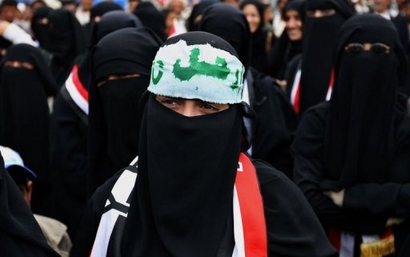
The rhetorical standoff in Yemen continues with only a limited amount of violence even while hundreds of thousands of people have been protesting, mostly against the decades-old regime of President Ali Abdullah Salih. Yesterday the New York Times commented that the protests in Yemen remain remarkably peaceful, with isolated cases of individual violence (mainly by those who support Salih) but no major clashes with the army or between tribal groups. President Salih holds a weekly rally of his supporters (some of whom have clearly been paid to come to the rally, as reporters note) as a counterpart to the far greater numbers protesting all over the country against his continued rule. He is holding on to power with a very thin string; indeed it is hardly even ‘power” any more given that much of the country is basically ignoring him and he is diplomatically isolated.

The only thing more incongruous than dictators (a military man installed in a coup after an assassination of the previous leader and who has remained in power for over three decades is at least an honorary dictator) talking about democracy is when dictators start talking about religion. Unlike Yemen’s Zaydi imams, whose millennium long rule was abolished in 1962, none of the military leaders of Yemen are noted as Quranic scholars; some could barely read and write when they came into office. Continue reading If Salih read the Qur’an →
Pornographic War Gazing: Why We Don’t Look Away


[This commentary was origially published in Religion Dispatches, April 12, 2011.]

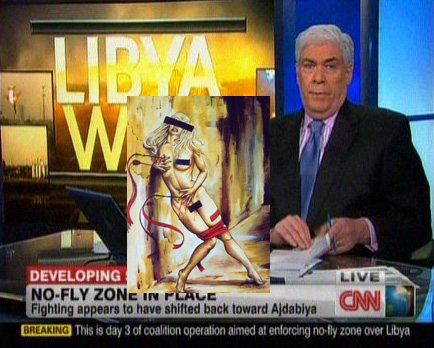
When it comes to grabbing attention bad news is the best news. Whether selling war or natural disaster or a fugitive serial killer, the competitive edge goes to the media outlet that can scoop the most violence, brutality or sheer inhumanity in an event.

The most recent news cycle of political protests started out on a hopeful note. As the spirit of frustrated youthful protest spread at tweet speed to dictatorial regimes and elitist monarchies, journalists flocked to North Africa and the modern day Holy Land. Live coverage has shifted from country to country, depending in large part on where the most violence is erupting. Yet, as much as the story may be promoted as one of hope and liberation, the hook is all about devastation. Continue reading Pornographic War Gazing: Why We Don’t Look Away →

Bloggerheads on Yemen


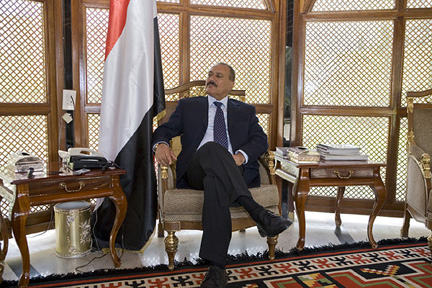
Yemen’s embattled President Ali Abdullah Salih

There is an interesting discussion between political scientists Charles Schmitz of Towson University (and President of the American Institute for Yemeni Studies) and Gregory Johnsen, moderator of the blog Waq al-Waq, on the context of the current protests in Yemen, especially on the role of President Ali Abdullah Salih. It is well worth looking at the video which can be viewed here: http://bloggingheads.tv/diavlogs/35377.

Tabsir Redux: If Lincoln had seen Aladdin


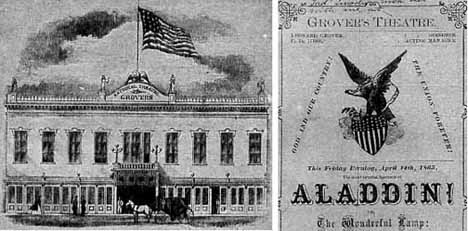
Grover’s Theater, Washington D.C.


[Tabsir Redux is a reposting of earlier posts on the blog, since memories are fickle and some things deserve a second viewing.]

April 14, 1865. For Americans, at least above the Mason Dixon line, this is one of those dates that lives in infamy. John Wilkes Booth, a rather bad actor on the stage, shot President Abraham Lincoln at Ford’s Theatre. According to an account by Mrs. Helen Palmes Moss in The Century Illustrated Monthly Magazine for 1909, Lincoln had the option of going to a rival theatre, the National or Grover’s, that night where a private box had been prepared for him by Mr. C. D. Hess, the co-manager. Apparently Booth had planned to attempt the assassination at whichever theater Lincoln attended. He much preferred Ford’s, since he had no inside help at the National and would have to shoot Lincoln as he stepped out of the carriage. What does this fateful event have to do with the Middle East? If Lincoln had attended the National Theatre and J. Wilkes Booth had missed, the President would have seen a dramatization of the Arabian Nights tale “Aladdin.” Would that Lincoln had been more of an Orientalist… Continue reading Tabsir Redux: If Lincoln had seen Aladdin →

Malika Zarra sings in New York, April 12


La chanteuse marocaine Malika Zarra en concert à l’Appolo Theater de Harlem à New York

from aufait, April 2, 2011

La chanteuse marocaine, Malika Zarra, se produira ce week-end sur la scène du mythique Apollo Theater de Harlem (New York) en hommage posthume à la chanteuse sud-africaine Miriam Makeba, surnommée “Mama Africa” en raison de son combat contre l’apartheid, a-t-on appris vendredi auprès des organisateurs.

Baptisée le “Morocco’s Jazz Jewel” (Joyau Marocain du Jazz) par la chaîne américaine CNN, Malika Zarra donnera, vendredi et samedi soir, deux concerts en hommage à cette grande dame ayant inspiré la scène musicale africaine mais également internationale depuis les années cinquante.

L’auteur-compositeur-interprète marocaine, célèbre pour ses mélodies irrésistibles portées par une voix mezzo-soprano incomparable, sera accompagnée par la chanteuse Lorraine Klaasen, une légende incontestable de la musique sud-africaine, qui, à l’instar de Zarra, voue un grand respect pour “Mama Africa”. Continue reading Malika Zarra sings in New York, April 12 →

Tabsir Redux: Arabia, A Poem from 1815


[Tabsir Redux is a reposting of earlier posts on the blog, since memories are fickle and some things deserve a second viewing.]

While reading old books on Arabia in Oxford’s Bodleian Library two summers ago, I came across a rare book indeed. I had the privilege of being the first person ever to read the book, as the folios were still uncut. Considering that the book was published in 1815 and soon thereafter entered the library, it might be readily assumed that it is a book not worth reading. In fact it proved to be a delight and a rarity. The book is called Arabia, A Poem and the author is a man named Johnson Grant. The author was an Oxford chap of St. John’s and is billed as the Domestic Chaplain to the Countess Dowager of Balcarres. No doubt the Countess enjoyed the work, although generations of Oxford students and scholars have somehow passed it by.

It is a rather long poem with extensive commentary. Not surprisingly, the Christian chaplain does not think Islam is the right religion. Continue reading Tabsir Redux: Arabia, A Poem from 1815 →

Central Asian, Early Iranian and Islamic Numismatic Conference


The Third MECA Seminar on early Iranian and Central Asian Numismatics will be held at Hofstra University in Hempstead, NY, this Sunday, April 10, 10:00 am to 5:00 pm in 106 Breslin Hall. This seminar has been organized by Prof. Aleksandr Naymark and is open to faculty and students of Hofstra University and to the public, free of charge. For more information, check out the conference website.

Program

Session I: Early Islamic Coinage
10:30 am to 12:00 pm

• Konstantin Kravtsov (State Hermitage Museum)
An Obscure Period in the History of Tabaristan (760s AD): Analysis of Written and Numismatic Sources

• Stuart Sears (Wheaton College)
Crisis on an Asian Frontier: The Countermarking of Umayyad Dirahms in Khurasan in the Early Eighth Century CE

• Luke Treadwell (Oxford Univeristy)
Aleksandr Naymark (Hofstra University)
The Very Last Sogdian Coin

Lunch break
12:00 pm to 1:00 pm

Session II: Classical Age of Islamic Coinage
1:00 pm to 2:15 pm

• Michael Bates (American Numismatic Society)
The Second Muhammadiyya, the Mine of Bajunays

• Arianna d’Ottone (La Sapienza University of Rome)
From Russia to Rome: the Stanzani Collection of Islamic Coins

• Aleksandr Naymark (Hofstra University)
Byzantine Anonymous Folles from Qarakhanid lands in the Ferghana and Chu Valleys

Coffee Break
2:15 pm to 2:30 pm

Session III: On the Borders: India and Yemen
2:30 pm to 3:30 pm

• Waleed Ziad (Yale University)
Islamic Coins from a Hindu Temple: Reevaluating Ghaznawid Policy towards Hinduism
through new Numismatic Evidence from the Kashmir Smast in Gandhara

• Daniel Martin Varisco (Hofstra University)
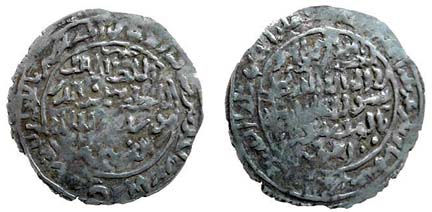
Rasulid Coinage in the Daftar of al-Malik al-Muzaffar: A Preliminary Textual Study

Coffee Break
3:30 pm to 3:45 pm

Session IV: Mongols
3:45 am to 5:00 pm

• Stefan Heidemann (Metropolitan Museum of Art B Bard College Graduate Center)
The Coin Finds from the Heart of the Mongol Empire: Qaraqorum Results of the Bonn University Excavation

• Necla Akkaya (Selcuk Universty)
Coins of the Ilkhanid ruler Abu Sa`id Bahadur Khan

• Olga Kirillova (Orel, Russia), Aleksandr Naymark (Hofstra University)
A Copy of the Seal of the Bulgarian Tsar Ivan II Asen from Samarqand

General Discussion
5:00 pm – 6:00 pm

Dinner in Brooklyn – 6:45 pm

Café Uzbekistan
2170 86th St. Brooklyn, NY 11214 (in the first block east of the crossing with Bay Parkway; parking on the sides streets)
Tel.: (718) 373-9393

India Orientalized for War, 1


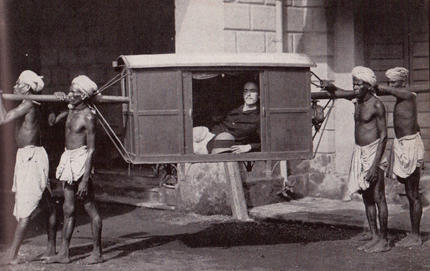
“Palkee or palanquin and bearers, Calcutta. Although the palanquin is no longer used for travel in India, in the days before the railroad it was of primary importance. The Kahars and other castes of palanquin bearers are thought to have been the prototypes of the bearers who are assigned to European sojourners in India today.”

During World War II the Smithsonian Institution issued a number of “War Background Studies.” I recently came across #18 in this series entitled Peoples of India by William H. Gilbert, Jr. (Washington D.C.: Smithsonian Institution, April 29, 1944). The image on Plate 6, reproduced above, sets the tone for this non-war zone. I was struck by the archaic presentation of images and the overtly Orientalist writing of Gilbert, who is billed as a “Specialist in Sociology and Anthropology, Legislative Reference Series, Library of Congress.” The Introduction (pp. 1-2) sets out in words the image vividly portrayed above. Read this for yourself and consider the various ways in which the author’s rhetoric both romanticizes India and justifies the colonial enterprise. I will make my own comments in a succeeding post, but I welcome comments posted here.

Introduction

Hardly any other country in the world can make a stronger claim on man’s inherent desire for the unique and the romantic than India. Continue reading India Orientalized for War, 1 →