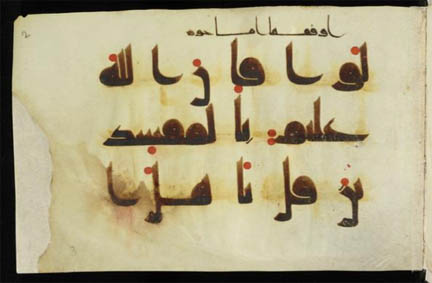
For those interested int he history and culture of Syria, there is an online archive available at http://www.syrianhistory.com/ The site has links to old photographs, film footage, music excerpts and more.

For those interested int he history and culture of Syria, there is an online archive available at http://www.syrianhistory.com/ The site has links to old photographs, film footage, music excerpts and more.

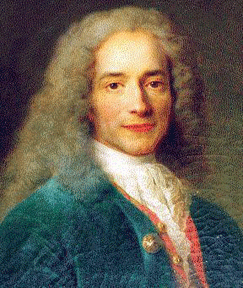
[One of the great moral tales of the 18th century is Voltaire’s (1759) Candide, a book well worth reading and rereading from time to time. Here is an excerpt from the end of the book, but it is not Orientalism in the Saidian sense of negative portrayal; indeed it is the honest Turk which stands in contrast to tyrants of all stripes.]
During this conversation, news was spread abroad that two viziers of the bench and the mufti had just been strangled at Constantinople, and several of their friends impaled. This catastrophe made a great noise for some hours. Pangloss, Candide, and Martin, as they were returning to the little farm, met with a good-looking old man, who was taking the air at his door, under an alcove formed of the boughs of orange trees. Pangloss, who was as inquisitive as he was disputative, asked him what was the name of the mufti who was lately strangled.
“I cannot tell,” answered the good old man; “I never knew the name of any mufti, or vizier breathing. I am entirely ignorant of the event you speak of; I presume that in general such as are concerned in public affairs sometimes come to a miserable end; and that they deserve it: but I never inquire what is doing at Constantinople; I am contented with sending thither the produce of my garden, which I cultivate with my own hands.” Continue reading Tabsir Redux: A Candid[e] View of an Honest Turk

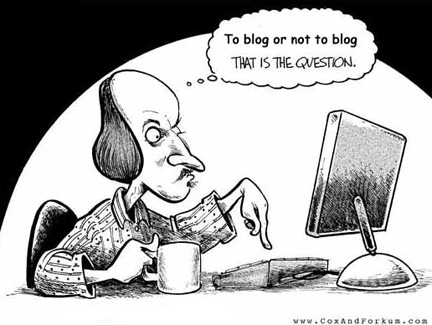
Cartoon source: http://www.trafficgenerationcafe.com/blog-website-faceoff/
Bassam Gergi and Mazen Zoabi unroll their guide to the Arabic blogosphere
Open Democracy, 12/30/11
Jadaliyya aims to shape the debate in the west by providing a window into regional scholarship and knowledge. Where others see data points, they see “living communities and dynamic societies.” The site currently publishes posts in both Arabic and English.
Mamfakinch is run by a group of young Moroccan activists who founded the #Feb20 movement calling for broad political, economic and social change. It aims to highlight information often ignored or distorted by official media sources. The site currently publishes posts in French, Arabic and English.
Nawaat, which means ‘the core’, was created to provide a platform for Tunisian bloggers and cyber-activists. It played a critical role in the Tunisian uprising and recognises that the “conquest of freedom is a battle to be fought every day. It currently publishes posts both in French and Arabic. Continue reading Best of the Blogs

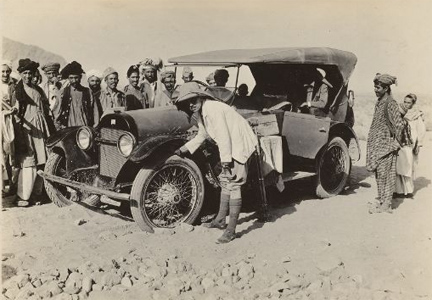
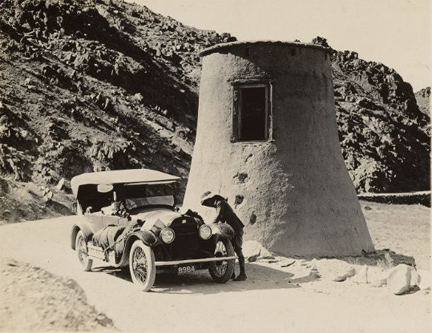
One of the most famous round-the-world journalists of the last century (or any century) was Lowell Thomas, most known for his blockbuster show on “Lawrence of Arabia.” In 1922 Thomas traveled to Afghanistan and visited the Emir Amanullah. A digital archive of 73 photographs from that trip is available online at Harvard University. Here are pictures of Kabul and other parts of Afghanistan from 90 years ago. Several of the photographs show the American Buick that Thomas drove for his visit. If you happen to be old car buff and interested in Afghanistan, this will be a visual feast.


The Arab Spring has morphed into the pundits’ pandering about Islamism. An example, and there are many to choose from in the current political orgy of right-wing rhetoric, is in a New York Times op-ed by John M. Owen IV. It seems that when Muslims elect representatives who are Muslim they must be a new species called “Islamists.” Yes, throughout the Middle East, where the dominant religion happens to be Islam and there happen to be many forms of Islam, there is a strong interest in electing leaders who espouse religious values. In part this is due to decades of dictators who barely gave lip service to Islam and did all in their power to demonize those Muslims who opposed them. But just look at the current GOP field of candidates and tell me that voting on religious values is somehow unique to Muslims. Do read what Owens writes and then my reasons for being critical of this Islamist hunting…
Why Islamism Is Winning
By JOHN M. OWEN IV, The New York Times, January 6, 2012EGYPT’S final round of parliamentary elections won’t end until next week, but the outcome is becoming clear. The Muslim Brotherhood will most likely win half the lower house of Parliament, and more extreme Islamists will occupy a quarter. Secular parties will be left with just 25 percent of the seats.
Islamism did not cause the Arab Spring. The region’s authoritarian governments had simply failed to deliver on their promises. Though Arab authoritarianism had a good run from the 1950s until the 1980s, economies eventually stagnated, debts mounted and growing, well-educated populations saw the prosperous egalitarian societies they had been promised receding over the horizon, aggrieving virtually everyone, secularists and Islamists alike.
The last few weeks, however, have confirmed that a revolution’s consequences need not follow from its causes. Rather than bringing secular revolutionaries to power, the Arab Spring is producing flowers of a decidedly Islamist hue. More unsettling to many, Islamists are winning fairly: religious parties are placing first in free, open elections in Tunisia, Morocco and Egypt. So why are so many Arabs voting for parties that seem politically regressive to Westerners?
The West’s own history furnishes an answer. From 1820 to 1850, Europe resembled today’s Arab world in two ways. Both regions experienced historic and seemingly contagious rebellions that swept from country to country. And in both cases, frustrated people in many nations with relatively little in common rallied around a single ideology — one not of their own making, but inherited from previous generations of radicals. Continue reading The Islamists are coming, the Islamists are coming

غيول» اليمن تموت Ø§Ø³ØªÙ†Ø²Ø§ÙØ§Ù‹
عمر الØÙŠØ§Ù†
المصدر أونلاين – الØÙŠØ§Ø©
January 5, 2012
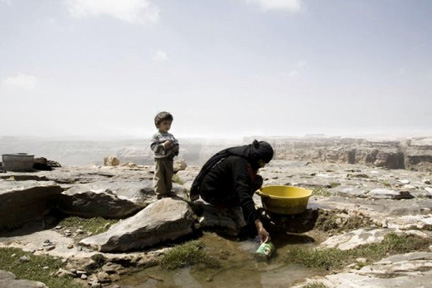
تعدّ الأنهار، أو الغيول كما يسميها اليمنيون، الشرايين الØÙŠÙˆÙŠØ© للموارد المائية ÙÙŠ اليمن، ÙØ£Ø±Ø¶ اليمن هبة الغيول، مثلما مصر هبة النيل. ومنذ آلا٠السنين اعتمدت Ø§Ù„ØØ¶Ø§Ø±Ø§Øª اليمنية المتعاقبة على جريان الغيول ÙÙŠ الأودية، وعلى Ø¶ÙØ§Ùها شيّد الإنسان اليمني ØØ¶Ø§Ø±ØªÙ‡ وأقام جنات سبأ ومعين.
ومقارنة بشبه الجزيرة العربية، Ø£Ø¶ÙØª الطبيعة الجبلية وكمية المتساقطات والمدرجات الخضراء طوال العام جمالاً وغنى على اليمن، ما جعل الأوروبيين يطلقون عليها لقب الأرض السعيدة. لكن الوضع اليوم Ù…Ø®ØªÙ„ÙØŒ إذ تربض العاصمة صنعاء Ùوق ØÙˆØ¶Ù‡Ø§ المائي المهدد بالنضوب سنة 2025ØŒ ÙˆÙقاً لدراسة أجراها مشروع إدارة ØÙˆØ¶ صنعاء، Ù„ØªØµØ¨Ø Ø£ÙˆÙ„ عاصمة ÙÙŠ العالم بلا مياه ربما بØÙ„ول سنة 2017.
مدينة صنعاء، الواقعة على Ø§Ø±ØªÙØ§Ø¹ 2150 متراً Ùوق Ø³Ø·Ø Ø§Ù„Ø¨ØØ±ØŒ والمتربعة على قاع منبسط تØÙŠØ· به الجبال من كل الجهات، كانت قبل أربعين عاماً منبعاً للغيول التي يعتمد عليها السكان ÙÙŠ الشرب والزراعة، ولعلّ أشهرها الغيل الأسود الذي ينبع من شمال صنعاء.
تغيّرت Ù…Ù„Ø§Ù…Ø Ø§Ù„Ù…Ø¯ÙŠÙ†Ø©ØŒ واندثرت الأراضي الزراعية ØªØØª مباني الأسمنت المتمددة ÙÙŠ كل الاتجاهات، مع Ø§Ø±ØªÙØ§Ø¹ عدد سكانها إلى Ù†ØÙˆ مليون وخمسمائة أل٠نسمة، يعتمدون على الآبار الجوÙية Ù„Ù„ØØµÙˆÙ„ على مياه للشرب وللأعمال الإنشائية والصناعية والزراعية. وقد Ø£ØµØ¨Ø ÙÙŠ سجلات أمانة العاصمة Ù†ØÙˆ 16 أل٠بئر، بعمق بات يتجاوز 1000 متر.
ÙŠØÙƒÙŠ Ø§Ù„ØØ§Ø¬ ØØ³ÙŠÙ† علي، من أهالي صنعاء، أنها كانت تعتمد على الغيول والآبار اليدوية التي لا يتجاوز عمقها عشرة أمتار. ÙˆÙŠØ´Ø±Ø Ø¨ØØ³Ø±Ø© ÙƒÙŠÙ Ø¬ÙØª آبار صنعاء القديمة بعد «مشروع السائلة»، الذي رص٠مجرى السيول وسط العاصمة.

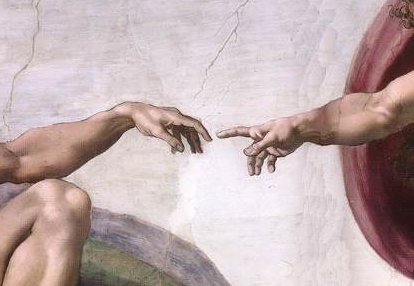
As a child I spent many inquisitive hours leafing through the books in my grandmother’s parlor bookcase. One that especially attracted my attention was John Kitto’s An Illustrated History of the Holy Bible (Social Circle, Georgia: E. Nebhut, 1871). Rev. John Kitto, recognized on the title page as author of the London Pictorial Bible, the Cyclopedia of Biblical Literature, ETC, ETC, retells the entire history of the Old and New Testament, from creation to the destruction of Jerusalem. Kitto was born into poverty in 1804 in Plymouth, England and due to an unfortunate accident ate age thirteen became entirely deaf and was forced into the poor house at the age of fifteen. This is quite an inauspicious beginning for a waif who went on to be a respected theological scholar. Through the local humanitarian efforts of several men in Plymouth, Kitto became a lay missionary to Malta and then for three and a half years in Baghdad. “While residing in that city,†writes Alvan Bond in the preface to Kitto’s book, Cairo “was visited by the plague, the terrific ravages of which swept off more than one-half the inhabitants in two months. Amidst this fearful desolation he remained calm and active at his post.†Once back in England he married and produced a travel account and several pictorial histories of the Holy Land. In 1844 the University of Giessen conferred upon him the degree of D.D. His ill health forced him to seek help in the spas of Germany, where he died after a mere half century in 1854. Continue reading Tabsir Redux: With Kitto Illustrating Bible History

In celebration of the United Arab Emirates National Day 2011, Obscura Digital produced a very nice virtual sound-and-light projection of the Sheikh Zayed Grand Mosque in Abu Dhabi. Check it out here.