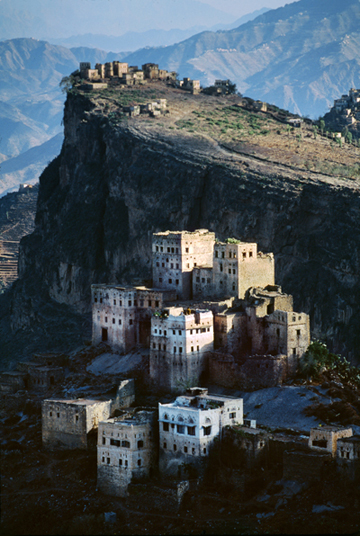
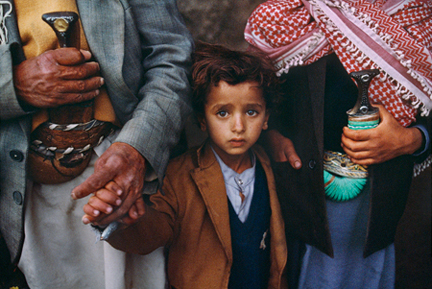
The photographer Steve McCurry has published some incredible pictures of Yemen on his blog. It is well worth checking out the pictures, but it is necessary to avoid the captions, which are neoconnish and ill conceived. When they say a picture is worth a thousand words, it can also be in reference to the kinds of words used. As long as the little boy is in the hands of his tribal family and values, he is most unlikely to be any kind of terrorist.
And the winner is?
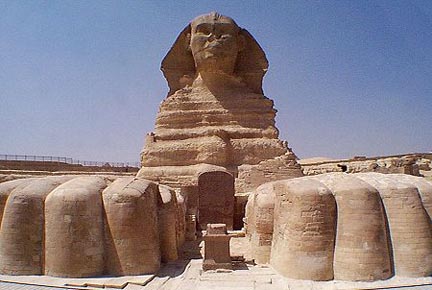
The polling is over in Egypt, but the dust has not yet settled. Given the simoon of recent political events, it is not likely to settle soon. Unofficial tallies place the Muslim Brotherhood backed candidate, Mohammed Morsi, with the lead. But the official results will not be released until June 21. Yet, it is possible to ask if there can be any real winner, since the ruling military council has ensured that it will continue to call the shots and ride oversight on any new government. The stage is now set for either a confrontation between supporters of the Brotherhood and the military or a marriage of convenience. I suspect the latter. The military is not about to lose power, not has it gambled away its prestige by engaging in ruthless slaughter as has happened in Syria.
Egypt, as most people know even if they only read their King James Bible, has a long history. Relics of the pharaohs dot the landscape; the pharaohs were gods on earth, the absolute dictators of their day, and they generally got along fine with the religious framers. When Akhenaten tried to go against the grains of the gods and call for the worship of one God, Aten, it was a short-lived moment. The rulers in the Islamic era were also not on the side of democracy. When the Mamluks, foreign mercenaries who wreaked havoc on the locals, took over in the 13th century, they played the religion game and adopted devout-sounding names, but their lust was for power and revenues and not to glorify Allah. It is tempting to view the continuing role of Egypt’s military as a Mamluk ploy, only from within. The military today is thoroughly Egyptian and has vast economic assets as well as the ability to channel politics. Continue reading And the winner is?
The 8th Voyage of Sindbad: #5
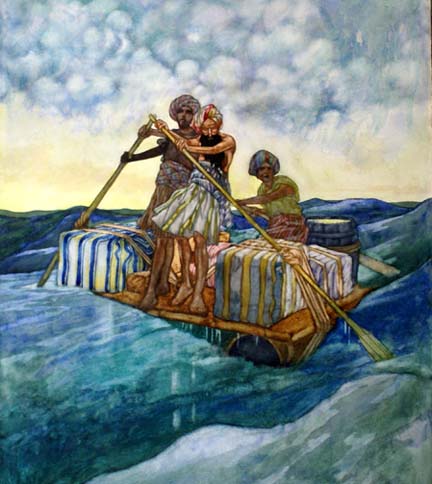
The Third Voyage of Sinbad, by Charles Robinson (1870 – 1937)
[Webshaykh’s Note: This last semester I taught an Honors Seminar on the Arabian Nights. The last assignment asked students to write the 8th voyage of Sindbad, drawing on what happened in earlier voyages. I will post several of these here for your enjoyment. This is the fifth one I am publishing by Becky Cuthbertson The fourth is by Mahmoud Abdelaziz. The third is by Peter Otis. The second is by Marissa Priest. For the first by Taryn Teurfs, click here.]
The Eighth Voyage of Sindbad the Sailor
by Becky Cuthbertson
For many years after his seventh journey, my father Sindbad the Sailor stayed at home, resuming his former lifestyle. He was joyous at my birth and that of my sister’s. We lead a life of indulgence and happiness; we had all the luck in the world. Many years later, my father sat at home with his wife, my mother, by the fire; they watched my sister and I play. He thought that it was a shame that my sister and I would never meet our grandfather; my parents fled my grandfather’s great city where men turn into birds and my father swore never to sail again. Smiling at my mother, he announced that we were journeying to see our grandfather; we were sailing next week.
My mother looked at him curiously, “Husband, have you not sworn to never sail the seas again?â€
He smiled broadly, “Yes my dear but I shall press my luck one more time; I am not sailing for excitement or adventure but to visit family. Allah should not begrudge me that.â€
So the following week we set off, sailing to find the city of my grandfather. A few days out to sea, a storm hit. The ship was rolling, rain down pouring, and wind gusts pitched the ship from side to side, almost capsizing us several times. All of us prayed to the Almighty God to protect us, save us, and deliver us from harm while the crew worked to stabilize the ship. Lightening began to strike off in the distance, but at every crash, a bolt loomed nearer and nearer. The captain bolted down below and brought up with him chalk. Murmuring to himself, he began to draw patterns all along the rails.
“Captain,†my father called, “why are you drawing with chalk all over the ship?†Continue reading The 8th Voyage of Sindbad: #5
Power corrupts and corrupts
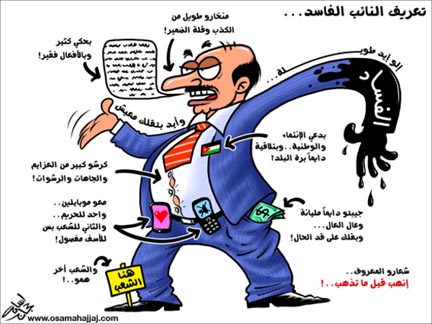
Yemen Press is reporting that they have uncovered documentation that the head of military finances in Yemen from 1998-2009, ‘Abd al-Mun‘im al-AdÄ«mÄ«, appropriated about 281 million riyals for his own use during the Salih regime. As his name suggests, he was indeed a slave to the role of benefactor, but not in the hallowed religious sense. Such corruption is not unique to Yemen, as dictators and monarchs do the same all the time. Power corrupts, as it has since records have been kept. The political cartoon accompanying the article speaks for itself…
Arab Love Songs

The Library of Congress has archived many of the Gramophone recordings from the early part of the last century. This includes several vaudeville songs about Arabs. One of these, about Egypt, is “Arab Love Song” sung by Harry Macdonough for Victor Records, made possibly as early as 1908. My personal favorite is “Sahara (we’ll soon be dry like you),” a prohibition era song recorded by Esther Walker in 1919. There are also comedy routines, like the schtick by Charles G. Widden on “Peterson at the Turkish Bath”. Then if you want a one-step from 1918, try “Arabian Nights” by the Waldorf Astoria Dance Orchestra or the fox trot “Oriental Love Dreams,” recorded in 1924 by Coon-Sanders Original Nighthawk Orchestra or “Harem Life” recorded in 1919 by the Paul Biese Novelty Orchestra.
With Baldensperger in Palestine #5
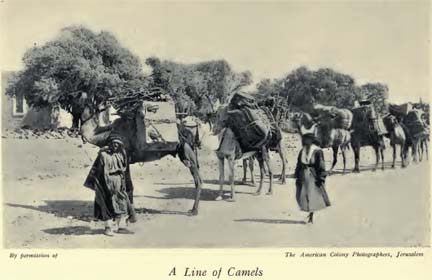
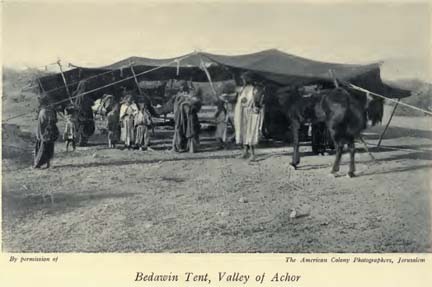
As begun in a previous post, here are several vintage photographs from Philip J. Baldensperger’s The Immovable East, published in 1913, and available for free as a pdf at archive.org
Qatar’s Social Divide

Qatari women as depicted on the main website of the Qatar Chamber of Commerce
Qatar’s social divide: hindering a pathway to the future?
By Michael Stephens, Open Democracy, June 10, 2012
When considering what Qatar might have in common with Arab countries which experienced revolutions following December 2010, one might get easily confused. There was no Arab Spring here, people did not take to the streets in protest. Indeed, most Qataris hold a genuine affection for the Emir, something which cannot be said for many other Arab nations.
It follows then that Qatar must be unaffected by the macro social processes that led to the outbreak of the Arab Spring. For if Qatar did not experience any of the symptoms it surely did not suffer from the illness, right?
Wrong, Qatar, like every Arab country in the world is struggling to deal with a number of social issues,ranging from a youth demographic boom, to political Islam, to inherent tribalism which pervades the public sphere.
Of most importance is the struggle between traditionalism and modernity, between the values of a mostly Bedouin orientated society clashing against western ideas. The struggle that many of the country’s young population go through on a daily basis is painfully obvious, as they attempt to combine the expectations of their families with growing up in a globalised world which their parents fundamentally do not understand.
This social cleavage leads to a society which awkwardly steps into the future, leading the ruler Sheikh Hamad Al Thani to plot a course which combines a mix of modernising polices on one hand with concessions to conservative forces on the other.
In recent years, this process has begun to accelerate. Continue reading Qatar’s Social Divide
Ansar al-Sharia on the Ropes?
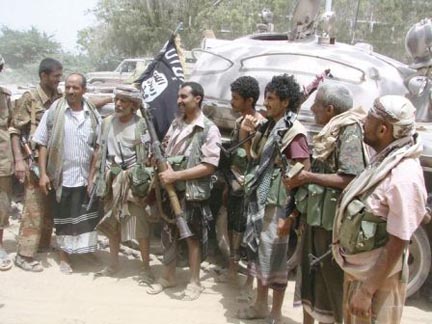
The news today is that Yemeni government troops and local tribal militia have finally dislodged the ultra-conservative Ansar al-Sharia from their base in the southern towns of Ja’ar and Zinjabar. These cities had been under de facto control of the rebels for over a year, with the military weakened during the long drawn-out political turmoil that eventually led to the removal of Ali Abdullah Salih. According to al-Jazeera, “Since the offensive began, 485 people have been killed, according to an AFP tally combined from different sources. This includes 368 al-Qaeda fighters, 72 soldiers, 26 local armed men and 19 civilians.” Without question this is a major blow to a group that used foreign fighters and was increasingly at odds with local tribes. During their tenure both towns had become virtual ghost towns where a distinctively non-Yemeni form of Islamic law was mandated by force. Details thus far are rather skimpy. but it appears that the remaining individuals of Ansar al-Sharia fled east to al-Shaqra.
The question remains, of course, of whether this is a major blow to Ansar al-Sharia and its affiliated partner al-Qaida in the Arabian Peninsula or a skirmish. Given the massive external support now being given to the central government, I strongly suspect that this is the beginning of the end for Ansar al-Sharia as a fighting force. It has survived thus far on weapons looted from the army with almost no direct outside support apart from an influx of foreign fighters from Afghanistan and Somalia. The agenda of Ansar al-Sharia, like that of AQAP, has failed to find fertile ground among the bulk of the population with outright antagonism from most tribal leaders. It has flourished primarily due to the weakness of the government over the past year. Continue reading Ansar al-Sharia on the Ropes?