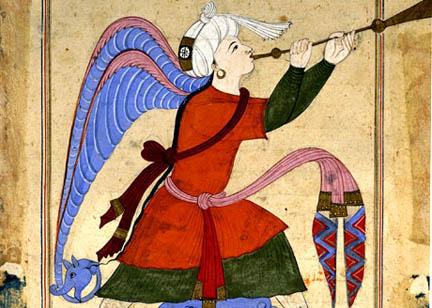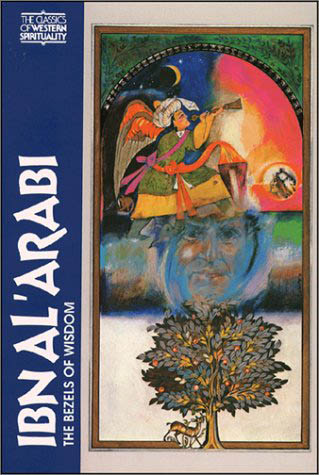
Cover of Ibn Al’ Arabi’s The Bezels of Wisdom (The Classics of Western Spirituality)
edited by R.W. Austin
[The following is part four of a series on a lecture presented in the Hofstra Great Books Series on December 5, 1993. For part three, click here.].
The Devout Scholar and the Text
In Islam there have been and continue to be both conservative and radical “theologians,” those whose wisdom almost anyone can benefit from and those who leave for posterity mainly the marks of their own highly strictured ignorance, mystics who dare to see beyond the literalist trap imposed by an all-too-human language and unthinking clerics who cling to tradition for little more than tradition’s sake.
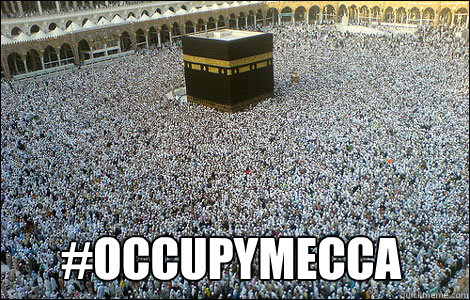
From the wide array of Islamic scholars, it would be impossible to say who has been the wisest, the most respected, the most influential. But certainly on the short list we would find Muhyi al-Din Muhammad Ibn al-‘Arabi, an extraordinarily well-traveled man of the late 12th and early 13th centuries A.D. Born in Islamic Spain, he traveled that seemingly vast symbolic distance across the Mediterranean Sea to Tunis, made the pilgrimage to Mecca (Islam’s sacred capital) in 1202 CE, and after traveling throughout the central lands of the Islamic Empire, eventually settled in Damascus, where he became a highly respected teacher for the last eighteen years of his life. He himself had studied with over 90 masters and produced (we are told) an estimated 700 distinct texts (some 400 of which are still preserved), several of which could rightly qualify in this series as “great books” in their own right. His magnum opus, called Futuhat al-makkiya (The Meccan Openings) is a vast encyclopaedia of Islamic knowledge and Quranic interpretation; it would cover perhaps some 17,000 pages in a formal published edition. Continue reading The Quran as a Great Book: Muslim Perspectives, 4