Hakadha (Thus Spake Zahed Sultan)


Zahed Sultan Releases ‘Revolutionary’ New Song & Music Video

Watch Zahed Sultan’s new ‘Like This (ha-ka-tha)’ music video on www.youtube.com/zahedsultan

Sign up on www.mousemusic.org and download free ‘Like This (ha-ka-tha)’ wallpaper for your computer.

Zahed Sultan announces the release of his new song & music video entitled “Like This (ha-ka-tha).” The song pays tribute to the social frustrations that have plagued the MENA region prior to the Arab Spring. In classical spoken-word Arabic, Zahed calls upon the Arab people to stand in unity, against tyranny, with a sense of civic pride.

In his music video, Zahed gives a gripping account of the revolutions as they sequentially unfold in each Arab country through use of raw-footage (shot by protestors with cell-phones) and stop-motion animation.

Be an active part of the change happening around you and share Zahed’s latest song & music video with your network!

About The Artist

Zahed is a music producer and social entrepreneur from Kuwait. He released his debut album “Hi Fear, Lo Love” on April 1st 2011and attained success with his 2nd single “I Want Her But I Don’t Want Her.” Parisian Dj, Stephane Pompougnac, featured the single on the internationally acclaimed Hotel Costes 15 compilation, which was released on Sept. 26th 2011. Continue reading Hakadha (Thus Spake Zahed Sultan)

Faith confronts culture in “American Dervish”


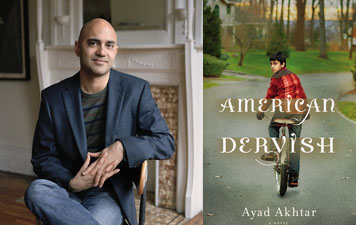
Author Ayad Akhtar, left

by JENNIFER S. BRYSON, Contending Modernities, August 7, 2012

American Dervish, by American actor and author Ayad Akhtar, is set in one of the many places in the world with vibrant Muslim communities. In this case: Wisconsin.

Akhtar skillfully develops wonderful characters. As I delved into this novel I kept wanting to find more and more time to read so I could find out what would happen to characters such as the main figure Hayat; Mina, a dear family friend; and Mina’s suitor, the kind Jewish doctor Nathan. Also, Akhtar powerfully tackles the serious, generally taboo topics of Jew-hatred and domestic abuse. (This courageous novel goes beyond abstract “anti-Semitism”; American Dervish confronts outright hatred and its real-life consequences.)

Quran “translation” conundrum

Along the way, American Dervish has one of the most interesting wrestling matches I’ve seen yet over whether or not to make the Quran accessible in languages other than Arabic for people who do not know Arabic. (While I as a non-Muslim am an onlooker to these intra-Muslim “wrestling” matches, I myself have sat through more than a few Catholic Masses in Latin trying to figure out why we weren’t using a language the people present would actually understand.) Continue reading Faith confronts culture in “American Dervish”

Ali Abdullah Salih: Not invincible, not invisible


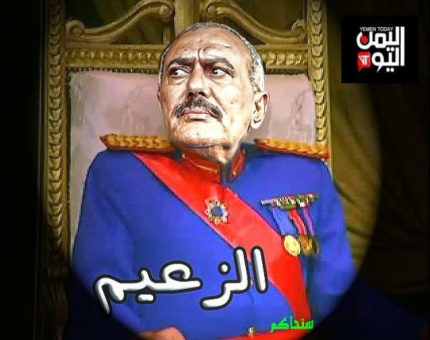
A little over six months ago, Ali Abdullah Salih finally resigned himself to the fact that he was no longer wanted by the people of Yemen or the international community as president-for-life in Yemen. But instead of taking his stashed away millions to exile in Saudi Arabia, which has open-armed several past dictators with Muslim names, or bribing a poor country to host him and his family, he remains in Yemen. I suspect when someone is in power for as long as Salih was, that delusion is the normal path. Perhaps he thinks that if things keep on getting worse (ignoring the fact that the problems are largely his own creation), Yemenis will bring him back. Perhaps he has heard those Iraqis who say things were better under Saddam? Perhaps, but his delusion contributes to the problem as long as he is living in Yemen.

Salih played the “dancing on the heads of snakes” game throughout his tenure at the head of the Yemeni state. He built a family-run state, allying himself with tribal powerbrokers like Shaykh Abdullah al-Ahmar, and shaping the military into a private army. Corruption was rampant and few Yemenis were fooled by the state-tun media myth of Salih as the father of his country. His triumph of uniting north and south was a ruse from the start, extending his control rather than actually caring to build a united country. But his downfall is largely due to backing the extremists, the Jihadis back from Afghanistan, those whose ideology he could never uproot for his own advantage. When his troops took over Aden in the 1994 civil war, Salih allowed northern zealots to raze religious shrines and demolish the one beer factory in the country. As the zealots shouted “Allahu Akbar” the guy in the presidential palace could only think of himself as the “akbar.” Building a monster mosque in the capital, not unlike Saddam’s architectural piety, could hardly disguise the fact that here was a man who worshipped himself. He was not the first to do so, is not alone in doing so, and will not be the last. Continue reading Ali Abdullah Salih: Not invincible, not invisible

Occupy Mecca


by Omid Safi, Religion News Service, August 28, 2012

It is time, and past time, to Occupy Mecca.

I am adamantly not talking about a disaster US occupation, a la Iraq and Afghanistan.

What I am calling for is nothing less than millions of faithful pilgrims saving Mecca from destruction.

I would call the destruction imminent, except that it is not imminent. It has already happened.

No, it’s not the Americans, or the Israelis, who would be destroying Mecca.
It’s the so-called Guardians of the two holy sites (Mecca and Medina), the Saudi royal elites, who have negligently stood by over the last two decades as the majority of holy sites in these two most sacred Muslim cities have been destroyed, sacrificed to the false gods of modernization, capitalism, and progress.

Saudi Wahhabis have a long history of destroying shrines, including those of the family of the Prophet in Saudi Arabia and Iraq. Continue reading Occupy Mecca

The Quran as a Great Book: Muslim Perspectives, 6


The angel Israfil from the Aja’ib al-Makhluqat of al-Qazwini, Mamluk, period. Illustration in the British Museum

[The following is part six of a series on a lecture presented in the Hofstra Great Books Series on December 5, 1993. For part five, click here.].

Concluding Remarks

The most important part of any lecture, assuming one is not completely turned off in the first minute or two, is supposed to come after the words “in conclusion.” In conclusion. This means there must be a need to conclude something. Regarding the Quran as a great book, there is little need to conclude anything. The mere fact that this talk was scheduled and that you came shows that a sacred scripture commanding the attention of so many people on earth warrants consideration. Regarding how Muslims view the greatness of their Great Book, there is too much to conclude, too great a gap in experience, too challenging a call for empathy. Rather than try to tell you what the Quran is in a nutshell, I would simply ask that sometime soon you try reading it or at least a selection of excerpts. A good place to start is the superb translation of select texts by Michael Sells’ Approaching the Quran.

However, having raised the issue of The Satanic Verses in a lecture on the Quran, a final comment does need to be made. If I were to simply tell you that most Muslims approach their sacred book quite differently, as I see it, than others approach their scriptures, you would probably say “alright, so things are different, so they have a right and we have a right, so what?” Even if the statement of faith outlined in the fatiha or the line of reasoning articulated by a brilliant scholar like Ibn al-‘Arabi is instructive, you would probably still walk away tonight basically unchallenged and unchanged. Continue reading The Quran as a Great Book: Muslim Perspectives, 6

The Quran as a Great Book: Muslim Perspectives, 5


Salman Rushdie, author of The Satanic Verses

[The following is part five of a series on a lecture presented in the Hofstra Great Books Series on December 5, 1993. For part four, click here.].

The Struggling Believer’s Novel and the Text

I could easily continue this discussion of the views of Ibn al-‘Arabi for hours, days, or weeks (how long would it take to simply read 17,000 pages in his major work?) It is valuable to probe with a believer like this great scholar into the depths of his own meaning-rich search through the language of the Quran. But much has happened in the past 750 odd years in the Islamic World. Muslims, through no fault of their own, have been caught up in a broadening discourse defined in large part by the overtly Christian West, even though any distinctive Christianness may have largely eroded. In contrast, Ibn al-‘Arabi lived in a world in which the Quran’s detractors — those who did not grapple with this Arabic text as a revelation — were few and far away. To be sure there were debates over the form of the revelation, although these were tilted to orthodoxy rather early on. But in his day there was no viable reason in the Muslim context not to accept the Quran as revelation.

Muslims over the past couple of centuries have been compelled to defend the Quran against what they believe is a secular war aimed at the integrity of their religion. The heartland of Islam since the 16th century has been dominated by Ottoman Turks (Muslim converts, it must be remembered) up until this century, with European colonial powers nibbling away at the often frayed edges of the Sublime Porte. The more recent raw power politics of this century, be this the regimen of Western-trained military elite takeovers, the imposition of secular Israel in a predominantly Islamic Middle East, the cleric-driven drive for a militant, rejectionist radicalism in Iran and Afghanistan, the dirt-poor rage of simple Egyptian fundamentalists, the cold war Sadaamizing of Kuwait, the collective blinking as Bosnia bleeds non-Christian blood — these events have sharpened the frustration and anger of Muslims wherever they are. And at least three out of four Muslims are not in the Middle East. While we only rarely see these events on our evening news, for Muslims they are far more than ubiquitous sound bites; they are rather like pages torn without mercy, without compassion from their great book. Continue reading The Quran as a Great Book: Muslim Perspectives, 5