by Reem Jazim
It is perfectly ordinary to feel like taking a shower or relaxing in a bathtub: you fill the tub with warm water and sink into it. For Yemenis—and especially for me—this simple scene can feel almost like a dream.
At the beginning of the war, despite the devastation surrounding us, we Yemenis tried to keep living as normally as we could, holding on to the lives we had known before the war. But circumstances kept forcing us onto a different path.
When the war began, I had just gotten married. My husband and I chose an apartment close to his workplace, even though it did not have many of the features you might hope for in a home. In fact, it was a partially damaged apartment. The walls of the kitchen and bathroom were cracked and partly broken as a result of the explosions caused by airstrikes. The landlord had promised to repair them, but that never happened.
When we rented the apartment, I was actually happy about the idea of fixing it myself and creating romantic memories there with my husband. Its greatest advantage was its location: it was close to where we worked.
But I soon lost the reason that had made me willing to overlook everything else. I could no longer stay at my job. Most of the embassies funding the projects of civil society organizations had withdrawn from Yemen just weeks before the war began, and many employees were laid off.
Still, we could not leave the apartment. Large numbers of people were being displaced within the city, and the collapse of the currency had sent rents soaring. Fortunately, our landlord did not raise our rent by much. He knew very well that his apartment was almost falling apart, and that no one else would agree to rent it for much more than what he was already charging us.
Then the war began taking away the things we had once taken for granted.
Water and electricity were cut off. Gas, oil, and gasoline became difficult to obtain. People had to find ways to provide these basic necessities for themselves.
The apartment still had one feature I considered a luxury: the bathroom had a bathtub.
After a long, exhausting day, I would imagine filling it with warm water and relaxing, or simply taking a refreshing shower. Instead, the bathtub became a reminder of what we could no longer afford to take for granted.
The water crisis had existed in Yemen long before the war, but the war made it much worse. We became completely dependent on what we Yemenis call white water: trucks carrying large tanks of water from wells and delivering it to the tanks on the rooftops or in the yards of our homes, for a fee.
Even the price of bottled water increased because of the rising cost of fuel needed to pump and transport it.
Our apartment’s water tank was tiny—only 500 liters—so every drop had to be used carefully. Filling a bathtub with water was an unimaginable luxury under those circumstances. And without electricity, things became even harder because we could no longer rely on electric water heaters to warm the water.
Before the war, electric water heaters were how we heated water. Yemen’s mountainous and desert regions can be surprisingly cold, with dry winters and rainy summers. When public electricity became unreliable or unavailable, Yemenis turned to solar energy instead.
I remember once watching a documentary about solar energy and learning that Japan was one of the countries leading the way in using it as an environmentally friendly alternative. I remember thinking that a country like Yemen would never turn to such technology. Yemen was not a developed country, and environmental concerns were hardly a priority.
I was completely wrong.
Yemen developed a huge market for imported solar panels and batteries, and Yemenis became remarkably knowledgeable about the technology. People learned to calculate watts and amps and figure out which electrical appliances could run on solar power and how to make their systems as efficient as possible.
But solar panels and batteries were expensive, and not everyone could afford them. And even those who could afford a system often could not afford one large enough to provide electricity throughout the entire day.
In our home, the electricity would surrender every night at around ten o’clock. After that, we would spend the rest of the night without power. On cloudy days, the system might give up much earlier—around four or five in the afternoon—when the sun could no longer prove its worth.
Private companies eventually began providing electricity through privately run networks, but their bills were expensive. We needed them anyway, so we learned to be extremely careful about which appliances we used. The refrigerator, for example, became something we could no longer run regularly, as was the case for many Yemenis.
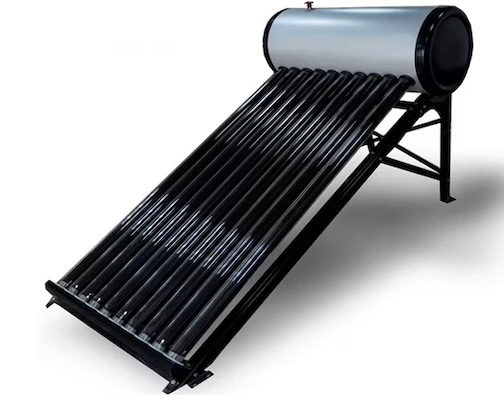
For cold water, we found another solution: solar water heaters. They worked beautifully, but they were expensive too.
One of my little dreams was to have a small solar water heater so that I could finally escape the daily struggle of bathing.
Until then, we used a large kettle that we kept specifically for heating bathing water. We would pour the hot water into a small bucket and mix it with cold water until the temperature was right.
I wished I could use the shower—even just once—and have both hands free while I bathed.
That was surprisingly difficult with a bucket. One hand had to pour the water over my body while the other did the washing.
Two years ago, I was very grateful that my husband managed to buy a solar water heater, and that particular struggle finally came to an end. We still struggle a little on rainy days.