Category Archives: Ethics

Where is the salam dunk?


The epitome of Arabic greetings is salam alaykum, peace be upon you, but it seems that the Middle East harbors more harb (war) than peace these days. It can be argued that this is hardly new for a region that has seen more warfare over time than any other. Perhaps the characterization of the region as the Holy Land has as much to do with the amount of human blood spilled on its soil as for the number of prophets preaching peace. But today’s news cycle is particularly sad because nowhere does there seem to be much hope for furthering the peace that most people are dying to achieve. The violence drones on and on.

As former President Mubarak lies in a coma, many Egyptians are once again flooding Tahrir Square to contest the military’s coup-like takeover of political power, although perhaps it should be styled a makeover, since they have held de facto power all along and will continue to do so no matter who is elected. To Egypt’s south far less individuals took to the streets in Khartoum, protesting the Sudanese government. Although Somalia has been pushed out of the major news cycle, the situation there remains as volatile as ever. Crossing over into Sinai, an Israeli construction worker was killed a few days ago and in the escalating tension Hamas has fired rockets at Israel and Israel has launched air raids in Gaza. Syrian violence continues but without the pretense of powerless monitors and the repaired helicopters that were being shipped from Russia. In Iraq pilgrims continue to be targets of bombs and pay for their devotion with their lives. In Yemen the military commander of the brigade that drove Ansar al-Sharia out of their southern base was killed earlier in the week by a suicide bomber. Even in Turkey there has been recent violence from Kurdish nationalists.

Long ago one of the prophets in this region said the immortal words: Blessed are the peacemakers. But how can they be blessed if they are absent? Why does the curse of the warmakers seem to outweigh efforts at peace? If Indeed we recently witnessed an “Arab Spring,” the reality is that spring is part of a seasonal cycle and not eternal. The “fall” of dictatorial regimes is still playing out, but the cold sectarian winds blowing out hopes for peace and the frosted rhetoric of intolerance do not bode well for the tender blossoming of sought freedoms. The region needs a Gandhi, not an Osama or an Assad. The region needs a salam dunk, not a harb to the right. But, if history is any gauge, there will still be no blessings to confer in tomorrow’s news cycle.
Anger over female circumcision in a Muslim sub-sect in India

NY Daily News, Tuesday, April 24th 2012

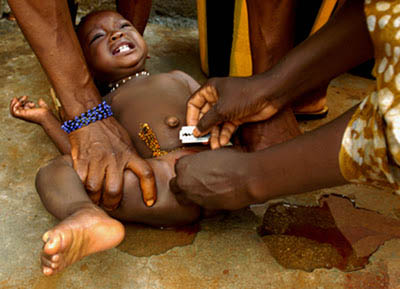
Over 1,600 Bohra Muslim women in India have signed an online petition calling for an end to the practice of female circumcision in the community. The community’s insistence on “Khatna” (the excision of the clitoris) sets it apart from other Muslims in the Indian subcontinent.

Eleven years ago, Farida Bano was circumcised by an aunt on a bunk bed in her family home at the end of her 10th birthday party.

The mutilation occurred not in Africa, where the practice is most prevalent, but in India where a small Muslim sub-sect known as the Dawoodi Bohra continues to believe that the removal of the clitoris is the will of God.

“We claim to be modern and different from other Muslim sects. We are different but not modern,” Bano, a 21-year-old law graduate who is angry about what was done to her, told AFP in New Delhi. She vividly remembers the moment in the party when the aunt pounced with a razor blade and a pack of cotton wool.

The Bohra brand of Islam is followed by 1.2 million people worldwide and is a sect of Shia Islam that originated in Yemen. While the sect bars other Muslims from its mosques, it sees itself as more liberal, treating men and women equally in matters of education and marriage.

The community’s insistence on “Khatna” (the excision of the clitoris) also sets it apart from others on the subcontinent. “If other Muslims are not doing it then why are we following it?” Bano says. Continue reading Anger over female circumcision in a Muslim sub-sect in India

First words since…..burying a 16-year old angel


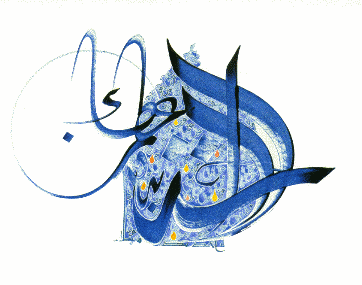
Calligraphy by Hassan Massoudy, an Iraqi artist based in Paris

by Omid Safi, Religion News Service, April 22, 2011

On Thursday, I went to the funeral of a 16-year old angel.

This was not a child, faceless and nameless, that you see buried in a newspaper. This was a child born to a family that I adore, a family whose whole lives has been spent in service to humanity. I was there when this angel came home from the hospital, and I used to babysit her when her mother, a leading scholar of Islamic studies, was finishing her PhD.

This was a child that every one of her teachers called the single most brilliant, creative, and inspiring child they had ever taught.

We put her body in the ground, the machines lowered a cement block on top of the coffin, and each of us scattered a handful of dirt, a rose, and tears, on her grave. Her adopted aunts and uncles sat by the graveside, and recited Qur’an verses to keep her soul company on the journey back to God.

We wept as few of us have ever wept before. We have not stopped crying. This is the kind of weeping that taps into a shattering of a heart.

High school kids with tattoos and dyed hair wept. Those of us who are parents wept for this child, for this family, confronting what is every parent’s absolute worst nightmare. Teachers wept.

Her mother stood up before us, beginning in the name of God, and catching her breath several times as she spoke through tears, softly and clearly. She thanked God for the gift of this beautiful child, for each one of the 16 years. She acknowledged that each of us felt that parents should not bury their own children, but we are not given any guarantees. She said gracefully that while she “strongly disagrees” with God’s plan to call her angel home, she abides in faith and is grateful.

I am a scholar of religion. Pondering these large questions of life—and sadly, death—is what I do, what I am supposed to do. I have looked into my own tradition, Islam, as well as Christianity, Judaism, Buddhism, and others, to find some semblance of explanation, of meaning. Continue reading First words since…..burying a 16-year old angel

For Whom the Death Toll tolls


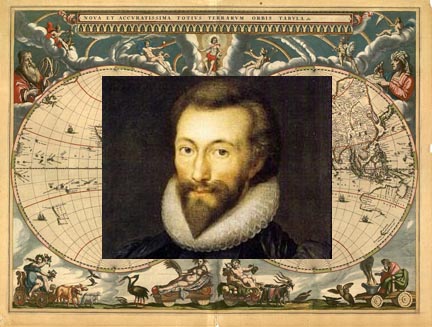
“John Donne and 1664 Dutch map of the world

“No man is an iland, intire of it selfe; every man is a peece of the Continent, a part of the maine; if a clod bee washed away by the Sea, Europe is the lesse, as well as if a Promontorie were, as well as if a Mannor of thy friends or of thine owne were; any mans death diminishes me, because I am involved in Mankinde; And therefore never send to know for whom the bell tolls; It tolls for thee….”
John Donne, Meditation 17, Devotions upon Emergent Occasions, 1624

What was true some four centuries ago for the English metaphysical poet John Donne is timeless, even if his writ shows its linguistic age. Today it can also be said that no country is an island unto itself, no matter where or how you spin the globe. This is certainly the case for the United Sates, with our military still on the ground in Iraq and Afghanistan, targeted drones over Pakistan and Yemen, the smoldering aftermath of the bombs that brought down Qaddafi in Libya, the stench of made-in-the-USA arms just about everywhere. If, as Donne eloquently reflects, the death of any man (or woman or child) diminishes us, then why are we so hell-bent on adding to this diminishing by arming thugs and sending our military to die in other countries?

First, it is important to realize how much the death toll drones on daily. Take today, for example. On Al-Jazeera we learn there are “many dead in Afghanistan suicide blasts,” 18 dead and 45 wounded by the numbers. As the nominal peace part still fails to protect the dictator-weary people of Syria, reports are that some 9,000 have been killed so far by the Assad regime, including refugees over the border in Turkey. There are also “Pakistanis dead in apparent sectarian attack,“adding six more to the thousands who have been killed in the ongoing violence that plagues Pakistan. The see-saw fighting in Yemen’s troubled south leaves “Dozens killed in attack on Yemen army base.” And a few days ago “Hamas hangs three Gaza prisoners“. Continue reading For Whom the Death Toll tolls

For the love of Jesus


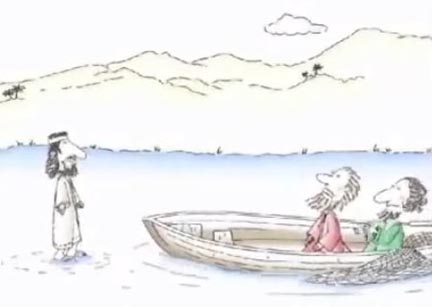
There are a number of issues on which Christians and Muslims agree, despite the historical antagonism that Islamophobia and Sectarianophobia perpetuate. For example, boycotting the power drink “Red Bull” in South Africa. A recent ad showed Jesus walking on the water after he drank “Red Bull”, stepping gingerly on the rocks that he could see beneath his feet in the water. The only miracle was in the drink, if you follow the ad. While the advertisers did not expect people to take the ad literally, gulp down their “Red Bull” and promenade without their water skis, the premise of the ad indeed denies the miracle, a denial that many Christians accept post-Hume with little problem. As reported in The Washington Post and picked up by a number of Muslim media outlets, such as Cii, South Africa’s Roman Catholic hierarchy told the faithful to give up “Red Bull” for Lent. And then, South Africa’s Muslim Judicial Council, in solidarity, joined the boycott by saying that an affront to the Prophet Issa (Jesus) is an affront to Muslims.

From the Catholic perspective, at least one that focuses less on “turn the other cheek” and more on “Get thee behind me, Satan,” the moral outrage is understandable. Think of a possible amendment to the catechism as follows:

Question: “What would Jesus do if a television commercial made fun of his miracles?
Answer: “If you believe that Jesus walked on “Red Bull”, then render unto “Red Bull”, but if you believe Jesus walked on water, then don’t drink this whited sepulcher of a beverage during Lent. Remember that at the wedding in Cana Jesus turned the water into wine, not “Red Bull.”

Although I have not found any specific news accounts, I suspect that the Bible-believer missionaries will forego “Red Bull” as well, even if they don’t hold fast to the Lenten fast.

But the fact that a major Muslim organization in South Africa has joined in condemnation of the ad is a cautious welcome sign, no matter what you think of the ad itself. Continue reading For the love of Jesus

Berserk, Breivik and Barzakh


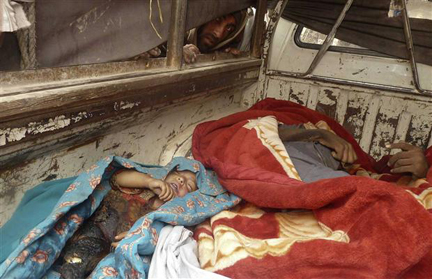
An Afghan man looks over the dead bodies of people killed by coalition forces in Kandahar province, March 11, 2012. Afghanistan’s defence ministry said coalition forces killed 15 civilians in a shooting spree in Kandahar province on Sunday.
Photograph by: AHMAD NADEEM, REUTERS

The senseless killing of more than a dozen Afghan villagers, while they slept, by a U.S. soldier has captured the headlines worldwide. Many of these headlines are variants of “In Afghan Civilian Killing Rampage, U.S. Soldier May Have Gone ‘Berserk'” The choice of “berserk” to describe this act is telling, since the word itself derives from old Norsk in reference to, as the OED puts it, “A wild Norse warrior, who fought with frenzied fury.” In the Norse legend, however, the warrior had a cause, while the Rambo-rampage here was a solo act, a random act as far as war strategy is concerned. The explanation that immediately comes to mind is that he “lost his marbles,” perhaps because those marbles had been jostled too many times during his three tours in Iraq.

A few days ago a court in Norway ruled that Anders Behring Breivik, “the 33-year-old right-wing extremist psychotic,” as USA Today terms him, might go to a psychiatric ward rather than prison for his “bomb and shooting rampage” that left 77 people, many who were young people, dead. News reports also labeled Breivik as someone “gone berserk.” But neither in Norway nor Kandahar do the men who aimed their guns at innocent victims demonstrate any kind of courage in the “just war” alibi. The old Norse warrior Berserk exuded raw courage, battling without armor and with the intensity of a bear or wolf. Of course, he was not a good man, having killed his wife after she delivered 12 sons (or so we are told in legend), but his battle-axe was aimed at fellow warriors, not sleeping children. One can understand, even if it is hard to appreciate, the fury of a battle, when blood runs hot as it is slashed out of bodies in hand-to-hand combat. But is “berserk” really the right word for deliberate singling out of men, women and children that in all normality are innocent? Continue reading Berserk, Breivik and Barzakh

A World to Fear or of Fear?


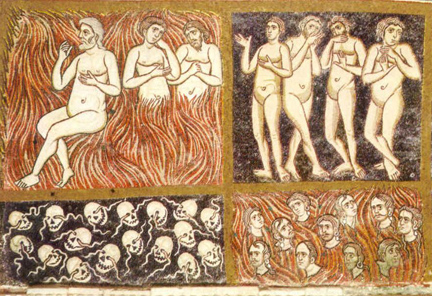
Unknown Artist. Sinners in Hell. Cattedrale di Santa Maria Assunta. Torcello (Italy). 12th century)

Yesterday I had the privilege of hearing a lecture by the anthropologist Talal Asad, who discussed the impact of the Arab Spring revolution in Egypt based on conversations he has held with Egyptians there and with a keen sense of historical insight. In the case of Egypt it is not just that it was sucked into strong-man rule for three decades under Mubarak, but that an entire generation has known nothing but cronyism and a firmly entrenched military elite still holds the reins, despite the street scenes on CNN. No one knows what exactly will happen next, least of all the media pundits who exude an expertise mentality that often borders on the ludicrous. One of the points that particularly struck me as poignant is the role of fear as a key aspect of all power politics. Mubarak, like Ali Abdullah Salih in Yemen and Ben Ali in Tunisia and even the Asad clan in Syria, have justified their self-serving iron grip as a quasi-secular bulwark against the specter of radical Muslims. They pretend to be the right kind of Muslims preventing the wrong kind of Muslims from taking over and returning the region to the 7th century. And Western nations, along with a number of Arab citizens, let fear dictate policy and overrule common sense.

Fear is on all sides, of course. Those who have dared to defy the power of the state have had good reason to fear, as the bloody security apparatus let loose in Syria amply demonstrates. Any trumped-up kind of “other” is an easy target for fear, especially when religious or ethnic identity is ascribed. In fact, as Talal noted, Mubarak went to great lengths to foster tension between Copts and Muslims in Egypt, creating fault lines for conflict where mutual cooperation had often been the norm. Religious sects do it to each other, dragging out the infidel charge and the heresy alibi whenever convenient. This is not at all unique to the Middle East or those who call themselves Muslims. When Rick Santorum states that President Obama does not base his policies on the Bible and Franklin Graham questions the president’s faith, religious passion is harnessed for political gain.

But what do we really mean by “fear”? Continue reading A World to Fear or of Fear?

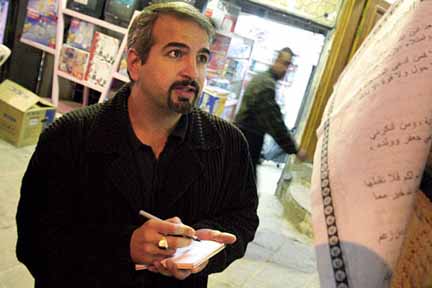
Anthony Shadid’s Last Article


The late Anthony Shadid

[The recent passing of New York Times reporter Anthony Shadid leaves a large gap in their coverage of the ongoing crises in the Middle East. Here is his last article on the political climate in Tunisia.]

Islamists’ Ideas on Democracy and Faith Face Test in Tunisia
By ANTHONY SHADID, The New York Times, February 17, 2012

This article was reported and written before Mr. Shadid’s death in Syria .

TUNIS — The epiphany of Said Ferjani came after his poor childhood in a pious town in Tunisia, after a religious renaissance a generation ago awakened his intellect, after he plotted a coup and a torturer broke his back, and after he fled to Britain to join other Islamists seeking asylum on a passport he had borrowed from a friend.

Twenty-two years later, when Mr. Ferjani returned home, he understood the task at hand: building a democracy, led by Islamists, that would be a model for the Arab world.

“This is our test,” he said.

If the revolts that swept the Middle East a year ago were the coming of age of youths determined to imagine another future for the Arab world, the aftermath that has brought elections in Egypt and Tunisia and the prospect of decisive Islamist influence in Morocco, Libya and, perhaps, Syria is the moment of another, older generation.

No one knows how one of the most critical chapters in the history of the modern Arab world will end, as the region pivots from a movement against dictatorship toward a movement for something that is proving far more ambiguous. But the generation embodied by Mr. Ferjani, shaped by jail, exile and repression and bound by faith and alliances years in the making, will have the greatest say in determining what emerges.

Their ascent to the forefront of Arab politics charts the lingering intellectual and organizational prowess of the Muslim Brotherhood, a revivalist movement founded by an Egyptian schoolteacher in a Suez Canal town in 1928. But intellectual currents that once radiated from Egypt now just as often flow in the other direction, as scholars and activists in Morocco and Tunisia, perched on the Arab world’s periphery and often influenced by the West, export ideas that seek a synthesis of what the most radical Islamists, along with their many critics here and in the West, still deem irreconcilable: faith and democracy. Continue reading Anthony Shadid’s Last Article