Category Archives: Countries

The School of Mamlūk Studies


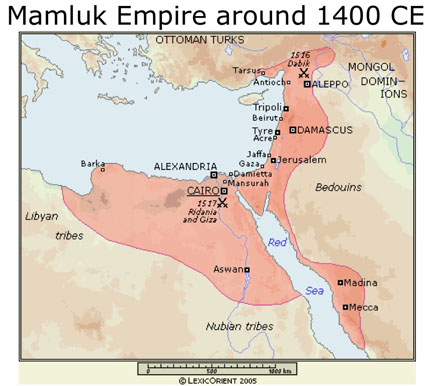
The School of Mamlūk Studies (SMS) is administered by the Universities of Chicago (Ill., USA), Liège (Belgium), and Venice (Italy), respectively represented by Marlis Saleh, Frédéric Bauden, and Antonella Ghersetti. It is currently based at the University of Chicago, where Mamluk-related projects such as Mamlūk Studies Review, the Chicago Online Bibliography of Mamluk Studies, and the Chicago Online Encyclopedia of Mamluk Studies are managed. The mission of SMS is to provide a scholarly forum for a holistic approach to Mamluk studies, and to foster and promote a greater awareness of the Mamluk sultanate (1250–1517). It aims to offer a forum for interdisciplinary debate focused on the Mamluk period in all its historical and cultural dimensions in order to increase, address, investigate, and exchange information and knowledge relevant to Mamluk studies in the broadest meaning of the term. Conceived as a meeting for scholars and graduate students working on any of the many aspects of the Mamluk empire, without neglecting its contacts with other regions, SMS offers to everyone working in the field of Mamluk studies the opportunity to attend annual conferences organized in turn by each of the three collaborating institutions.

The annual conferences will be organized around a general or a more specific theme which scholars will be invited to address. In addition, proposals for panels on other relevant subjects may be submitted by individuals, research teams, or institutions. Accepted panels will be held at the end of the thematic conference. On an irregular basis, SMS will also organize seminars in various fields (such as diplomatics, paleography, codicology, numismatics, epigraphy, etc.) which will be aimed at graduate students. These seminars will be planned to take place prior to or following the annual conference in the institution where the conference is held.

Papers presented at each conference on the selected theme will be published as a monograph, while papers presented at the panels will be considered for publication in Mamlūk Studies Review.

The first annual SMS conference is planned for 2014 in Venice. A call for papers will go out in 2013.

Tabsir Redux: Syrian Cuisine, Two Centuries Ago

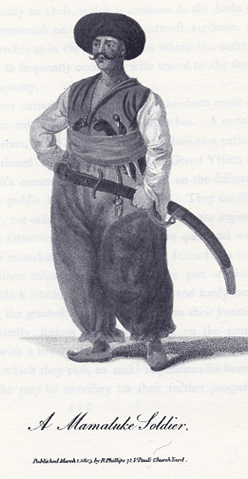
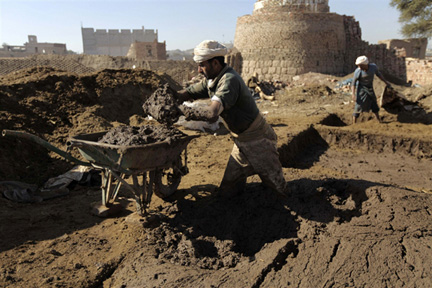
[Note: The following account is by the English traveler William Wittman, who commented on the foods and crops he saw while passing through the Levant in what was then Syria. The spelling is that of the original, from a time when proof reading was a distant concern and spelling was a democratic venture. The picture above is from the original 1803 edition.

Wherever the land is susceptible of cultivation, and has not been neglected, it affords abundant crops of wheat, barley, Indian corn (dourra), tobacco, cotton, and other productions. Fruits and vegetables are in equal abundance. Among the former are pomegranates, figs, oranges, lemons, citrons of an uncommonly large size, melons, grapes, and olives. The melons are large, and have a delicious flavour; as have also the grapes. of which we partook so late as the month of December, when we found they still retained their exquisite flavour. I have already adverted to the uncommon size of the water-melons, many of which weight from twenty to thirty pounds. they are a great and valuable resource to the inhabitants, who are so passionately fond of them, that, during the summer months, they form a great part of their subsistence. Notwithstanding they are as cooling and refreshing, as grateful to the taste, I was surprised to see the natives eat them in such immoderate quantities, without experiencing any unpleasant consequences. Continue reading Tabsir Redux: Syrian Cuisine, Two Centuries Ago

Illuminating Jewish Life in a Muslim Empire


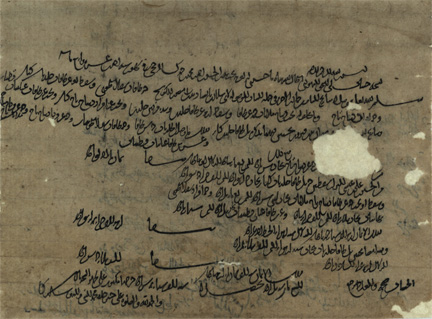
A document attesting to the accounts of Abu Ishaq the Jew (1020-1021CE); The National Library of Israel

By Isabel Kershner, The New York Times, January 14, 2013

JERUSALEM — A batch of 1,000-year-old manuscripts from the mountainous northern reaches of war-torn Afghanistan, reportedly found in a cave inhabited by foxes, has revealed previously unknown details about the cultural, economic and religious life of a thriving but little understood Jewish society in a Persian part of the Muslim empire of the 11th century.

The texts are known collectively as the Afghan Geniza, a Hebrew term for a repository of sacred texts and objects.

The 29 paper pages, now encased in clear plastic and unveiled here this month at the National Library of Israel, are part of a trove of hundreds of documents discovered in the cave whose existence had been known for several years, with photographs circulating among experts. Remarkably well preserved, apparently because of the dry conditions there, the majority of the documents are now said to be in the hands of private dealers in Britain, Switzerland, and possibly the United States and the Middle East. Continue reading Illuminating Jewish Life in a Muslim Empire

And the winner is … Islamophobia


The moral ambiguity of Homeland or Argo is a fitting tribute to the reality of US Middle East policy

by Rachel Shabi, The Guardian, Monday 14 January 2013

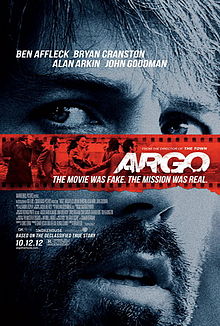
America’s Middle East policy has been enthusiastically endorsed. Not at the UN or Arab League, however, but by the powerbrokers of Hollywood. At the Golden Globes, there were gongs for a heroically bearded CIA spook saving hostages and American face in Iran (the film Argo); a heroically struggling agent tracking down Bin Laden (Zero Dark Thirty) and heroically flawed CIA operatives protecting America from mindless, perpetual terror (TV series Homeland).

The three winners have all been sold as complex, nuanced productions that don’t shy away from hard truths about US foreign policy. And liberal audiences can’t get enough of them. Perhaps it’s because, alongside the odd bit of self-criticism, they are all so reassuringly insistent that, in an increasingly complicated world, America just keeps on doing the right thing. And even when it does the wrong thing – such as, I don’t know, torture and drone strikes and deadly invasions – it is to combat far greater evil, and therefore OK.

When I saw Argo in London with a Turkish friend, we were the only ones not clapping at the end. Instead, we were wondering why every Iranian in this horribly superior film was so angry and shouty. It was a tense, meticulously styled depiction of America’s giant, perpetual, wailing question mark over the Middle East: “Why do they hate us?” Iranians are so irked by the historically flimsy retelling of the hostage crisis that their government has commissioned its own version in response.

Zero Dark Thirty, another blanked-out, glossed-up portrayal of US policy, seems to imply that America’s use of torture – sorry, “enhanced interrogation” – is legitimate because it led to the capture of Osama bin Laden (something that John McCain and others have pointed out is not even true). Adding insult to moral bankruptcy, the movie has been cast as a feminist film, because it has a smart female lead. This is cinematic fraud: a device used to extort our approval. Continue reading And the winner is … Islamophobia

More of the Sham of al-Sham


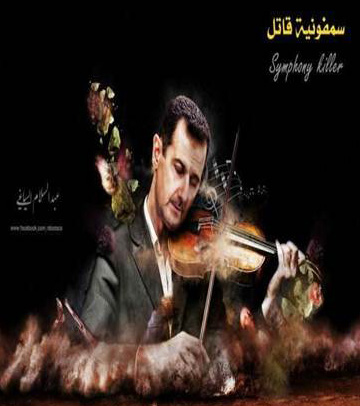
Image source: alhadath.yemen

The demise of Bashar al-Assad continues its downward spiral with bodies strewn all over Syria in the process. What makes him hang on? Can he not see what just about every pundit outside of Syria and increasingly most Syrians see in blood red letters: mene mene tekel upharsin? Even vain Belzhazzar saw the gig was up in Babylon when those lines cracked his banquet hall. Or is he raving mad in the style of Nero, who plucked his lyre while Rome burned? Or is he just a chicken without a head, but who is still trying to bury his head in the sand?

He hangs on for a variety of reasons. First and foremost, because for the time being he can. Russia has not yet told him he has to go and the United States has basically given him leave to do whatever he wants to his own people except gas them. The military has not yet deserted him in sufficient numbers and they are, thanks to Russia, very well armed. Even the hint from the U.N. envoy Lakhdar Brahimi that Assad has been in power long enough is not likely to move the last of the pre-Arab-Spring dictators (not counting kings, sultans and emirs for life) into retirement.

The Syria of 2013 is not that conquered by Umar ibn al-Khattab, not that of Ayyubid Saladin, nor that run over by the Mongols, nor that ruled briefly at the end of World War I by Faisal of Arabia (patron of Lawrence of Arabia and vice versa), nor that which joined the ill-fated United Arab Republic initiated by Gamal Abd al-Nasser in the 1960s. But there are indeed historically-stretched fault lines. Continue reading More of the Sham of al-Sham

Petition for a Kahlil Gibran US Postage Stamp


Sign the Petition for a Kahlil Gibran US Postage Stamp!

Why Gibran?

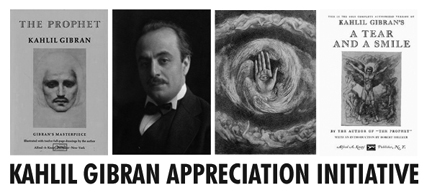
Since his passing, fans of Gibran Kahlil Gibran (1883-1931) have called for a fitting tribute to the poet, author, artist, and philosopher, who remains one of the most renowned figures in the world literary landscape. For Arab Americans and Arabs daunted by political, financial and social uncertainty, Gibran holds a valuable place as the immigrant voice in America. Arab Americans and Arabs have long ago claimed Gibran’s achievements as their own, proudly holding his life and works close to their hearts.

Perhaps this protective emotional engulfing has to do partly with Gibran’s own quest to belong. Early on in his childhood, the Lebanese born poet was rendered homeless after his father was sent to prison for tax evasion, and his property was impounded. Shortly thereafter, the family emigrated to Boston’s South End, where non-English speaking Gibran was told he should Anglicize his name, and refer to himself simply as Kahlil Gibran. Continue reading Petition for a Kahlil Gibran US Postage Stamp

Arab Constitutions and American Freedoms


Virginia Bill for Establishing Religious Freedom; source, Library of Congress

By Anouar Majid, Tingis Redux, January 8th, 2013

The deeply contentious referendum on Egypt’s new constitution last December 2012 gave me some hope that not all is lost to Arabs and Muslims in the aftermath of the revolutions that toppled dictators in the last two years. Given the rapid Islamization of the public sphere in much of the Arab world in the last few decades, I was expecting something close to a landslide, not a small voter turnout and a modest 63.8 percent in favor of the charter. As it turns out, there are still pockets of resistance that oppose the Muslim Brothers and their agenda, even though, as the New York Times columnist Thomas Friedman noted at that time, the divisions are not necessarily between Islamists and secular liberals. The fault lines in Egypt seem to be more varied than what is broadcast in the United States.

Be that as it may, the thing that concerns me the most is what the Western media is talking about, i.e., the clash between those who want a nation governed by divine law and those who don’t want religion to be the absolute reference in legislation. In November 2012, I had the opportunity to make the case for the separation of state and religion to people who participated or are actually participating in the drafting of constitutions in Morocco and Tunisia, a person who ran in the last presidential race in Egypt, members of the Tunisian parliament, a leader of a major Egyptian political party, and many others who are playing some role in the future of North Africa and the Middle East. I also explained why, at this crucial juncture in the region, Arabs and Muslims can’t do better than learn from the American constitutional process and especially the reasons for separating state and religion.

Fewer documents explain more powerfully the reasons for doing so than the Virginia Statute for Religious Freedom, first written by Thomas Jefferson in 1777–only a year after he drafted the Declaration of Independence–and enacted into law in January 1786, with the crucial help of James Madison. Jefferson was so proud of Virginia’s Religious Act that he wanted it noted on his epitaph. Continue reading Arab Constitutions and American Freedoms