Category Archives: Countries

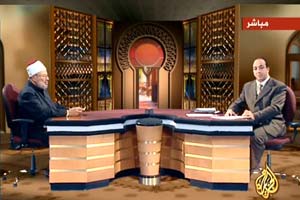
Yusuf al-Qaradawi: Fatwa on Islam and Democracy

by Yusuf al-Qaradawi, Islamopedia, June 27, 2011

The Islamic state is a civil one, like other governments in the modern world and the only difference is that it makes Islamic Shari’a its reference. We would like to highlight, in this chapter, that the Islamic state is based on the Shura Council, allegiance, free choice of the nation to its ruler, advice to him, accountability of him, obedience to him, break of his allegiance if he commands sin, and the nation’s right to dismiss him if he insists on straying and deviation. This approach makes the essence of the Islamic state close to the democratic one.

By democracy we mean political democracy. As economic democracy is concerned, it means capitalism and it has its advantages and disadvantages, so we have been conservative about it while the social democracy means liberalism holding the absolute freedom, and we have been conservative about it too. Capitalism (of Qaron, a king of the past) is unacceptable to us since it is based on an idea of wealth refused by the Holy Quran. As Qaron said about his wealth, “I have been given it according to my knowledge”(stories: 78). Or as people said to Prophet Shoaib, “Does your prayer command us to leave what our fathers worshiped or that we do in our money what we want (Hud: 87).

According to Islamic thought, human being are heirs to the wealth of God. The Quran said: spend of that He made you heirs in it (Iron: 7). The true owner of the wealth is Allah while the rich man is trustee of this wealth and agent of the real owner. So ownership is bound with some duties and obligations as it is constrained in consumption, investment, distribution and circulation. Also, the giving of alms (Zakat) is imposed on the wealthy as one of the pillars of Islam. And usury, monopoly, fraud, injustice, extravagance, luxury, treasuring and other transactions are prohibited to the owners. With these admonitions and law, we could dull the dangerous nail of the capitalism, so as to achieve social justice, care for vulnerable groups in society such as orphans, the needy and the wayfarers, and work on a better distribution of the wealth “in order not to be the circulated among the rich of you” (al-Hashr: 7). Continue reading Yusuf al-Qaradawi: Fatwa on Islam and Democracy

Tabsir Redux: The Land and the Book #1: Looking for an Omnibus?


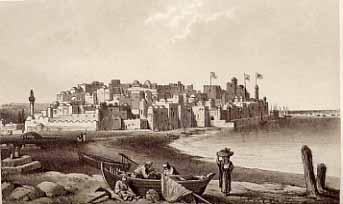
Jaffa from Thomson’s “The Land and the Book”

Almost 150 years ago one of the most popular travel accounts of the Holy Land was penned by an American missionary named William M. Thomson. Born in Ohio, my own home state, the 28-year old Thomson and his young bride arrived in Lebanon in 1834 as Protestant missionaries. This was a mere 15 or so years after the first American missionaries had made the Holy Land a mission field. At once an entertaining travel account and Sunday School commentary on the places and people of the Bible, this may have been one the most widely read books ever written by a Protestant missionary.

Reading Thomson is like reading one of the early English novels. The language is less familiar, although still thoroughly Yankee and the devotional tone has long since disappeared for a readership buying out The Da Vinci Code as soon as it hit the bookstores. The biblical exegesis, literalist yet frankly pragmatic at times, is intertwined with astute and at times humorous accounts of the people Thomson met along the way. But the style is not at all dry or discouragingly didactic. From the start Thomson engages in a dialogue with the reader, making the text (which stretches over 700 pages in the 1901 version) a rhetorical trip in itself.

Here is one of the forgotten books of a couple generations back. Easily dismissed as an Orientalist book, in the sense propounded and confounded by Edward Said, it is nevertheless a very good read. With this post I begin a series to sample the anecdotes and local color presented by Rev. Thomson. The times have indeed changed, but such textual forays into the night reading of a previous generation of Americans are well worth the effort. Let’s begin with the author’s own invitation. Continue reading Tabsir Redux: The Land and the Book #1: Looking for an Omnibus?

Tabsir Redux: The Cynical Dairy Farmer’s Guide to the New Middle East


BY Karim Sadjapour, Foreign Policy, June 15, 2011

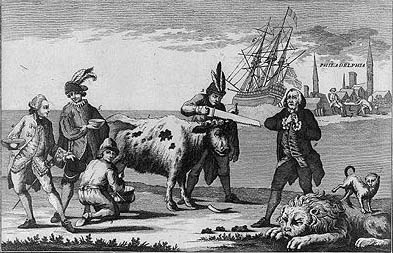
How a couple of cows explain a changing region: equal opportunity offender edition.

In the early years of the Cold War, in an effort to simplify — and parody — various political ideologies and philosophies, irreverent wits, in the spirit of George Orwell, went back to the farm. No one really knows how the two-cow joke known as “Parable of the Isms” came about, but most students of Political Science 101 have likely come across some variation of the following definitions:

Socialism: You have two cows. The government takes one of them and gives it to your neighbor.

Communism: You have two cows. The government takes them both and provides you with milk.

Nazism: You have two cows. The government shoots you and takes the cows.

Capitalism: You have two cows. You sell one and buy a bull.

Over the years, the parables gradually expanded, using the two-cow joke to explain everything from French unions (You have two cows. You go on strike because you want three cows.) to the Republican Party (You have two cows. Your neighbor has none. So what?). While in its original iteration the cows were a metaphor for currency, capital, and property, they later began to take on different meanings.

Today, the Middle East has replaced the Cold War as America’s primary foreign-policy preoccupation. As opposed to the seemingly ideologically homogenous communist bloc, however, the 22 diverse countries that compose the modern Middle East are still confusing to most Americans. Why can’t the Israeli and Palestinians stop fighting already? What’s the difference between Libya and Lebanon again?

Herewith then is a satirical effort to simplify the essence of Middle Eastern governments so that, in the immortal words of George W. Bush, “the boys in Lubbock” can read it. And, rather than symbolizing property, the cows here symbolize people, which — funny enough — is how most Middle Eastern regimes have traditionally viewed their populations.

Saudi Arabia
You have two cows with endless reserves of milk. Gorge them with grass, prevent them from interacting with bulls, and import South Asians to milk them.

Iran
You have two cows. You interrogate them until they concede they are Zionist agents. You send their milk to southern Lebanon and Gaza, or render it into highly enriched cream. International sanctions prevent your milk from being bought on the open market.

Syria
You have five cows, one of whom is an Alawite. Feed the Alawite cow well; beat the non-Alawite cows. Use the milk to finance your wife’s shopping sprees in London.

Lebanon
You have two cows. Syria claims ownership over them. You take them abroad and start successful cattle farms in Africa, Australia, and Latin America. You send the proceeds back home so your relatives can afford cosmetic surgery and Mercedes-Benzes.

Hezbollah
You have no cows. During breaks from milking on the teat of the Iranian cow you call for Israel’s annihilation. Continue reading Tabsir Redux: The Cynical Dairy Farmer’s Guide to the New Middle East

الأزهر والزنداني والدولة المدنية


محمدعبدالملك المتوكل

د.محمدعبدالملك المتوكل, المصدر أونلاين

بتاريخ 21/6/2011م نشرت جريدة الأهرام وثيقة الأزهر بشأن مستقبل مصر وبتاريخ 9 يوليو2011م نشرت جريدة الشارع هجوماً للشيخ الزنداني على الداعين للدولة المدنية والشرعية الثورية مطالباً لهم مراجعة دينهم، ومن المفيد للقارئ أن يعلم أن الأزهر بعلمائه والشيخ الزنداني بجامعته كلهم ينتمون إلى مذهب أهل السنة والجماعة ولكن، وللناس فيما يعشقون مذاهب.

حدد بيان الأزهر أحد عشر مبدأ نذكر منها خمسة مبادئ أساسية تتعلق بنظام الحكم.
الأول: تأسيس الدولة الوطنية الدستورية الديمقراطية الحديثة التي تعتمد على دستور ترتضيه الأمة يفصل بين سلطات الدولة ومؤسساتها القانونية الحاكمة ويحدد إطار الحكم ويضمن الحقوق والواجبات لكل أفرادها على قدم المساواة بحيث تكون سلطة التشريع فيها لنواب الشعب. وينسجم ذلك مع المفهوم الإسلامي الصحيح، فالإسلام لم يعرف لا في تشريعاته ولا حضارته ولا تأريخه ما يعرف في الثقافات الأخرى بالدولة الدينية الكهنوتية التي تسلطت على الناس.. بل ترك للناس إدارة مجتمعاتهم واختيار الآليات والمؤسسات المحققة لمصالحهم مع اشتراط أن تكون المبادئ الكلية للشريعة الإسلامية هي المصدر الأساسي للتشريع وبما يضمن لأتباع الديانات السماوية الأخرى الاحتكام إلى شرائعهم الدينية في قضايا الأحوال الشخصية.
Continue reading الأزهر والزنداني والدولة المدنية

كيف استقبل شباب الثورة بصنعاء ظهور صالح؟!


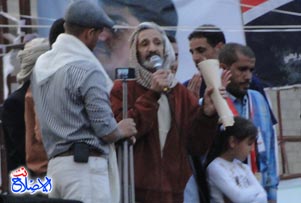
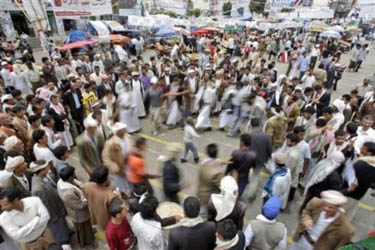
  • الصورة لمتظاهرين في ساحة التغيير بصنعاء في 4 يوليو الجاري (AP).

    لمصدر أونلاين ـ صلاح القاعدي

    تباينت ردود الفعل لدى شباب الثورة في ساحة التغيير بصنعاء من الظهور العلني للرئيس صالح من خلال خطابه المسجل الذي بث يوم الخميس الفائت، وتوزعت بين حالة من الاحتقان والسخط على القوى المحلية والدولية لتأثيرها على مسار الثورة، وأخرى ساخرة.

    الشباب الذين استولى عليهم السخط والغضب نتيجة شعور سيطر عليهم، بسبب تفويتهم الفرص المتاحة لحسم الثورة، التي كان أبرزها فرصة رحيل صالح إلى السعودية. ومع ذلك خرج الشباب في مسيرات تجوب ساحة التغيير مرددين هتافات ضد قوى يعتقدون أنها سبباً حقيقياً في تأجيل حسم الثورة وومن بينها أحزاب اللقاء المشترك ودولتي السعودية والولايات المتحدة الأمريكية.

    وتنامت حالة العداء تجاه السعودية والولايات المتحدة في أوساط شباب الثورة في اليمن خلال الآونة الأخيرة بسبب دور الأخيرتين البارز في حل المشكلة اليمنية، وسط اتهامات لهما بالتواطؤ مع نظام صالح والسعي لإجهاض الثورة السلمية المطالبة بإنهاء حكم صالح المستمر منذ نحو 33 عاماً.

    الاختلاف في الآراء ووجهات النظر كان سيد الموقف حول انعكاسات خطاب صالح، ويرى الشاب سليمان الراشدي ان اتضاح حالة صالح الصحية بعد أسابيع من التضارب، سيسهل في الإقدام على الخطوات القادمة وتحقيق بقية الأهداف التي قامت من أجلها الثورة.

    لكن كثيراً من شباب الثورة جعلوا من ظهور صالح مادة لصياغة النكتة التي تتميز بسرعة انتشارها على قطاع واسع من اليمن بمختلف الوسائل المتاحة.
    Continue reading كيف استقبل شباب الثورة بصنعاء ظهور صالح؟!

  • Breaking News: Salih on Yemeni TV


    from Al Jazeera website

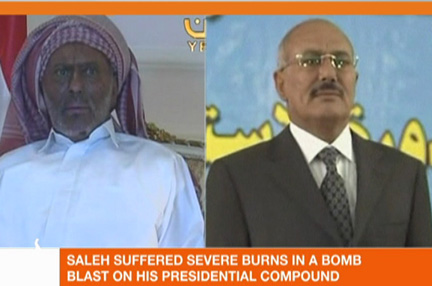
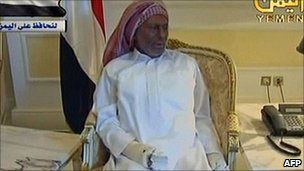
    The first video of President Ali Abdullah Salih since his severe injuries has been broadcast in Yemen just a short while ago. A brief excerpt is already on Youtube with better videos likely to be posted. As the pictures above and below show, he is heavily bandaged and the audio indicates he has trouble speaking. It is hard to imagine that he would be able to resume work any time in the foreseeable future. It appears he is lucky to even be alive. For an interview on Al Jazeera with Dr. Ameen al-Himyari of Qatar University, click here.


    from the BBC website

    Old World Travel 90 years on: #2 The Simoon and Mirage


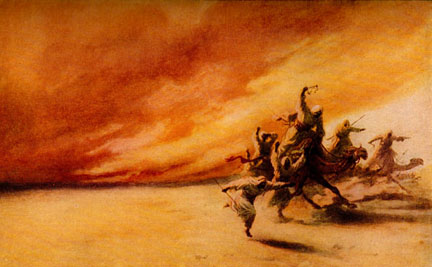
    Exactly 90 years ago a four-volume set of encyclopedia-like human interest books was published as The Human Interest Library: Visualized Knowledge by Midland Press in Chicago. In a previous post I commented on its thoroughly “Orientalist” flavor. Not only was the Sahara portrayed as a barren landscape with people who have nothing to do, but the only winds of change are violent storms summed up in the Anglicized “simoon.” Above is an image from the frontispiece to volume 2 in the series and entitled “The Dreaded Simoon – The Scourge of the Desert”. I have not been able to find the name of the artist, which is clearly pre-1921. The caption reads: “The fury of the simoon is like the blast of a furnace. Winged with the whirlwind. and charioted with thunder, it blasts everything in its course. It has the appearance of a train of fire whose murky smoke fills the whole wide expanse of the desert.”

    Here is the text describing “The Scourge of the Desert” (Vol. 4, p. 97):

    As the color plate shows, the simoon, described by writers, must have presented a majestic and awe-inspiring spectacle. Continue reading Old World Travel 90 years on: #2 The Simoon and Mirage

    An American Treaty on Religion


    Yes, a treaty and not a Humean treatise, although Hume’s treatise on Religion no doubt had an influence on the creators of the text. The third treaty established by the young United States, recently liberated from British rule, with the nations of the “Barbary Coast” was with the Bey of Algiers in 1797. Like the earlier two treaties, the focus was on maritime trade in the Mediterranean and the problem of Barbary “pirates” as well as neutrality of the Barbary states when the U.S. was battling other “Christian” powers. Our Founding Fathers (for surely those members of Congress in 1797 were as close to being Founding Father’s as Sarah Palin’s contorted dubbing of John Quincy Adams, who had just turned 20 and had yet to enter politics) were obviously not working hard to free slaves (as these treaties will bear out), but they did stress a point that many rightwing pundits conveniently gloss over: the United States was not created as a “Christian nation.”

    As you read the treaty below, in celebration of the 4th of July, note article 11 in particular. It turns out that the translation provided to Congress by Joseph Barlow, is not very accurate and the original Arabic version did not contain what we find in Article 11. But in fact, Congress never knew that and only saw the version printed here; this was accepted unanimously and then acknowledged as well by President John Adams at the time. So it was certainly not the contention of the Dey of Algiers that the U.S. was not a Christian nation, but an idea that resonated well with the young Congress.

    Treaty of Peace and Friendship, signed at Tripoli November 4, 1796 (3 Ramada I, A. H. 1211), and at Algiers January 3, 1797 (4 Rajab, A. H. 1211). Original in Arabic. Submitted to the Senate May 29, 1797. (Message of May 26, 1797.) Resolution of advice and consent June 7, 1797. Ratified by the United States June 10, 1797. As to the ratification generally, see the notes. Proclaimed Jane 10, 1797.

    [Translation]
    Treaty of Peace and Friendship between the United States of America and the Bey and Subjects of Tripoli of Barbary.

    ARTICLE 1.
    There is a firm and perpetual Peace and friendship between the United States of America and the Bey and subjects of Tripoli of Barbary, made by the free consent of both parties, and guaranteed by the most potent Dey & regency of Algiers.

    ARTICLE 2.
    If any goods belonging to any nation with which either of the parties is at war shall be loaded on board of vessels belonging to the other party they shall pass free, and no attempt shall be made to take or detain them.

    ARTICLE 3.
    If any citizens, subjects or effects belonging to either party shall be found on board a prize vessel taken from an enemy by the other party, such citizens or subjects shall be set at liberty, and the effects restored to the owners. Continue reading An American Treaty on Religion