Category Archives: Gender and Sexuality

كنّا ابتدأنا


Lebanese House by J. Matar

Poem by George El-Hage

كنّا ابتدأنا

عادتْ لنا الرؤيا وأبكانا اللقاءْ
طفلان لا يشفيهما غير البكاءْ

عادت لنا الأيامُ مزهرةً
ما همّنا الحسّادُ إنْ حسدوا.. سواء

فأبكي.. ولا تخشَي.. على كتفي
أشتاقُ أن تبكي على كتفي سماء

ما أروعَ اللحظاتِ تجمعنا
طيران عن أشواقنا ضاق الفضاء

هذي يدي ذوبي براحتها
عطراً ولوناً بعض بهجته الضياء

وتساقطي سحباً على عطشي
السيف تواقٌ إلى لون الدماء

يا ديمتي يا الآه من وتري
يا البالَ مرسوما بأنفاس الصفاء

إني لأشعر إذ أضاجعكِ
أني أضاجع كل أجناس النساء

أشياؤك الكانت تراودني
ظلّت وعوداً دونها غصص اشتهاء
Continue reading كنّا ابتدأنا

Moroccan Photography Museum


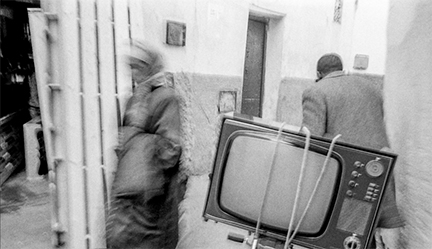
اما المراكشي داود ولد سيد، المتأثر بالمصورين هنري كارتييه بريسو وروبرت فرانك وريتشارد افيدون، فقد تخصص بتصوير الرحلات المنفردة التي قام بها في ارجاء المغرب. في هذه الصورة، ينقل رجل جهاز تلفاز في الرباط.

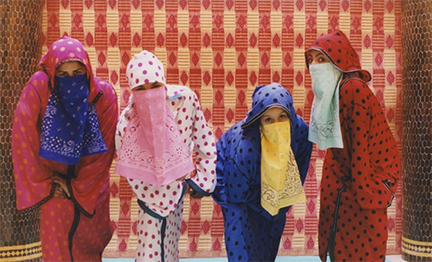
The Arabic BBC website has presented several photographs for a proposed Moroccan Photography Museum in Marrakesh. Here are two of the photographs.


حسن حجاج الذي ولد في المغرب عام 1961 غادر بلاده الى لندن في سن مبكرة. تجمع اعمال حجاج العناصر المرئية لفن تصوير الازياء المعاصر مع فن البوب.

The Boon in Yemen’s Bun


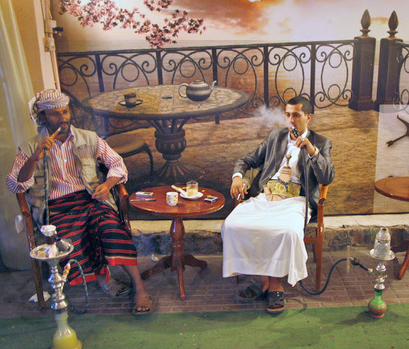
Men smoke shisha water pipes in a cafe in Sanaa, Oct. 1, 2011. (photo by REUTERS/Ahmed Jadallah)

Yemen’s Modern Coffee Shops: Progressive, Yet Exclusive
by Farea al-Muslimi, Al-Monitor, September 5 2013

SANAA, Yemen — Over the past few decades, Yemen has been known to conjure images of serious conservatism, isolation between men and women and male dominance over issues pertaining to daily life.

However, things look different here: A group of boys, girls, men and women are having discussions in modern coffee shops, which have become popular in the past 10 years and have significantly become more common across Sanaa in the past few years, including the historical part of the old city. The coffee shops, however, are more concentrated in the southwest of the city, where the richest and most open neighborhood, al-Siyasi Hadda, is located. They have become posh meeting spots for the privileged classes that can afford it.

There are coffee shops with foreign names that largely resemble any coffee shop in Amman, Cairo or Beirut, but the difference here is that the stone buildings are more elegant and posh.

Waitresses — hailing from Ethiopia and East Asia, alongside a few Yemenis — wear uniforms and serve you with a gentle smile that you cannot find elsewhere in the city. In fact, you usually cannot so much as look at a woman’s body, even if she were covered from head to toe. One can typically see little more than the standard black abaya, or a niqab for the more conservative.

You can order hot or cold beverages and Western snacks, the names of which are unknown to many people. Moreover, you can spot the most modern and cleanest coffee shops if you do not smoke shisha [sweetened tobacco smoked with a water pipe]. Some coffee shops offer it for high prices, while others do not find it suitable to be served in their establishment. Continue reading The Boon in Yemen’s Bun

Make love and make war?


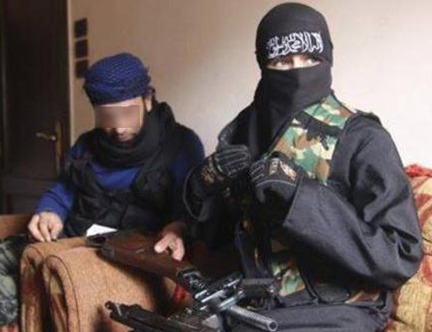
A number of Tunisian girls who had travelled to Syria for “sexual jihad” have returned home pregnant, the government says

Newspapers love a juicy story line. What could be more apt for tabloid sensationalism than one that combines multiple sex partners and jihad fighters? The Telegraph (no one seems to have informed the management that telegraphs are a bit on the ancient side these days) has come up with the following headline ‘Sex Jihad raging in Syria, claims minister” for its September 20th edition. Here are the lead paragraphs…

Tunisian women have travelled to Syria to wage “sex jihad” by comforting Islamist fighters battling the regime there, Interior Minister Lotfi ben Jeddou has told MPs.

“They have sexual relations with 20, 30, 100” militants, the minister told members of the National Constituent Assembly on Thursday.

“After the sexual liaisons they have there in the name of ‘jihad al-nikah’ – (sexual holy war, in Arabic) – they come home pregnant,” Ben Jeddou told the MPs.

He did not elaborate on how many Tunisian women had returned to the country pregnant with the children of jihadist fighters.

Jihad al-nikah, permitting extramarital sexual relations with multiple partners, is considered by some hardline Sunni Muslim Salafists as a legitimate form of holy war.

The minister also did not say how many Tunisian women were thought to have gone to Syria for such a purpose, although media reports have said hundreds have done so.

Here is a new twist that might actually revolutionize the way jihad is being waged by the most militant crazies. Continue reading Make love and make war?

Medieval Muslim Women’s Travel


Two woman observing a conversation, Baghdad, Maqamat al-Hariri, Late Eleventh to early Twelfth Centuries, Bibliotheque Nationale, Paris. MS arabe 3929 fol 134, Maqamat 40, detail

Medieval Muslim Women’s Travel: Defying Distance and Dangerby Marina Tolmacheva, World History Connected

Women’s rights in Muslim societies became an especially sensitive subject of intercultural discussion in the twenty-first century. The recent Arab awakening has made understanding Islam, explaining Muslim sacred law to non-Muslims, and interpreting the internal dynamics of Islamic countries an increasingly urgent concern for educators. This paper focuses on historical evidence of Muslim women’s spatial mobility since the rise of Islam and until the early modern period, that is from the seventh until the sixteenth centuries. The Muslim accounts of travel and literature about travel created during this long period were written by men, mostly in Arabic. Muslim women did not leave behind records of their own travel, and it is only in the early modern period that some records were created by women, only a very few of which have been discovered. This means that we must rely on men’s accounts of women’s travel or draw on general descriptions of travel conditions that are applicable to women’s travel as well as men’s. Another limitation derives from the Islamic requirements of privacy and Muslim conventions of propriety: it was generally not considered good manners to discuss womenfolk or specific ladies, so medieval, and even early modern, Muslim books rarely describe living women unless it is to praise them. Historical chronicles may glorify queens, discuss important marriages made by princesses, or praise pious or learned Muslim women, but some travel books—for example, “The Book of Travels” (Safar-Nama) by the Persian traveler Nasir-i Khusraw (1004–1088)—do not speak of women at all. Some of the eyewitness evidence below explicitly related to women’s travel is drawn from the author who set the pattern of the travel account focused on pilgrimage to Mecca, Ibn Jubayr (1145–1217) and from “The Travels” (Rihla) of by Ibn Battuta (1304–1368?), who repeatedly married and divorced during his travels and sought advantage from association with prominent women met on his journeys. No such reservation was practiced in the Christian writing tradition, so occasionally observations of Muslim women on the journey may be found in the records left by European pilgrims, merchants or captives in the Near East, especially in works published after 1500. Continue reading Medieval Muslim Women’s Travel

A dowdy pundit and an easy target

Some journalist pundits follow the Barnum and Bailey freakocentric approach to writing for the public. It really does not matter if they lean to the left or right, since it is never clear where a rational media center would be. I am actually glad that opinion page and editorial commentaries are amalgamated into the acronymical “op-ed” since it removes the genre further away from being taken seriously. There is plenty of hanging red meat around, a recent example being the New York electoral season with former governor Eliot Spitzer running for city comptroller and former congressman Anthony Weiner attempting to fill the shoes of Mayor Bloomburg. Here are two seasoned politicians with two glaring things in common: both fell from grace due to excessive sexual interests and both have wives who have not taken the route of former South Carolina governor Mark Sanford’s wife and jilted.

The tabloids are in paradise over these two. So why not the New York Times as well? I guess that is what prompted Maureen Dowd to unleash her op-edible wit and take down “Carlos Danger” AKA Anthony Weiner. In her piece for Sunday, July 28, she began with the following rhetorical volley:

WHEN you puzzle over why the elegant Huma Abedin is propping up the eel-like Anthony Weiner, you must remember one thing: Huma was raised in Saudi Arabia, where women are treated worse by men than anywhere else on the planet. Comparatively speaking, the pol from Queens probably seems like a prince.

When I puzzle over these opening lines, I am not able to forget one thing: Maureen Dowd must have learned everything she thinks she knows about Saudi Arabia from watching the movie Sex and the City 2. Continue reading A dowdy pundit and an easy target

Sex Education in Yemen


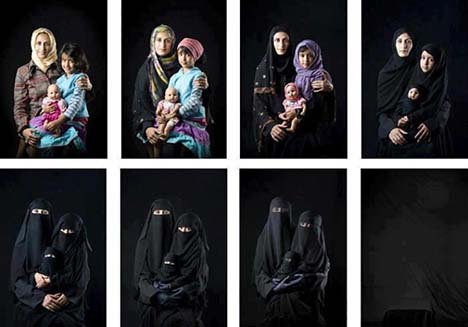
Photography by Boushra al-Moutawakel

from Yemen Times, June 24, 2013

It’s a sensitive subject in this conservative and religiously observant country. Who is talking about safe sex? In a recent online survey carried out by the organization Time to Talk, lasting 11 days—from May 11 to May 22, 2013—the organization asked 300 Yemenis that question, among others. Here are the results of their survey:

More men than women completed the survey, approximately 93 percent men and 7 percent women, all of them holding Yemeni nationality and spread over different age groups, with the largest prevalence among the 19-25 age group (28 percent), and less participation on the part of people in the age of 15-18 (6.12 percent).

The Yemeni respondents cannot be considered to be a representative sample of the Yemeni population because while there are currently as many males resident in Yemen as there are females, the number of men who voluntarily took part in our survey outnumbered the women, with an account for approximately 93 percent of all respondents.

However, almost all age groups present in the Yemeni population are well represented in our group: 19-25 (28.57 percent), 26-30 (19.39 percent), 30-35 (23.24), 36-40 (13.27 percent). The Yemeni age groups least well-presented were young people aged between 15-18 (6.12 percent) and the over 40’s (9.18 percent). Of those who responded to the survey, 54.17 percent are single and 45.83 percent are married. Continue reading Sex Education in Yemen