All posts by tabsir

Political Cultures and the Revolution in the Cyrenaica of Libya


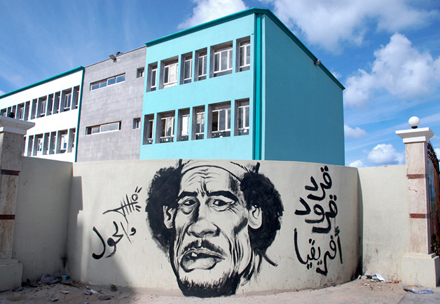
Spray painting the Libyan revolution

by Thomas Hüsken, Anthropology News, January, 2012

This commentary will explore some actors and patterns of the recent political culture in the Cyrenaica region of Libya with special regard to the revolutionary events. This political culture is shaped by the polymorphy of tribal, Islamic and civil urban forms of political organisation as well as varying notions of power and legitimacy.
Tribe and Revolution

In his early years Gaddafi abolished the tribe as a legal unit and reorganised local administrative structures, explicitly replacing tribal politicians with followers of the revolution. However this collided with the political, social and cultural realities in the country. In the past decades of Gaddafi’s regime tribal leaders had not only come to dominate and control a significant part of the state but also charged the political culture with tribal notions and practices. It is thus not surprising that tribal politicians have not been at the forefront of the revolution. Nevertheless they have actively shaped and organized a great deal of the transitional political order in the last months. They have come to dominate the local transitional councils in Cyrenaica due to their skills as producers of order and conflict mediators on the basis of the tribal customary law. They have gained significant influence in the National Transitional Council (NTC). The production of order is accompanied by a broad common sense on tribal culture among the population. Both build the legitimacy of these leaders. The political practice of these politicians is shaped by a consensus-oriented process of moderation and negotiation that is embedded in tribal traditions but is also informed by their education and by experiences in governance and business. Their political visions focus on the continuation of a regional and local intermediary rule between the central state and the people. The reintroduction of polygamy and Sharia by NTC Chairman Mustafa Abdul Jelil in November 2011 was an affirmative signal towards these leaders. In my understanding they will play an important role in the political future of post-Gaddafi Cyrenaica and in Libya as a whole. Continue reading Political Cultures and the Revolution in the Cyrenaica of Libya

Into the Snake Pit: The US and Restructuring the Military in Yemen


by Gregory Johnsen, Waq al-Waq, February 24, 2012

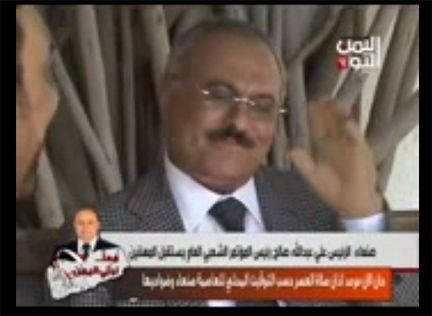
The closest thing the US has to a “Yemen Czar” is John Brennan, President Obama’s Deputy National Security Adviser, and so when he speaks on Yemen – as he did recently – it is a good idea to pay attention.

On Monday, the eve of Yemen’s one-man elections, Brennan was in Sanaa, and during his time there he sat down with some journalists, and the US Embassy has since published the transcript of his roundtable.

Brennan has a lot to say, and I would encourage everyone to read his full remarks, but one of the things that stood out to me was Brennan’s comments on military restructuring.

Obviously military restructuring is going to be one of the most important and most controversial processes of the post-Salih era in Yemen. Salih’s relatives and fellow tribesmen have a stranglehold on much of the military and security apparatus in Yemen. Salih spent more than 33 years building this network, and dismantling it is going to require a great deal of patience, effort and knowledge.

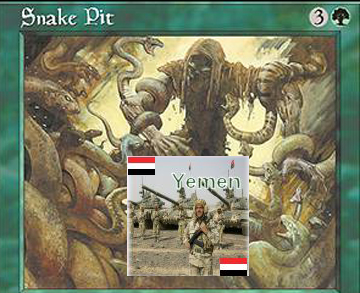
Imagine the security services like a giant Jenga tower and you get some idea of the problem: the US wants to remove some key blocks, without seeing the whole thing tumble down. Continue reading Into the Snake Pit: The US and Restructuring the Military in Yemen

A World to Fear or of Fear?


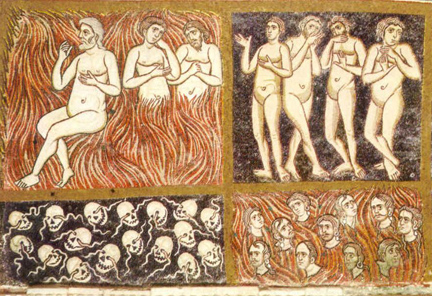
Unknown Artist. Sinners in Hell. Cattedrale di Santa Maria Assunta. Torcello (Italy). 12th century)

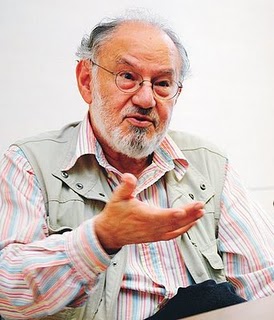
Yesterday I had the privilege of hearing a lecture by the anthropologist Talal Asad, who discussed the impact of the Arab Spring revolution in Egypt based on conversations he has held with Egyptians there and with a keen sense of historical insight. In the case of Egypt it is not just that it was sucked into strong-man rule for three decades under Mubarak, but that an entire generation has known nothing but cronyism and a firmly entrenched military elite still holds the reins, despite the street scenes on CNN. No one knows what exactly will happen next, least of all the media pundits who exude an expertise mentality that often borders on the ludicrous. One of the points that particularly struck me as poignant is the role of fear as a key aspect of all power politics. Mubarak, like Ali Abdullah Salih in Yemen and Ben Ali in Tunisia and even the Asad clan in Syria, have justified their self-serving iron grip as a quasi-secular bulwark against the specter of radical Muslims. They pretend to be the right kind of Muslims preventing the wrong kind of Muslims from taking over and returning the region to the 7th century. And Western nations, along with a number of Arab citizens, let fear dictate policy and overrule common sense.

Fear is on all sides, of course. Those who have dared to defy the power of the state have had good reason to fear, as the bloody security apparatus let loose in Syria amply demonstrates. Any trumped-up kind of “other” is an easy target for fear, especially when religious or ethnic identity is ascribed. In fact, as Talal noted, Mubarak went to great lengths to foster tension between Copts and Muslims in Egypt, creating fault lines for conflict where mutual cooperation had often been the norm. Religious sects do it to each other, dragging out the infidel charge and the heresy alibi whenever convenient. This is not at all unique to the Middle East or those who call themselves Muslims. When Rick Santorum states that President Obama does not base his policies on the Bible and Franklin Graham questions the president’s faith, religious passion is harnessed for political gain.

But what do we really mean by “fear”? Continue reading A World to Fear or of Fear?

Talal Asad on Egypt after Mubarak


On Friday, February 24, Professor Talal Asad will be speaking in the CUNY Graduate Program in Anthropology series. His topic is Fear and Revolution: Reflections on Egypt after Mubarak. This will be held at The Graduate Center, CUNY, 365 Fifth Avenue at 34th Street, New York, NY 10016 in Room C415A (concourse level). Light refreshments will be served afterward in the Brockway Room, Rm. 6402. For more information, click here.

Islam and homosexuality: Straight but narrow


from The Economist, Feb 4th 2012

ONE leaflet showed a wooden doll hanging from a noose and suggested burning or stoning homosexuals. “God Abhors You” read another. A third warned gays: “Turn or Burn”. Three Muslim men who handed out the leaflets in the English city of Derby were convicted of hate crimes on January 20th. One of them, Kabir Ahmed, said his Muslim duty was “to give the message”.

That message—at least in the eyes of religious purists— is uncompromising condemnation. Of the seven countries that impose the death penalty for homosexuality, all are Muslim. Even when gays do not face execution, persecution is endemic. In 2010 a Saudi man was sentenced to 500 lashes and five years in jail for having sex with another man. In February last year, police in Bahrain arrested scores of men, mostly other Gulf nationals, at a “gay party”. Iranian gay men are typically tried on other trumped-up charges. But in September last year three were executed specifically for homosexuality. (Lesbians in Muslim countries tend to have an easier time: in Iran they are sentenced to death only on the fourth conviction.) Continue reading Islam and homosexuality: Straight but narrow

Anthony Shadid’s Last Article


The late Anthony Shadid

[The recent passing of New York Times reporter Anthony Shadid leaves a large gap in their coverage of the ongoing crises in the Middle East. Here is his last article on the political climate in Tunisia.]

Islamists’ Ideas on Democracy and Faith Face Test in Tunisia
By ANTHONY SHADID, The New York Times, February 17, 2012

This article was reported and written before Mr. Shadid’s death in Syria .

TUNIS — The epiphany of Said Ferjani came after his poor childhood in a pious town in Tunisia, after a religious renaissance a generation ago awakened his intellect, after he plotted a coup and a torturer broke his back, and after he fled to Britain to join other Islamists seeking asylum on a passport he had borrowed from a friend.

Twenty-two years later, when Mr. Ferjani returned home, he understood the task at hand: building a democracy, led by Islamists, that would be a model for the Arab world.

“This is our test,” he said.

If the revolts that swept the Middle East a year ago were the coming of age of youths determined to imagine another future for the Arab world, the aftermath that has brought elections in Egypt and Tunisia and the prospect of decisive Islamist influence in Morocco, Libya and, perhaps, Syria is the moment of another, older generation.

No one knows how one of the most critical chapters in the history of the modern Arab world will end, as the region pivots from a movement against dictatorship toward a movement for something that is proving far more ambiguous. But the generation embodied by Mr. Ferjani, shaped by jail, exile and repression and bound by faith and alliances years in the making, will have the greatest say in determining what emerges.

Their ascent to the forefront of Arab politics charts the lingering intellectual and organizational prowess of the Muslim Brotherhood, a revivalist movement founded by an Egyptian schoolteacher in a Suez Canal town in 1928. But intellectual currents that once radiated from Egypt now just as often flow in the other direction, as scholars and activists in Morocco and Tunisia, perched on the Arab world’s periphery and often influenced by the West, export ideas that seek a synthesis of what the most radical Islamists, along with their many critics here and in the West, still deem irreconcilable: faith and democracy. Continue reading Anthony Shadid’s Last Article