THE LAST OTTOMANS ARE GATHERING ON FACEBOOK

from Sabah, Nisan 2, 2013

The last 77 members of the Ottoman dynasty, which are spread out throughout a wide geography spanning from the United States to Jordan, are now in communication with one another through a group formed on the popular social networking website Facebook.

Some were forced to get by through selling pages of gold-engraved Korans. Others were forced to sleep on the coast and to travel by coal trains. Then there were the ones who died before being able to scramble up the money for a ticket to return to their homeland when Turkey finally granted permission for the members of the Ottoman dynasty to return after being forced to spend 50 years in exile. The remaining members of the dynasty who were forced into exile following the downfall of the Ottoman Empire gathered for the first time ever in the London Embassy in February in an event hosted by Foreign Minister Ahmet DavutoÄŸlu.

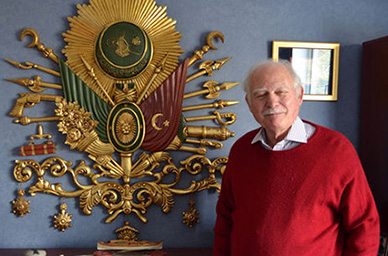
SABAH went and knocked on the door of one of the remaining members of the Ottoman family who resides in England. The oldest remaining member of the dynasty, Osman Selaheddin OsmanoÄŸlu, who is the grandson to Sultan Murad V, relayed to us his experience of being one of the remaining members of such a legacy:

THEY TRAVELLED FROM COUNTRY TO COUNTRY: “My father, Ali Vasıb Efendi was born in the ÇıraÄŸan Palace. He was a graduate of Galatasaray High School and was sent into exile at the age of 21. They first went to Budapest, Hungary where they stayed for six months. Then he and my grandfather settled in Nice, France where they lived for 11 years. My mother is the granddaughter of Sultan Mehmed V. They later went to Egypt, which became a central location for members of the Ottoman dynasty. I was born there during World War II.” Continue reading THE LAST OTTOMANS ARE GATHERING ON FACEBOOK

1001 Dreams


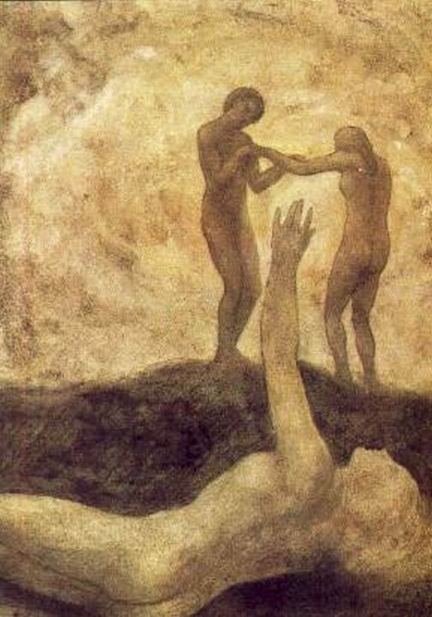
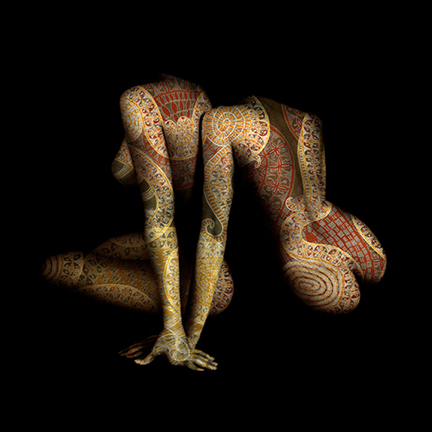
Dream #1 by Yasmina Alaoui and Marco Guerra

Yasmina Alaoui is of French and Moroccan descent, born in New York in 1977. She studied Fine Arts at the Carousel du Louvre in Paris, and earned a BA in Sculpture from the College of William and Mary. She currently lives in New York city, and exhibits internationally.

The underlying themes behind all her works deal directly with her experiences of multicultural upbringing and aims to bridge extremes by embracing opposites: secular and holy, classical and contemporary, order and chaos, repulsion and attraction. She is known to create complex and intricate visual works using a wide variety of techniques, which she combines in an authenticate manner.

Yasmina has collaborated with photographer Marco Guerra on the Tales of Beauty and 1001 Dreams series, which have been and collected and exhibited internationally since 2003.

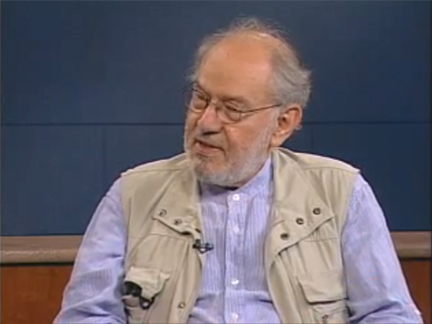
“Thinking About Religion, Secularism and Politics” with Talal Asad

This video interview with Talal Asad (Professor of Anthropology, Graduate Center of
the City University of New York), recorded in 2008, is well worth watching. Harry Kreisler welcomes Professor Talal Asad who reflects on his life and work as an anthropologist focusing on religion, modernity, and the complex relationships between Islam and the West.

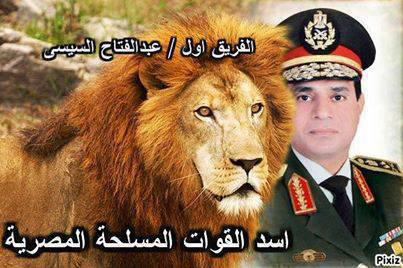
Sensational Sisi

The new not-a-coup leader of Egypt, General Abdel Fattah Sisi, has created a sensation. Not all of the response is serious, however. A dancer named Sophia attempts a belly dance while holding a picture of the general and blowing kisses to the camera.

And as for the new direction of security in the post-Muslim-Brotherhood state, you need look no further than a woman’s underwear. Now that the Muslim Brotherhood has been outlawed, chic underwear is in again.

Catoonists have also had a field day with the lionizing of the general. Continue reading Sensational Sisi

The near future of Iraq is dark


Supporters of Muqtada al-Sadr celebrate the departure of US troops from Sadr City last year

‘The near future of Iraq is dark’: Warning from Muqtada al-Sadr – the Shia cleric whose word is law to millions of his countrymen

by Patrick Cockburn, The Independent, November 29, 2013

The future of Iraq as a united and independent country is endangered by sectarian Shia-Sunni hostility says Muqtada al-Sadr, the Shia religious leader whose Mehdi Army militia fought the US and British armies and who remains a powerful figure in Iraqi politics. He warns of the danger that “the Iraqi people will disintegrate, its government will disintegrate, and it will be easy for external powers to control the country”.

In an interview with The Independent in the holy city of Najaf, 100 miles south-west of Baghdad – the first interview Mr Sadr has given face-to-face with a Western journalist for almost 10 years – he expressed pessimism about the immediate prospects for Iraq, saying: “The near future is dark.”

Mr Sadr said he is most worried about sectarianism affecting Iraqis at street level, believing that “if it spreads among the people it will be difficult to fight”. He says he believes that standing against sectarianism has made him lose support among his followers.

Mr Sadr’s moderate stance is key at a moment when sectarian strife has been increasing in Iraq – some 200 Shia were killed in the past week alone. For 40 years, Mr Sadr and religious leaders from his family have set the political trend within the Shia community in Iraq. Their long-term resistance to Saddam Hussein and, later, their opposition to the US-led occupation had a crucial impact.

Mr Sadr has remained a leading influence in Iraq after an extraordinary career in which he has often come close to being killed. Several times, it appeared that the political movement he leads, the Sadrist Movement, would be crushed.

He was 25 in 1999 when his father, Mohammed Sadiq al-Sadr, a revered Shia leader, and Mr Sadr’s two brothers were assassinated by Saddam Hussein’s gunmen in Najaf. He just survived sharing a similar fate, remaining under house arrest in Najaf until 2003 when Saddam was overthrown by the US invasion. He and his followers became the most powerful force in many Shia parts of Iraq as enemies of the old regime, but also opposing the occupation. In 2004, his Mehdi Army fought two savage battles against American troops in Najaf, and in Basra it engaged in a prolonged guerrilla war against the British Army which saw the Mehdi Army take control of the city. Continue reading The near future of Iraq is dark

When I wore the hijab: Power and the headscarf


I put on my daughter’s abaya, took a picture of myself, and used it as my profile picture on Twitter and Facebook. (Photo supplied: Abdullah Hamidaddin)

by Abdullah Hamidaddin, Al-Arabiya, November 30, 2013

The ‘hijab’ is a very complicated piece of cloth. Since its inception a few millennia ago it had carried with it many meanings. It was an expression of male dominance, an act of religious piety, a manifestation of female oppression, a limitation to a female’s power of seduction, an icon of cultural pride, a slogan of resistance to colonialism imperialism and globalization, an indicator of a worthy wife, an evasion of feminine competition, a marker of otherness and a discouragement to harassers. Different meanings constructed in different epochs for different social and political reasons by different actors with different motivations.

If anything, this makes it quite difficult to speak of the ‘hijab’ rather one ought to speak of ‘hijabs’ each using a ‘cloth’ but each assigning to it so many meanings that renders it impossible to make any generalization no matter how mild it may be. And every generalization I make here has multiple exceptions. Yet despite all those many differences there seems to be one constant about the hijab: it is about women and for women; only women. Men do not put on a hijab. They may cover their heads even their faces, but that is another thing. The hijab is not the cloth that covers a head, or hair, or even the face. The hijab is something else altogether. Continue reading When I wore the hijab: Power and the headscarf

Women and Peacebuilding in Yemen

Women and Peacebuilding in Yemen: challenges and opportunities

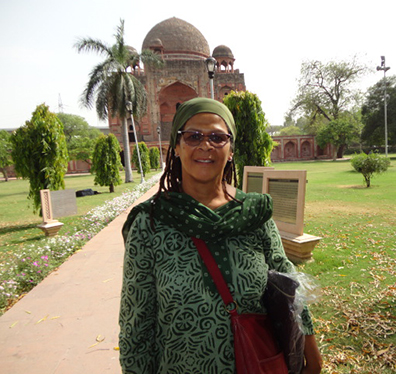
by Najwa Adra, NOREF, 12 November 2013

This expert analysis explores hurdles facing and opportunities available to Yemeni women in light of UN Security Council Resolution 1325’s guidelines. Yemen is rich in social capital with norms that prioritise the protection of women, but internal and external stresses pose serious threats to women’s security.

Despite these hurdles, Yemeni women continue to participate in nation building. In 2011 women led the demonstrations that ousted the previous regime. At 27%, women’s representation and leadership in the current National Dialogue Conference is relatively inclusive. Their calls for 30% women’s participation in all levels of government have passed despite the opposition of religious extremists and the Yemeni Socialist Party. To provide the best guarantee of women’s security in Yemen, international agencies must, firstly, pressure UN member states to desist from escalating conflicts in Yemen, and secondly, prioritise development over geopolitical security concerns. Literate women with access to health care and marketable skills can use their participatory traditions to build a new Yemeni nation.

Downlad the pdf of this report here: http://www.peacebuilding.no/Regions/Middle-East-and-North-Africa/The-Gulf/Publications/Women-and-peacebuilding-in-Yemen-challenges-and-opportunities

Najwa Adra , PhD, is a cultural anthropologist with long-term research and consulting experience in Yemen. She has worked with FAO, UNICEF, USAID, the World Bank and DfID. In 2000-03 she piloted the highly successful Literacy through Poetry/Heritage, an adult literacy project in which learners’ own oral traditions formed the texts from which they learned to read and write. Her academic publications and development reports cover tribal identity and customary law, women in agriculture, social exclusion and adult literacy.