Iraq Study Day at Hofstra

The Middle Eastern and Central Asian Studies (MECA) Program at Hofstra University is hosting a day-long “Iraq Study Day” on Monday, April 27, 2009. The purpose of the program is to bring several distinguished scholars to campus to speak to the Hofstra community and general public about the making of modern Iraq and the ongoing occupation by American military forces. Although information on the current crisis is widely available in the media, students, faculty and the general public need to understand the historical context for the making of modern Iraq in the 20th century.

A general forum for the public will be held on the theme “Iraq: How the Past Shapes the Future” on Monday, April 27, 3-4:30 p.m., in the Monroe Lecture Center Theater, California Avenue, South Campus of Hofstra University. Directions to Hofstra are available here.

The participants in the panel are:

• Nida al-Ahmad, Political Science, New School for Social Research: “State Power in Ba’thist Iraq”
• Dr. Magnus Bernhardsson, History, Williams College (author of “Reclaiming a Plundered Past: Archaeology and Nation Building in Modern Iraq,” 2006)
• Dr. Eric Davis, Political Science, Rutgers University (author of “Memories of State: Politics, History and Collective Identity in Modern Iraq,” 2005)
• Dr. Reeva Simon, History, Yeshiva University (author of “The Creation of Iraq, 1914-1921,” 2004
• Dr. Bassam Yousif, Economics, Indiana State University (author of “The Paradox of Development under Dictatorship: Iraq 1950-2003,” 2006)

Continue reading Iraq Study Day at Hofstra

The Quran in an Historical Context


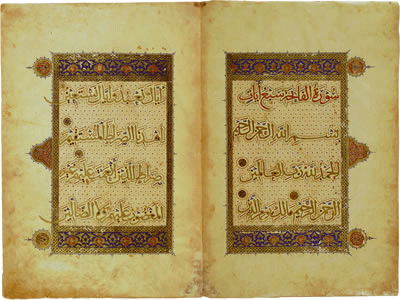
Sultan Baybars’ Qur’an Text

Alwan for the Arts Presents

The Quran in an Historical Context by Nasr Hamid Abu Zayed
Friday, April 24, 2009 6:30 P.M.
Free and Open to the Public

Religious texts are understandably ubiquitous and take on a life of their own, above and beyond the quotidian, above and beyond history, and are endowed with a sacred halo of omnipotence and omnipresence. However subjecting sacred texts to innovative forms of historical, hermeneutical or allegorical readings can be an immensely rich exercise in bringing out the multidimensional view inherent in the text and in our reception of its meaning. In this lecture, Nasr Hamid Abu Zayed will offer a survey of the most recent theories, controversies and discoveries in the field of Quranic studies as well as address by way of a historical and comparative reading the circumstances in which the Quran was formed and its relationship to the Bible. Continue reading The Quran in an Historical Context

Hanif Kureishi on Salman Rushdie

by Kenan Malik, Prospect, April 2009

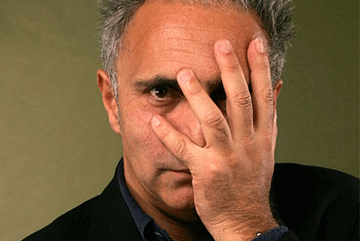
… The novelist Hanif Kureishi, a friend of Rushdie’s since before the fatwa, has long chronicled the changing experience of immigrants in Britain, through novels like The Buddha of Suburbia and screenplays such as My Beautiful Laundrette. I talked to him recently about the impact of the campaign against The Satanic Verses on his writing and on British culture.

“Nobody,” Kureishi suggests, “would have the balls today to write The Satanic Verses, let alone publish it. Writing is now timid because writers are now terrified.”

Like Rushdie, Kureishi is a writer who came of literary age in the 1980s, exploring the relationship between race, culture, identity and politics in Thatcher’s Britain. But where Rushdie had been born in Bombay and his work deeply shaped by the politics and culture of the subcontinent, Kureishi was born in Bromley, south London, went to the same school as his hero David Bowie (although not at the same time), and his work is infused by the sounds and rhythms of the capital. Continue reading Hanif Kureishi on Salman Rushdie

Tea Party A[O]bom[a]inations


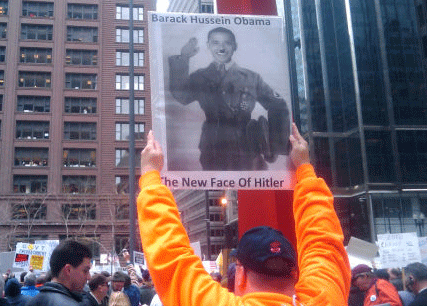
Sign at a tea party tax protest earlier this week in Arizona

In the 1770s the beer and coffee drinking crowds of revolutionaries in Boston heaved sacks of British tainted tea into the deep. Since American colonists were never that fond of tea, the symbolism was not very taxing. “No taxation without representation” was the rallying cry. Earlier this week, encouraged by the right-wing media pundits on Fox News and the radio rush of vitriol, a slight rage [the oxymoron here is intentional] of tea bagging took place. Apparently the government that poured millions and millions of dollars into an unnecessary war in Iraq and lined the pockets of Wall Street executives through deregulation was doing its job when it was Republican in name. But tea is the wrong drink to describe the protesters, few of whom were the two-martini lunch crowd. This was a shot of sour grapes straight up. Continue reading Tea Party A[O]bom[a]inations

Forensic Scriptures: Down by the Riverside

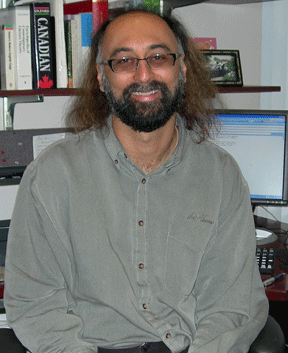
The following information is about a conference at the Riverside Church in Manhattan on May 15-17, 2009. Tabsir commentator and newly tenured professor Amir Hussein (pictured above) will be giving a presentation on Saturday, as noted below. Note that unlocking the key to these Forensic Scriptures is not free, but requires registration.

Forensic Scriptures presents the Qur’an as a sacred resource increasingly accessible to Jewish and Christian scholars and students of the Scriptures. It is a template of scriptural production from the last major culture to spring from the ancient Middle East, in which reliable information about scriptural development has never disappeared from view. To illustrate the model, Muslims believe Muhammad was illiterate and that nearly all Surahs of the Qur’an may have been written down by the women of his household, lead by Hafsah, who was entrusted with preservation of the Qur’an and transmission of it to the world. The Hadith presents conversations and actions of the Prophet as recorded by his Companions, male and female, including another wife, Ayisha. Recognition that such materials were penned by women does not rely on secondary sources or conjecture. Islamic primary sources, under rigorous re-evaluation by Islamic scholars today, have a potential to reveal whole new paradigms that may now be applied to Biblical texts, beginning with these historic Riverside symposia, supported by surrounding seminaries and by noted scholars. Continue reading Forensic Scriptures: Down by the Riverside

Visit the Topkapi for free

Given the economy, you may not be planning any trips this summer or anytime soon. But who would not like to take a tour of the Topkapi Palace in Istanbul? No problem, you can do it for free. Just go to this website (http://www.3dmekanlar.com/topkapi_palace.htm), download and start clicking away. And when you exhaust that, check out a number of major Islamic sites that are yours for digital pleasure.

Islamophobia and MisIslamothropes


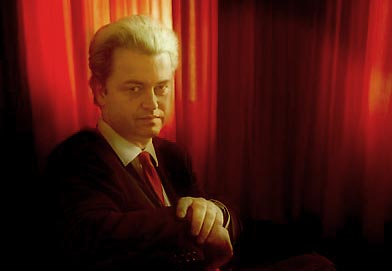
Geert Wilders, the right-wing Dutch politician. Photograph: Jerry Lampen/Reuters

“Islamophobia” is a relatively new word, perhaps only from the late 1980s. What it signifies, however, dates back to the very beginning of the Islamic faith. Indeed, the initial response of the Meccan elite to the monotheistic preaching of Muhammad was so fearful of the economic fallout and political challenge of the message brought by this new prophet that the first Muslims were forced to flee to a safe haven in Madina. After Islam was established as a community and expanded, it came into conflict with the Christian enclaves in Syria and Egypt, as well as the Sassanian Persian empire to the east. By the time Muslims had briefly made forays into southern France in the 9th century, the Venerable Bede villified them as a “very sore plague.” Whether seen as Arabs, Moors or Turks, the many ethnicities represented by the growing religion understandably struck fear among those who saw the faith as a political or religious threat.

Fear is understandable; anything new is prone to be misunderstood, especially when the issue is about how to believe in God. Christians and Jews came to fear Islam because it was a rival, one with powerful political muscle through the 16th century. Fear, however, is not the problem. The major stumbling block for peaceful coexistence between rival faiths or ideologies of any kind is hatred. Continue reading Islamophobia and MisIslamothropes