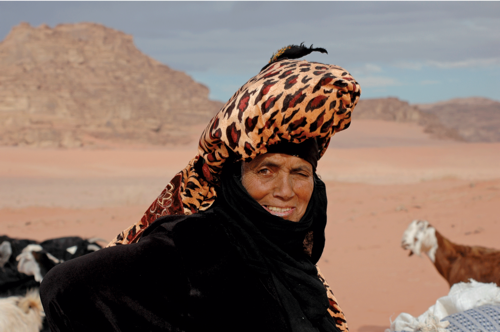
Some fascinating photographs of Jordanian Bedouins are online at http://www.acacialand.com/BGallery.html. The photographs were taken by Rami Sajdi, who has a number of webpages on Jordanian Bedouin.
Some fascinating photographs of Jordanian Bedouins are online at http://www.acacialand.com/BGallery.html. The photographs were taken by Rami Sajdi, who has a number of webpages on Jordanian Bedouin.
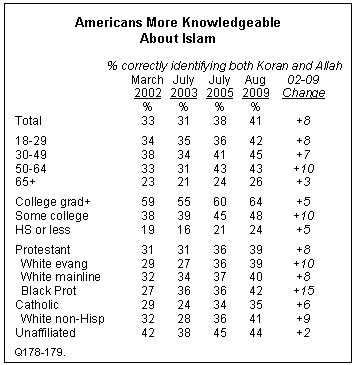
Muslims Widely Seen As Facing Discrimination
Views of Religious Similarities and Differences
The Pew Research Center for the People & the Press, September 9, 2009
Overview
Eight years after the terrorist attacks of 9/11, Americans see Muslims as facing more discrimination inside the U.S. than other major religious groups. Nearly six-in-ten adults (58%) say that Muslims are subject to a lot of discrimination, far more than say the same about Jews, evangelical Christians, atheists or Mormons. In fact, of all the groups asked about, only gays and lesbians are seen as facing more discrimination than Muslims, with nearly two-thirds (64%) of the public saying there is a lot of discrimination against homosexuals.
The poll also finds that two-thirds of non-Muslims (65%) say that Islam and their own faith are either very different or somewhat different, while just 17% take the view that Islam and their own religion are somewhat or very similar. But Islam is not the only religion that Americans see as mostly different from their own. When asked about faiths other than their own, six-in-ten adults say Buddhism is mostly different, with similar numbers saying the same about Mormonism (59%) and Hinduism (57%). Continue reading Muslims after 9/11
Digging up the Saudi past: Some would rather not
by Donna Abu-nasr, AP, August 30th, 2009
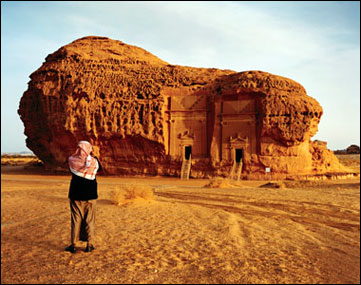
RIYADH, Saudi Arabia — Much of the world knows Petra, the ancient ruin in modern-day Jordan that is celebrated in poetry as “the rose-red city, ‘half as old as time,’†and which provided the climactic backdrop for “Indiana Jones and the Last Crusade.â€
But far fewer know Madain Saleh, a similarly spectacular treasure built by the same civilization, the Nabateans.
That’s because it’s in Saudi Arabia, where conservatives are deeply hostile to pagan, Jewish and Christian sites that predate the founding of Islam in the 7th century.
But now, in a quiet but notable change of course, the kingdom has opened up an archaeology boom by allowing Saudi and foreign archaeologists to explore cities and trade routes long lost in the desert.
The sensitivities run deep. Archaeologists are cautioned not to talk about pre-Islamic finds outside scholarly literature. Few ancient treasures are on display, and no Christian or Jewish relics. A 4th or 5th century church in eastern Saudi Arabia has been fenced off ever since its accidental discovery 20 years ago and its exact whereabouts kept secret. Continue reading Saudiana Jones vs the “Days of Ignorance”
HOW SHARIA LAW PUNISHES RAPED WOMEN
by Hasan Mahmud, Mudugnet.com, November 20, 2008.
On October 30, 2008, the United Nations condemned the stoning to death of Aisha Duhulow, a 13-year-old girl who had been gang-raped and then sentenced to death by a Sharia court for fornication (Zina). She was screaming and begging for mercy, but when some family members attempted to intervene, shots were fired by the Islamic militia and a baby was killed.
Local Sharia courts in Bangladesh regularly punish raped minor girls and women by flogging and beating them with shoes.[1] Similar cases of punishing raped women are Mina v. the State, Bibi v. the State and Bahadur v. the State.[2] Sharia courts in Pakistan have punished thousands of raped women by long term imprisonment.[3]
You might think that such horrific barbarity cannot be the real Sharia law; that it is a misapplication of the law by ignorant clergy. Sadly, neither is true. Continue reading Rape and Shariah Law
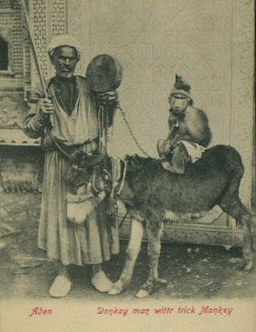
Here is an old photograph entitled “Donkey Man with Trick Monkey,” taken in Aden during the days of the British protectorate. It is not just any kind of “monkey,” of course. Sitting on the donkey is Papio hamadryas, the baboon, usually called rubâh in Yemen. It appears, in deference to the British colonial presence, that the monk is wearing britches.

Destruction of a minaret in the recent fighting at Sa’da, Yemen
by Hakim Almasmari, Yemen Post, August 31, 2009
With every day that passes, we come close to believe that the war in Sa’ada is a Saudi-Iranian war, not a Yemeni one.
Both foreign countries are desperate for more regional power while both are also worried of losing greatly. Saudi Arabia does not want Houthis controlling northern parts of Yemen for one main reason; southern Saudi has a large number of Shiite’s which could make them turn against their country as well. Saudi also fears that Shiite’s already have a militant group in the north of Arabia (Hezbollah), and are now looking for one in the south of Arabia (Houthis). Saudi Arabia paid billions of dollars to keep Hezbollah out of rule in Lebanon and somewhat came out victorious for the meantime, and is doing the same in Yemen. Continue reading Saudi- Iranian War fought in Sa’ada
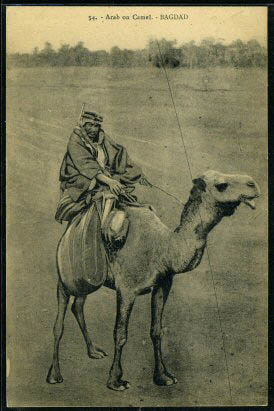
Here is a postcard from a century ago entitled “Arab on Camel … BAGDAD.” I guess for the postcard title writer, a camel rider outside the city of Baghdad might as well be down town. But one wonders why the title was even needed. Where else would the person receiving the postcard at the time have imagined an “Arab” would be?
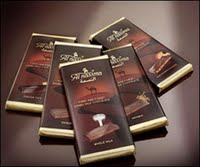
World’s First Camel-Milk Chocolates Going Global
Asharq Alawsat, July 22, 2009
DUBAI (Reuters) – Dubai’s Al Nassma, the world’s first brand of chocolate made with camels’ milk, is in talks to expand into new Arab markets, Europe, Japan and the United States, its general manager said Tuesday.
Martin Van Almsick said the United Arab Emirates company planned to enter Saudi Arabia first, followed by Bahrain, Qatar, Kuwait and the United States within the next few months.
Al Nassma is also in talks with British department store Harrods and San Francisco’s Chocolate Covered to sell its products.
Founded and owned by Dubai’s ruler Sheikh Mohammed bin Rashid al-Maktoum, Al Nassma was formally established in October last year and aims to produce 100 tons of premium camels’ milk chocolate a year. Continue reading Walk a Mile for a Chocolate Bar?