Ottoman Haifa


William Henry Bartlett, Mount Carmel Looking towards the Sea, engraving,
collection of Dr. Y. Rimon, Haifa

The Haifa City Museum in Israel is sponsoring a special exhibition entitled “Ottoman Haifa: Aspects of the City, 1516-1918” from August 29, 2009 – October 2, 2010. The curator is Ron Hillel. Details are provided at the exhibition website, with the description copied below.

During the Ottoman period, many marked changes occurred in Haifa and its environs. The foundations of today’s city were laid, economic, social, and religious. Even though Ottoman rule ended less than 100 years ago, the general sense is that all this happened in the remote past. This exhibition is intended to revive that heroic era, to make it tangible.

The exhibition follows Haifa’s development during the Ottoman period. The city’s growth is linked by indissoluble bonds to its technological and economic progress. Its development is documented in geographic illustrations and maps and with the invention Continue reading Ottoman Haifa →

Manly manoeuvres


By Nadeem F. Paracha. Smoker’s Corner, Dawn.com, July 4, 2010

It is rather startling to note how the powerful ‘Women’s Lib’ movement in the 1970s was manhandled by certain sections of society in the West. They scrapped the intellectual aspects of the concept and used the fruits of the movement by simply exhibiting it as a way to justify nudity.

The above was what most frontline women activists of the movement bemoaned, alluding that their movement’s many positive social outcomes had been misused. In fact, such is also the view of a majority of conservative Muslim thinkers — especially those who have been at the forefront of encouraging the usage of veil among Muslim women.

Interestingly, a lot of young Muslim women who adorn the hijab/burqa suggest that veiling demonstrates their liberation from becoming an object of the pitfalls of the Women’s Lib movement. But just as one is correct to point out that these pitfalls involve emancipated women who shroud their obvious objectification by describing it as liberation, one isn’t too far off the mark to also question the other side of the divide. Continue reading Manly manoeuvres →

America’s “Good Muslims” Are Being Left Out to Dry


by Abbas Barzegar, Huffington Post, August 19, 2010

There were a few things I did and didn’t expect when I first heard about the now controversial Cordoba Initiative’s Muslim community center project in Manhattan. Of course, right wing fringe hysteria and contrived national debate — that was easy to predict. But in truth, I never thought it would get as far as it has. And never did my jaded skepticism expect to see Mayor Bloomberg and other NYC authorities support Muslim rights to religious freedom so unequivocally. But the real shockers for me are 1) the national polls which reveal a deep seeded anti-Muslim bias in American society and 2) the way in which Democrats are balking on one of our country’s greatest values because of a midterm election. That the construction of a “Muslim YMCA” has devolved into a lame discussion of “why there?” is not only insulting to our constitutional principles, it shows how little we have come as a society since 9/11, despite incessant overtures by American Muslims to be fully accepted in our society.

Let there be no mistake. For decades American Muslims have struggled to reconcile a falsely conceived identity crisis which pits their American and Muslim loyalties at odds. Continue reading America’s “Good Muslims” Are Being Left Out to Dry →

Economisstep


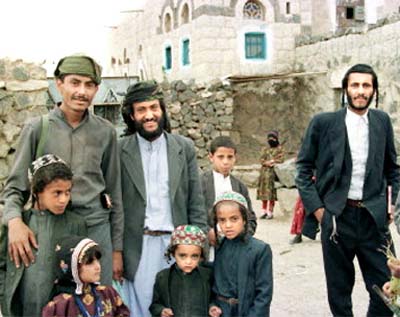
The Economist is generally considered one of the better journalistic bright spots for periodical subscribers. The editors lean to the conservative side, but usually provide articles with the background and rationale to make informative reading. However, a short article released in the latest issue is misinformed and borders on propaganda. There is no byline, at least in the online edition I read, but the writer is poorly informed about Yemen. It is true that Yemenite Jews have suffered because of the political actions of Israel. Like most Arab nations, Yemeni Arabs tend to side with the plight of the Palestinians. Yes, they are exposed to a steady stream of anti-Zionist news, but the government itself has protected the Jewish community. Most Yemenis do not swallow the government propaganda whole and there is still a great deal of respect for the Yemenite Jewish tradition in Yemen. The distinction between “Jew” and “Zionist” does exist.

Even if the author visited Sanaa and Jibla, he has totally missed the amount of unrest among the population. To state “Yemenis rarely protest publicly against their own miserable circumstances at home” is quite naive. Continue reading Economisstep →

Speaking up


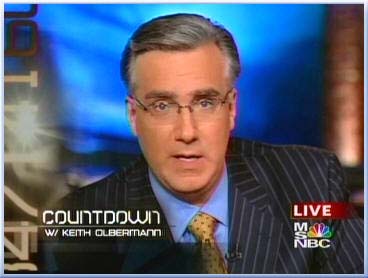
The right wing smells blood, perhaps not knowing in the case of the so-called Ground Zero Mosque, that it is from a self-inflicted wound. For a passionate rebuttal to the ludicrous Islamophobic comments of Newt and Sarah, listen to Keith Olbermann of MSNBC’s Countdown.

An if you want a more humorous spin that out-foxes Fox News coverage, see the latest by Jon Stewart.

30 Mosques in 30 States


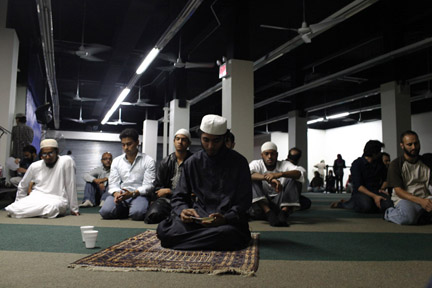
The imam takes a gander at some notes before getting ready for the next round of prayers

There is an interesting blog called 30 Mosques, 30 States, where Aman Ali and Bassam Tariq are posting each day during Ramadan about their visits to different mosques, a different one each day of the month of Ramadan. They started out at the mosque closest to Ground Zero:

Day 1 – New York, Ground Zero Mosque
by Aman Ali, August 12, 2010

Dude, it’s just a mosque.

Bassam and I walked into Park 51, the site of the so called “Ground Zero Mosque,” expecting to feel transformed, knowing the fact that I was praying inside the place that’s practically been mentioned in the news every 20 minutes.

But all it felt like – was praying inside a mosque.

Bassam and I spent days debating whether or not we should visit Park 51, because we didn’t want to get sucked into the bickering over the building that’s dominated the news cycle for weeks.

But at about 8 p.m. tonight, we said to each other “Whatever, let’s go for it.” Since we broke our fast at the Mosque of Islamic Brotherhood in Harlem, we decided to pray Taraweeh, the Ramadan night prayer, at Park 51.

We hopped in our car and drove about 100 blocks to the place and found a security guard standing outside the building. In light of all the protests and animosity towards the mosque, I guess you can never be too careful. Continue reading 30 Mosques in 30 States →

Yemen: not on the verge of collapse

by Steven C. Caton, The Middle East Channel, August 11, 2010

The Republic of Yemen is often spoken of in the press and in policy circles as a society on the verge of collapse (last year it was “another Somalia”), based largely on two claims, the first being the supposed weakness of its state, the other the supposed lawlessness of its tribal population that makes up the majority ethnic group (about seventy-five percent are settled agriculturalists in the mountains and another five per cent, nomadic Bedouin in the eastern desert). And supposedly being on the verge of collapse, Yemen is seen as vulnerable to take-over by terrorist organizations such as al-Qaeda that threaten America’s and the region’s security. Let us consider how tribe and state, law and conflict operate in Yemen that few analysts seem to grasp when they make these pronouncements.

History may provide some perspective. There has been a state or dawlah in Yemen for thousands of years, whether the Sabaean state that built Marib Dam and was the reputed homeland of the Queen of Sheba, or the Islamic state created shortly after the advent of Islam which lasted for a thousand years, or the republican state that came into being in 1962 and has lasted until the present day, despite two bitter civil wars. To be sure, the state has waxed and waned in power and contracted or expanded in territory during this history, and it has faced formidable outside opponents, beginning with the Romans and most recently with al-Qaeda, but it has never fully collapsed or disappeared from the scene. It is unlikely to do so in the present in spite of arguments that the current regime is at a tipping point and about to fall apart because of an unprecedented number of seemingly intractable problems facing it (an ever weakening economy, unsustainable water consumption, projected diminished oil reserves, conflicts between the state and certain regional populations, rampant corruption, and let us not forget al-Qaeda). Continue reading Yemen: not on the verge of collapse →