A Citizen of Baghdad

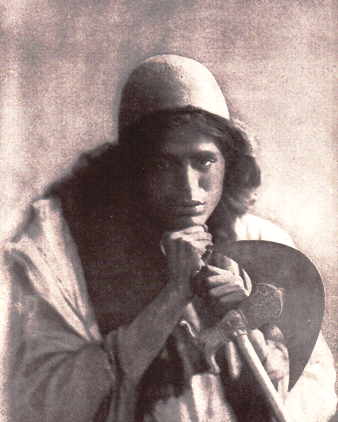
One of my prize collections, inherited in part from my grandparents, is an almost complete run of National Geographic Magazine from 1907 to the present. Periodically I pull an issue off the shelf at random and browse. I recently opened up the February, 1917 issue and noticed that near the end advertising (as interesting as the articles in many cases) there were several pictures of the Middle East, but not tied to a specific article in the issue. It may be that the publisher needed to add a few pages or else these were pictures that somehow did not make it into an earlier issue. The one that struck me the most is the above portrait on p. 199. It is simply entitled “A Citizen of Baghdad” and no photographer is indicated. It looks to me like there is a scabbard in view, but the man is also holding on to something I cannot make out. I wonder if anyone has any ideas on what the man is wearing and if that is a clue as to his background.
Message to Muslims: I’m Sorry


Message to Muslims: I’m Sorry
By NICHOLAS D. KRISTOF, The New York Times, September 18, 2010

Many Americans have suggested that more moderate Muslims should stand up to extremists, speak out for tolerance, and apologize for sins committed by their brethren.

That’s reasonable advice, and as a moderate myself, I’m going to take it. (Throat clearing.) I hereby apologize to Muslims for the wave of bigotry and simple nuttiness that has lately been directed at you. The venom on the airwaves, equating Muslims with terrorists, should embarrass us more than you. Muslims are one of the last minorities in the United States that it is still possible to demean openly, and I apologize for the slurs.

I’m inspired by another journalistic apology. The Portland Press Herald in Maine published an innocuous front-page article and photo a week ago about 3,000 local Muslims praying together to mark the end of Ramadan. Readers were upset, because publication coincided with the ninth anniversary of 9/11, and they deluged the paper with protests. Continue reading Message to Muslims: I’m Sorry →

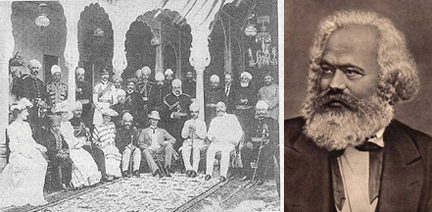
UnOrienting Marx


Lord Curzon in white, left; Karl Marx, right (for a change)

Of all the passages in Edward Said’s polemical Orientalism (1978), the one that most offended his natural allies on the left was placing Karl Marx in the den of Orientalist iniquity. What are “the sources of Marx’s conceptions about the Orient”? For Said they are no different than the prejudice of Renan or Lord Curzon.

“These are Romantic and even messianic: as human material the Orient is less important than as an element in a Romantic redemptive project. Marx’s economic analyses are perfectly fitted thus to a standard Orientalist undertaking, even though Marx’s humanity, his sympathy for the mystery of people, are clearly engaged. Yet in the end it is the Romantic Orientalist vision that wins out, as Marx’s theoretic socio-economic views become submerged in this classically standard image…” (Said, Orientalism, 1979, p. 154)

The quote from Marx that follows, and supposedly damns him, is as follows:

“England has to fulfill a double mission in India: one destructive, the other regenerating – the annihilation of the Asiatic society, and the laying of the material foundations of Western society in Asia.”

Said does not bother to note that the above quote is not take from the same article he quotes extensively earlier, although that is the impression given. Continue reading UnOrienting Marx →

Sikand on Qaradawi


[Webshaykh’s note: The following is a book review by Yoginder Sikand, who maintains the blog Madrasa Reforms in India.]
 
Review of Global Mufti—The Phenomenon of Yusuf al-Qaradawi.
Edited by Jakob Skaovgaard-Peterson & Bettina Graf (Hurst & Co, London, 2009,
ISBN: 978-1-85065-939-6

Reviewed by: Yoginder Sikand
 
 
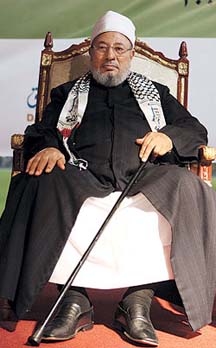
The Qatar-based Egyptian Yusuf al-Qaradawi is among the most well-known Islamic scholars on the contemporary global scene. It might be something of an exaggeration to label him as a ‘phenomenon’ and as the ‘global mufti’—which is what the very title of this book hails him as—but that he exercises an enormous influence in numerous Islamic scholarly and activist circles is undeniable.
 
This book is a collection of essays on diverse aspects of Qaradawi’s life, achievements and writings. In their introductory essay, the editors of the volume provide a broad overview of his life, against which they situate his scholarly and activist accomplishments. Born in a poor family in a village in Egypt in 1926, Qaradawi studied at Cairo’s Al-Azhar, then the largest seat of traditional Islamic learning, after which he shifted to Qatar as emissary of his alma mater. It was there, we are told, that Qaradawi established himself as a noted scholar and activist, traveling widely across the world and establishing a number of Islamic institutions. The editors provide a pen-portrait of a passionate, dedicated scholar-activist, seeking to revive the rapidly disappearing tradition of socially-engaged ulema, who Qaradawi believes, should lead Muslims in the twenty-first century. Continue reading Sikand on Qaradawi →

Mohamed Arkoun passes away

L’islamologue Mohamed Arkoud est mort

Le Monde, September 15, 2010

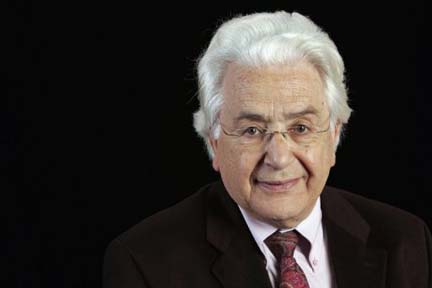
Le professeur Mohamed Arkoun, grand islamologue, est mort mardi 14 septembre à Paris à l’âge de 82 ans, a annoncé le “curé des Minguettes” Christian Delorme, qui était un de ses proches. Il était professeur émérite d’histoire de la pensée islamique à la Sorbonne et un des initiateurs du dialogue interreligieux.

Mohammed Arkoun était né en 1928 à Taourit-Mimoun, petit village de Kabylie, dans un milieu très modeste. Après avoir fréquenté l’école primaire de son village, il avait fait ses études secondaires chez les Pères blancs à Oran, puis avait étudié la littérature arabe, le droit, la philosophie et la géographie à l’Université d’Alger. Grâce à l’intervention du professeur Louis Massignon, rappelle Christian Delorme, il a pu préparer l’agrégation en langue et littérature arabes à la Sorbonne. Il a enseigné ensuite dans plusieurs universités puis en 1980, il a été nommé professeur à la Sorbonne-Nouvelle – Paris III, y enseignant l’histoire de la pensée islamique. Là, il a développé une discipline : l’islamologie appliquée. Continue reading Mohamed Arkoun passes away →

Leaves from an old Bible Atlas #4


Hurlbutt’s Atlas, p. 17


Hurlbutt’s Atlas, p. 17

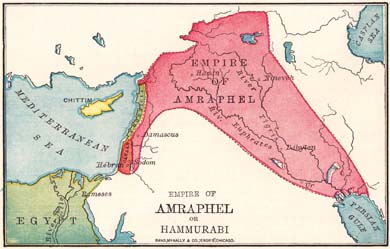
The Christian fascination with the Holy Land as a window into interpretation of the Bible has a long and indeed fascinating history of its own. Here I continue the thread on Jesse Lyman Hurlbutt’s A Bible Atlas (New York: Rand McNally & Company, 1947, first published in 1882). After describing the physical geography, Hurlbutt proceeds directly the “The Journeys of the Patriarchs.” He writes (p. 17):

The journeys of Abraham extend over nearly all the lands of the Old Testament from Chaldea to Egypt. They represent the separation of a Semitic clan from the great body of the race, which was then ruled by an Elamite dynasty; and they bring to our notice the political relations of the world about two thousand years before Christ, in the early Chaldean period of the East.

Continue reading Leaves from an old Bible Atlas #4 →

IMANA Conference at Hofstra University


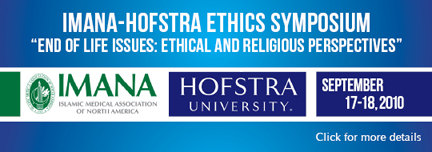
The Islamic Medical Association of North America (IMANA) and the Muslim Chaplain’s Office of Hofstra University invite you to attend the 2010 IMANA-Hofstra Ethics Symposium, September 17-18, 2010. The symposium’s theme is End of Life Issues: Ethical and Religious Perspectives.

Intended audience are physicians, especially those in critical care medicine, emergency medicine, maternal fetal medicine and neonatology, medical bioethicists, chaplains, students in these fields and interested individuals.

Full details, including registration, are available on the conference website. For more information, contact the conference co-director Dr. Hossam E. Fadel.

Hofstra University is located in Hempstead, New York, accessible by the LIRR from Penn Station. All sessions take place in the Multipurpose Room 0101, Student Center.

The conference schedule is provided below: Continue reading IMANA Conference at Hofstra University →

Questioning the Veil


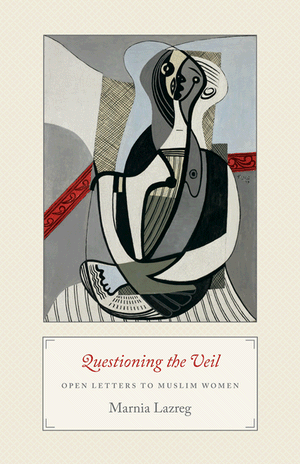
[Editor’s note: Marnia Lazreg’s Questioning the Veil: Open Letters to Muslim Women (Princeton: Princeton University Press, 2009) is a refreshing unveiling of the long debated arguments on the use of some sort of “veil” in Muslim societies. These letters, concise and impassioned arguments in essay format, are for all to read. Modesty? Protection against sexual harassment? Newly formatted cultural identity? Conviction and Piety? Lazreg draws on her own upbringing in Algeria and research as a sociologist to frame her conviction of why Muslim women should not wear the veil. No one interested in the ongoing discussion should fail to read her important contribution. I provide here a brief excerpt from her Introduction.]

I do not approach veiling from the perspective of the struggle between “tradition” and “modernity,” which purportedly women resolve by opting for the veil, as a number of studies have claimed. New styles of veiling are less confining to a woman’s ability to move about than old ones, and a number of veiled women throughout the Muslim world have been carrying out their professional activities side by side with men in their workplaces. Nor do I consider wearing a veil at work as ushering in a new form of “modernity.” Furthermore, I do not intend to characterize veiling as representing women’s “alienation,” “enslavement,” or “subjugation” to cultural norms. Such characterizations are unhelpful as they can easily be applied to our postmodern condition, marked as it is by a retreat from a meaningfully shared human experience and the flaunting of privatized forms of consciousness, which result in conceptions of women that are as detrimental to women’s integrity as the veil might be. Continue reading Questioning the Veil →