Winners and Losers in a Post-Mubarak Arab World

By Yousef Munayyer, Palestine Center, The Jerusalem Fund, February 14, 2011

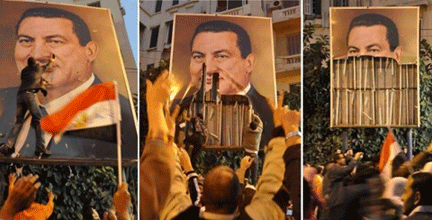
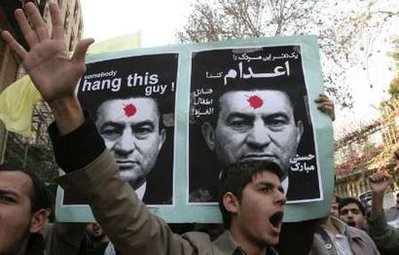
Thirty years ago the Soviet Union was at the beginning of a long campaign in Afghanistan, the average person was lucky to have an advanced recording technology called a “VHS tape,” and Mohammad Hosni Mubarak took control of Egypt, the most populous nation in the Arab Middle East. This week, the last of these beginnings came to an end when millions of Egyptian protestors succeeded in toppling one of the longest standing rulers in the 5,000-year history of Egypt.

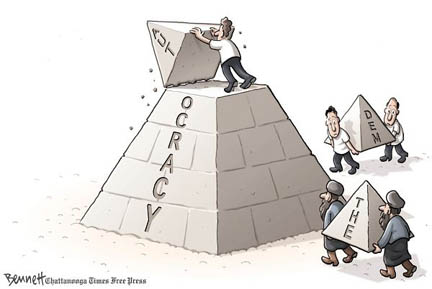
But as with all eras, Hosni Mubarak’s established norms, some national and others regional, which have now irreversibly changed. What type of government may take form in Egypt in the coming weeks and months is yet to be seen, however, it is highly unlikely that any new government can afford to repeat the mistakes of the previous regime which eliminated pluralistic political participation in the formulation of both domestic and foreign policy.

Many different global players had an investment in the outcome of the drama that finally concluded in Egypt with Mubarak’s departure. So after this transformational moment, who are the winners and who are the losers?

The Winners

1. The People of Egypt – After only 18 days, the people of Egypt succeeded in removing a ruler who had governed Egypt for three decades. But the victory for the people of Egypt is far greater than the removal of one person like Mubarak or his family. Continue reading Winners and Losers in a Post-Mubarak Arab World

Ottoman Palestine


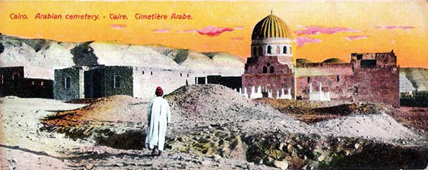
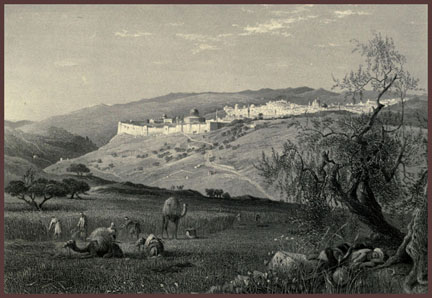
A friend recently brought my attention to an Arabic website with a fascinating collection of illustrations and photographs about Palestine under Ottoman rule. I also came across another site with illustrations of Jerusalem in the Ottoman era. I attach two examples here from the latter website, although the site does not specify the source or date of the images. Continue reading Ottoman Palestine

Breadom


by el-Sayed el-Aswad, United Arab Emirates University

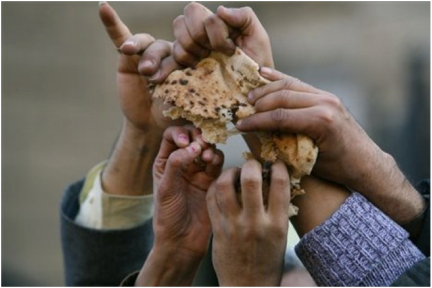
The word “Breadom” is not a spelling mistake; rather it is a combination of the words “bread” and “freedom” indicating, respectively, the “body” and “soul” of the Mother of the World (umm ad-duniya, Egypt), which is currently being affected by a novel form of revolt. In the bread uprising of January 18-19, 1977, falsely depicted by Sadat as “the uprising of thieves” (intifada haramiyya), Egyptians, especially the poor, were interested in securing the ‘bread of their livelihood’ (luqmat al-‘aysh), while in the revolt beginning on January 25th, 2011, they showed profound interest in both bread and freedom. The Arabic word “‘aysh” means both “bread” and “life or living.” These two inseparable meanings have made the phrase “‘aysh al-huriyya” (life of freedom) the best iconic gift crafted, engraved and offered, through victorious young Egyptians of victorious Cairo (al-Qahira), in the Freedom Square (Tahrir Square) opening a new chapter of Egyptian (Arab) history.

It is not surprising to hear people in Tahrir Square, directing their chanting to the government and its businessmen, shout forcefully, “thieves, thieves, thieves” (haramiyya). Also, there was a phrase written in huge letters on the ground of Tahrir Square that says “catch a thief” (imsik haramy). Such phrases resonate and reverberate in the Egyptian folk saying, “its guard is its thief”, (hamiha haramiha), with reference to a plundering and deceitful governor. Continue reading Breadom

The Music of Rebellion


The revolution in Egypt never would have happened as fast and as ultimately peacefully as it did without the new digital age in full bloom. Now that Mubarak has resigned, the protesters are attempting to go back to life with an air of freedom conquering the stale odor of fear. Last night was one of jubilation as Egyptians of all stripes danced in the streets. The withdrawal of Mubarak was music in the ears. And, indeed, music was part of the process. Here is a hip-hop protest on Youtube with a range of video and still photographs by the Egyptian rap group known as Arabian Knightz. Other rap groups also found the recen protests worthy of Youtube. For yet another early video on the protests, click here. And here is a collage from the rapper Marcel Cartier.

Hosni Mubarak and Don Giovanni


Eighteen days and no longer counting. On this day of farewell, although the wellness wished was not very strong for Hosni Mubarak among the thousands upon thousands of protesters gathered today in Tahrir Square, the Pharaoh left Thebes for good. There have been so many questions swirling in central Cairo and streaming into households worldwide that none of the thousands of pundit-pandered answers were able to satisfy. Never has a revolution been witnessed by so many people; never have so many questions been asked with so little ability to predict precisely what would happen. Will he leave? Or perhaps, more likely, when will he leave? Or, perhaps, has he already exited, stage right? Now we know, Mubarak has resigned.

Yesterday there was a brief spell of hope that Mubarak had finally accepted his fate. I attended an Egyptian event in Manhattan about as far away from the protests in Tahrir Square as can be imagined. This was a performance of Mozart arias translated into Arabic, some into Egyptian dialect. A friend arrived full of relief, having heard the earlier news that Mubarak was planning to leave. The old man’s long and self-serving speech seemed to squelch any hopes for that; the sighs and groans of the unified Egyptian spirit of protest could then be heard around the world. During intermission a long-time Egypt watcher told me that Mubarak will not leave and violence was sure to start up again. Thankfully, he was wrong. Continue reading Hosni Mubarak and Don Giovanni

Mozart in Arabic


Ashraf Sewailam as Sarastro in Mozart’s “The Magic Flute,” Bibliotheca Alexandrina (Alexandria, Egypt), Jan. 2011

The New York Public Library for the Performing Arts, Dorothy and Lewis B. Cullman Center, Bruno Walter Auditorium at Lincoln Center is presenting a performance of scenes and arias from Mozart operas sung in Arabic by Mona Rafla, Cynthia Samaha-Melki, Ashraf Sewailam, and Raouf Zaidan, with pianist Mohamed Shams. Performances are Thursday, February 10, 2011 at 6 pm and Saturday, February 12, 2011 at 2:30 pm. For details see the website.

New book on Hanna Batatu and Iraq


Professor Hanna Batatu (1926-2000)

In 2008, CCAS invited prominent scholars of Iraq to reflect on the lessons of Hanna Batatu’s legendary 1978 work, The Old Social Classes and the Revolutionary Movements of Iraq. The end result of that conference is Uncovering Iraq: Trajectories of Disintegration and Transformation, edited by Middle East Report editor Chris Toensing and CCAS editor Mimi Kirk. The book’s seven chapters explore three aspects of Batatu’s scholarship: his contribution to current understandings of Iraqi history (chs. 1 & 2); his categories of analysis as applied to Iraqi sociopolitical affairs (chs. 3, 4, & 5); and his influence (or lack thereof) on portrayals of Iraq by non-academic producers of knowledge (chs. 6 & 7).

Table of Contents: Continue reading New book on Hanna Batatu and Iraq