George Nicolas El-Hage: If you were mine, 1


Poems by George Nicolas El-Hage

Translated from the original Arabic by Diana Malouf and George El-Hage

Introduction by Khalil Semaan, Binghamton University.

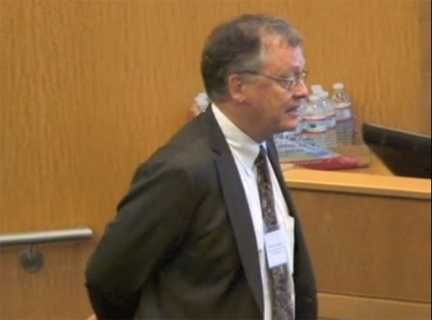
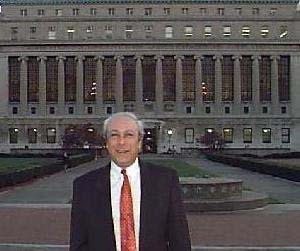
George Nicolas El-Hage was born in Mansourieh, near Beirut, Lebanon. He was educated at the Lebanese University of Beirut and in the United States where he earned an M.A and a Ph.D. in Arabic and Comparative Literature at Binghamton University in N.Y. His Dissertation (later published into a book by NDU Press, Lebanon) was on William Blake and Kahlil Gibran: Poets of Prophetic Vision. He has taught at Yale University, Binghamton University, The Lebanese University, Columbia University, Monterey Institute of International Studies and the Defense Language Institute. His academic career was equally spent between teaching, authoring, lecturing and administration.

He published five volumes of poetry, numerous research articles, books on language pedagogy and poetry in Lebanese Dialect and Zajal. While in Beirut, El-Hage studied with and was influenced by poets like Buland al-Haidari and Khalil Hawi. His poetry betrays a marked fluctuation between a deep romantic sensitivity and a tragic existential awareness which colors his reading of current universal and regional events. The tragedy of his embattled country constitutes a dominant theme in his writings. El-Hage is a supporter of the free verse movement in Modern Arabic Poetry. Nevertheless, he still appreciates the Qasida ‘Amudiyya, the classical form of traditional Arabic Poetry. He always chooses short meters and his poetry is characterized by its musical effects.

From El-Hage’s book of poetry: If You Were Mine

From the INTRODUCTION

No, I shall not tell you that I became a poet. The day I read joy and sadness in your smile and witnessed the sun rising in your eyes, I abandoned my heart, crucified on the ivory ramparts of your face, and setting sail, I strove to navigate the deep waters of inspiration. That day, I discovered my inner self in the mirror of your pure love, and I vowed to tell you this in words. These are some of them. Continue reading George Nicolas El-Hage: If you were mine, 1

On the beauty of late medieval florilegium


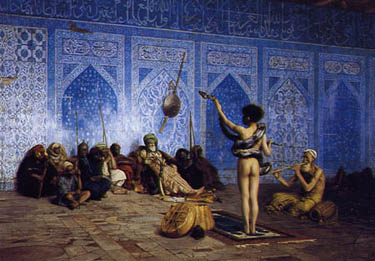
Jean-Léon Gérôme’s Le charmeur des serpentes, 1880

In 2007 I published Reading Orientalism: Said and the Unsaid with the University of Washington Press. The build-up to its publishing is a story that spans almost six years. Originally I had planned to include a chapter on Said’s Orientalism in a book I was writing called Islam Obscured: The Rhetoric of Anthropological Representation, which was published in the SAR series of Palgrave in 2005. But as I began to work on the chapter, it quickly took on a life of its own. I had first read Orientalism when returning from ethnographic fieldwork in Yemen in 1979. It sat on my bookshelf and I dutifully included the author’s “introduction” (the most readable part of the book for undergraduate students) in my course on Middle East anthropology. But as I delved back into Said’s book and started collecting the original reviews (which turned out to be more than 50) and the plethora of writings about Orientalism, I discovered that this dense book was fraught with errors of fact and methodological missteps.

While working on both books-to-be, I delivered a paper at the annual meeting of the American Anthropological Association in 2001 entitled “Dissing Orientalist Discourse: What Said Said and What Ethnographers Did,” followed by talks on my evolving text at the University of Pennsylvania, Harvard, the University of London and New York University. The AAA talk prompted a young employee of Routledge to ask if I was thinking of writing a book on the subject. Naively, I said yes and after another year had a draft ready to drop off in their New York office. Time went by and by and there was no word from Routledge. Eventually, after several months, I received a letter from the Sociology editor noting that Routledge at the time no longer had an Anthropology editor and my manuscript was not of interest to him. I thus learned that there were sociologists who seemed not to know much about Edward Said. But they did send the reviewer’s comments and these were well taken. In fact my first draft was in need of major revision.

So revise I did and then I accidentally stumbled across a website of a book agent inviting queries. Continue reading On the beauty of late medieval florilegium

Buried Christian Empire Casts New Light on Early Islam


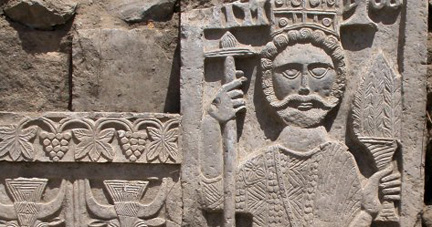
The “crowned man” relief found in Zafar, Yemen is seen as evidence that there was a Christian empire in the region before Islam took hold.

by Matthias Schulz, Der Spiegel, December 21, 2012

The commandment “Make yourself no graven image” has long been strictly followed in the Arab world. There are very few statues of the caliphs and ancient kings of the region. The pagan gods in the desert were usually worshipped in an “aniconic” way, that is, as beings without form.

But now a narcissistic work of human self-portrayal has turned up in Yemen. It is a figure, chiseled in stone, which apparently stems from the era of the Prophet.

Paul Yule, an archeologist from the southwestern German city of Heidelberg, has studied the relief, which is 1.70 meters (5’7″) tall, in Zafar, some 930 kilometers (581 miles) south of Mecca. It depicts a man with chains of jewelry, curls and spherical eyes. Yule dates the image to the time around 530 AD.

The German archeologist excavated sites in the rocky highlands of Yemen, an occupation that turned quite dangerous recently because of political circumstances in the country. On his last mission, Yule lost 8 kilograms (18 lbs.) and his equipment was confiscated.

Nevertheless, he is pleased, because he was able to bring notes, bits of debris and bones back to Heidelberg. Yule has concluded that Zafar was the center of an Arab tribal confederation, a realm that was two million square kilometers (about 772,000 square miles) large and exerted its influence all the way to Mecca. Continue reading Buried Christian Empire Casts New Light on Early Islam

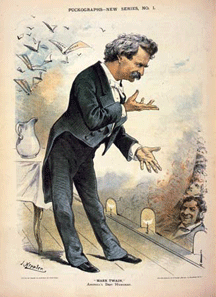
Marking (by Twain) the new year once again

The more things change, the more they remain the same. Mark Twain did not say that, but consider his greeting from the 19th to the 20th century, published in the New York Herald on December 30, 1900:

I bring you the stately nation named Christendom, returning, bedraggled, besmirched, and dishonored, from pirate raids in Kiao-Chou, Manchuria, South Africa, and the Philippines, with her soul full of meanness, her pocket full of boodle, and her mouth full of hypocrisies. Give her soap and towel, but hide the looking glass.

I wonder what Twain would say about American troops in Iraq and Afghanistan, drones over Pakistan and Yemen and old ladies taking off their shoes to board an airplane…

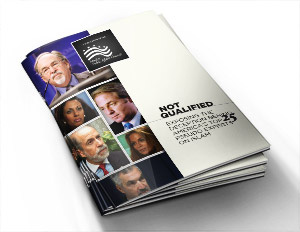
Not Qualified: Exposing the Deception Behind America’s Top 25 Pseudo Experts on Islam


[Click here to download the recent publication of the Muslim Public Affairs Council exposing the lack of credentials of the [mis]leading Islam[ophobic] experts.]

For the benefit of national security and the American public at large, we must ensure that those people speaking about terrorism perpetrated in the name of Islam are qualified. At a minimum, individuals who speak about Islam and its co-opting by violent extremists need to be properly informed and qualified.

To date, groundbreaking research into the anti-Muslim hate industry has been conducted by the Center for American Progress and the Southern Poverty Law Center. Their research focuses primarily on anti-Muslim hate activists’ sources of funding and their possible connections to other forms of hate. No study that we know of has focused on the qualifications of the so-called experts on Islam and Muslim violent extremists.

This study seeks to fill in this research gap by focusing the academic qualifications of 25 individuals who comprise some of the most vocal voices and activists in the anti-Muslim circuit. We specifically focus on highly visible personalities who engage in anti-Islam rhetoric and who frequently and inaccurately speak not only about extremist Muslims, or even Muslims at large, but who also claim to be knowledgeable about the fundamental beliefs and tenets of the Islamic faith.

The study asks the question: Do these individuals have the formal academic credentials to back their explicit and implicit claims of expertise on Islam?

A Conversation with Marjorie Ransom


[The following online video interview with retired diplomat Marjorie Ransom was made by Sama’a al-Hamdani and can be seen here. The description of the interview provided by Ms. al-Hamdani is reproduced below. For a website about Ransom’s work, click here. For an article about her work in Aramco World, click here.]

Many Yemenis feel that their country has been reduced to terrorism. However, many of those who have visited Yemen know that the country has a lot more to offer. At the tip of the Arabian Peninsula, Yemen is one of the few countries that had a culture prior to Islam. Although it is not as prevalent as it used to be, one of the traditions that have survived is the production of unique silver jewelry.

Today’s guest, Ms. Marjorie Ransom, lived the life of a diplomat, traveling for years throughout the Middle East; settling twice in Yemen. Ms. Ransom and her late husband began collecting Yemeni Jewelry and in turn started displaying some pieces in American Museums, like the Bead Museum (DC), Jefferson County Historical Society (NY), Gibson Gallery of the State University (NY), and the Arab American National Museum (MI) (to view the latest exhibit, click here). Jewelry is not just a product of a decorative tradition but it is a historic art that captures the essence of Yemen.

In 2003, Ms. Marjorie Ransom decided to apply for a grant travel throughout Yemen to document this tradition. In October of 2013, the first comprehensive book on Yemen’s tradition of silver-smithing will be available through the American University of Cairo Press. This effort is the first of its kind.

In this interview, Ms. Ransom identifies some types and symbols of Yemeni jewelry. Ms. Ransom also brought several silver-smiths to the US whenever she hosted a Jewelry exhibit. She understands that this trade is becoming less common in Yemen and is one of the few people supporting its revival.

Tribes and Terrorism: Myth and Reality


Tribesmen from Yemen´s Bakil tribal confederation waiting for a decision at a tribal law-based conflict resolution session (Mikael Strandberg)

by Khaled Fattah, opencanada.org, October 18, 2012

With the recent stepping up of controversial U.S. drone attacks in tribal areas of Yemen, and post-Arab Spring confrontations with militant jihadist groups in tribal areas of Egypt, Libya, and North Africa, a number of misconceptions surrounding the links between tribes and terrorism in the Arab Middle East continue to plague press coverage and policy reports. The first of these misconceptions is that tribal areas are lawless, ungoverned spaces – a modern-day Wild West. Another misconception is that the ultra-conservative culture of Arab tribes is fertile ground in which to root the violent ideology of transnational terror cells. The truth is that much of the current commentary about tribes and tribalism in the Arab Middle East reflects the Pentagon’s experiences so far in the American-led “War on Terror.” This war has now shifted from boot-heavy invasions to ghost wars in which drones hover over countries with significant tribal populations: Yemen, Pakistan, Afghanistan, Somalia, Libya, and Mali. The War on Terror is now primarily carried out via “open secret” predator drone missions that increasingly target exclusively tribal areas.

Tribal Areas Today Are Not the Wild West

Over the last 10 years, many comparisons have been drawn between the fabled “Wild West” of America toward the end of the 19th century, and present-day tribal areas of the Middle East. The “Wild West” conjures up images of adventurous cowboys facing off in a dusty street in front of a gambling den or brothel, pistols drawn. The image suggests a lawless era in U.S. history, where violence prevailed in American frontier towns, might made right, and the weak were punished for crimes they did not commit. The Wild West was an anarchic social world shaped by outlawed individuals and their henchmen. This period in American history bares little resemblance to life in the tribal areas of the Arab world today, which are highly socialized, with clear normative controls. The association of tribal areas in the Middle East with the Wild West is simply an attractive analogy to intermittent foreign observers and army generals. Continue reading Tribes and Terrorism: Myth and Reality

Breaking the Syria Stalemate


A member of the Free Syrian Army stands guard during a patrol in the western border town of Zabadani; photograph from The Daily Star

by Amr Al-Azm, The Cairo Review of Global Affairs, December 18, 2012

There are two possible trajectories for the current Syrian crisis. The first is a purely military scenario in which the opposition forces engage the regime in a bitter war of attrition until its annihilation. The success of such a course of action, however, is difficult to guarantee, and the cost to the country, its infrastructure and its civilian population is likely to be catastrophic. In fact the more probable outcome is a protracted bloody stalemate, leading to the collapse of the state, sectarian genocide and the fragmentation of the country with significant blowback into neighbouring states such as Lebanon, Jordan and Iraq.

The second trajectory would feature a political resolution. Negotiations would bring about the departure of the Bashar Assad’s regime along with a peaceful transition to democracy. Such a political outcome is the one clearly favored by the international community and was strongly endorsed at the latest friends of Syria meeting held in Marrakesh on December 12 both in statement and in action (by not publicly agreeing to the provision of any military assistance to the Syrian opposition). It is also the option that should be favored by the Syrian people since they too have no interest in seeing their country succumb to the fate described above.

There are certain conditions that must prevail in order for the preferred political outcome to have any chance of success. The first and foremost of these is that both sides must be prepared to engage in a political process with the ultimate outcome of a peaceful transition of power to a newly elected government. Currently, however, the situation in Syria is one of stalemate on political and military fronts; progress on both is needed simultaneously in order to break this stalemate. Continue reading Breaking the Syria Stalemate