Category Archives: Ethics

Not so Fast

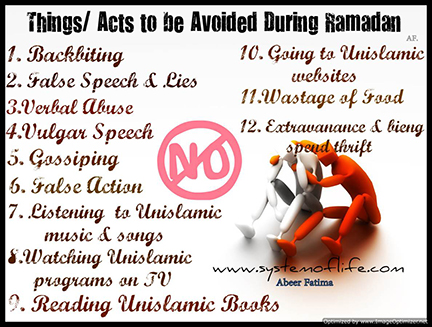
As the month of Ramadan draws to a close, the ethical dissonance that now overshadows just about everything else in the Middle East is evident in the daily news. Muslims are dying daily from suicide bombs strapped to the waists of fellow Muslims, military bullets in Egypt and Syria, as well as sectarian violence just about everywhere. The focus during this month of Ramadan is on fasting, a temporary denial of the basic necessities (food water and sex) for a period of time under the sun. But it would be much better if the fasting extended to a moratorium on all violence.

Islam did not invent the idea of fasting, which was once a major ritual in both Judaism and Christianity. One might argue that contemporary Catholic Lent is a watered-down version, playing fast and loose with the more rigorous traditions of the past. In Islam fasting is one of the so-called five pillars, a ritual that most Muslims believe is essential for the believer. The Quran is quite clear on this:

Ramadhan is the (month) in which was sent down the Qur’an, as a guide to mankind, also clear (Signs) for guidance and judgment (Between right and wrong). So every one of you who is present (at his home) during that month should spend it in fasting, but if any one is ill, or on a journey, the prescribed period (Should be made up) by days later. Allah intends every facility for you; He does not want to put to difficulties. (He wants you) to complete the prescribed period, and to glorify Him in that He has guided you; and perchance ye shall be grateful. Surat al-Baqara (2:185)

The fact that there are exceptions (while traveling, women who are pregnant or breastfeeding or menstruating, taking necessary medicine, etc.) indicates that there has always been flexibility built into the ritual. In these cases the rule is that the fast be made up at another time in the year. Some individuals (a child before puberty, or someone who is insane or even a person who has a terminal illness) are not obliged to fast at all, nor to make up any fasting days.

But how much flexibility? What if a Muslim chooses not to fast for a reason other than those laid out in centuries of Islamic fiqh? Continue reading Not so Fast

Punditry: Pondering or Pandering?

Having established this blog a little less than a decade ago, I was initially excited about the possibility of responding to things I read about the Middle East and Islam in virtual “real time.” I still have several letters (the kind put on paper) to the editor that never were published where I sent them. Even if they had been eventually published, it would have been a bit late. Blogs seemed a new and accessible way to play the role of a pundit. But there are different paths for punditry. The best kind is pondering about events; the least useful is pandering to a particular point of view.

To ponder is to wonder, which requires taking risks with ideas and sentiments. Pondering goes beyond posturing, which is simply repeating a polemical mantra no matter where it falls on the left-right political spectrum. Pandering results from preaching to the choir, fixating on speaking a specific truth to power that others may not think is a valid “truth” at all. The contentious issues surrounding representation of Islam, Muslims, Arabs, Jews and the gamut of issues that smolder in the region known as the Middle East are not resolved by rhetorical crossfire. I think that sometimes there is so much speech clutter on the internet that voices of reason have little chance of being heard.

Everyone has pet issues and I am certainly no exception. The reader of my posts over the years will find that for the most part I preach tolerance of diverse views with one glaring exception: I am loathe to tolerate intolerance. A dialogue of disagreement, in my mind, is always better than a monologue of “I am right and you are wrong.” To ponder an issue, then, should be to probe it, test it, play with it, throw it around and see what falls out, make it transparent. Dogma ends all dialogue. Continue reading Punditry: Pondering or Pandering?

Irrational Monologue vs. National Dialogue in Yemen


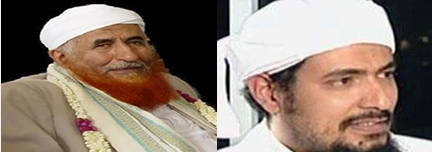
Al-Zindani, father and son

The winds that ushered in the “Arab Spring” were less a simoon, in the sense of a gust that stirs up everything in sight, than they were variable. Regime change has not been the same in every case. Take the case of Yemen, where Ali Abdullah Salih was ousted after three decades in power, but still remains free and influential in Yemen. Such a situation would be impossible for Mubarak, Ben Ali, Qaddafi and especially Bashar al-Asad. Although lives were lost in the Yemeni protests, these were few compared to the bloodshed that rocked Libya and Syria and escalates in Egypt with the recent protests against President Morsi’s removal by the military. Currently Yemen is in the process of a “National Dialogue.” This is admittedly a financially bloated endeavor that only the United Nations could create, but it has brought in a broad array of Yemeni views and has proceeded peacefully and with dignity.

Dialogue is always a plus. Monologue is the problem, whether it is a military dictator or a self-important religious cleric. Now the National Dialogue has been compromised by an irrational monologue carried on by Sheikh Abd al-Majid al-Zindani, a Salafi whose henna redness in his beard is in direct contrast to any common sense and good will. Al-Zindani reminds me of the “moral majority” preacher Jerry Falwell, who founded his own university and soaked up all the lavish praise his accolades could offer. Al-Zindani founded and runs, in his spare time it would seem, al-Imān University, which teaches hate more than it professes tolerance. The United States considers him a “Specially Designated Global Terrorist”, for his links to al-Qaeda, but this has not stopped his constant monologue of self-promotion.

Apparently upset that he was not getting enough attention in the media, al-Zindani has written a letter to the Yemeni people claiming that the National Dialogue is against Islam and that the only constitution possible is that of the shari’a (I suspect he has long forgotten about the Constitution of al-Madina). Continue reading Irrational Monologue vs. National Dialogue in Yemen

Return to Lebanon


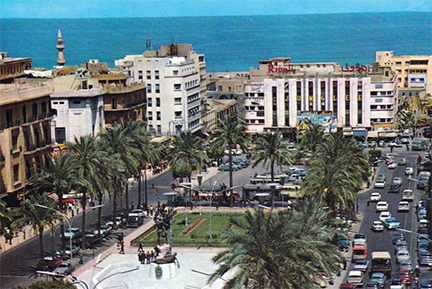
Rivoli Square, Beirut, Lebanon, ca. 1960

First Impressions of Lebanon in June 2013

By George Nicolas El-Hage, Ph.D., Professor of Arabic and Comparative Literature

In 2002, I published my book, The Return of the Hero and the Resurrection of the City. In this poetry book about Lebanon, I borrowed the tragic image of Virgil’s Aeneas who had left his city of Troy in ashes burning behind him as he carried his father on his shoulder and held his son’s hand and marched forward to the new world where he was destined to build Rome and establish a new world order. My saga of self-imposed exile mirrors that of Aeneas’s in many ways with one major difference: I wanted to come back to my destroyed city, to Beirut, to my Troy, in spite of the temptations of my sweet exile abroad. The burning question was: When? How long will the war last and when will peace reign again? Was I really waiting for Godot?

To have experienced life in pre-war Lebanon in the sixties and early seventies, when Lebanon was the jewel of the Mediterranean, was a time that is unforgettable. Every moment remained deeply engraved in my memory during the 37 years that I spent in the United States. I kept insisting on staying away while Lebanon kept persisting in its suicidal lifestyle torn between nationalism , Arabism, Palestinianism, Islamism, Lebanization, Westernization, globalization and many other “isms” that went on bleeding it to death and dislocating its citizens and scattering them across the globe.

Thirty-seven years later it dawned on me, what am I waiting for? Am I waiting for Lebanon to become a powerful, strong country with a stable central government? Am I waiting for all of its numerous political parties to unify under one leadership or for all of its religious factions to denounce their allegiances and pray under one dome? Am I waiting for the rest of the world and for the friendly and neighboring countries, superpowers and faraway countries to denounce their claim on Lebanon and leave it alone, independent, free and self-governed? No, my friend, this shall not come to pass. After all, when was Lebanon ever in charge of its own destiny and master of its internal affairs or its foreign policy? Continue reading Return to Lebanon

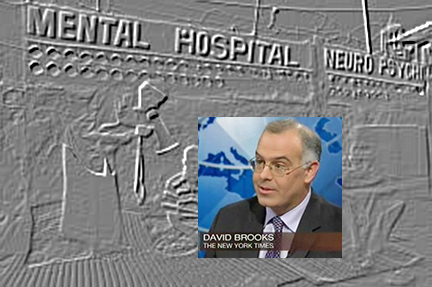
A “Mental” Lapse for David Brooks

In today’s New York Times, talking head David Brooks makes what I think on a certain level could be a valid point, but suffers a “mental” lapse in the process. He divides the camps weighing in on the recent military “coup” in Egypt as those who emphasize process and those who emphasize substance. Starting with a simplistic binary is only the first mistake. Process and substance are hardly independent variables. The process he talks about is “democracy,” as though any time a bunch of ballots are collected in what the Carter Center would call a “free election,” there must be democracy. In the Egyptian case, the Carter Center noted that the election was “marred by uncertainty.” It is obvious that there is no “free” election anywhere in the strict sense. People are often intimidated or so ideologically driven that they do not consider the options available. In many elections, Egypt and Iran being only recent examples, the options are so limited that some people do not even bother to vote. Then there is the question of one-person-one vote vs. the electoral patch that underlies the democracy of the United States. Democracy is a chimera if not seen as relative to other forms of political coercion.

But Brooks steps deep in his own bullshit (and then puts his rhetorical foot in his mouth) when he claims that “It’s not that Egypt doesn’t have a recipe for a democratic transition. It seems to lack even the basic mental ingredients.” The “it” here is the word for a nation state, but the implication is that the people of Egypt are somehow mentally deficient. He does not even bother to clarify that his target is the so-called “Islamists,” but totally ignores the fact that Egyptians are a diverse population with views all across the political spectrum. I wonder what these “basic mental ingredients” are? Can they be found with the Tea Party or even the current debilitating state of the Republican Party in the United States? Does the Democratic Party have such basic mental ingredients when it has conservatives who vote against the Democratic president to secure their seats in Confederate territory? Continue reading A “Mental” Lapse for David Brooks

On Democrats and Tyrants

by Corri Zoli

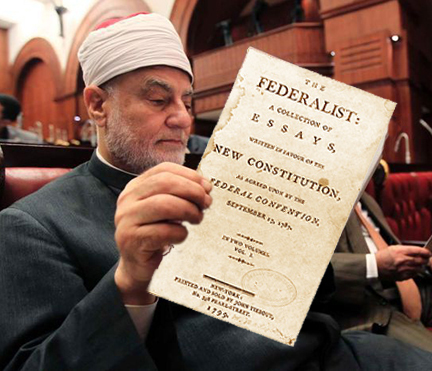
In principle, democratically elected officials can—and often do—become tyrants. It’s a fitting week in the U.S. to reread Madison’s Federalist Papers #10, which addressed both the tyranny of majorities and the more serious problem of tyranny of factions, when one group uses a democratic veneer to arrogate disproportionate power to their group’s narrow interests. When a new leader changes the nation’s constitution to serve that faction’s worldview, chances are we’re seeing factionalism in action. Recall that Madison thought factionalism the greatest threat to genuine republics and, thus, immunized young U.S. institutions (separate branches/balance of powers) to specifically thwart them.

Equally, militaries can defend and preserve democratic institutions and even aid democratic transitions. There is no question that 18th century rural colonial militias were at the vanguard of republican transition in US history. Even today in the U.S., where we operate by civilian control and where our military consistently garners some of the highest public opinion and respect, this institution routinely displays traits that protect democratic and constitutional values. One need only look at the record of who were the earliest, strongest critics of Bush-sponsored torture practices—Judge Advocate Attorneys (JAGs)—to see the professional, law-based culture of the military at work. Today, it is the signal intelligence captains—long trained to honor the 4th and never target Americans for surveillance—who are shocked by executive branch overreach in FISA decisions. Continue reading On Democrats and Tyrants

Voltaire on Tolerance


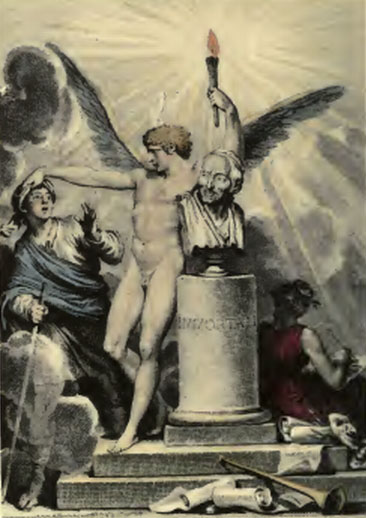
Allegorical bust of Voltaire; from 1901 text

One of the vexing paradoxes of modernity is whether or not intolerance can be tolerated. Should dictators be cuddled if they play up to the foreign policy concerns of a democracy? Should anyone — man, woman or child — be forced to live by religious dogma? How much of the intolerable actions in this world should we tolerate? Some wise words on the problem were offered two and a half centuries ago by the French savant, Voltaire, as brilliantly said in his Philosophical Dictionary. Here is what Voltaire said:

What is tolerance? it is the consequence of humanity. We are all formed of frailty and error; let us pardon reciprocally each other’s folly–that is the first law of nature.

It is clear that the individual who persecutes a man, his brother, because he is not of the same opinion, is a monster. That admits of no difficulty. But the government! but the magistrates! but the princes! how do they treat those who have another worship than theirs? If they are powerful strangers, it is certain that a prince will make an alliance with them. Franois I., very Christian, will unite with Mussulmans against Charles V., very Catholic. Francois I. will give money to the Lutherans of Germany to support them in their revolt against the emperor; but, in accordance with custom, he will start by having Lutherans burned at home. For political reasons he pays them in Saxony; for political reasons he burns them in Paris. But what will happen? Persecutions make proselytes? Soon France will be full of new Protestants. At first they will let themselves be hanged, later they in their turn will hang. There will be civil wars, then will come the St. Bartholomew; and this corner of the world will be worse than all that the ancients and moderns have ever told of hell.

Madmen, who have never been able to give worship to the God who made you! Miscreants, whom the example of the Noachides, the learned Chinese, the Parsees and all the sages, has never been able to lead! Monsters, who need superstitions as crows’ gizzards need carrion! you have been told it already, and there is nothing else to tell you-if you have two religions in your countries, they will cut each other’s throat ; if you have thirty religions, they will dwell in peace. Look at the great Turk, he governs Guebres, Banians, Creek Christians, Nestorians, Romans. The first who tried to stir up tumult would be impaled; and everyone is tranquil.

Humanitarianism (?) in Lebanon


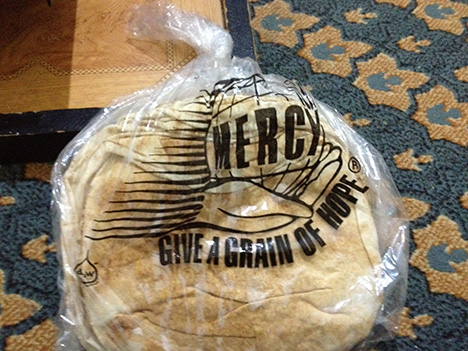
bread provided by NGOs to Syrian refugees in the aid kit in Wadi Khaled (Akkar); photograph by Estella Carpi


A practitioner and a researcher assess humanitarianism in today’s Lebanon

By Fiorenzo Conte and Estella Carpi

In our combined effort of providing the perspectives of the practitioner and the researcher, we would like to take as a point of departure Italian scholar Roberto Belloni’s theses according to which humanitarianism, on the one hand, ends up being the short-term substitute for development, and, on the other, tends to reproduce the same cleavages it tries to overcome.

Humanitarianism as a short-term substitute for development

While conducting research and grounded humanitarian work in Lebanon, we have noticed how humanitarianism, while providing increasing quantity of aid, avoids addressing the root causes of Lebanese chronic poverty, administrative anarchy and recurring war-like events. Predominantly Western and Gulf countries have focused their attention on managing the symptoms of the malaise without effectively addressing its causes and hence engaging in the long term.

The humanitarian needs in Lebanon are surely huge for both Syrian refugees and long neglected Lebanese host communities. With the massive influx of Syrian refugees since August 2011, the Lebanese community, living in the poorest regions, has felt the pinch. Indeed, many residents are currently trying to tackle increased expenditures and a drop in income caused by a variety of factors: the closure of the border and the consequent inaccessibility to Syrian cheaper goods through the usual border-cross smuggling; fierce competition in the labor market that has been increased by the presence of Syrian workers; a deteriorating security situation; and reduced access to the agricultural lands strewn with landmines (1).

The situation for Syrians is similarly grim: according to a recent report, more than 50% of Syrian refugees and Lebanese returnees live in substandard conditions, as Lebanese host communities are no longer able to absorb new flows of refugees in their houses. Continue reading Humanitarianism (?) in Lebanon