Category Archives: Film and Video

Body Politics: Muhammad and Middleton


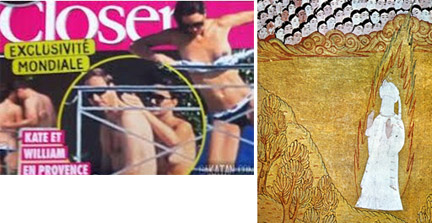
The offending photographs of Kate Middleton, left; an Islamic depiction of Muhammad by not showing his face, right


[Note: The following commentary has been posted to my column “Middle East Muddle” on the online website of Anthropology News, published by the American Anthropological Association. To read the entire commentary, click here. For more commentaries on “Middle East Muddle, click here.]

Two scandals have dominated the news, at least in Europe and America, over the week following the 9/11 anniversary. The first, which has yet to abate as I write this, is the widespread protests against a pathetic anti-Muslim film trailer trolled from Youtube, rhetorically warmed over in Arabic and promoted by extremist Muslims to stir up violence. The troll took a toll with the American ambassador and several other Americans killed in Libya, violent clashes in Egypt and in Yemen and a range of protests (many of which have remained peaceful) across Muslim communities. The second, which is equally absurd as a pretext, is the voyeuristic publishing by French, Irish and Italian tabloids of a long-distance photograph of the naked breasts of Kate Middleton, the newly wed wife of Britain’s Prince William. The paparazzi have once again harmed Britain’s royal family, first by chasing Princess Diana and now by turning a powerful lens on a private moment in a private home while Diana’s son vacationed in France. In both the body is all about politics…

For the entire commentary go to “Middle East Muddle” by clicking here.
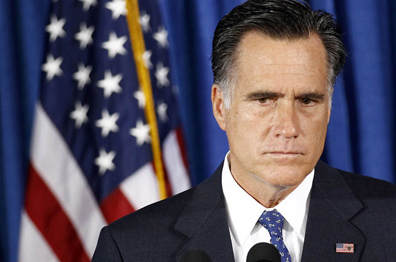
Mitt miffs the tweets


US Republican presidential nominee Mitt Romney listens to questions on the attack on the US consulate in Libya, in Jacksonville, Florida, September 12, 2012. [Reuters]

Romney poses, as militants burn a US consulate over Islamophobic film

By Juan Cole, Al Jazeera, September 14, 2012

As Mitt Romney misfires on the campaign trail; scholar argues that the events in Benghazi are atypical of the new Libya.

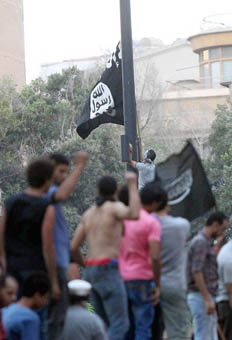
Predictably, Republican presidential candidate Mitt Romney tried to make political hay of the tiny demonstrations in Cairo and Benghazi by Muslim militants. The Benghazi mob turned violent in clashes with police and the consulate ended up being burned and an embassy staffers being killed.

Romney seized on the frantic tweets of the Cairo embassy, which condemned the sleazy Youtube videos by American Islamophobes that had provoked the ire of the crowds, as evidence that the Obama administration was sidingwith the attacking mobs. First of all, really? Romney is trying to get elected on the back of a dead US diplomat? Second of all, really? He thinks the State Department thought the attack on themselves was justified? Third of all, really? Romney is selective. When it comes to Christianity, Romney decries a ‘war on religion.’ But apparently he thinks there *should* be a war on Islamic religion. Romney’s intervention (he is just a civilian at the moment) in American foreign policy is unwise and risky, not to mention distasteful. Continue reading Mitt miffs the tweets

Beyond religion in the Middle East


An Egyptian protester tries to raise an Islamic flag at the U.S. embassy during a protest, in Cairo, Egypt on September 11, 2012. (Khaled Elfiqi / EPA / September 13, 2012)

Violence in Egypt and Libya is more about local politics than Islam.

By Mimi Hanaoka, LA Times, September 13, 20121

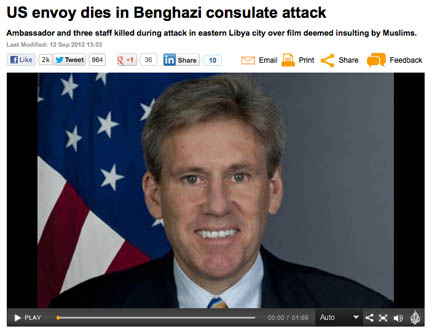
The chaotic violence that killed U.S. Ambassador J. Christopher Stevens and three American staffers in Libya, and that resulted in a mob storming the U.S. Embassy in Cairo, has been garbed in religious language and references. However, the religious rhetoric from all corners distracts from the real issues: serious domestic political fragmentation in Libya and Egypt in the aftermath of the Arab Spring, and America’s place in the region.

Media attention has focused on a polemic 14-minute movie trailer for “Innocence of Muslims” posted on YouTube, which prompted protests in Benghazi and Cairo. The film was allegedly produced by Sam Bacile, who has identified himself as an Israeli Jew. In the Wall Street Journal, Bacile called Islam a “cancer” and claimed he raised $5 million from about 100 Jewish donors to fund the film, details that only intensify the film’s polemic power.

The trailer, translated into Arabic and viewed thousands of times in the Middle East, portrays the prophet Muhammad as, among other things, a child abuser. Florida pastor and provocateur Terry Jones, who burned the Koran in 2011, claims to have screened the film; a self-described Christian militant in California claims to have consulted on it. Continue reading Beyond religion in the Middle East

The Politics of Cinematic Hate

Yesterday was the 11th anniversary of the tragic loss of life on 9/11, the ugly outcome of hate in which people who had personally done nothing to offend the perpetrators lost their lives. Today we awake to hear that the American ambassador to Libya is dead; the American flag at the U.S. embassy in Cairo is torn to shreds. This is the same American diplomat who aided the Libyan revolution against Qaddafi; this is the same flag that is synonymous with the political notion of democracy. In both cases yesterday it was not a response to anything the United States government did or authorized, nor to any military action. A hate film, and a very poorly done one at that, had been posted on the Internet in which Islam and the prophet Muhammad are portrayed in an extremely negative way. The film, an excerpt of which can be seen here, is pathetic both as cinema and for its almost comical portrayal of Muslims. But it has provided an excuse for militants to once again harp on the specter of the United States against the Muslim world.

Were this film from a religious nutcase like Terry Jones, I suspect it would not have garnered as much attention. But it appears that the maker of the film is an Israeli backed by Jewish donors and promoted by an anti-Muslim Copt in California. How perfect is that for a conspiracy plot. Hateful films do not have to be good cinema to fuel hateful responses. But this time it is the role of the Internet that fuels the fire. Anyone can post a malicious film on Youtube and have it circle the globe in an instant. The solution is not to ban the Internet, which is impossible, nor to justify the actions of those who turn their anger into a killing spree. It is not possible to stop a Terry Jones from burning the Quran or any cinematic venom from being posted (at least temporarily), so the onus falls back on our own ethics. We need to think beyond the politics of hate, which have not been unleashed with a fury, to the politics of restraint.

Cinematic Contending with the Companions


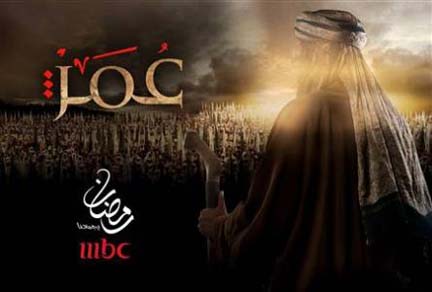
As Ramadan for the Hijri year 1433 draws to a close, the violence between Muslims on the ground is paralleled by the violence about Muslims on the screen. The daily slaughter of Syrians, continued terrorist bombings throughout the region and the uncivil rebellion in Mali dominate the news, as such atrocities should. But cinema does not lag far behind in showing blood spurting out of bodies and broken bones, all in the name of politicized religion. I am not talking about The Expendables, where aging Hollywood superheroes unite to make themselves even more money, but a Ramadan television serial that has captured the attention of Muslims across the Middle East: a retelling of the story of the second caliph ‘Umar ibn al-Khattab. Click here for the trailer and here to watch Episode #2.

Premiering 36 years after Moustafa Akkad’s acclaimed The Message recreated the life of Muhammad without actually showing Muhammad, the serial ‘Umar in 30 episodes is a millions-of-megabucks production worthy of Cecil B. DeMille. The earlier film had the blessing of the major Islamic organizations, since it avoided showing an image of the prophet Muhammad. It was a bit eerie to see Anthony Quinn as Hamza constantly speaking to the camera as though the camera-not-very-obscura was in fact the Prophet. But this new film has been railed against by the Grand Mufti of Saudi Arabia and the sheikhs of al-Azhar because it dares to show an actor playing a companion of the Prophet, notably the caliph ‘Umar ibn al-Khattab. If it had been Saladin, that would be okay it seems. Continue reading Cinematic Contending with the Companions