Category Archives: Photography

Leaves from an old Bible Atlas #3


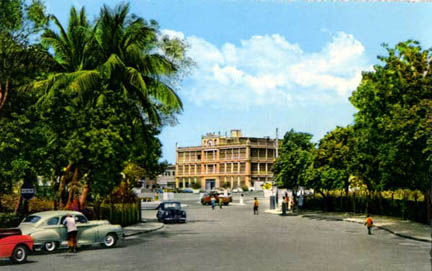
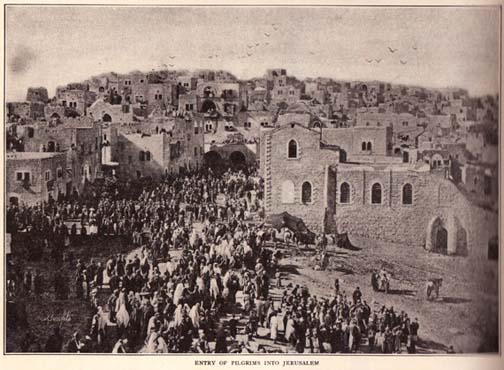
Entry of pilgrims into Jerusalem, Hurlbutt’s Atlas, p. 150

The Christian fascination with the Holy Land as a window into interpretation of the Bible has a long and indeed fascinating history of its own. Here I continue the thread on Jesse Lyman Hurlbutt’s A Bible Atlas (New York: Rand McNally & company, 1947, first published in 1882). The photograph above is actually the last in the atlas, just before a colorful foldout chart of Bible History.

The edition I am using includes an Introduction by Bishop John H. Vincent, whose memories of a visit to Palestine are quite typical of this Holy-Landaphilia. The following is a good example of the preacher’s rhetoric:

At one time I was permitted to spend forty days and forty nights in Palestine. I saw Abraham at his tent door; Rebekah veiling herself at the approach of the stranger; the long caravan of camels and Midianites on their way toward the south. I saw the wailing mourners at the house of death; the roof that might easily have been broken up; the wedding procession; the grass on the housetops; the sparrow making a nest for her young in the synagogues of Jerusalem. I saw the elders in the gates; David the shepherd, with his sheep, on the hillside; the Jewish mother, teacher Timothy, the words of the old Book in the old city on the hill. Verily, it is the old land; it is the old life; it is the memorial presentation in concrete form of what the Book says was true there thousands of years ago.

To be continued …
Leaves from an old Bible Atlas #1

Perhaps there is a geographical inclination gene in my ancestry, since I have always loved Bible atlases. Many years ago my father was given a copy of Jesse Lyman Hurlbut’s A Bible Atlas, first published in 1910; his volume was a 1947 revision. But for the most part I assume the photographs were taken around the turn of the 20th century, give or take a decade. The author lived from 1843–1930 and as early as 1882 had published a Manual of Biblical Geography, the perecursor to this atlas. The 1910 version is archived online. There is also a website devoted to maps from his 1904 Story of the Bible.

So here I begin a thread of photographs of the Holy Land from at least a century ago. Let’s begin in Tiberias … Continue reading Leaves from an old Bible Atlas #1

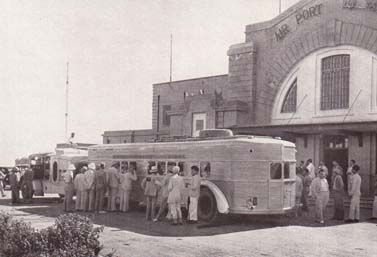
By Air-Cooled Bus from Baghdad


The photograph above, taken by W. Robert Moore, appeared in the National Geographic Magazine December, 1938 issue (p. 732). The caption reads:

THE DESERT-GOING BAGHDAD-DAMASCUS BUS IS AIR-COOLED AND WAS “MADE IN U.S.A.”
Temperature was 111 degrees Fahrenheit when the picture ws taken at Baghdad’s airport, but inside the stainless-steel bus, operated by Nairn Transport Company, it was only 76 degrees. Now, in a few hours, these huge high-speed cars make the trip that once took camels many days.

Covering Afghanistan


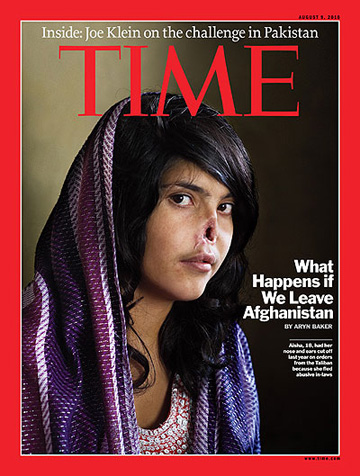
August 9, 2010 cover of Time Magazine

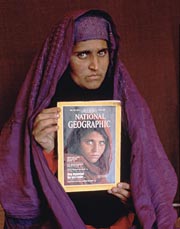
As usual for the end of the week, my Time arrived yesterday. It seems a bit unusual that I should receive the August 9 issue a week early, but then Time is not always accurate. The cover photograph is startling, haunting, disturbing and an unfortunate example of sensationalized news reporting. I cannot help but compare this to the widely traveled National Geographic photograph of an Afghan woman. I have no objection to covering a human tragedy etched in the face of young Aisha, the 18 year old girl whose nose and ears were cut off by self-righteous extremists who practice a brand of Islam that would make the Prophet Muhammad roll over in his grave. But the cover’s prominent announcement of the article inside by Aryn Baker is in fact not the title of the article, nor the main message of the author. “What happens if we leave Afghanistan” is a lot more sensational than “Afghan Women and the Return of the Taliban,” which is why it graces the cover. Tragedies, like sex scandals, sell. The issue for me is how they should be reported responsibly.


Afghan woman holding 1985 National Geographic issue with her picture on the cover

Continue reading Covering Afghanistan

Images from the Hadramawt

Note: The following images were taken in the early part of the 20th century when the British were in control of the Aden Protectorate.


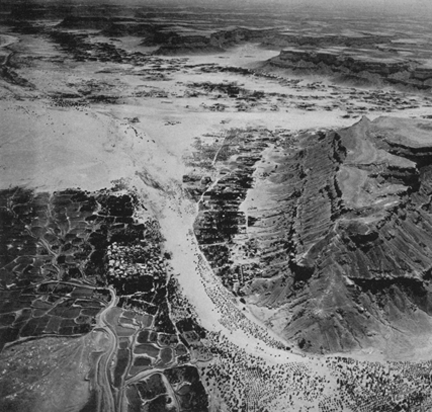
Shibam, looking down the Wadi Hadhramaut towards Seiyun. Shibam is built on a low hill at the tip of a plateau spur and, for lack of space, grew upward; the buildings are eight to ten stories high. The landlord occupies the upper stories and these parts are whitewashed; the more whitewash, the wealthier the owner. Note the abandoned fields embanked to prevent runoff of water. The upper right-hand margin shows the plateau topography in the direction of the sea, a hundred miles distant.

Continue reading Images from the Hadramawt

Hands Up after seven decades


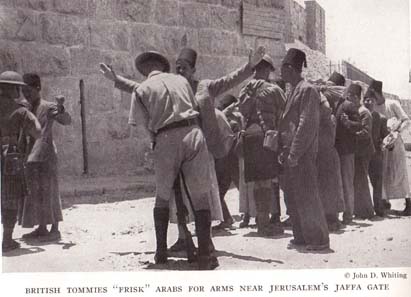
The plight of the Palestinians has a long history, one engaged on the ground before the creation of modern Israel. The photograph above, taken by John D. Whiting, is from The National Geographic Magazine December 1938 issue (p. 696). The caption reads:

BRITISH TOMMIES “FRISK” ARABS FOR ARMS NEAR JERUSALEM’S JAFFA GATE
In fighting between Arabs and Jews, hundreds on both sides have been killed and wounded from gunfire, bombs, and mines set under highways. Both peoples object to the proposed partition of the country, whereby each would be colonized in a separate district and Britain would retain control of a corridor from Jerusalem to the sea and of certain other regions.

One is reminded of Solomon’s lament that there is nothing new under the sun or the old French saw that the more things change, the more they remain the same. Regardless of who has done the frisking, the image of civilians standing in line before soldiers and with their hands up in the air is a telling reminder of the inability of politicians to resolve one of the most intractable disputes of the 20th century. The aftermath of two world wars and the thawing of the Cold War would seem more difficult to resolve than sharing space in a small corner of the Middle East. But then, this is a corner with a history of bloodshed that is unrivaled anywhere else. How ironic that the city where Christians believe the “Prince of Peace” will save the world from ultimate evil has been the site for so much continuing mistreatment of people.