Category Archives: Yemen

The Arab Spring

By Rashid Khalidi, The Nation, March 21, 2011 and Institute for Palestine Studies, March 3, 2011

Suddenly, to be an Arab has become a good thing. People all over the Arab world feel a sense of pride in shaking off decades of cowed passivity under dictatorships that ruled with no deference to popular wishes. And it has become respectable in the West as well. Egypt is now thought of as an exciting and progressive place; its people’s expressions of solidarity are welcomed by demonstrators in Madison, Wisconsin; and its bright young activists are seen as models for a new kind of twenty-first-century mobilization. Events in the Arab world are being covered by the Western media more extensively than ever before and are being talked about positively in a fashion that is unprecedented. Before, when anything Muslim or Middle Eastern or Arab was reported on, it was almost always with a heavy negative connotation. Now, during this Arab spring, this has ceased to be the case. An area that was a byword for political stagnation is witnessing a rapid transformation that has caught the attention of the world.

Three things should be said about this sea change in perceptions about Arabs, Muslims and Middle Easterners. The first is that it shows how superficial, and how false, were most Western media images of this region. Virtually all we heard about were the ubiquitous terrorists, the omnipresent bearded radicals and their veiled companions trying to impose Sharia and the corrupt, brutal despots who were the only option for control of such undesirables. In US government-speak, faithfully repeated by the mainstream media, most of that corruption and brutality was airbrushed out through the use of mendacious terms like “moderates” (i.e., those who do and say what we want). That locution, and the one used to denigrate the people of the region, “the Arab street,” should now be permanently retired. The second feature of this shift in perceptions is that it is very fragile. Even if all the Arab despots are overthrown, there is an enormous investment in the “us versus them” view of the region. This includes not only entire bureaucratic empires engaged in fighting the “war on terror,” not only the industries that supply this war and the battalions of contractors and consultants so generously rewarded for their services in it; it also includes a large ideological archipelago of faux expertise, with vast shoals of “terrorologists” deeply committed to propagating this caricature of the Middle East. These talking heads who pass for experts have ceaselessly affirmed that terrorists and Islamists are the only thing to look for or see. They are the ones who systematically taught Americans not to see the real Arab world: the unions, those with a commitment to the rule of law, the tech-savvy young people, the feminists, the artists and intellectuals, those with a reasonable knowledge of Western culture and values, the ordinary people who simply want decent opportunities and a voice in how they are governed. The “experts” taught us instead that this was a fanatical people, a people without dignity, a people that deserved its terrible American-supported rulers. Those with power and influence who hold these borderline-racist views are not going to change them quickly, if at all: for proof, one needs only a brief exposure to the sewer that is Fox News. Continue reading The Arab Spring

When in Paris


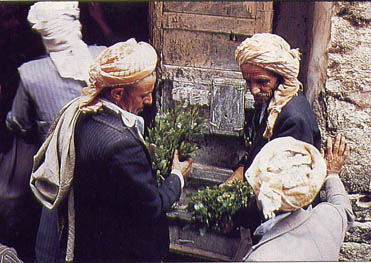
Qat market in Yemen; photograph by Pascal Maréchaux

For anyone reading this in Paris, I am giving a talk in the afternoon on qat in Yemen. Here are the details:

CONFÉRENCE
Prof. Dan Martin Varisco (Anthropologie, Hofstra university)
Qāt, Sex and Traditional Healing / Qāt, sexe et médecine traditionnelle

Abstract/Résumé
There is a substantial corpus of analysis about “Catha edulis”, or qāt in Arabic, both for Yemen and East Africa. Much of this focuses on the origin and distribution of the plant and its legality in an Islamic context. Prof. Varisco has previously published articles on both these aspects of the plant’s history. This talk will focus on the proposed medical benefits of qāt chewing in traditional Yemeni culture, with a focus on the issue of sexual
performance and libido. Although relatively late as an introduction into the medicinal and pharmacological literature, qāt was placed within the existing humoral system. Qāt was considered cold and dry, which explains why the recommended preparation for its use is eating a meal of ‘hot’ food like sorghum porridge or meat. Opinions differ about its impact on the libido. Prof. Varisco examine relevant historical sources (including legal
and medicinal texts), ethnographic accounts, poetry and contemporary scientific analysis of “Catha edulis” for his talk.

Un corpus est déjà constitué sur le qāt ou Catha edulis, aussi bien pour le Yémen que pour l’Afrique de l’Est. Il porte essentiellement sur l’origine et la distribution de cette plante, ainsi que sur son caractère légal en Islam. Ces deux aspects ont déjà fait l’objet de plusieurs publications du Prof. Varisco. Dans sa conférence de Paris, il s’intéressera plutôt aux vertus médicales du qāt, selon la culture yéménite, en particulier aux performances sexuelles et l’accroissement de la libido qu’il est considéré procurer. Bien que le qāt ait été introduit dans la théorie médicale et pharmacologique de manière tardive, il n’en fait pas moins partie du système des humeurs. Il est classé parmi les matières froides et sèches, ce qui explique qu’il doive être absorbé avec des mets Ë‹chaudsËŠ, tel que brouet de sorgho ou viande. Cependant, les opinions varient à propos de son effet sur la libido. Pour les besoins de sa communication, le Prof. Varisco aura donc recours à des sources historiques variées, incluant les textes légaux et médicaux, à des relevés ethnographiques, à la poésie et, enfin, aux analyses scientifiques contemporaines de « Catha edulis ».

La conférence se tiendra le 10 mars 2011 entre 15h et 17h, à l’Institut National d’Histoire de l’Art (INHA), en salle Vasary, Paris, France

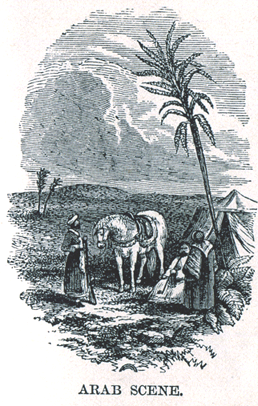
A Geography Lesson from 1879: #4: Arabia and Turkey


In a previous post I continued a thread from an 1879 school geography text. At the time much of the Arab World was under the control, nominal at times, of the Ottoman Empire. This text divided the Ottoman holdings into those in Asia, discussed below, and those in Europe, to be given in a separate post.

1. Arabia is a great plateau, abounding in deserts, and possessing but few fertile districts, except along the coast. Its area is about 1,000,000 square miles.
2. The Climate is the dryest in the world, rain seldom falling anywhere, and the heat being intense, especially in the lowlands and deserts.
Arabia has been divided into three parts: – ARABIA FELIX, happy or fertile; ARABIA PETRAE, stony; and ARABIA DESERTA, desert. The fist of these divisions borders on the Persian Gulf, the Indian Ocean, and the Red Sea; the second lies on the northeastern shore of the Red Sea; and the third includes all of the central portion of the country. The cultivated tracts are generally near the mountains, from which rivers descend in the rainy season and thus enrich the soil. Numerous oases re found in the desert regions. Continue reading A Geography Lesson from 1879: #4: Arabia and Turkey

Vote for Sanaa Water


There is currently a contest for interesting sustainable living concepts in the Philips Livable Cities Award. One of these is about collecting rainwater in the Yemeni capital from rooftops. There is a short video on this that can be accessed here. You need to scroll down to the option called “Rainwater Aggregation.” Voting continues until March 24, 2011. If you vote, you might win a trip to the handing out of the award in The Netherlands.

Tribal Mediation in Yemen


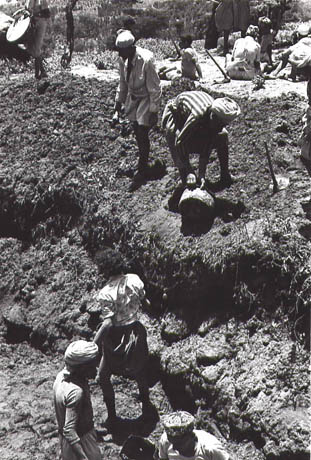
Community cleaning of cistern in al-Ahjur, 1979; photograph by Daniel Varisco

TRIBAL MEDIATION IN YEMEN AND ITS IMPLICATIONS TO DEVELOPMENT

by NAJWA ADRA, AAS WORKING PAPERS IN SOCIAL ANTHROPOLOGY
2010, Volume 19: 1–17.

Introduction

An international phenomenon that has captured the interest of scholars and international development organizations is a continued tendency to resolve conflict through indigenous methods rather than in state courts (Chirayath et al.; Corrin Care 2000; Syria-News.com; UNDP). In Yemen, as in countries as diverse as Kenya and the Solomon Islands, traditional justice is often perceived as familiar, transparent, and participatory. Its focus is reconciliation rather than punishment (Dempsey and Coburn 2010; Dimitrijevic 2006). Specifically in Yemen there is considerable flexibility and adaptability in indigenous tribal procedures and decisions, more so than one usually finds in state justice systems, and decisions are restitutive rather than coercive. Furthermore, indigenous dispute mediation, where fi nes are shared by the entire community, is less costly than the formal legal system. On the other hand, there are concerns that traditional justice may perpetuate social hierarchies by favoring the powerful or discriminating against women (Corrin Care 2000; Kameri-Mbote 2005; Kollapen 2005; Tripp n.d.). In Yemen, as elsewhere, “local strongmen” may co-opt traditional mechanisms by using force in ways that would not have been permitted historically (Dempsey and Coburn 2010). Political scientists worry that resort to traditional justice may undermine state sovereignty.

In this article, I explore these issues as they apply to self-identified tribal communities in Yemen’s Central Highlands through case studies of mediation that I collected during extensive fieldwork between 1978 and 2005 in al-Ahjur. Continue reading Tribal Mediation in Yemen

Yemen is Not Tunisia, not Egypt

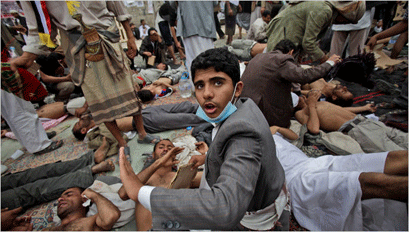
Yesterday I published a commentary on CNN Opinion about the recent protests in Yemen. I attach the start of this here, but the full account can be read at CNN.com.

(CNN) — “Yemen is not Tunisia.” These were the words that President Ali Abdullah Saleh spoke to his people on television last Sunday.

As street protests erupt in Yemen’s capital, it is not surprising that an Arab leader who has held power since a bloodless coup in 1978 would dismiss calls for his ouster.

But he was correct.

Although his regime has been accused of corruption, Saleh is no Zine El Abidine Ben Ali of Tunisia, nor even Hosni Mubarak of Egypt. Instead of using an iron fist, he has maintained power by cleverly playing off rivalries among tribal, religious and political divisions.

When he became president of North Yemen, he allied himself with Sheikh Abdullah al-Ahmar, who headed the most powerful tribal alliance in the North. After negotiating the unification of Yemen’s North with the socialist South in 1990, Saleh fostered a climate of grass-roots democratization before outmaneuvering the socialists for total control of the country.

Power is shared in Yemen largely because of the continuing local importance of tribal affiliation. This is not always understood. A major conflict near Yemen’s border with Saudi Arabia, for example, has been wrongly characterized as an Islamist rebellion. Like most political conflict in the region, the battle has religious overtones, but it is mainly over tribal autonomy…

I was interviewed this morning for the program Worldview of WBEZ in
Chicago and this interview aired today but is archived on the website.

Daniel Martin Varisco