Category Archives: Yemen

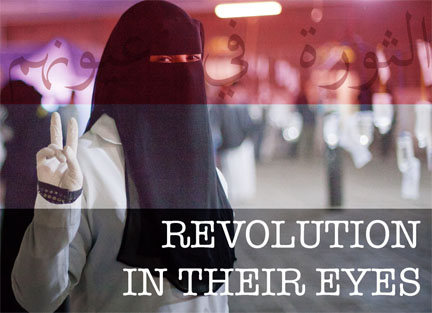
Revolution in Their Eyes: Activist Photography from Yemen’s Revolution

Revolution in Their Eyes: Activist Photography from Yemen’s Revolution

Opening Friday, January 27, 2012, 6.30 to 8.30 pm

The Exhibition

The images in this show are the work of several activist-photographers. They provide a glimpse of the reality—both brutal and beautiful—of daily life inside Change Square, the heart of the revolution in Yemen’s capital, San’a.

The Revolution

Since February 2011, hundreds of thousands of citizens from every walk of life have taken to the streets of Yemen’s cities and towns to demand the ouster of President ‘Ali ‘Abdullah Saleh’s regime, which has ruled the country for 33 years. In spite of violent repression, the revolutionaries have pledged to persevere until Yemen is free.

The Yemen Peace Project

Founded in early 2010, the Yemen Peace Project is an international network of activists and scholars whose mission is to develop and promote peaceful solutions to the challenges faced by the people of Yemen. It provides up-to-date, accurate information about events in Yemen, and is a conduit to Yemeni activists so their voices are heard in the U.S. The Yemen Peace Project has also launched a series of fundraising campaigns to support medical and humanitarian efforts among Yemen’s most vulnerable citizens.

Cosponsored by the Yemen Peace Project

Opening Friday, January 27, 2012, 6.30 to 8.30 pm
Room 6304.24 (MEMEAC space)
Photos will be on view until June 2012
The Salafis, Politics and the Revolution in Yemen

The Salafis, Politics and the Revolution in Yemen

Monday, January 23rd; 12:30pm-2pm
208 Knox Hall ~ 606 West 122nd Street, New York, NY

A lecture by Laurent Bonnefoy
Moderated by Brinkley Messick

Since the early 1980s, Salafism in Yemen has developed as a mostly apolitical movement. Yet, the revolutionary process that emerged in 2011 is changing much of its face in the country and fostering deep recompositions in the Islamist field. This lecture will analyze these changes and concentrate on showing why this political movement matters beyond issues of counter-terrorism.

Laurent Bonnefoy (PhD), born in 1980, is a researcher in political science at the Institut Français du Proche-Orient (IFPO) based in Palestine. Building on four years spent in Yemen, his research focuses primarily on contemporary religious identities in the Arabian Peninsula. He is the author of Salafism in Yemen. Transnationalism and Religious Identity (Columbia University Press, 2012).

Co-sponsored by the Middle East Institute and the Alliance Program.

Cool as a Camel

How the camel kept its cool: Dromedary in the desert finds shade under rare tree that does the job of a parasol

By Chris Parsons, Daily Mail, January 4. 2012

When the temperature soars around the sweltering 40C mark, you’ll take anywhere as respite from the scorching rays no matter how unusual it looks.

This camel sought refuge in the baking heat on the Island of Soqotra in Yemen by sheltering in the shade under an unusual tree which looks like a giant mushroom. Continue reading Cool as a Camel

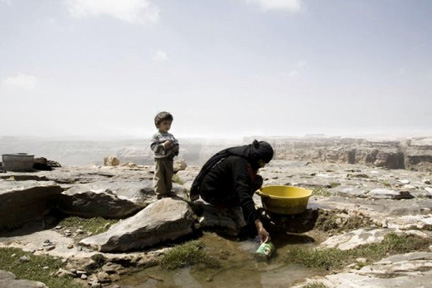
When Yemeni springs stop flowing…


غيول» اليمن تموت استنزافاً

عمر الحيان
المصدر أونلاين – الحياة

January 5, 2012

تعدّ الأنهار، أو الغيول كما يسميها اليمنيون، الشرايين الحيوية للموارد المائية في اليمن، فأرض اليمن هبة الغيول، مثلما مصر هبة النيل. ومنذ آلاف السنين اعتمدت الحضارات اليمنية المتعاقبة على جريان الغيول في الأودية، وعلى ضفافها شيّد الإنسان اليمني حضارته وأقام جنات سبأ ومعين.

ومقارنة بشبه الجزيرة العربية، أضفت الطبيعة الجبلية وكمية المتساقطات والمدرجات الخضراء طوال العام جمالاً وغنى على اليمن، ما جعل الأوروبيين يطلقون عليها لقب الأرض السعيدة. لكن الوضع اليوم مختلف، إذ تربض العاصمة صنعاء فوق حوضها المائي المهدد بالنضوب سنة 2025، وفقاً لدراسة أجراها مشروع إدارة حوض صنعاء، لتصبح أول عاصمة في العالم بلا مياه ربما بحلول سنة 2017.

مدينة صنعاء، الواقعة على ارتفاع 2150 متراً فوق سطح البحر، والمتربعة على قاع منبسط تحيط به الجبال من كل الجهات، كانت قبل أربعين عاماً منبعاً للغيول التي يعتمد عليها السكان في الشرب والزراعة، ولعلّ أشهرها الغيل الأسود الذي ينبع من شمال صنعاء.

تغيّرت ملامح المدينة، واندثرت الأراضي الزراعية تحت مباني الأسمنت المتمددة في كل الاتجاهات، مع ارتفاع عدد سكانها إلى نحو مليون وخمسمائة ألف نسمة، يعتمدون على الآبار الجوفية للحصول على مياه للشرب وللأعمال الإنشائية والصناعية والزراعية. وقد أصبح في سجلات أمانة العاصمة نحو 16 ألف بئر، بعمق بات يتجاوز 1000 متر.

يحكي الحاج حسين علي، من أهالي صنعاء، أنها كانت تعتمد على الغيول والآبار اليدوية التي لا يتجاوز عمقها عشرة أمتار. ويشرح بحسرة كيف جفت آبار صنعاء القديمة بعد «مشروع السائلة»، الذي رصف مجرى السيول وسط العاصمة.

Continue reading When Yemeni springs stop flowing…

Muslim Hadramis in “Christian Ethiopia”


Muslim Hadramis in “Christian Ethiopia”: Reflections on Boundary Making Processes

by Samson A. Bezabeh, Bergen University

[Note: This is the Introduction to a recent article on the Hadrami experience in Ethiopia. The full article can be downloaded from the Journal of Muslim Minority Affairs.]

Introduction

Throughout recorded history sporadic population migration from Arabia to East Africa and Ethiopia has been a noted phenomenon. In the modern era Hadramis started to migrate and settle in Ethiopia at the end of the nineteenth century and the beginning of the twentieth century. Thus, by the beginning of the twentieth century, Ethiopia hosted a number of Arab families who were mainly Yemeni or Hadrami by origin. Although the exact population of the Hadramis at that time is not known, various statistical estimates and narrations, including narration of present day Hadrami families indicate that their number was substantial. This is particularly true in the case of major Ethiopian towns and trading centres such as Harar, Jimma and Asmara.

Despite their pronounced presence, however, their numbers, declined during the second half of the twentieth century as a result of negative factors that have forced them to leave the country. One such factor was the movement of pan-Arab nationalism which gained momentum in the 1960s. To be more specific, in 1969 Hadramis were expelled from Ethiopia for “supporting” the Eritrean Liberation Front (ELF), whom Arab nations, particularly Syrians and Egyptians, were supporting for fulfilling their goal of creating a united Arab land which in their vision also included the highlands of northern Ethiopia. In this scenario, Hadramis along with other Arabs were accused by the Haile Selassie regime4 in Ethiopia of sympathizing with the Arab backers of the Eritrean Liberation Front (ELF), and hence undermining Ethiopian unity. This has led many Hadrami families to voluntarily and involuntarily relocate themselves to Yemen and to oil reach countries in the Gulf such as Saudi Arabia. Continue reading Muslim Hadramis in “Christian Ethiopia”

The Zaydi manuscripts of Northern Yemen


Qu’ran manuscript in Western Library of the Great Mosque, Sanaa

by Arie Amaya-Akkermans, bikyamasr, 13 December 13, 2011

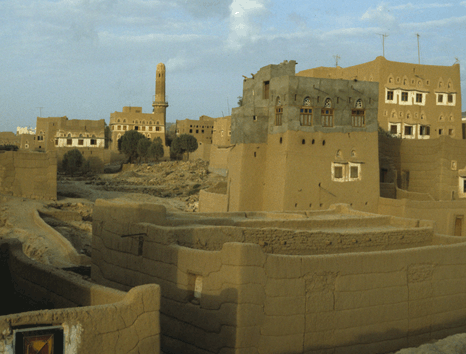
In recent articles on Bikyamasr.com, it was reported at length on the diversity of cultural sites, part of Yemen’s vast cultural heritage, that were threatened with neglect and destruction, partly because of the inability of the Yemeni authorities to preserve them and partly because of the state of unrest caused by the Yemeni uprising – namely the ancient cities of Sana’a, Shibam and Zabid, in which thousands of years of rich history are likely to become yet another casualty in Yemen’s struggle for freedom from the 33-years old dictatorial rule of Ali Abdullah Saleh.

It is fortunate however that these three ancient cities are considered UNESCO world heritage sites, due to the fact that they have received attention from international organizations – most prominently the government of Germany – and some degree of action has been taken in order to minimize the damage, or at least, that was the case until the beginning of the Yemeni uprising. The extent of the real damage done to the sites in the course of 2011 remains yet to be properly assessed in a post-revolutionary scenario.

More unfortunate is the fate not only of other sites but of something much more intangible but equally valuable: The rich intellectual Islamic heritage of the country embodied in over 50000 manuscripts held in many libraries and private holdings. The astounding numbers and the nature of the manuscripts make Yemen one of the most important archival collections in the world, easily rivaling similar holdings of Islamic manuscripts in the national libraries of Cairo, Istanbul and Teheran. Continue reading The Zaydi manuscripts of Northern Yemen