Category Archives: Yemen

Tribes and Terrorism: Myth and Reality


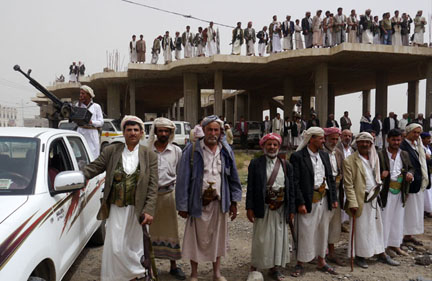
Tribesmen from Yemen´s Bakil tribal confederation waiting for a decision at a tribal law-based conflict resolution session (Mikael Strandberg)

by Khaled Fattah, opencanada.org, October 18, 2012

With the recent stepping up of controversial U.S. drone attacks in tribal areas of Yemen, and post-Arab Spring confrontations with militant jihadist groups in tribal areas of Egypt, Libya, and North Africa, a number of misconceptions surrounding the links between tribes and terrorism in the Arab Middle East continue to plague press coverage and policy reports. The first of these misconceptions is that tribal areas are lawless, ungoverned spaces – a modern-day Wild West. Another misconception is that the ultra-conservative culture of Arab tribes is fertile ground in which to root the violent ideology of transnational terror cells. The truth is that much of the current commentary about tribes and tribalism in the Arab Middle East reflects the Pentagon’s experiences so far in the American-led “War on Terror.” This war has now shifted from boot-heavy invasions to ghost wars in which drones hover over countries with significant tribal populations: Yemen, Pakistan, Afghanistan, Somalia, Libya, and Mali. The War on Terror is now primarily carried out via “open secret” predator drone missions that increasingly target exclusively tribal areas.

Tribal Areas Today Are Not the Wild West

Over the last 10 years, many comparisons have been drawn between the fabled “Wild West” of America toward the end of the 19th century, and present-day tribal areas of the Middle East. The “Wild West” conjures up images of adventurous cowboys facing off in a dusty street in front of a gambling den or brothel, pistols drawn. The image suggests a lawless era in U.S. history, where violence prevailed in American frontier towns, might made right, and the weak were punished for crimes they did not commit. The Wild West was an anarchic social world shaped by outlawed individuals and their henchmen. This period in American history bares little resemblance to life in the tribal areas of the Arab world today, which are highly socialized, with clear normative controls. The association of tribal areas in the Middle East with the Wild West is simply an attractive analogy to intermittent foreign observers and army generals. Continue reading Tribes and Terrorism: Myth and Reality

A conversation with Dr. AbdulKarim Al-Eryani


[Editor’s note: This superb interview with a major figure in Yemeni politics has recently been posted by Samaa al-Hamdani, who blogs at Yemeniaty.]

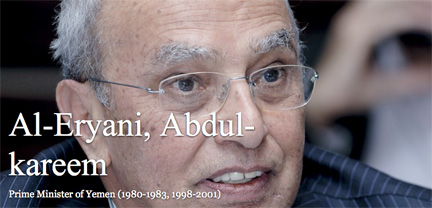
Dr. Abdulkarim Al-Eryani has been involved in Yemeni politics for more than 40 years, holding various senior positions within the government, first under the Yemen Arab Republic (YAR) then the Republic of Yemen. Moreover, he is an influential member of the General People’s Congress (GPC) political party. Currently, Dr. Al-Eryani presides over the National Dialogue Committee (NDC). For his full biography, click here.

In New York City, Yemeniaty sat down with him to discuss some Yemeni politics. Click here to watch the interview.

خارطة طريق لحل مشكلة المياه والقات في اليمن


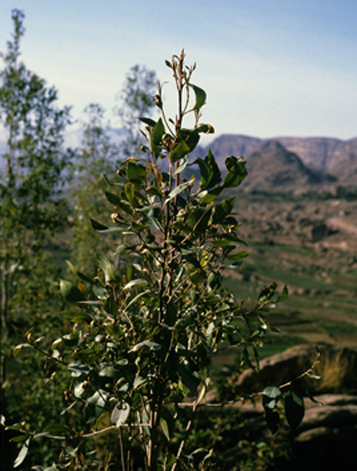
Qat tree in the highland valley of al-Ahjur; photograph by Daniel Martin Varisco

محمد فارع محمد الدبعي
بروفيسور الموارد المائية – جامعة صنعاء
الأحد, 25 نوفمبر, 2012

التفكير جدياً في استيراد القات من دول الجوار على مراحل حفاظاً على الإنسان في اليمن.

لماذا كل شيء يمكن استيراده في بلادنا (كل شيء) ما عدا القات؟؟

منع استخدام المبيدات في زراعة القات لما تشكله من أضرار على صحة المواطنين

توطين تكنولوجيا تحلية المياه في المناطق الساحلية باعتبارها الحل الذي لا بديل عنه لمجابهة الحاجة المتزايدة لهذا المورد على الدوام.

العمل على أن تكون عبوة قنينة الماء المعبأة نصف لتر فقط، حفاظاً على كثير من الماء المهدور.

استيراد القات الخالي من المبيدات أصبح ضرورة للحد من الاستنزاف الحاد للمياه الجوفية والعبث بالمواطن اليمني صحياً ومادياً

المشكلة في غاية الأهمية والخطورة بالنسبة لنا ولأجيالنا القادمة وعلى الجهات المسئولة إيجاد الحلول والمعالجات بدلاً من عقد المؤتمرات والندوات وورش العمل المغلقة التي تستهلك معونات وهبات المنظمات الدولية ويستفيد منها منظموها فقط وبدون مردود على الصعيد الوطني. إن ما يتم القيام به لحل مشكلة المياه والحد من التوسع في زراعة القات لا يلامس حل المشكلة ولا يعطي الاطمئنان لتنمية مستدامة تبشر بمستقبل واعد.

لليمن تاريخ طويل في إدارة الموارد المائية والحفاظ عليها. وما بناء سد مأرب التاريخي قبل ثلاثة ألف سنة، وصهاريج عدن التاريخية، وكذلك بناء السدود الصغيرة في المنحدرات الجبلية، إلا شاهداً على ذلك، لقد اختفى الكثير من هذه السدود الصغيرة وأصبحت في ذمة التاريخ، وما تبقى منها لا يعمل، لقد عملت هذه السدود على حفظ الماء من أجل الري الزراعي والشرب والاستخدامات المنزلية المختلفة، وساعدت في تغذية الخزان الجوفي.
Continue reading خارطة طريق لحل مشكلة المياه والقات في اليمن

Johnsen on Yemen in New York

Book Night With Gregory Johnsen

12 November 2012 – 6:00pm – 7:30pm

40 West 45th Street, Club Quarters, New York, Free admission

by Sonya K. Fry, Overseas Press Club of America

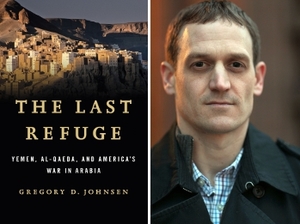
The Last Refuge: Yemen, Al-Qaeda, and America’s War in Arabia [W.W. Norton & Company, November, 2012] is an eye-opening look at the successes and failures in fighting a new type of war in the turbulent country of Yemen, written by Gregory D. Johnsen, who is an OPC Foundation Scholar, a Fulbright fellow in Yemen, part of a 2009 USAID conflict assessment team and is now a doctoral candidate in Near Eastern studies at Princeton University.

Johnsen takes readers into Yemeni mosques where clerics in the 1980’s recruited young men to jihad to fight the Russian invaders in Afghanistan. These men eventually formed the basis for the Al-Qaeda movement. The story also leads to the presidential palace in Yemen where the country’s military dictator, Ali Abdullah Salih vascillated between helping the U.S. get rid of Al-Qaeda in the Arabian Peninsula and hindering the process. Salih himself called this delicate balancing act of staying in power a “snake dance.” For years this dance included concealing Islamists from the prying eyes of U.S. intelligence and yet later he allowed the U.S. to conduct attacks that killed dozens of Al-Qaeda operatives including Abu Ali al-Harithi, who was known as the “godfather” by U.S. intelligence. The dramatic story sounds like a Hollywood movie: Haritihi turned on his cell phone as he left a secret meeting which signaled a predator drone to track him. The first missile from the drone exploded next to Harithi’s speeding car. He threw the phone out of the window and screamed at everyone to get out, but there was nowhere to go since they were in the middle of the desert. The drone fired its second missile and the car exploded in flames. Continue reading Johnsen on Yemen in New York