Category Archives: Yemen

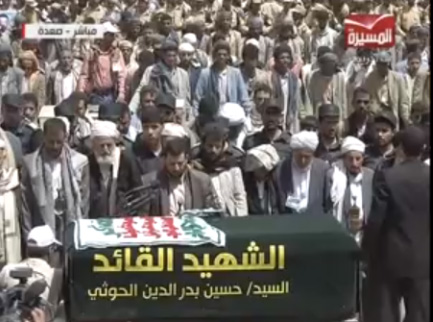
الحوثيون يشيعون زعيمهم الروحي حسين الحوثي في صعدة بعد 9 سنوات على مقتله


عبدالملك الحوثي يؤم بعشرات الآلاف في صعدة شمال اليمن في صلاة الجنازة على شقيقه “حسين”

  • المصدر أونلاين – خاص
    الأربعاء 5 يونيو 2013 06:14:48 مساءً

    شيع عشرات الآلاف في محافظة صعدة شمال اليمن، اليوم الأربعاء، جثمان الزعيم الروحي لجماعة الحوثيين حسين بدرالدين الحوثي بعد تسع سنوات من مقتله على يد قوات الجيش.

    وتوافد الآلاف من أنصار الحوثيين من مدن يمنية إلى صعدة حيث تتركز قوة جماعة الحوثيين، للمشاركة في تشييع الحوثي، وشدد مسلحو الجماعة من إجراءات الأمن وعززت نقاط تفتيش التي ينصبونها في أرجاء المحافظة.

    وحسين الحوثي المولود في 1965 قتل في عام 2004 خلال الحرب التي اندلعت بين الجيش وجماعته، إبان حكم نظام الرئيس السابق علي عبدالله صالح الذي أطاحت به انتفاضة شعبية انطلقت قبل عامين.

    وبدأت مراسم التشييع بأداء صلاتي الظهر والعصر وراء الدكتور المرتضى المحطوري وهو أحد أبرز منظري المذهب الزيدي في صنعاء.

    وصعد شقيقه الأصغر عبدالملك الحوثي وهو القائد الحالي للجماعة، على منصة محاطة بالحراس، يدعو فيه الموجودين في ساحة كبرى بالمدينة إلى أداء صلاة الجنازة وبدء مراسيم التشييع.

    Continue reading الحوثيون يشيعون زعيمهم الروحي حسين الحوثي في صعدة بعد 9 سنوات على مقتله

  • Tabsir Redux: Mocha Musings #1: Mecca and Arabia

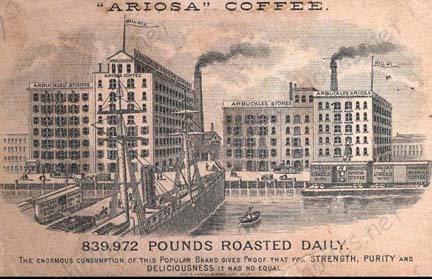
    Arbuckles’ Ariosa (air-ee-o-sa) Coffee packages bore a yellow label with the name ARBUCKLES’ in large red letters across the front, beneath which flew a Flying Angel trademark over the words ARIOSA COFFEE in black letters. Shipped all over the country in sturdy wooden crates, one hundred packages to a crate, ARBUCKLES’ ARIOSA COFFEE became so dominant, particularly in the west, that many Cowboys were not aware there was any other kind. Keen marketing minds, the Arbuckle Brothers printed signature coupons on the bags of coffee redeemable for all manner of notions including handkerchiefs, razors, scissors, and wedding rings. To sweeten the deal, each package of ARBUCKLES’ contained a stick of peppermint candy. Due to the demands on chuck wagon cooks to keep a ready supply of hot ARBUCKLES’ on hand around the campfire, the peppermint stick became a means by which the steady coffee supply was ground. Upon hearing the cook’s call, “Who wants the candy?” some of the toughest Cowboys on the trail were known to vie for the opportunity of manning the coffee grinder in exchange for satisfying a sweet tooth.

    While sorting through a bevy of late 19th century advertising cards and magazine illustrations collected by my great, great aunt in several yellowing albums, I came across several for the Middle East that were published for Arbuckle’s coffee. Continue reading Tabsir Redux: Mocha Musings #1: Mecca and Arabia

    Tabsir Redux: Traveling Light in Arabia

    [Note: the following list of items for light camping in Arabia is provided by G. Wyman Bury for the early part of the 20th century.]

    CAMP EQUIPMENT
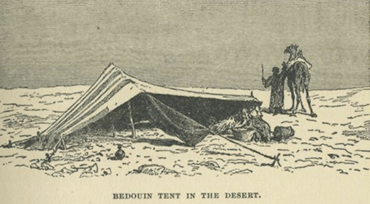
    Try to do without a tent. Arabs hate pitching tents after a long day’s march, and seldom pitch them well. They draw fire and afford no protection, while preventing your own observation; they also betray the site of your camp to bad characters and casual callers on the look out for supper.

    BEDDING
    Avoid Wolseley valises or anything with pleats and folds, which become the permanent abiding places of parasitic insects.
    ‘Blankets.’ One each for the men. A few extra for convalescents or invalided men. Two for yourself.
    ‘Pillows.’ Carry your spare clothes in a green canvas sack. Continue reading Tabsir Redux: Traveling Light in Arabia

    The Myth of the “Yemen Model”


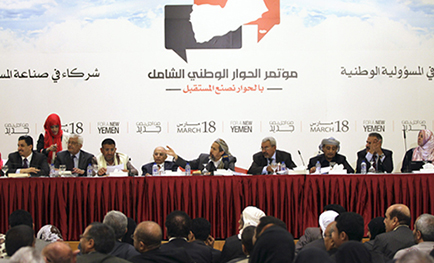
    Yemen’s Abdul Wahab al-Ansi (C), secretary-general of the party Islah, speaks during a session of the National Dialogue Conference in Sanaa, March 23, 2013. (photo by REUTERS/Mohamed al-Sayaghi)

    by Atiaf Zaid Alwazir, Huffington Post, May 29, 2013

    Shortly following the internationally funded uncontested election in Yemen, a high-ranking western diplomat berated me for not voting. When I asked him, “would people in your country be happy with a one-person election?” He responded: “people in my country are not trying to kill each other!”

    While not all diplomats think this way, unfortunately, that simplistic and ignorant statement is what drives much of western policy on Yemen — if there is a policy — and it is also why it is expected that Yemenis should accept half solutions — should in fact celebrate them!

    Maybe misconceptions of Arabs as apolitical, who were just “awakened” by the “Arab Spring,” leads to the belief that anything is a step forward. These misconceptions, if internalized, lead to flawed analysis, and worse they can become disastrous policies.

    This is egregiously exemplified by Thomas Friedman’s recent New York Times op-ed (on May 11) where, for example, he states that “the good news is that — for now — a lot of Yemenis really want to give politics a chance.” Friedman is referring to the internationally backed National Dialogue Conference (NDC) in Yemen. The NDC began in March 2013 and is to last for six months, with 565 delegates tasked with providing recommendations and culminating in writing of a new constitution. Friedman’s statement attempts to celebrate Yemenis, while in fact downplaying an entire history of political participation and ignores Yemen’s cultural tradition of dialogue and political pluralism. Yemen has had dialogues before and has operated in a relatively diverse political sphere. The movement for change in 2011 is a culmination of years of activities in the south and north.

    Neglecting all of that naturally does not present a thought-out article. Continue reading The Myth of the “Yemen Model”

    Coffee and Yemen

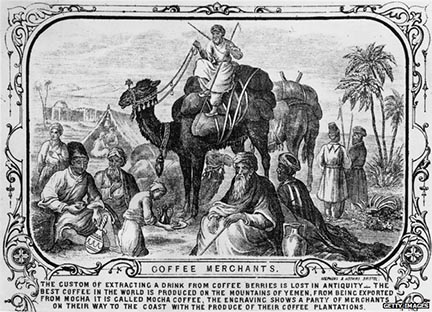
    Coffee and qahwa: How a drink for Arab mystics went global

    By John McHugo, BBC News Magazine, April 17

    The Arab world has given birth to many thinkers and many inventions – among them the three-course meal, alcohol and coffee. The best coffee bean is still known as Arabica, but it’s come a long way from the Muslim mystics who treasured it centuries ago, to the chains that line our high streets.

    Think coffee, and you probably think of an Italian espresso, a French cafe au lait, or an American double grande latte with cinnamon.

    Perhaps you learned at school that the USA became a nation of coffee drinkers because of the excise duty King George placed on tea? Today ubiquitous chains like Starbucks, Cafe Nero and Costa grace every international airport, and follow the now much humbler Nescafe as symbols of globalisation.

    Coffee is produced in hot climates like Latin America, sub-Saharan Africa, Vietnam and Indonesia, and you could be forgiven if you thought it is a product from the New World like tobacco and chocolate. After all, all three became popular in Europe at more or less the same time, in the 16th and 17th Centuries.

    In fact, coffee comes from the highland areas of the countries at the southern end of the Red Sea – Yemen and Ethiopia. Continue reading Coffee and Yemen

    The Killing of Abdulrahman al-Awlaki


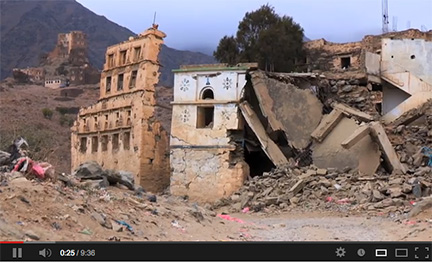
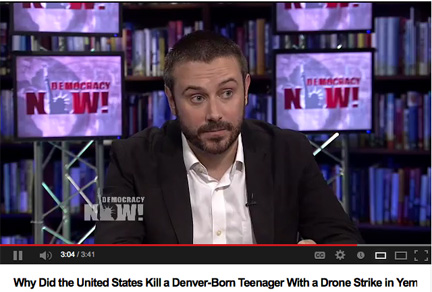
    For a brief introduction to a report on the killing of the 16-year old son of Anwar al-Awlaki, check out this brief Youtube video. Here are the details on the video:

    Watch the full 50-minute interview with Jeremy Scahill at http://owl.li/klnWN. Abdulrahman al-Awlaki was a 16-year-old boy, born in Colorado, who liked listening to hip-hop and posed as a rapper in pictures posted on Facebook. He was killed by a U.S. drone strike in Yemen two weeks after the Obama administration assassinated his father, the U.S. citizen Anwar al-Awlaki, in a separate strike. Abdulrahman’s death is a central part of Jeremy Scahill’s new book, “Dirty Wars: The World Is A Battlefield.” While the Obama administration has defended the killing of Anwar, it has never publicly explained why his son was targeted. Scahill reveals CIA Director John Brennan, Obama’s former senior adviser on counterterrorism and homeland security, suspected that the teenager had been killed “intentionally.” “I understand from a former senior official of the administration who worked on this program at the time, that when it became clear that Abdulrahman al-Awlaki had been killed, that President Obama was furious, and that John Brennan, who at the time was … the guy running all of these operations, that Brennan believed or suspected that it was an intentional hit … against this 16-year-old kid,” Scahill says.

    Democracy Now!, is an independent global news hour that airs weekdays on 1,100+ TV and radio stations Monday through Friday. Check out our vast news archive and stream live 8-9am ET at http://www.democracynow.org.

    Drone Policy in Yemen

    For anyone in the NYC region, I will be giving a talk at the COLUMBIA UNIVERSITY SEMINAR on KNOWLEDGE, TECHNOLOGY, and SOCIAL SYSTEMS on Wednesday, May 15, 7 pm (at Columbia University’s Faculty House). The title of the talk is: “Drone Strikes in the War on Terror: The Case of Post-Arab-Spring Yemen.” Unmanned drones have been used by the US military against terrorism in many areas of the world. In particular, these drones have become the US military’s weapon of choice in targeting terrorists in Yemen, where strikes quadrupled in 2012 from the previous year. This talk addresses the impact of these strikes on the political context within Yemen and the effectiveness of the strategy in combating Al Qaeda recruitment. The talk builds on a commentary published in the Middle East Muddle blog of the Anthropology News website.

    For information on the talk, please contact me directly by email at daniel.m.varisco@hofstra.edu.