Category Archives: Yemen

الى اللاعبين السياسيين

الى اللاعبين السياسيين الذين يلعبون بالنار، النار ستحرق فلذات اكبادكم قبل ان تحرق الآخرين.
الى كل المناضلين الطيبين، التهرب من مواجهة الحقائق المريرة، والبحث عن شماعات يلقى عليها اللوم في كل صغيرة وكبيرة، لا يحل المشاكل، بل يساعد على تفاقمها.
الى الأغلبية السلبية من المتفرجين، سلبيتكم هي الهشيم الذي تنتشر فيه نيران الفوضى والهدم والقتل وتنتزع الابتسامة من وجوه أطفالكم.
أبناء الجنوب وأبناء الشمال اخوة في الدنيا والدين، والمخاطر والظلم والمعاناة واقعة على الجميع، والعابثين بأمن واستقرار الجنوب هم العابثين بأمن واستقرار الشمال.
وعلى من أمن بالله ورسوله ان يتذكر قوله تعالى: “وَاذْكُرُوا نِعْمَةَ اللَّهِ عَلَيْكُمْ وَمِيثَاقَهُ الَّذِي وَاثَقَكُمْ بِهِ إِذْ قُلْتُمْ سَمِعْنَا وَأَطَعْنَا Û– وَاتَّقُوا اللَّهَ Ûš إِنَّ اللَّهَ عَلِيمٌ بِذَاتِ الصُّدُورِ”. صدق الله العلي العظيم

محمد احمد جرهوم
صنعاء اليمن

Trouble in Hadramawt


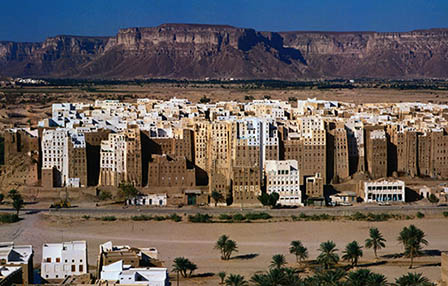
The famous Hadrami town of Shibam

News reports over the past week have indicated growing tensions in the Yemeni Hadramawt, following the shooting of a major tribal leader at a military checkpoint. Military outposts have been attacked and several soldiers killed in the upheaval. According to the Yemen Times, President Hadi has accepted the demands of several tribal leaders who asked for the closing of military camps and for investigation of those responsible for killing the shaykh. To appease the local inhabitants, Hadi also promised that the oil companies in the area would hire more Hadramis.

The Hadramawt has a fascinating history as a region often sheltered from the events happening elsewhere in Yemen. There is probably no region that has seen more out-migration over the centuries with Hadramis establishing a major foothold in India, Indonesia and the East Africa coast. For a delightful video on the scenes and history of the Hadramawt in Arabic, click here.

Breaking with tradition

by Amal Al-Yarisi, Yemen Times, November 26, 2013

The institution of marriage has gone through radical transformations since our ancestors gave up their nomadic wanderings and adopted an agricultural-based lifestyle. What has historically been an economic arrangement and a way to merge properties and tribes in Yemen is increasingly becoming a love arrangement.

Though arranged marriages remain the norm, Yemeni women are proving how far they are willing to go to be with the ones they love, including turning the tradition of a dowry on its head. As more women marry the men they love, they are contributing to wedding costs, a phenomenon unheard of in Yemen until recently.

A year ago, Sabah Al-Khalidi and her then fiancé, Saeed Ali, began furnishing a three-room apartment in the Al-Safia district of Sana’a. The burden was solely Ali’s, but Al-Khalidi, a private school teacher, ended up contributing the majority of their home furnishings.

In Yemen, marriage costs, including the wedding ceremony, the couple’s future home and new clothes and gifts for the bride, are traditionally paid for by the groom and his family.

According to Ahmed Al-Ghazan, a social researcher at the Sana’a Social Studies Center, dowries in Yemen generally range from YR200,000 ($930) to YR2 million ($9,300), barring the extremely poor, extremely wealthy Yemenis paying higher dowry prices for women who hold citizenship from Western countries. Continue reading Breaking with tradition

Of Drones and Reporting


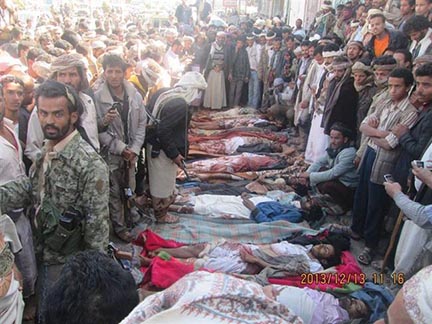
Bodies of Yemenis killed by a drone attack last Thursday

The use of drones in Yemen has received a lot of attention this year, even though there has appeared to be a lull in their use since the summer. It is reported in Yemen Press that an American drone killed 8 Al-Qaida suspects in Ahwar Abyan. No details are given in the article. Nashwan News, quoting sources from Yemen’s security forces, describes a different strike the same day in al-Bayda’ in which a top al-Qa’ida figure is said to have been killed. Or was it really a wedding procession, as reported in Al-Masdar Online, which describes a drone (known in Arabic as a ta’ira bidun tiyar) that killed 13 and wounded 30 others in hitting cars in a wedding procession (zifaf). Aden Online reports the number of dead as 17 and 32 wounded. Another source gives a range of 12 dead and wounded. The province of al-Bayda’ has seen a lot of resistance to the government. The drone struck at 4:30 pm on Thursday, hitting cars carrying men from two tribes. Two prominent tribal shaykhs were said to be wounded in the process.

The stories differ because the sources differ, some eager to justify any drone attack as effective and others unwilling to admit that the strike was successful in eliminating a terrorist. Clearly, however, as the horrendous photograph of the dead documents, whether or not al-Qa’ida lost a leader, there were quite a few other people who were killed. Even if the government thought it legitimate to go after one man, is it worth depriving so many citizens of life and limb? Once again drones serve as the best recruiting tool for terrorists in Yemen and drag the name of the United States even further into the muck. Continue reading Of Drones and Reporting

Yin and Yang over Yemen’s Drones


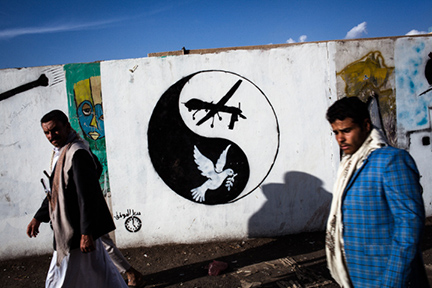
Men walk past anti-drone mural in Sanaa, Yemen, Nov. 25, 2013; photography by Juan Herrerro

Yemen’s New Ways of Protesting Drone Strikes: Graffiti and Poetry

by Tik Root, Time Magazine, November 30, 2013

An American drone hovers along a main thoroughfare in the Yemeni capital, Sana’a. Not a real drone, but rather a 7 foot-long rendition of an unmanned aircraft spray-painted near the top of a whitewashed city wall. Below it, a stenciled-on child is writing: “Why did you kill my family?” in blood-red English and Arabic script.

Painted by Yemeni artist Murad Subay, the Banksy-esque mural sits beside three others also admonishing the United States’ use of drones in Yemen to track and kill terrorism suspects. This drone art is part of Subay’s latest campaign, “12 Hours”, which aims to raise awareness about twelve problems facing Yemen, including weapons proliferation, sectarianism, kidnapping and poverty. Drones are the fifth and arguably most striking “hour” yet completed.

“Graffiti in Yemen, or street art, is a new device to communicate with the people,” says Subay, 26, who after taking up street art two years ago in the wake of Yemen’s Arab Spring revolution has almost single-handedly sparked the growing Yemeni graffiti movement. “In one second, you can send a message.”

The anti-drone chorus in Yemen has grown louder since the Obama Administration took office in 2009. All but one of the dozens of reported drone strikes in Yemen have been carried out since Obama came to office (although strikes here and in Pakistan have been more sporadic in recent months). Operations are rarely acknowledged by American officials but have nonetheless stirred a global debate about the strikes’ legality, morality and effectiveness. Continue reading Yin and Yang over Yemen’s Drones

Arabian Humanities Online


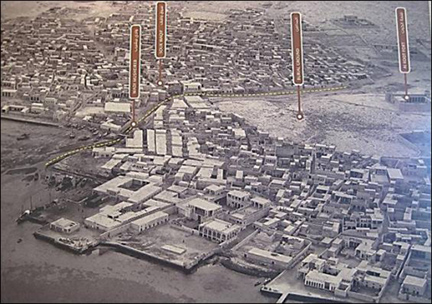
Urban structure of Doha until the 1960s; Source: Scharfenort 2012 (Exhibition in Msheireb Enrichment Center)

The second issue of the new journal Arabian Humanities, with selections in both English and French, is now available online here.

The table of contents is reproduced below:

Juliette Honvault
Éditorial
Villes et dynamiques urbaines en péninsule Arabique
Cities and Urban Dynamics in the Arabian Peninsula

Claire Beaugrand, Amélie Le Renard et Roman Stadnicki
Au-delà de la Skyline : des villes en transformation dans la péninsule Arabique [Texte intégral]
Beyond the Skyline: Cities in Transformation in the Arabian Peninsula [Texte intégral | traduction]

Nelida Fuccaro
Preface: Urban Studies in the Arabian Peninsula: 6 Thoughts on the Field [Texte intégral]
Préface : Les études urbaines en péninsule Arabique
1. Croissances, politiques et projets
Growth paths, politics and projects

Brigitte Dumortier
Ras al‑Khaïmah, l’essor récent d’une ville moyenne du Golfe [Texte intégral]
Ras al‑Khaimah : the recent dynamics of a middle size city of the Arab‑Persian Gulf

Steffen Wippel
Développement et fragmentation d’une ville moyenne en cours de mondialisation : le cas de Salalah (Oman) [Texte intégral]
Development and Fragmentation of a Globalizing Secondary City: The Case of Salalah (Oman)

Sebastian Maisel
The Transformation of ‘Unayza: Where is the “Paris of Najd” today? [Texte intégral]
La transformation de ‘Unayza : où en est le « Paris du Najd » ?
Philippe Cadène
Koweït City : planification urbaine et stratégie régionale [Texte intégral]
Kuwait City: Urban Planning and Regional Strategy Continue reading Arabian Humanities Online

Women and Peacebuilding in Yemen

Women and Peacebuilding in Yemen: challenges and opportunities

by Najwa Adra, NOREF, 12 November 2013

This expert analysis explores hurdles facing and opportunities available to Yemeni women in light of UN Security Council Resolution 1325’s guidelines. Yemen is rich in social capital with norms that prioritise the protection of women, but internal and external stresses pose serious threats to women’s security.

Despite these hurdles, Yemeni women continue to participate in nation building. In 2011 women led the demonstrations that ousted the previous regime. At 27%, women’s representation and leadership in the current National Dialogue Conference is relatively inclusive. Their calls for 30% women’s participation in all levels of government have passed despite the opposition of religious extremists and the Yemeni Socialist Party. To provide the best guarantee of women’s security in Yemen, international agencies must, firstly, pressure UN member states to desist from escalating conflicts in Yemen, and secondly, prioritise development over geopolitical security concerns. Literate women with access to health care and marketable skills can use their participatory traditions to build a new Yemeni nation.

Downlad the pdf of this report here: http://www.peacebuilding.no/Regions/Middle-East-and-North-Africa/The-Gulf/Publications/Women-and-peacebuilding-in-Yemen-challenges-and-opportunities

Najwa Adra , PhD, is a cultural anthropologist with long-term research and consulting experience in Yemen. She has worked with FAO, UNICEF, USAID, the World Bank and DfID. In 2000-03 she piloted the highly successful Literacy through Poetry/Heritage, an adult literacy project in which learners’ own oral traditions formed the texts from which they learned to read and write. Her academic publications and development reports cover tribal identity and customary law, women in agriculture, social exclusion and adult literacy.