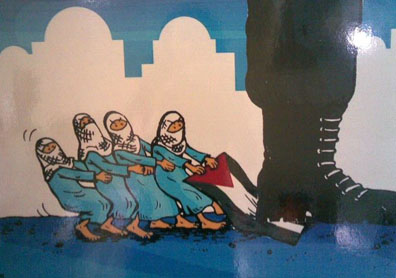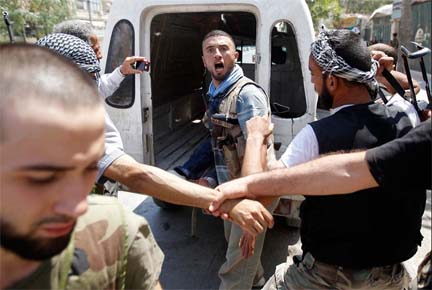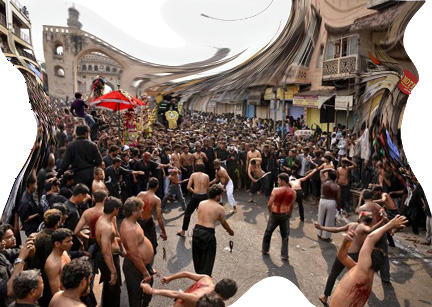
The most potent symbol of the history of the Middle East, indeed of much of human history, is the stuff of life itself: blood. In the sacred history of the three major monotheisms enough blood has been shed since their inception (by and against each one of them) to raise the sea level meters upon meters. Even in the Genesis origin story the first two natural births, Cain and Abel, became the first to introduce bloodshed as a norm. The God of Genesis got into the act, killing animals to make skins that would clothe the naked bodies he created of Adam and Eve and then preferring the animal sacrifice of Abel to the firstfruit figs raised by Cain. The same God went on to substitute a lamb for Abraham’s heir, although only when Abe’s knife was poised to slit his son’s throat, but then in Christian dogma the now-threefold deity shed a third of his essence on the cross. In that same dogma Jesus no longer needs that lost blood as he resurrected to make the trinity a divine threesome once more. But the bloodletting has never stopped.
By all accounts the prophet Muhammad was not fond of shedding blood. The forays and battles that took place while he and his followers were in exile in Medina are remarkable for how few deaths are said to have occurred. When he returned in triumph to Mecca it was not because of any great military victories, nor was their a bloodbath of the Meccans. At the start of Islam the Allah seen through the Quran is neither interested in literal blood sacrifices or a figurative eucharistic variety. Muslims purify themselves with water to make themselves ready for prayer. Calls for jihad have resonated throughout the Islamic era as countless thousands upon thousands have died for not being Muslim, being Muslim or being the wrong kind of Muslim: such is the political baggage common to most religions known to history and probably before recorded history. Continue reading Self-inflicted wounds