Category Archives: Countries

The “Muslim” Problem


The past week has seen a dramatic punctuation in the political present. This present is one in which several countries in North Africa and the Middle East are emerging from years of “stable” dictatorial rule in which human rights were ignored by the Western countries who philosophize how important human rights (or at least the right kind of rights) are. There is also a presidential election looming in the most powerful nation on earth, a nation divided in a partisan way with few realistic ideas on how to frame a way out of the greatest economic downturn since the Great Depression. It is raining politics and that is fire and brimstone in the current climate.

The drama starts with the anniversary of the 9/11 tragedy, which like the abduction of Helen of Troy, prodded the United States to engage in two decade-long wars that have resulted in the deaths of former figure-head foes (Saddam and Bin Laden) but which are unwinnable in the old-fashioned “sign a peace treaty and let trade make us friends” sense after World War II. The spark, a most surreal one at that, is a pathetic trailer for the kind of film no one would ever pay money to see. Before Youtube, before the Internet, this would have been yet another throw-away on the huge cinematic rubbish pile already brimming with porn. But in a scenario that a producer would probably laugh away, an Islamophobic individual dubs intentionally hateful dialogue denigrating the Prophet Muhammad. For non-Muslims the main thing offended is taste; for Muslims this is hateful and hurtful, akin to throwing something sacred into a toilet.

The politics has exploded all over the media, not in spits but a massive vomit. Continue reading The “Muslim” Problem

Mitt miffs the tweets


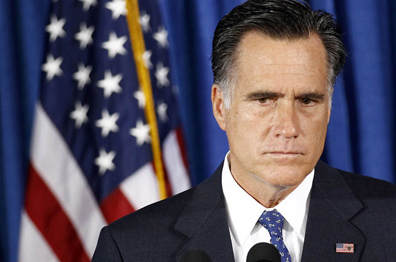
US Republican presidential nominee Mitt Romney listens to questions on the attack on the US consulate in Libya, in Jacksonville, Florida, September 12, 2012. [Reuters]

Romney poses, as militants burn a US consulate over Islamophobic film

By Juan Cole, Al Jazeera, September 14, 2012

As Mitt Romney misfires on the campaign trail; scholar argues that the events in Benghazi are atypical of the new Libya.

Predictably, Republican presidential candidate Mitt Romney tried to make political hay of the tiny demonstrations in Cairo and Benghazi by Muslim militants. The Benghazi mob turned violent in clashes with police and the consulate ended up being burned and an embassy staffers being killed.

Romney seized on the frantic tweets of the Cairo embassy, which condemned the sleazy Youtube videos by American Islamophobes that had provoked the ire of the crowds, as evidence that the Obama administration was sidingwith the attacking mobs. First of all, really? Romney is trying to get elected on the back of a dead US diplomat? Second of all, really? He thinks the State Department thought the attack on themselves was justified? Third of all, really? Romney is selective. When it comes to Christianity, Romney decries a ‘war on religion.’ But apparently he thinks there *should* be a war on Islamic religion. Romney’s intervention (he is just a civilian at the moment) in American foreign policy is unwise and risky, not to mention distasteful. Continue reading Mitt miffs the tweets

Beyond religion in the Middle East


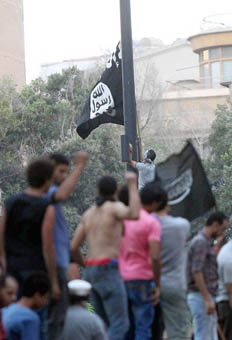
An Egyptian protester tries to raise an Islamic flag at the U.S. embassy during a protest, in Cairo, Egypt on September 11, 2012. (Khaled Elfiqi / EPA / September 13, 2012)

Violence in Egypt and Libya is more about local politics than Islam.

By Mimi Hanaoka, LA Times, September 13, 20121

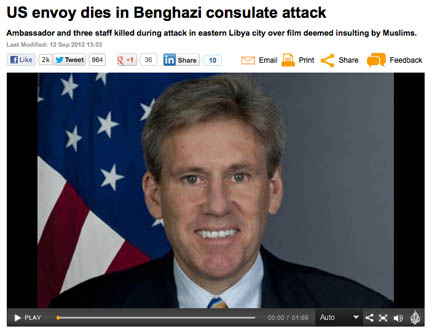
The chaotic violence that killed U.S. Ambassador J. Christopher Stevens and three American staffers in Libya, and that resulted in a mob storming the U.S. Embassy in Cairo, has been garbed in religious language and references. However, the religious rhetoric from all corners distracts from the real issues: serious domestic political fragmentation in Libya and Egypt in the aftermath of the Arab Spring, and America’s place in the region.

Media attention has focused on a polemic 14-minute movie trailer for “Innocence of Muslims” posted on YouTube, which prompted protests in Benghazi and Cairo. The film was allegedly produced by Sam Bacile, who has identified himself as an Israeli Jew. In the Wall Street Journal, Bacile called Islam a “cancer” and claimed he raised $5 million from about 100 Jewish donors to fund the film, details that only intensify the film’s polemic power.

The trailer, translated into Arabic and viewed thousands of times in the Middle East, portrays the prophet Muhammad as, among other things, a child abuser. Florida pastor and provocateur Terry Jones, who burned the Koran in 2011, claims to have screened the film; a self-described Christian militant in California claims to have consulted on it. Continue reading Beyond religion in the Middle East

The Politics of Cinematic Hate

Yesterday was the 11th anniversary of the tragic loss of life on 9/11, the ugly outcome of hate in which people who had personally done nothing to offend the perpetrators lost their lives. Today we awake to hear that the American ambassador to Libya is dead; the American flag at the U.S. embassy in Cairo is torn to shreds. This is the same American diplomat who aided the Libyan revolution against Qaddafi; this is the same flag that is synonymous with the political notion of democracy. In both cases yesterday it was not a response to anything the United States government did or authorized, nor to any military action. A hate film, and a very poorly done one at that, had been posted on the Internet in which Islam and the prophet Muhammad are portrayed in an extremely negative way. The film, an excerpt of which can be seen here, is pathetic both as cinema and for its almost comical portrayal of Muslims. But it has provided an excuse for militants to once again harp on the specter of the United States against the Muslim world.

Were this film from a religious nutcase like Terry Jones, I suspect it would not have garnered as much attention. But it appears that the maker of the film is an Israeli backed by Jewish donors and promoted by an anti-Muslim Copt in California. How perfect is that for a conspiracy plot. Hateful films do not have to be good cinema to fuel hateful responses. But this time it is the role of the Internet that fuels the fire. Anyone can post a malicious film on Youtube and have it circle the globe in an instant. The solution is not to ban the Internet, which is impossible, nor to justify the actions of those who turn their anger into a killing spree. It is not possible to stop a Terry Jones from burning the Quran or any cinematic venom from being posted (at least temporarily), so the onus falls back on our own ethics. We need to think beyond the politics of hate, which have not been unleashed with a fury, to the politics of restraint.

Buried Cities Recovered #2


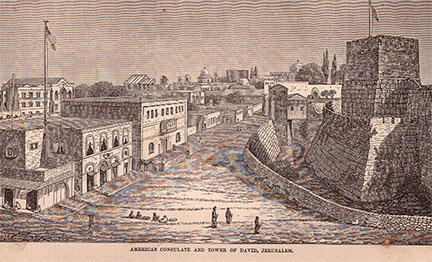
In a previous post I began a thread on a 19th century Bible Lands text by Rev. Frank S. DeHaas. This is a typical devout travel account for an American audience by an author who served both a political and religious role. The frontispiece shows the American consulate opposite the Old City wall, shades to come of where the American Embassy might locate if Romney is elected President in November.

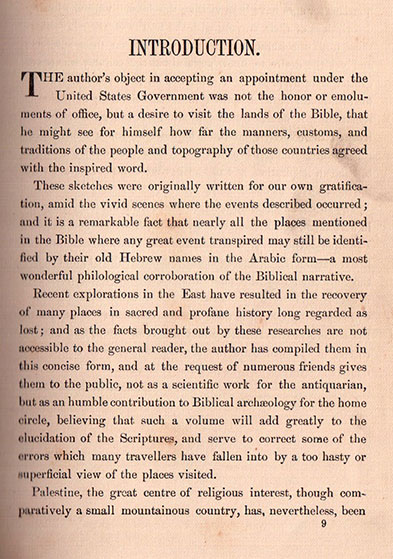
Here is his Introduction…


Continue reading Buried Cities Recovered #2

Buried Cities Recovered


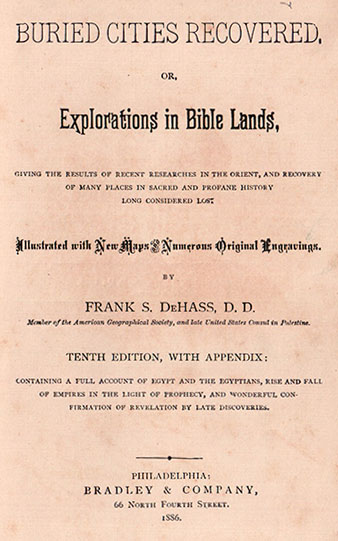
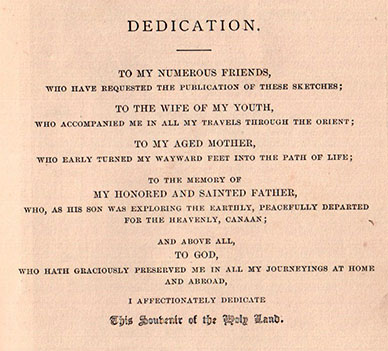
During the 19th century there was a flourishing genre of “Explorations in the Bible Lands.” As the geography and archaeology of the Holy Land came to light, often with only a modicum of scientific investigation, books flooded the market on how the remains and customs in this area were bringing the Bible to life for Protestants in England and America. Despite Mark Twain’s biting satire of the genre in his Innocents Abroad, the Bible Lands books piled on. One of these is Buried Cities Recovered by the Rev. Frank S. DeHass, who was appointed U.S. Consul to Palestine, where he lived for a considerable period. This was first published in 1882 and was in its 10th edition only two years later. The small print at the bottom of the title page says it all: “CONTAINING A FULL ACCOUNT OF EGYPT AND THE EGYPTIANS, RISE AND FALL OF EMPIRES IN THE LIGHT OF PROPHECY, AND WONDERFUL CONFIRMATION OF REVELATION BY LATE DISCOVERIES.” Such was the enthusiasm of Bible enthusiasts of the late 19th century.


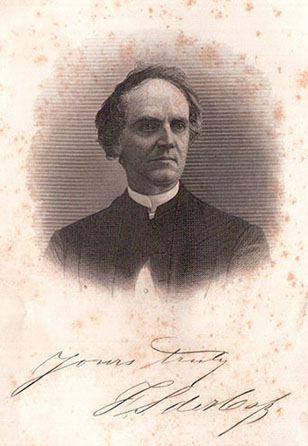
The dedication of the book, reproduced below, is quite flowerly and hardly leaves anyone out, except perhaps the emerging higher critics of the Bible at the time.


to be continued

Hakadha (Thus Spake Zahed Sultan)


Zahed Sultan Releases ‘Revolutionary’ New Song & Music Video

Watch Zahed Sultan’s new ‘Like This (ha-ka-tha)’ music video on www.youtube.com/zahedsultan

Sign up on www.mousemusic.org and download free ‘Like This (ha-ka-tha)’ wallpaper for your computer.

Zahed Sultan announces the release of his new song & music video entitled “Like This (ha-ka-tha).” The song pays tribute to the social frustrations that have plagued the MENA region prior to the Arab Spring. In classical spoken-word Arabic, Zahed calls upon the Arab people to stand in unity, against tyranny, with a sense of civic pride.

In his music video, Zahed gives a gripping account of the revolutions as they sequentially unfold in each Arab country through use of raw-footage (shot by protestors with cell-phones) and stop-motion animation.

Be an active part of the change happening around you and share Zahed’s latest song & music video with your network!

About The Artist

Zahed is a music producer and social entrepreneur from Kuwait. He released his debut album “Hi Fear, Lo Love” on April 1st 2011and attained success with his 2nd single “I Want Her But I Don’t Want Her.” Parisian Dj, Stephane Pompougnac, featured the single on the internationally acclaimed Hotel Costes 15 compilation, which was released on Sept. 26th 2011. Continue reading Hakadha (Thus Spake Zahed Sultan)