Category Archives: Countries

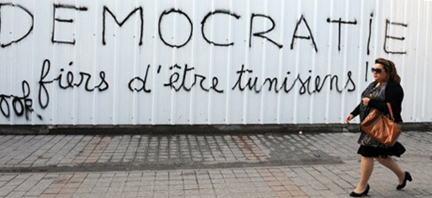
Tunisians frustrated but engaged


by Lindsay Benstead, Ellen Lust, Dhafer Malouche, The Middle East Channel, Foreign Policy, December 11, 2012

Just over a year since Tunisia’s October 23, 2011 Constituent Assembly elections, long lines of patient citizens who emerged beaming from polls last October have given way to new demonstrations and general strikes — this time against the Ennahda-led troika. In the cradle of the Arab uprising, Tunisians are deeply frustrated with the economic and political failure of the government. Today, nearly half of Tunisians feel they are worse off than they were before the revolution, and only 26 percent believe their situation has improved. Despite this, however, our original survey of 1,200 Tunisians conducted between October 10 and November 20 finds reason for optimism.

Tunisia’s problems run deep. A December 1 New York Times article, written in the wake of uprisings in the Tunisian town of Siliana in November that led to a five-day stand-off with the government, chronicles the problems: unemployment is up from 13 to 18 percent since the fall of former President Zine el-Abidine Ben Ali, youth increasingly flow out of universities to find themselves without work, a constitution is yet to be written, elections are postponed, and local governments remain appointed. Tunisians talk about the disconnect between the government and the people — grumbling that it is no more concerned with daily needs than Ben Ali’s before it. People say that the current government and police are as corrupt as in the past, and express a general sense of insecurity. Continue reading Tunisians frustrated but engaged

Self-inflicted wounds


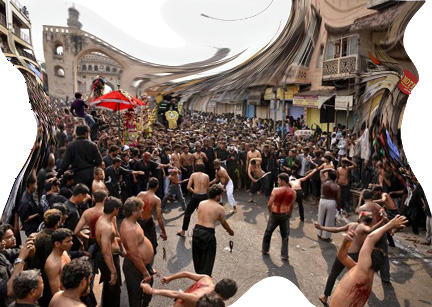
The most potent symbol of the history of the Middle East, indeed of much of human history, is the stuff of life itself: blood. In the sacred history of the three major monotheisms enough blood has been shed since their inception (by and against each one of them) to raise the sea level meters upon meters. Even in the Genesis origin story the first two natural births, Cain and Abel, became the first to introduce bloodshed as a norm. The God of Genesis got into the act, killing animals to make skins that would clothe the naked bodies he created of Adam and Eve and then preferring the animal sacrifice of Abel to the firstfruit figs raised by Cain. The same God went on to substitute a lamb for Abraham’s heir, although only when Abe’s knife was poised to slit his son’s throat, but then in Christian dogma the now-threefold deity shed a third of his essence on the cross. In that same dogma Jesus no longer needs that lost blood as he resurrected to make the trinity a divine threesome once more. But the bloodletting has never stopped.

By all accounts the prophet Muhammad was not fond of shedding blood. The forays and battles that took place while he and his followers were in exile in Medina are remarkable for how few deaths are said to have occurred. When he returned in triumph to Mecca it was not because of any great military victories, nor was their a bloodbath of the Meccans. At the start of Islam the Allah seen through the Quran is neither interested in literal blood sacrifices or a figurative eucharistic variety. Muslims purify themselves with water to make themselves ready for prayer. Calls for jihad have resonated throughout the Islamic era as countless thousands upon thousands have died for not being Muslim, being Muslim or being the wrong kind of Muslim: such is the political baggage common to most religions known to history and probably before recorded history. Continue reading Self-inflicted wounds

Suffer the little children


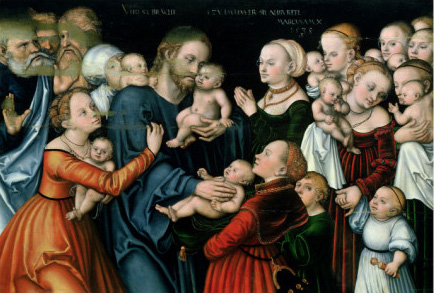
Suffer the Little Children to Come Unto Me, by Lucas Cranach the Elder, 1538

Growing up on the King James Version of the Gospels, I well remember the force of a verse from Mark 10:14 in which Jesus, in anger, said: “Suffer the little children to come unto me, and forbid them not: for of such is the kingdom of God.” The occasion was when several parents brought children to Jesus to be blessed, but were discouraged by his disciples. This past week has seen the suffering of little children around the world. Last Friday America was gripped by the tragedy of twenty elementary children and six adults gunned down by a disturbed young man, who first killed his mother in bed and then at the school took his own life. In a nation that wears its constitutional “right to bear arms” on its political sleeves, this was a shot to the gut. For all of us whose children have gone through the public school system, the shock lingers. It could have been any local school in any state. It could have been any of our children. A killer with a gun has denied them life. This suffering is not what Jesus meant when he said “suffer the little children to come unto me.” One need not be an expert in 17th century English to understand the meaning of the verse.

But children continue to suffer at the hands of adults all over the world. In Pakistan on Monday six health workers engaged in a project to immunize children were shot to death by extremists who have been told that such a program to save children’s lives is actually a Western plot to undermine Islam. Along with five brave women and one man, the Pakistani children who will not have immunity from polio will also suffer. The irony that six adults were killed both in Pakistan and in New Town, Connecticut is worth reflecting on. In both cases those trying to save children became victims; in both cases children suffer. Continue reading Suffer the little children

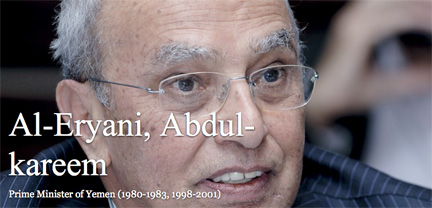
A conversation with Dr. AbdulKarim Al-Eryani


[Editor’s note: This superb interview with a major figure in Yemeni politics has recently been posted by Samaa al-Hamdani, who blogs at Yemeniaty.]

Dr. Abdulkarim Al-Eryani has been involved in Yemeni politics for more than 40 years, holding various senior positions within the government, first under the Yemen Arab Republic (YAR) then the Republic of Yemen. Moreover, he is an influential member of the General People’s Congress (GPC) political party. Currently, Dr. Al-Eryani presides over the National Dialogue Committee (NDC). For his full biography, click here.

In New York City, Yemeniaty sat down with him to discuss some Yemeni politics. Click here to watch the interview.

Poison Gas: Does it cut mustard?


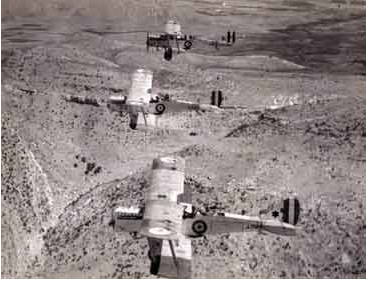
British planes bombed Iraqi Kurds after World War I; Churchill once said “I do not understand this sqeamishness about the use of gas. I am strongly in favour of using poison gas against uncivilised tribes.”

[Editor’s Note: The issue of Syria’s chemical weapons overshadows the continual loss of life in the current uncivil civil war. Below is a journalistic take by Robert Fisk, who debunks the notion that Syria has stockpiles of gas ready to unleash. A more sophisticated view of the problem is presented by Syrian writer Rime Allaf in a New York Times commentary on December 6; she notes that drawing a “red line” over the blood already spilled only encourages Assad to do everything but use gas. The thought of chemical weapons added to the already toxic mix is, of course, deplorable, but meanwhile the more conventual slaughter goes on and on…]

Bashar al-Assad, Syria, and the truth about chemical weapons

by Robert Fisk, The Independent, December 8, 2012

Bashar’s father Hafez al-Assad was brutal but never used chemical arms. And do you know which was the first army to use gas in the Middle East?

The bigger the lie the more people will believe it. We all know who said that – but it still works. Bashar al-Assad has chemical weapons. He may use them against his own Syrian people. If he does, the West will respond. We heard all this stuff last year – and Assad’s regime repeatedly said that if – if – it had chemical weapons, it would never use them against Syrians.

But now Washington is playing the same gas-chanty all over again. Bashar has chemical weapons. He may use them against his own people. And if he does…

Well if he does, Obama and Madame Clinton and Nato will be very, very angry. But over the past week, all the usual pseudo-experts who couldn’t find Syria on a map have been warning us again of the mustard gas, chemical agents, biological agents that Syria might possess – and might use. And the sources? The same fantasy specialists who didn’t warn us about 9/11 but insisted that Saddam had weapons of mass destruction in 2003: “unnamed military intelligence sources”. Henceforth to be acronymed as UMIS. Continue reading Poison Gas: Does it cut mustard?

What do Ordinary Egyptians want?


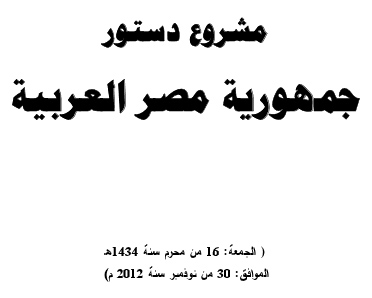
[Editor’s Note: The following commentary is a post originally submitted to the Sociology of Islam listserv about the current debate over the proposed new Egyptian constitution. There has been an active discussion of the pros and cons of the constitution, both in Egypt and among academics abroad, as evidenced in Dr. Bamyeh’s comments.]

by Dr. Mohammed Bamyeh

I think we have been constantly losing track of, or at least are not sure about, the right question to ask. For me, the primary question has always been: what ordinary Egyptians wanted? I know that “ordinary” is a construct, but there are ways to either measure that when you can, or at least sense with reasonable evidence where the prevailing sentiments may be heading. The revolution was made by those “ordinary people,” not by professional “revolutionaries.” It would never have succeeded any other way. But within the revolution there has always been a hardcore self-identified “revolutionary camp” (which in fact was the minority) that had an inflated sense of self-importance, and thus a propensity to be easily and deeply frustrated when it did not get its way (beginning with the March 19, 2011 referendum). Out of that they developed a strong suspicion of ordinary Egyptians, but outwardly that suspicion appeared as a strong resentment of what to them appeared as a monolith called the Brotherhood. The fact that they did not afterwards hesitate to use the Supreme Constitutional Court, that bastion of the counter-revolution, as their main weapon against popular will, and do so precisely in the name of the revolution(!) is simply shameless.

The fact that they did not want to accept was that the Ikhwan won not because of any manipulation, nor because of a deal with the military, but simply because they deserved to win. I am certainly not an Islamist–in fact I would describe my political leanings as anarchist. However, the real question for me is not one of ideology, but of sociology. The force that will have most resonance after the fall of a dictatorship would naturally be one that is most organically embedded in the deep, deep fabric of society, that exists in every Egyptian village, that for more than 80 years has been doing what ordinary Egyptians have felt to be useful, practical, everyday, non-revolutionary work–mostly. In contrast, what have the leftists/secularist/liberals ever done other than issuing pamphlets and grand declarations? What have they ever done for anyone, so as to cultivate the conviction that they should be the natural leaders of a society in which they had little roots and to which they spoke as vanguardist strangers–and before the revolution, often with contempt? Continue reading What do Ordinary Egyptians want?

خارطة طريق لحل مشكلة المياه والقات في اليمن


Qat tree in the highland valley of al-Ahjur; photograph by Daniel Martin Varisco

محمد فارع محمد الدبعي
بروفيسور الموارد المائية – جامعة صنعاء
الأحد, 25 نوفمبر, 2012

التفكير جدياً في استيراد القات من دول الجوار على مراحل حفاظاً على الإنسان في اليمن.

لماذا كل شيء يمكن استيراده في بلادنا (كل شيء) ما عدا القات؟؟

منع استخدام المبيدات في زراعة القات لما تشكله من أضرار على صحة المواطنين

توطين تكنولوجيا تحلية المياه في المناطق الساحلية باعتبارها الحل الذي لا بديل عنه لمجابهة الحاجة المتزايدة لهذا المورد على الدوام.

العمل على أن تكون عبوة قنينة الماء المعبأة نصف لتر فقط، حفاظاً على كثير من الماء المهدور.

استيراد القات الخالي من المبيدات أصبح ضرورة للحد من الاستنزاف الحاد للمياه الجوفية والعبث بالمواطن اليمني صحياً ومادياً

المشكلة في غاية الأهمية والخطورة بالنسبة لنا ولأجيالنا القادمة وعلى الجهات المسئولة إيجاد الحلول والمعالجات بدلاً من عقد المؤتمرات والندوات وورش العمل المغلقة التي تستهلك معونات وهبات المنظمات الدولية ويستفيد منها منظموها فقط وبدون مردود على الصعيد الوطني. إن ما يتم القيام به لحل مشكلة المياه والحد من التوسع في زراعة القات لا يلامس حل المشكلة ولا يعطي الاطمئنان لتنمية مستدامة تبشر بمستقبل واعد.

لليمن تاريخ طويل في إدارة الموارد المائية والحفاظ عليها. وما بناء سد مأرب التاريخي قبل ثلاثة ألف سنة، وصهاريج عدن التاريخية، وكذلك بناء السدود الصغيرة في المنحدرات الجبلية، إلا شاهداً على ذلك، لقد اختفى الكثير من هذه السدود الصغيرة وأصبحت في ذمة التاريخ، وما تبقى منها لا يعمل، لقد عملت هذه السدود على حفظ الماء من أجل الري الزراعي والشرب والاستخدامات المنزلية المختلفة، وساعدت في تغذية الخزان الجوفي.
Continue reading خارطة طريق لحل مشكلة المياه والقات في اليمن