An exhibit was held in Paris in April-July 2013 of West African talismans. The catalog is online here and well worth perusing.

An exhibit was held in Paris in April-July 2013 of West African talismans. The catalog is online here and well worth perusing.

By James M. Dorsey, RSIS Commentaries, October 16, 2013
Synopsis
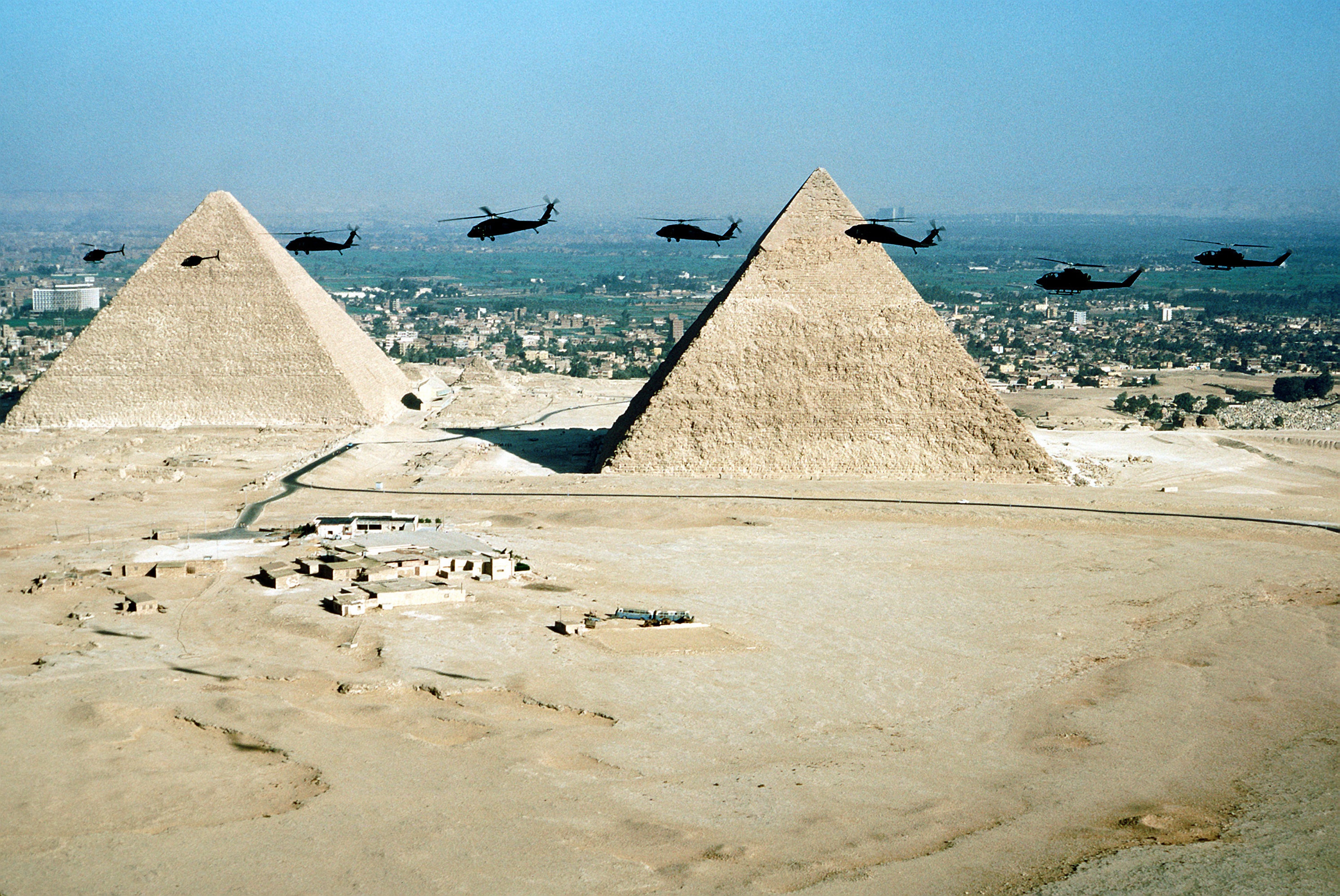
The decision by the Obama administration to freeze military aid deprives the Egyptian military of its favourite toys but does little to weaken its military capability. It further strains relations with key US allies in the Gulf, and highlights Washington’s difficulty in balancing its twin goals of stability and democratisation in the Middle East and North Africa.
Commentary
THE OBAMA administration’s decision to impose sanctions on Egypt’s military-appointed government following the killing of 51 anti-military protestors in Egypt illustrates the US’ limited leverage on one of its closest allies in the Middle East and North Africa. It also reflects its difficulty in striking a balance between acknowledging that the region has entered into an era of messy transition and maintaining close ties to its counter-revolutionary allies such as Saudi Arabia.
Washington had refrained in the past three months to define as a coup the military’s overthrow of Egypt’s only democratically-elected president and brutal suppression of the Muslim Brotherhood that left more than 1,000 people dead, to avoid being legally obliged to cut off aid.
Reinforcing worries about US stance
The aid freeze comes on the heels of the announcement of a November date for the start of court proceedings against ousted president Mohamed Morsi. It is likely to reinforce Saudi and Israeli fears that Washington is steering a dangerous course not only by its perceived support for fundamental change of the region’s established order but also by its willingness to engage with revolutionary Iran, seen by Arab conservatives as a threat to their national security.
In anticipation of the US sanctions, Egyptian interim President Adly Mansour secured pledges for continued support from Saudi Arabia and other cash-rich Gulf states that have already funded his government to the tune of US$12 billion. In advance of the coup against Morsi, Saudi Arabia had already assured the Egyptian military that it would compensate for any loss of US economic and financial aid.
The Gulf’s support has kept the post-Morsi government afloat but does little to address Egypt’s festering, structural economic problems nor does it offer the prospect of substituting military hardware for what is the world’s 14th largest armed forces. Continue reading US Freezing of Military Aid to Egypt: How Much of a Dent?

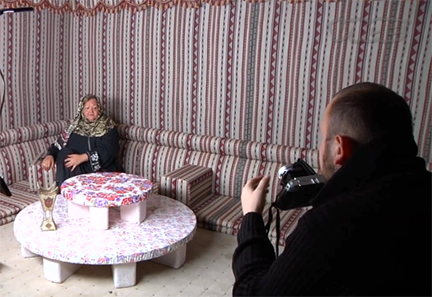
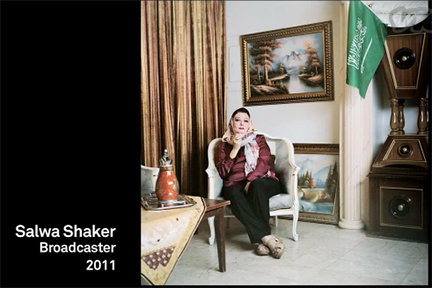
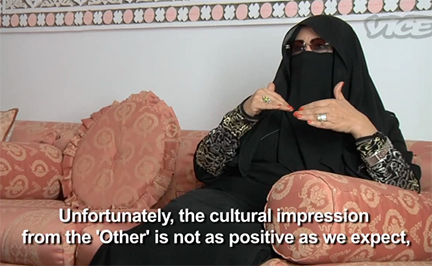
The photographer Ziyah Gafic recently went to Saudi Arabia to film women in context. Check out his interesting video here. He is allowed to photograph several well educated and wealthy women in their luxurious surroundings. The very fact that he is not free to film women outside such crafted, indoor settings is the “elephant in the room” that the lens does not capture.


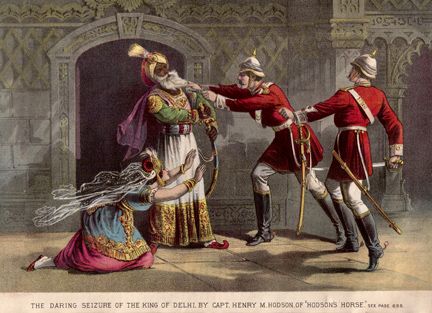
My grandmother’s aunt, Ms. Ida Hoyt, put together several scrapbooks in the 1890s. The pages are quite frayed today, but most of the images are still in good shape. At this time the British Raj was in full force, including the “glorious” depictions of the British rule.

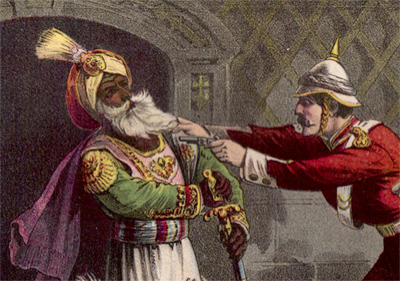
Detail
For Part 1, click here; for Part 2, click here; for Part 3, click here.

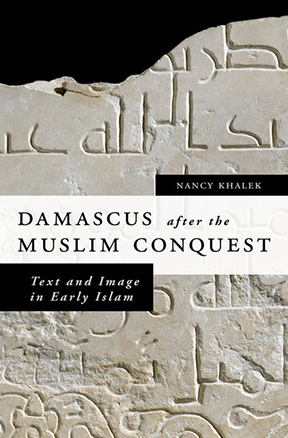
[The following is a link to an interview with Professor Nancy Khalek on her recent book, Damascus after the Muslim Conquest: Text and Image in Early Islam
Oxford University Press, 2011]
by Matthew Long, New Books in Islamic Studies, September 6, 2013
A top five finalist for the Best First Book in the History of Religion Award, Damascus after the Muslim Conquest (Oxford University Press, 2011) by Nancy Khalek, professor of Religious Studies at Brown University, is a study of the city of Damascus, the seat of power for the Umayyad dynasty. More specifically, this book explores the interaction between the recently arrived Muslim Arab rulers and the Byzantine-Christian peoples who made up the majority of the population in Syria. Khalek employs both traditional historical texts, such as Ibn ‘AsÄkir’s TÄrÄ«kh Dimashq, along with art and architecture from the region. She displays a mastery of both the Muslim and Christian sources, discerning the value of their historicity but highlighting the narrative and iconographic significance that can be extrapolate from those sources. During her study of the stories and art, the narratives and iconography reveal that the Muslim and Christian cultures of Syria were in a type of dialogue with each other. She takes care to avoid stating this was a replacement one culture or one borrowing from anther, but instead wishes to portray a blending of these cultures; a blending whose legacy lived on for centuries. Khalek’s work is truly a significant contribution to the field of Islamic Studies and an indispensable interdisciplinary study for both its use of a variety of lesser known source material and its re-imagining of Umayyad history in Syria.

Mackintosh-Smith in China
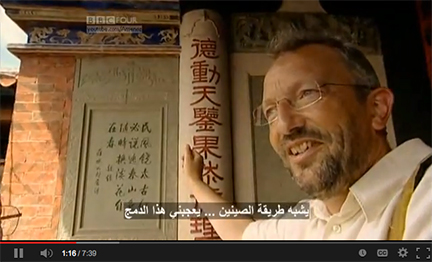
One of the most celebrated Arab travelers was the 14th century Ibn Battuta. For a book on the travels of Ibn Battuta, Timothy Mackintosh-Smith literally followed in the footsteps that the Arab savant had taken some seven centuries earlier. In addition to the book, a documentary film was made. An excerpt of the film on Tim’s experience int he Chinese city of Zaytun is available on Youtube and well worth watching. Other Youtube excerpts are on an Ibn Battuta shopping mall in Dubai and on Turkey. Vimeo provides access to the entire first part of the three-part series. For more information on the work of Mackintosh-Smith, check out his website. An earlier documentary on the English Sheikh and the Arab Gentleman by Bader Ben Hirsi is available in its entirely on Youtube.

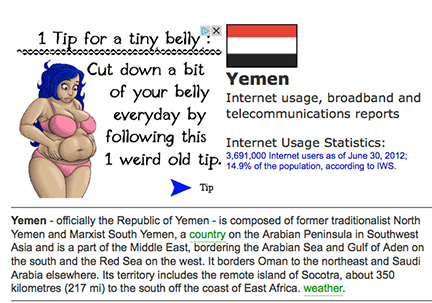
The juxtaposition of information and advertising on Internet sites always amazes me. In researching Internet use in Yemen for a paper to be delivered at the annual American Anthropological Association meeting in Chicago in November, I came across the image above. I suppose if any belly dancers accessed the page, this ad might be of value. Indeed, it must be a weird tip…
Poem by George El-Hage
كنّا ابتدأنا
عادتْ لنا الرؤيا وأبكانا اللقاءْ
Ø·Ùلان لا يشÙيهما غير البكاءْ
عادت لنا الأيام٠مزهرةً
ما همّنا Ø§Ù„ØØ³Ù‘اد٠إنْ ØØ³Ø¯ÙˆØ§.. سواء
ÙØ£Ø¨ÙƒÙŠ.. ولا تخشَي.. على كتÙÙŠ
أشتاق٠أن تبكي على كتÙÙŠ سماء
ما أروعَ Ø§Ù„Ù„ØØ¸Ø§ØªÙ تجمعنا
طيران عن أشواقنا ضاق Ø§Ù„ÙØ¶Ø§Ø¡
هذي يدي ذوبي Ø¨Ø±Ø§ØØªÙ‡Ø§
عطراً ولوناً بعض بهجته الضياء
وتساقطي Ø³ØØ¨Ø§Ù‹ على عطشي
السي٠تواقٌ إلى لون الدماء
يا ديمتي يا الآه من وتري
يا البالَ مرسوما Ø¨Ø£Ù†ÙØ§Ø³ Ø§Ù„ØµÙØ§Ø¡
إني لأشعر إذ أضاجعكÙ
أني أضاجع كل أجناس النساء
أشياؤك الكانت تراودني
ظلّت وعوداً دونها غصص اشتهاء
Continue reading كنّا ابتدأنا