Category Archives: Countries

Picturing the Displaced in Yemen


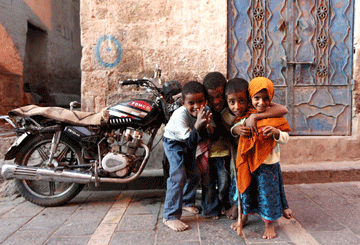
A boy who fled fighting between militants and government forces in a refugee camp near the town of Hadja, north west Yemen. Photo by David Bebber, The Times

Photographer David Bebber has produced a superb slide show in The Times on Yemenis, especially children, displaced by recent fighting in the north of Yemen between government forces and the al-Huthi rebels. To see a slide show of the 19 images, click here.


Photo by David Bebber, The Times

Cartoonist in Yemen

“Return to Aden:” Rediscovering Yemen, the land of a thousand tales

By Dr. T.I.Farag, The Ambassadors Online Magazine, January, 2001

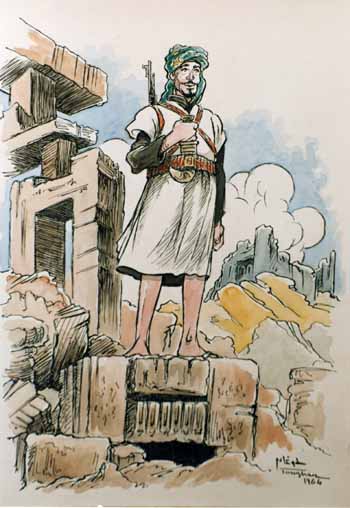
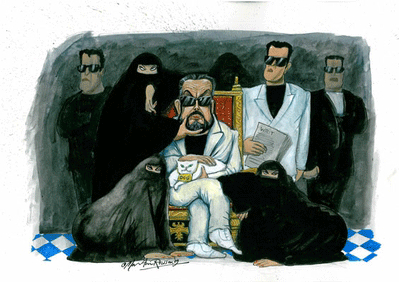
This issue’s megastar and renowned political cartoonist, Ahmed Toughan, is preparing a gallery illustrating his journeys in Yemen, through his artistic drawings. During his ten visits to the country over a period of 40 years, Toughan has compiled a library of works about Yemen and developed a strong bond with the tribes, the communities, the buildings, the environment, and all that he came in contact with. Since that time, Toughan has produced galleries of water paintings, sketches and cartoons about Yemen that have been published in seven books and presented in several international exhibitions. In true and genuinely-arousing colors and strokes, Toughan’s pieces presented here capture a Yemen that transcends time and space, whose ambiance is penetrative and transporting. His art exudes a mystique that penetrates materiality while embodying all that moves his aesthetic essence. We hope that these images will move you the same way they moved me. Continue reading Cartoonist in Yemen

The End of Middle East History

by Richard Bulliet, Agence Global, September 28, 2009

Iran’s Arab adventure had ostensibly grown from three separate roots, Islamic revolution, Shi‘ite solidarity, and sympathy for the Palestinians. But underlying each of these was a dream dating back to the overthrow of Prime Minister Mossadegh in 1953 — the dream of confronting and confounding American imperial arrogance. Now each of the three roots withered, and confrontation with the Great Satan faded from significance along with them.

The idea of an Islamic revolution leading to an Islamic republic that would reinvigorate the faith and reveal the viciousness of Western stereotypes of Islam had lost steam before the IRI was a decade old. Internal progress had been stifled by eight years of war with Iraq and by factional infighting that sapped governmental innovation and efficiency. Though public discourse of unprecedented vitality flourished after the revolution, other intellectual and philosophical trends superseded the concept of Islamic revolution per se. However, the death knell of constructive Islamic revolution was rung on September 11, 2001 when the terrorist attacks on the World Trade Center and the Pentagon elevated nihilistic violence in the name of (Sunni) Islam above the dream of creating a model religious state in (Shi‘ite) Iran. Instead of an Islamic republic, the ideologues of the new terrorism called for an autocratic Islamic emirate or an atavistic return to a universal caliphate that had not wielded significant political power for over a thousand years. In response, Islamic political parties everywhere put behind them the idea of an Islamic republic, and with it the Iranian model, and called instead for pluralistic electoral systems in which Islamist parties would be free to run for office, but not free to disempower rival non-religious parties. Continue reading The End of Middle East History

Sex, flies and videotape: the secret lives of Harun Yahya

by Halil Arda, The New Humanist, Volume 124, Issue 5, September/October 2009

Inspired by the high profile of its Christian American counterpart, Muslim creationism is becoming increasingly visible and confident. On scores of websites and in dozens of books with titles like The Evolution Deceit and The Dark Face of Darwinism, a new and well-funded version of evolution-denialism, carefully calibrated to exploit the current fashion for religiously inspired attacks on scientific orthodoxy and “militant” atheism, seems to have found its voice. In a recent interview with The Times Richard Dawkins himself recognises the impact of this new phenomenon: “There has been a sharp upturn in hostility to teaching evolution in the classroom and it’s mostly coming from Islamic students.”

The patron saint of this new movement, the ubiquitous “expert” cited and referenced by those eager to demonstrate the superiority of “Koranic science” over “the evolution lie”, is the larger-than-life figure of Harun Yahya. Continue reading Sex, flies and videotape: the secret lives of Harun Yahya

The Land and the Book #5: Dead Sea Reflections


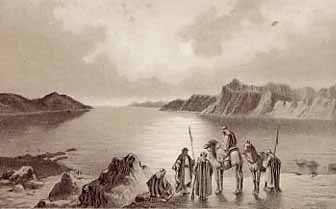
The Dead Sea from Thomson’s “The Land and the Book”, opp. p. 614

Almost 150 years ago one of the most popular travel accounts of the Holy Land was penned by an American missionary named William M. Thomson. Born in Ohio, my own home state, the 28-year old Thomson and his young bride arrived in Lebanon in 1834 as Protestant missionaries. This was a mere 15 or so years after the first American missionaries had made the Holy Land a mission field. At once an entertaining travel account and Sunday School commentary on the places and people of the Bible, this may have been one the most widely read books ever written by a Protestant missionary.


Reading Thomson is like reading one of the early English novels. The language is less familiar, although still thoroughly Yankee and the devotional tone has long since disappeared for a readership buying out The Da Vinci Code as soon as it hit the bookstores. The biblical exegesis, literalist yet frankly pragmatic at times, is intertwined with astute and at times humorous accounts of the people Thomson met along the way. But the style is not at all dry or discouragingly didactic. From the start Thomson engages in a dialogue with the reader, making the text (which stretches over 700 pages in the 1901 version) a rhetorical trip in itself.

Among the wonders described by Thomson is the Dead Sea, which as a devout literalist he interpreted through the biblical tale of the brimstone destruction of Sodom and Gomorrah. Yet, he is quite interested in the geologic and chemical character, as he notes: Continue reading The Land and the Book #5: Dead Sea Reflections

The Land and the Book #4: Bringing in the Sheaves


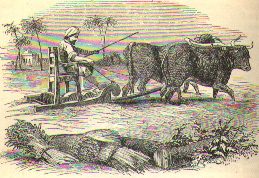
Threshing Sledge or Mowrej from Thomson’s “The Land and the Book”, p. 540

Almost 150 years ago one of the most popular travel accounts of the Holy Land was penned by an American missionary named William M. Thomson. Born in Ohio, my own home state, the 28-year old Thomson and his young bride arrived in Lebanon in 1834 as Protestant missionaries. This was a mere 15 or so years after the first American missionaries had made the Holy Land a mission field. At once an entertaining travel account and Sunday School commentary on the places and people of the Bible, this may have been one the most widely read books ever written by a Protestant missionary.


Reading Thomson is like reading one of the early English novels. The language is less familiar, although still thoroughly Yankee and the devotional tone has long since disappeared for a readership buying out The Da Vinci Code as soon as it hit the bookstores. The biblical exegesis, literalist yet frankly pragmatic at times, is intertwined with astute and at times humorous accounts of the people Thomson met along the way. But the style is not at all dry or discouragingly didactic. From the start Thomson engages in a dialogue with the reader, making the text (which stretches over 700 pages in the 1901 version) a rhetorical trip in itself.

While hardly free from Yankee hubris and missionary zeal, Thomson’s observations are often useful as well as colorful, especially when accompanied by illustrations. Consider, for example, this description of threshing on a visit to Yebna, about three and a half hours from Haifa through Wadi Hanayn in Palestine: Continue reading The Land and the Book #4: Bringing in the Sheaves

Bury on Yemen

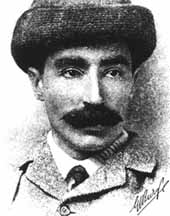
[Note: One of the early 19th century travelers to Yemen was the British birder G. Wyman Bury. His Arabia Infelix, or The Turks in Yamen (London: MacMillan, 1915) is a personal and informative account of his visit to the southern part of Yemen, especially Aden and its hinterlands. Near the end of his book, he discusses the political climate of his day, when Britain was firmly in control of Aden as part of its Indian Empire. Clearly biased in favor of his own British order, there is nevertheless a note of irony for a country which until this day has yet to attain stability.]

The Yameni is not fanatical. He has his own religious views, but realizes, from the sects into which his own people are divided, that there are at least two sides to every religious question.

He is a patriot ; and who, indeed, could help loving a country like the highlands of Yamen, in spite of past and present woes ? His patriotism, however, does not blind him to the fact that his local rulers have done and can do little for the welfare of his country. He would gladly throw off his present yoke for any change of government that promised more stability. Continue reading Bury on Yemen