Category Archives: Countries

The Yemen Election: No Surprises


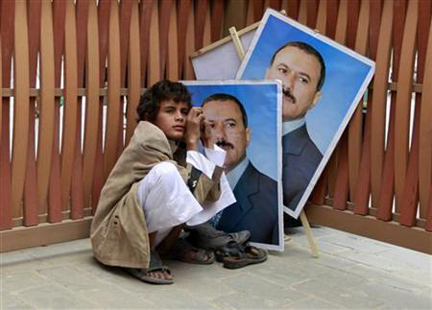
The Yemeni election was not destined to be a cliff hanger and never in doubt. With only one candidate, seemingly supported from many sides, millions of Yemeni citizens went to the polls yesterday with a blue thumbs up for the interim president-in-waiting, Abd Rabbou Mansour al-Hadi. Considering that al-Hadi has been in the innocuous position of Vice-President to the outgoing President Ali Abdullah Salih, for some 17 years, this changing of the guard is seemingly only at the palace gate. So some people might wonder why it was worth spending an estimated 48 million dollars to hold an election that was a foreordained outcome. The answer is not that democracy is served by having only one candidate to vote for, but democracy may be viable by the mere fact that Ali Abdullah Salih is no longer in charge. The vote for al-Hadi was less a vote for the consensus candidate al-Hadi than a vote to move on after the fall of Ali Abdullah. And despite the ongoing pockets of violence in several parts of the country, in effect this is the first relatively peaceful transfer of power where the leader is negotiated out of office rather than seeking asylum.

The issue is not whether Yemen is ready for democracy, as though democracy is pure only in its Western trappings, but if the various factions in Yemen can sort out their legitimate grievances without having a strong man in power for life. Before Ali Abdullah the tenure of Yemen’s military-coup leaders was cut short by assassinations. The fact that Ali Abdullah lasted for over three decades is remarkable, to say the least. While not the butcher that Asad has shown himself to be in Syria, the regime hardly had clean hands. But Yemen’s natural wealth has been squandered by corruption and incompetence, two problems that usually accompany dictatorships. The water is running out and so is the oil, so in a very real sense time is running out to resolve the political problems. The secessionists in the south and the Huthis in the north boycotted the election, but al-Hadi will have to bring them into the political framework. This is not an impossible task, but much now rests on the shoulders of a man who is not necessarily in control of the military, which itself is split. Continue reading The Yemen Election: No Surprises

Anthony Shadid: An American Story


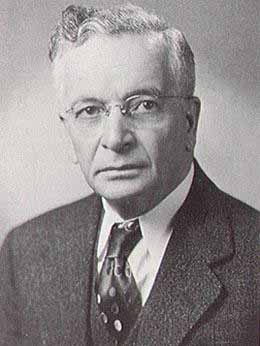
Dr. Michael Abraham Shadid (1882-1966), who founded the first medical cooperative in Elk City, Oklahoma in 1931.

By Anouar Majid 
 
The sudden and tragic death of Anthony Shadid affected me in ways I had not anticipated.  As a childhood asthma sufferer, I always pay attention when I hear about such death-causing attacks, but Mr. Shadid’s untimely death in Syria left me wondering about how a man who had endangered his life to report on the troubled region of the Middle East was destined to die in the land of his ancestors.  I don’t know much about his life beyond what has been reported, but through a brief exchange I had with him recently, I now read his death as part of the dramatic encounter between the Middle East and the United States since the late nineteenth century.
 
The story for me begins with Mr. Shadid’s relative, Dr. Michael Shadid, an unsung national hero.  A couple of years or so ago, I came across the story of one Michael Shadid, a progressive Syrian (as Arabs from the Levant were known at the turn of the 20th century) immigrant who tried to change healthcare in the United States and left a legacy that could inspire us today as we desperately search for the right solutions. I also wrote about him on TingisRedux .

Born in a tiny village on the slopes of Mount Lebanon in 1882, in a household of nine siblings and a widowed mother, Michael Abraham Shadid overcame nearly insurmountable odds to get an American education in Beirut before finding a way to get out of his native land in search of a better life in the United States. Like many immigrants, he was mesmerized by the sight of New York and America’s possibilities.  He worked hard peddling jewelry and trinkets, got a medical education, and, moved by the suffering of poor people in Oklahoma, fought against entrenched interests to establish the first cooperative medical facility in Elk City. Continue reading Anthony Shadid: An American Story

Islam and homosexuality: Straight but narrow


from The Economist, Feb 4th 2012

ONE leaflet showed a wooden doll hanging from a noose and suggested burning or stoning homosexuals. “God Abhors You” read another. A third warned gays: “Turn or Burn”. Three Muslim men who handed out the leaflets in the English city of Derby were convicted of hate crimes on January 20th. One of them, Kabir Ahmed, said his Muslim duty was “to give the message”.

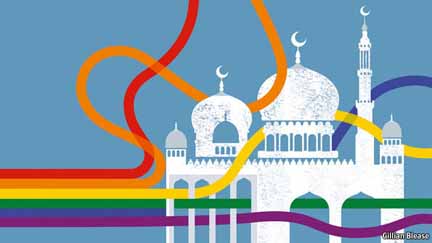
That message—at least in the eyes of religious purists— is uncompromising condemnation. Of the seven countries that impose the death penalty for homosexuality, all are Muslim. Even when gays do not face execution, persecution is endemic. In 2010 a Saudi man was sentenced to 500 lashes and five years in jail for having sex with another man. In February last year, police in Bahrain arrested scores of men, mostly other Gulf nationals, at a “gay party”. Iranian gay men are typically tried on other trumped-up charges. But in September last year three were executed specifically for homosexuality. (Lesbians in Muslim countries tend to have an easier time: in Iran they are sentenced to death only on the fourth conviction.) Continue reading Islam and homosexuality: Straight but narrow

Greek Lessons for the Arab Spring


by Anouar Majid, written for Juan Cole’s Informed Comment, February 15, 2012

As the Arab Spring enters its second year and the whiff of democratic possibilities hovers in the air of many an Arab nation, a question that continues to be left unanswered is whether an Islamist worldview and democracy can truly co-exist in this climate of heightened expectations.

Revolts in Tunisia, Egypt, and Tunisia, as well as reforms in Morocco, with their insistence on Islamic solutions, have brought to the fore the twin but clashing heritages of the Arab world. Most of this world is part of the Mediterranean, but it is, by the same token, light years away from what the Romans once called their mare nostrum–our sea. The birth of Islam in the seventh century placed an insurmountable wedge between the northern and southern shores of this ancient basin and propelled both sides toward very different historical trajectories. The Romans learned from the ancient Greeks and laid down the cultural foundations of what we nowadays call the West; the Muslims, with the exception of a brief period when they built on Greek science and adopted parts of Greek philosophy, sought refuge in theology. Christian Europe did that, too, but the re-introduction of Greek thought (thanks, partly, to the Moorish philosopher Averroes) loosened the grasp of the Church and Europe was able to rediscover the legacies of ancient Greece and Rome.

Muslims have yet to do that. Continue reading Greek Lessons for the Arab Spring

Anthony Shadid’s Last Article


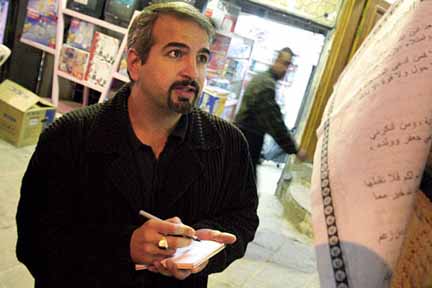
The late Anthony Shadid

[The recent passing of New York Times reporter Anthony Shadid leaves a large gap in their coverage of the ongoing crises in the Middle East. Here is his last article on the political climate in Tunisia.]

Islamists’ Ideas on Democracy and Faith Face Test in Tunisia
By ANTHONY SHADID, The New York Times, February 17, 2012

This article was reported and written before Mr. Shadid’s death in Syria .

TUNIS — The epiphany of Said Ferjani came after his poor childhood in a pious town in Tunisia, after a religious renaissance a generation ago awakened his intellect, after he plotted a coup and a torturer broke his back, and after he fled to Britain to join other Islamists seeking asylum on a passport he had borrowed from a friend.

Twenty-two years later, when Mr. Ferjani returned home, he understood the task at hand: building a democracy, led by Islamists, that would be a model for the Arab world.

“This is our test,” he said.

If the revolts that swept the Middle East a year ago were the coming of age of youths determined to imagine another future for the Arab world, the aftermath that has brought elections in Egypt and Tunisia and the prospect of decisive Islamist influence in Morocco, Libya and, perhaps, Syria is the moment of another, older generation.

No one knows how one of the most critical chapters in the history of the modern Arab world will end, as the region pivots from a movement against dictatorship toward a movement for something that is proving far more ambiguous. But the generation embodied by Mr. Ferjani, shaped by jail, exile and repression and bound by faith and alliances years in the making, will have the greatest say in determining what emerges.

Their ascent to the forefront of Arab politics charts the lingering intellectual and organizational prowess of the Muslim Brotherhood, a revivalist movement founded by an Egyptian schoolteacher in a Suez Canal town in 1928. But intellectual currents that once radiated from Egypt now just as often flow in the other direction, as scholars and activists in Morocco and Tunisia, perched on the Arab world’s periphery and often influenced by the West, export ideas that seek a synthesis of what the most radical Islamists, along with their many critics here and in the West, still deem irreconcilable: faith and democracy. Continue reading Anthony Shadid’s Last Article

A Tale of Two Brothers


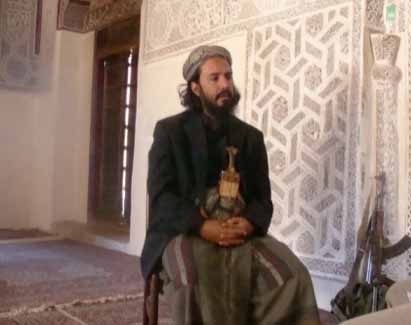
The late Tariq al-Dhahab

Yet another tale of two brothers, this time in Yemen and it is not about brotherly love. What drives a man to kill his brother? For Cain in the Garden of Eden it was jealousy that God preferred his brother Abel’s sacrifice to his own; in effect the God of Genesis wanted blood. Several Abbasid caliphs were adept at taking their brother’s lives, a royal custom that knew no geographic or cultural boundaries. The American Civil War is remembered as a family conflict in which brother at times fought brother. When fratricide does occur, it is always a sad affair, whether the passions are aroused by politics, religion or a more mundane jealousy.

The two Yemeni brothers are Tariq and Hizam al-Dhahab. Tariq gained international attention on January 16 when he seized control of the Yemeni town of Rida’ and declared himself Amir of a new Islamic regime. A self-important proponent of Al-Qaida in the Arabian Peninsula (as useful a banner as any these days in this region), Tariq was related to Anwar al-Awlaqi by marriage and this made the event all the more newsworthy outside of Yemen. But the purpose of the raid, which was symbolic more than bloody, was to negotiate release of prisoners and not jumpstart a new caliphate. After nine days they pulled out when Hizam’s brother Nabil was released, but the main impetus was opposition within his own tribe against such actions. Continue reading A Tale of Two Brothers

Study this Spring in Qatar


Qatar: Religion, Economy, and Sustainability

A course offered in Qatar for the Spring Term 2012 (Travel: March 24 — April 5, 2012)

Led by: Tugrul Keskin, PSU — International and Middle Eastern Studies Middle East Studies Coordinator (INTL)

Over the last twenty years, with the emergence of the global economy, Qatar has become a center of an economic boom in the Persian Gulf. This economic transformation has also shaped the social and political characteristics of Qatar. In the Gulf region, Qatar has one of the fastest growing education systems, increased levels of women’s participation in education and the workplace, and more open media and communications systems. Therefore, Qatar uniquely represents a new trend in the Middle East. In this study abroad course, we will explore and try to understand these changes based on our interactions with Qatari organizations, politicians, citizens, educators and etc.

Study abroad in Qatar offers students the unique opportunity to understand religion, economy and sustainability from the perspective of course materials in addition to discussion with community members and leaders, and visits to historical venues. This will help to contextualize the inter-relationships between contemporary Qatari society, and its historical, economic and geo-political underpinnings. It will enable students to interact with and directly explore issues that are core to the Muslim Societies. Continue reading Study this Spring in Qatar

Can AQAP mount an insurgency?


by Issandr El Amrani, The Arabist, February 14, 2012

[This post was co-authored by the editor of the recently released report “A False Foundation? AQAP, Tribes, and Ungoverned Spaces in Yemen”, Gabriel Koehler-Derrick, and the author of the same report. For reasons of security and to facilitate future research in the region the author’s name has been withheld from the report. Gabriel is an associate at West Point’s Combating Terrorism Center and an instructor in the Department of Social Sciences.]

On 15 January a member of a United Nations team was kidnapped from an upscale neighborhood in Yemen’s capital. He was reportedly taken to the eastern governorate of Marib and held for more than a week by heavily-armed tribesmen who demanded the release of their relatives held on suspicion of supporting al-Qa`ida. The day of the abduction, word spread of militants from an alleged al-Qa`ida affiliate, Ansar al-Sharia`a, overrunning a city just 80 miles south of Sana’a. A week later, footage of an alleged commander of the group, a tribal sheikh and brother in law of Anwar al-`Awlaqi named Tariq al-Dhahab, was posted on YouTube. The clips seem to show Ansar al-Sharia`a fighters in control of the city’s mosque, enjoying support from some local residents, and for the first time on video, soliciting oaths of allegiance from young men on behalf of al-Qa`ida’s leaders in Yemen and Pakistan. (Click here for videos)

Both events have been interpreted as the latest evidence of Yemen’s imminent collapse, an outcome especially troubling for the United States. Whereas the Arab Spring has spurred varying degrees of optimism regarding political developments in Tunisia, Egypt, and even Libya, Yemen appears headed in the opposite direction. The prospect of al-Qa`ida inspired militants moving to fill the void left by a faltering central government makes a bad situation that much worse. AQAP is not alone in taking advantage of the chaos. Across the country the Yemeni government is ceding ground to a variety of sub state actors. These include Southern Secessionists in the former PDRY (People’s Democratic Republic of Yemen), Houthi insurgents in the North, and since May of 2011 in Abyan and perhaps Baydah governorates, al-Qa`ida’s local offshoot, al-Qa`ida in the Arabian Peninsula (AQAP) and Ansar al-Shar`ia. Continue reading Can AQAP mount an insurgency?