Category Archives: Anthropology/Sociology

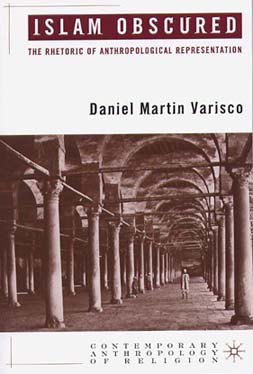
Islam Obscured reviewed

Review of D. M. Varisco, Islam obscured. The rhetoric of anthropological representation, Palgrave MacMillan, New York 2005.

by Estella Carpi, letturearabe di Jolanda Guardi, June 29, 2012

Anche a distanza di ben sei anni, vale la pena recensire il testo dell’antropologo Americano Daniel Varisco, considerate l’urgenza attuale di de-cristallizzare i discorsi sull’Islam, particolarmente nel contesto accademico italiano.

Attraverso una rassegna concettuale di eminenti studiosi tra i quali Ernest Gellner e Clifford Geertz, e la de-mitizzazione della sociologa marocchina Fatima Mernissi che ancora pecca di una visione monolitica dell’Islam, Varisco riesce totalmente, a mio avviso, nell’intento di decostruire il solo Islam univoco, omogeneo, aspettatamente coerente e destoricizzato che ci viene rifilato.

L’Islam che definirei “monolitico” tuttora pervade i discorsi dei più esperti: Varisco, attraverso il suo background squisitamente antropologico, invoca invece all’osservazione degli individui che si auto-definiscono “musulmani”, piuttosto che alla catalogazione di ciò che l’Islam teologicamente prevede. L’Islam, come qualsiasi altra religione intesa sia come istituzione che pratica culturale, può soltanto essere rappresentato.

Per demolire le tuttora ancor troppo diffuse stagnazioni dogmatiche e una comprensione campanilistica dell’Islam, è quindi necessario, sostiene Varisco, tener conto del fatto che additiamo costantemente ai misfatti compiuti dai musulmani con maggior indignazione, in riflesso appunto alla nostra lettura dell’Islam, inteso come insieme di valori e pratiche rigorosamente coerenti, rispetto a qualsiasi altra religione.

I musulmani sono invece “conservatori o comunisti, maschi o femmine, giovani e vecchi, ricchi e poveri, di buon umore o mal intenzionati”, che poco hanno a che fare con una logica islamica del “prendere o lasciare”, quale invece ampiamente diffusa nella letteratura al riguardo. Continue reading Islam Obscured reviewed
Tabsir Redux: Mahdi as Hell…

Has your atlas arrived yet? The New York Times reported yesterday that prominent American scientists and politicians are receiving what purports to be an “Atlas of Creation” from a Turkish media guru self-named Harun Yahya. No, it is not revenge for the “War on Terror.” Nor is a glossy book of patent nonsense, no matter how intelligently designed and styled as “probably the largest and most beautiful creationist challenge yet to Darwin’s theory” much of a challenge. Scientists will recognize it for a “load of crap,” as Kevin Padian, an evolutionary biologist at the University of California, Berkeley, impolitely phrased it.

The “War on Terror” has manufactured a whole host of new enemies. But what a strange bedfellow is Charles Darwin, who liberated science from the dogmatic demands of religious apologists like Mahdi Yahya a century and a half ago. Darwin’s approach now summarizes all of modern science, a steady advance in knowledge because no specific idea is ever held sacred. This does not mean that scientists must abandon religion and faith, but it does offer a view of the world in which human reason is not abandoned under the cloak and rhetorical dagger of a supposedly spiritual quest for moral behavior. Continue reading Tabsir Redux: Mahdi as Hell…

An end to creationism?


In Monday’s Washington Post there is a report that the paleoanthropologist Richard Leakey is predicting that in another 15-3o years the evidence for evolution will be so overwhelming that creationists who believe in a literal Adam and Eve (which includes about half of the American public, according to opinion polls) will finally throw in the towel. Would that it were so, but the evidence has been overwhelming for well over a hundred years. Every aspect of scientific discovery since Darwin rests on the assumption that life, and indeed all matter, has evolved over a process that involves millions of years. There is not a shred of evidence for the old Bishop Ussher chronology that it all began in a garden called Eden with a lump of clay, a serpent, a couple of symbolic trees and a refashioned rib; not a shred. Push back that divine origin story several thousand years and there is no difference.

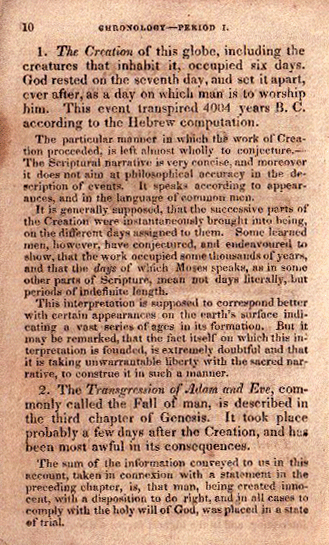
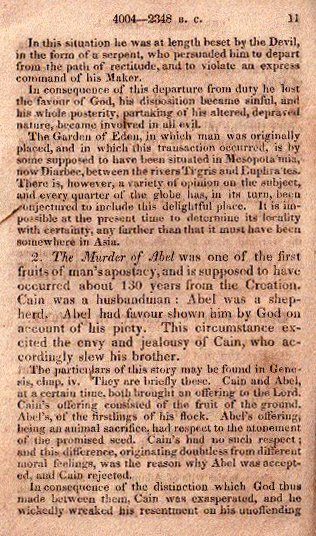
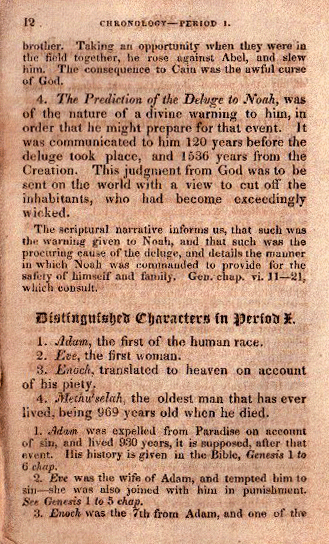
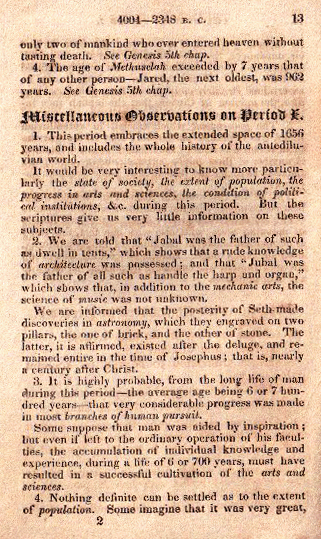
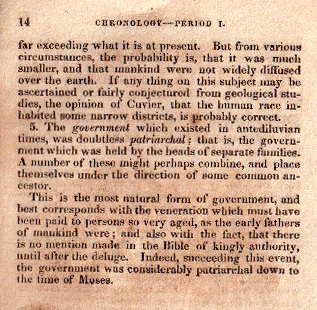
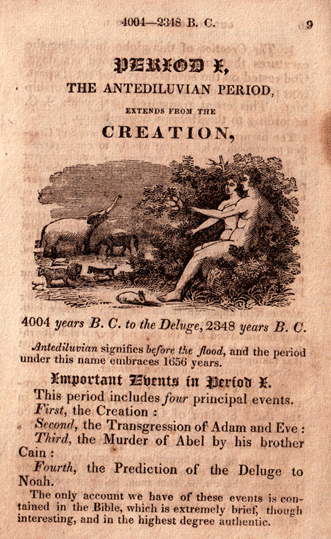
If I am still around in another 15-35 years I do not expect the ardent creationists to be any less active. They continue because of an ideology that refuses to accept that the Bible is myth and not the inspired science and history of a rather old and unconvincing idea of God. Creationists do not approach science with an open mind, so they will not be convinced no matter what scientific evidence there is. The theology of the creationists has not changed. Take this old “history of the world” text book I have from the early part of the 19th century (the title page is missing, but the last information is for 1815). It may very well have been one of those books that Abraham Lincoln sought as a child for his own education. I include here the first section, which takes the sacred history of Genesis as real history. This was a book used in the public schools before Darwin published his revolutionary Origin of Species, not a religious tract. Science has come a long way, notwithstanding David Hume’s contributions not long before this book came out; creationists have not and never will.


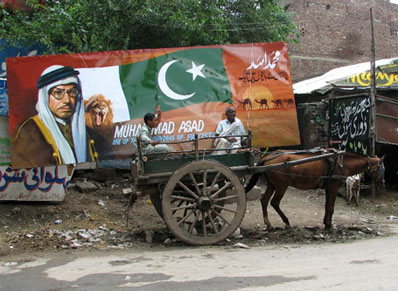
Muhammad Asad Between Religion and Politics


by Talal Asad, Islam Interactive, May 21, 2012

In April 2011 an international symposium was held in Riyadh, under the auspices of the King Faisal Center for Research and Islamic Studies as well as the Austrian Embassy to Saudi Arabia, on the life and work of my father. The conference as a whole was entitled “Muhammad Asad – A Life for Dialogue,” but I was asked by the organizers to write specifically on “Muhammad Asad Between Religion and Politics.” Unfortunately I was unable to attend the symposium so I sent in my written contribution to be read out by someone else at the meeting. What follows is a slightly elaborated version of the argument I sent.

I should begin by correcting a view that has become common among people interested in my father’s life and work, that his conversion can be seen as the building of a bridge between Islam and the West. He has even been described by some as a European intellectual who came to Islam with the aim of liberalizing it. Nothing could be further from the truth. When he embraced Islam (aslama, “submitted,” is the Arabic term) he entered a rich and complex tradition that had evolved in diverse ways – mutually compatible as well as in conflict with one another – for a millennium-and-a-half. Thus in his own life’s work he sought to use the methodology of the medieval Spanish theologian Abu Muhammad Ibn Hazm, he drew often and copiously on the interpretations of the nineteenth-century Egyptian reformer Muhammad Abduh, and again, despite strong disagreement on various points of substance with the fourteenth-century Syrian theologian Taqi al-Din Ahmad Ibn Taymiyya, he attempted, like the latter, to integrate reason (‘aql), tradition (naql), and free-will (irāda), to form a coherent and distinctive vision of Islam. His view of Sufism, incidentally, was also influenced by Ibn Taymiyya, for whom it was the excess of Sufis rather than Sufism as such that was the object of reproach. In fact most of what my father published in the early years of his life (Islam at the Crossroads, the translation of Sahīh al-Bukhāri, the periodical Arafāt, etc.) was addressed not to Westerners but to fellow-Muslims. I would say, therefore, that he was concerned less with building bridges and more with immersing himself critically in the tradition of Islam that became his tradition, and with encouraging members of his community (Muslims) to adopt an approach that he considered to be its essence. His autobiography was the first publication that was addressed to non-Muslims (as well as to Muslims, of course), a work in which he attempted to lay out to a popular audience not only how he became a Muslim but also what he thought was wonderful about Islam. His translation of the Qur’an into English, completed in the latter part of his life, was not simply a translation: it was a detailed presentation of his final vision of Islam. Continue reading Muhammad Asad Between Religion and Politics

Tribal Governance and Stability in Yemen


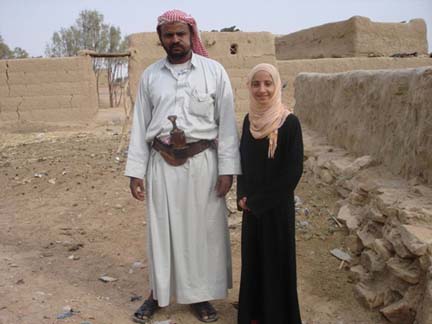
Nadwa Al-Dawsari (with her tribal shiekh colleague)

by Nadwa Al-Dawsari, Carnegie Paper, April 2012

The power-sharing deal signed by Yemen’s President Ali Abdullah Saleh in November 2011 mentioned presidential elections, the formation of a national unity government, and a military commission to reform the armed forces. It was at best the first step in Yemen’s recovery from the protracted turmoil and instability that wracked the country for months.

In this uncertain period of transition, as the new government struggles to establish legitimacy and address its most pressing issues, tribal law and traditions will play an important role in restoring a degree of stability because government capacity is extremely limited. This is particularly true given increasing conflicts and emerging sectarian and political divisions in the country. State and rule of law institutions are not only weak and ineffective outside of the main cities but also widely untrusted.

Yemenis have relied on indigenous tribal traditions to regulate conflict and establish justice for centuries, if not millennia. Tribal law has effectively handled conflicts between various tribes, between tribes and extractive companies, and between tribes and the government. It has successfully prevented and resolved conflicts over resources, development services, and land, and has sometimes managed to contain complex revenge-killing cases. Nationally, tribal mediators have played an important role in promoting political dialogue and building consensus among political groups. During the past year, where government forces withdrew, tribes took responsibility and managed to provide a reasonable level of security within their territories and along the main roads that connect tribal governorates. Continue reading Tribal Governance and Stability in Yemen

Journal of Sufi Studies


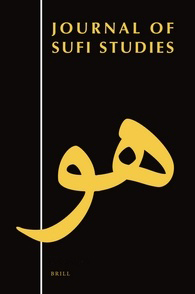
Brill has just announced the inaugural issue of a new publication, the Journal of Sufi Studies. The first issue is currently available free online. the following excerpt is from the editor’s introduction:

While the academic study of Sufism has a relatively long and productive pedigree in both western and Islamic academic discourses, in recent years the mainstay philological, philosophical and literary approaches to the subject have begun to give way to a much wider array of approaches drawn from across the humanities and social sciences. In the new conversational vistas and cross-fertilizations attendant to the study of the subject that such a situation portends, it would appear that the time is now ripe for sentiment to give way to assurance. What can, for example, anthropologists bring to the table which might be of interest to art historians? How might the insights of those dealing with philosophical discourse inform the work of those interested in cultural history? How and in what ways might a study devoted to pre-modern Sufi communities be usefully placed alongside one investigating globalized Sufi networks in modern times? While disciplinary territoriality and parochialism might been seen as posing difficulties to an effort seeking to link together scholarly engagements produced in different academic arenas, creating a space for genuine conversation and cross-fertilization on a subject of shared interest is not necessarily as arduous as it may sound. This, especially when dealing with a subject as amendable to a general multivocality, scholarly or otherwise, as that which this journal looks to engage.

It is precisely such a space which the Journal of Sufi Studies looks to create: an international scholarly forum for research on Sufism which, in taking an expansive view of the subject, brings together all disciplinary perspectives so as to promote a wide understanding of the richly variegated Sufi tradition in both thought and practice and in its cultural and social contexts. By providing a forum for academic research of the highest caliber on any and all denotable instances of Sufism wherever they may be situated, the journal looks to make a distinctive contribution to current scholarship on Sufism and its integration into the broader field of Islamic studies. As such, it is the fervent hope of the editors that this journal will come to serve as a meaningful outlet for the field of Sufi studies, one which fosters, shapes and energizes the efforts of those researchers who have ventured to engage one or another instantiation of the particularly persistent feature of the Islamic tradition which is Sufism, and in doing so contribute to those processes which are presently shaping the contours of the field itself.

For Whom the Death Toll tolls


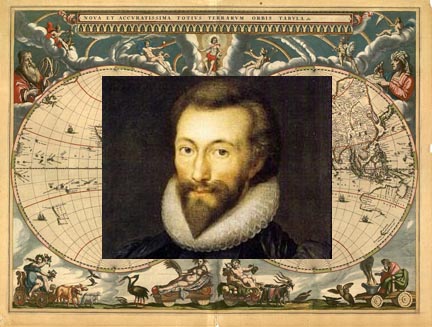
“John Donne and 1664 Dutch map of the world

“No man is an iland, intire of it selfe; every man is a peece of the Continent, a part of the maine; if a clod bee washed away by the Sea, Europe is the lesse, as well as if a Promontorie were, as well as if a Mannor of thy friends or of thine owne were; any mans death diminishes me, because I am involved in Mankinde; And therefore never send to know for whom the bell tolls; It tolls for thee….”
John Donne, Meditation 17, Devotions upon Emergent Occasions, 1624

What was true some four centuries ago for the English metaphysical poet John Donne is timeless, even if his writ shows its linguistic age. Today it can also be said that no country is an island unto itself, no matter where or how you spin the globe. This is certainly the case for the United Sates, with our military still on the ground in Iraq and Afghanistan, targeted drones over Pakistan and Yemen, the smoldering aftermath of the bombs that brought down Qaddafi in Libya, the stench of made-in-the-USA arms just about everywhere. If, as Donne eloquently reflects, the death of any man (or woman or child) diminishes us, then why are we so hell-bent on adding to this diminishing by arming thugs and sending our military to die in other countries?

First, it is important to realize how much the death toll drones on daily. Take today, for example. On Al-Jazeera we learn there are “many dead in Afghanistan suicide blasts,” 18 dead and 45 wounded by the numbers. As the nominal peace part still fails to protect the dictator-weary people of Syria, reports are that some 9,000 have been killed so far by the Assad regime, including refugees over the border in Turkey. There are also “Pakistanis dead in apparent sectarian attack,“adding six more to the thousands who have been killed in the ongoing violence that plagues Pakistan. The see-saw fighting in Yemen’s troubled south leaves “Dozens killed in attack on Yemen army base.” And a few days ago “Hamas hangs three Gaza prisoners“. Continue reading For Whom the Death Toll tolls

New Work on Mahri Poetry

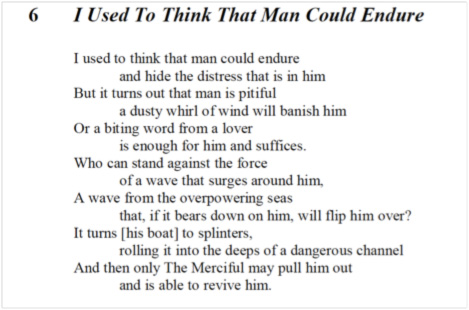
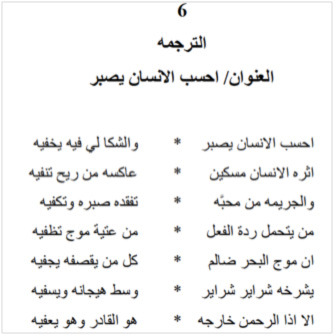
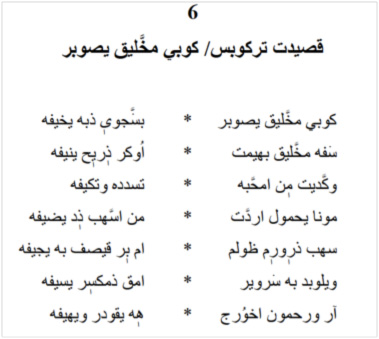
The Dīwān of Ḥājj Dākōn, published by the American Institute for Yemeni Studies in 2011, is a collection of eighteen poems in the endangered Mahri language of Yemen and Oman, one of the last, non-Arabic indigenous languages of the Arabian Peninsula. This publication marks an important step in the history of the Mahri language since it contains its first literary texts meant for a local readership. Ḥājj Dākōn, a pioneer of modern Mahri sung-poetry, has included an Arabic translation for each Mahri poem, which is supplemented by an English translation and transliteration into Latin characters provided by Samuel Liebhaber. The Dīwān is introduced by commentary that places the innovations of Ḥājj Dākōn’s lyric qaṣīdas in their cultural and linguistic context. A facsimile of Ḥājj’s original handwritten manuscript is included in the Dīwān. Starting in June 2012, audio and visual recordings of each poem in recitation will be accessible online on the site: http://blogs.middlebury.edu/mahripoetry/.

Sample poem, #6 from The Dīwān of Ḥājj Dākōn


English translation


Arabic translation


Mahri

Continue reading New Work on Mahri Poetry